The Sounds a Shih Tzu Puppy Needs to Meet
One of the most common worries for new Shih Tzu puppy parents is how sensitive their little fluffballs can be. It’s absolutely heartbreaking to watch your tiny companion jump out of their skin at the sound of a dropped spoon, or tremble under the sofa every time the doorbell rings. The world, for a brand new puppy, is full of strange and often startling noises, and without proper introduction, these everyday sounds can quickly become lifelong fears. This guide is here to walk you through how to gently and positively introduce your Shih Tzu puppy to the myriad of sounds they’ll encounter in their home and beyond, building their confidence and ensuring they grow into a calm, well-adjusted adult dog.
Understanding Your Shih Tzu Puppy's Sensitive Hearing
It’s easy to forget that while our world feels familiar, for a puppy, everything is a brand-new experience. Imagine being born into a quiet, controlled environment, only to be suddenly plunged into a bustling household filled with unfamiliar rumbles, clicks, and bangs. It's a lot to process, and their little systems are simply not yet equipped to handle it all without guidance.
Why Puppies Are So Prone to Startle
Think about it: a puppy's ears have been developing in the relatively quiet confines of the womb, and then perhaps a calm whelping box. Suddenly, they're thrust into a symphony of human life. Every creak of a floorboard, every distant siren, every flush of the toilet is a novel sensation, and their natural instinct is often to react with caution, if not outright fear. Their hearing is incredibly acute, far more so than ours, meaning what sounds like a gentle hum to you might be a roaring beast to them. This sensitivity is a survival mechanism, but in a domestic setting, it can lead to unnecessary stress. Shih Tzus, being bred primarily as companions, often pick up on our emotions and reactions, too. If we react with alarm or over-comfort, it can inadvertently reinforce their fear, signaling that there is indeed something to be afraid of. They're looking to us for cues, and our calm demeanor is just as important as the sounds themselves.
The Importance of Early Sound Socialization
The first few months of a puppy's life, roughly up to 16 weeks, are often called the critical socialization window. During this period, their brains are like sponges, absorbing every experience and forming associations that will stick with them for life. Introducing a wide variety of sounds in a positive, controlled way during this time is absolutely crucial. If you miss this window, or if a puppy has negative experiences with sounds, it can lead to chronic anxiety, fear-based barking, hiding behaviors, or even aggression later in life. Imagine living with a dog that cowers under the bed every Fourth of July, or barks incessantly at every passing truck. It's not just stressful for you, it's a miserable existence for your dog. By carefully exposing them to sounds now, you're investing in their future emotional well-being, helping them build resilience and understand that most sounds are just a normal, non-threatening part of their world. This foundational work is key to raising a confident and happy Shih Tzu. The Shih Tzu Socialization Deadline is a great resource if you want to dive deeper into this critical period.
Common Household Sounds to Introduce
The world is full of sounds, and your puppy needs to learn that most of them are harmless background noise. We want to aim for a "been there, done that" attitude rather than a "OMG, what was that?!" reaction. This takes patience and a systematic approach, especially for a sensitive breed like the Shih Tzu.
Everyday Indoor Noises
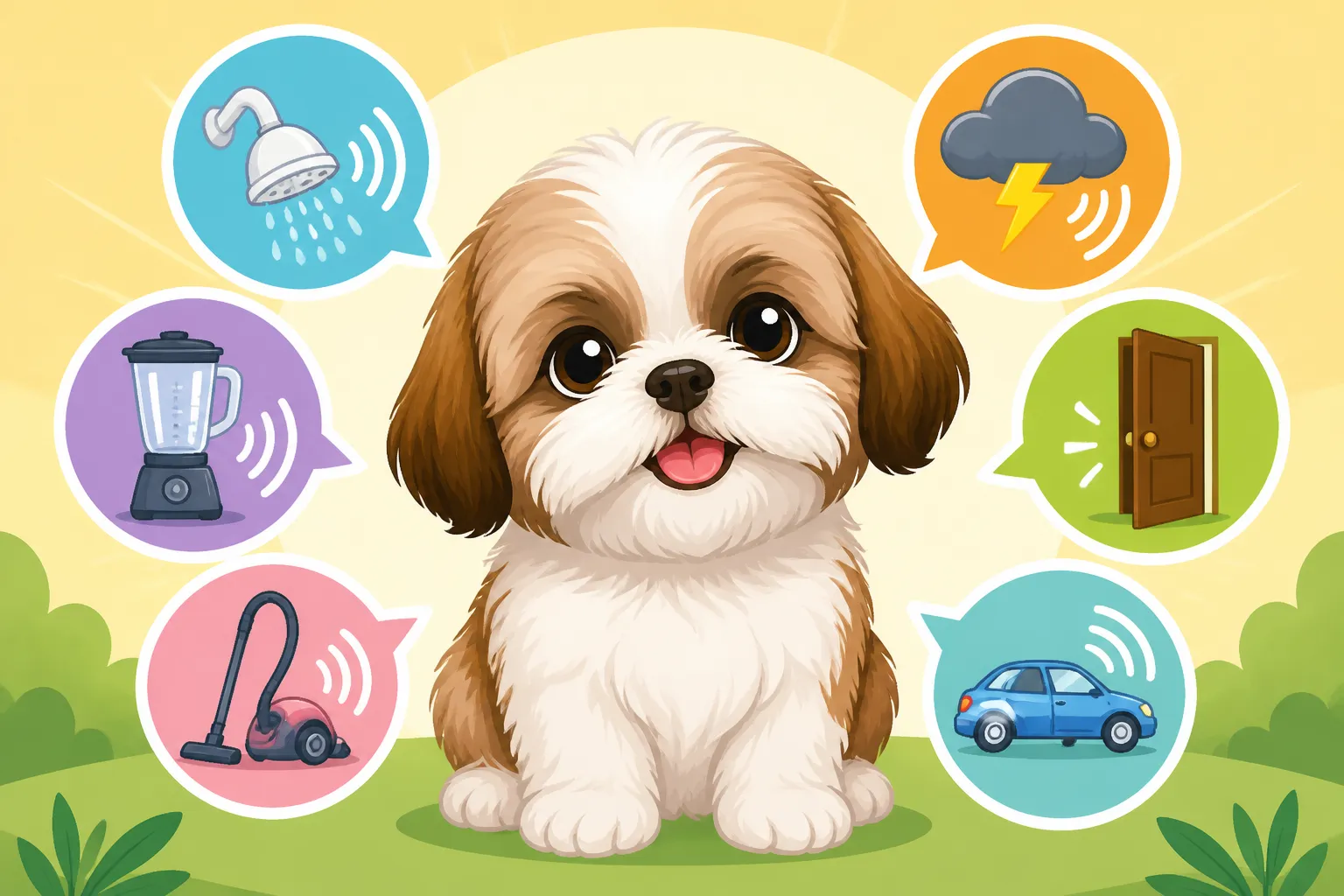
Your home is probably a hub of various sounds that you barely notice anymore. But to a Shih Tzu puppy, a vacuum cleaner can sound like a roaring monster, a blender like a spaceship taking off, and the ding of a microwave like a terrifying warning. Start with these common, everyday sounds, but introduce them gently.
- Vacuum Cleaner: Begin by simply having the vacuum in the room, turned off. Let your puppy sniff it, maybe even toss a treat near it. Then, turn it on in a distant room at a low setting. As your puppy calmly tolerates this, gradually move the vacuum closer and increase the power. Always have high-value treats on hand – cheese, cooked chicken, anything they adore. The moment the vacuum starts, give a treat. Vacuum stops, treats stop. This creates a positive association: "Vacuum = yummy things!"
- Blender/Coffee Grinder: These are sudden, sharp noises. Start with the appliance in the kitchen, giving treats. Then, turn it on for just a second, dropping a shower of treats when it starts. As they get used to it, increase the duration.
- Doorbell/Knocking: This is a classic trigger for many dogs. Find a recording of a doorbell sound (you can find many on platforms like YouTube or even specific sound apps for pets on Amazon). Play it at a very low volume, far from your puppy. As soon as it rings, give a treat. Gradually increase the volume and proximity. You can even practice with a real doorbell, having a friend ring it while you're ready with treats. For tips on managing reactions, check out A Shih Tzu Barking at the Doorbell.
- Washing Machine/Dishwasher: These are consistent, rumbling sounds. Let your puppy observe them from a distance, perhaps while they're eating their meal or playing with a favorite chew toy. The steady hum often becomes background noise quite quickly once they realize it poses no threat.
- Television/Radio: Different shows have different sound profiles. Cartoons can be shrill, action movies can have sudden explosions, and news programs have distinct voice tones. Expose your puppy to a variety of programming at a moderate volume. Don't constantly keep it on at high volume, but ensure they hear a range of human voices, music, and other sounds from the TV or radio without reacting fearfully.
The key is always to start small, keep it positive, and never force your puppy into a situation that causes extreme fear. If they're trembling, hiding, or barking frantically, you've gone too far, too fast. Back off and try again at a lower intensity.
Outdoor and Environmental Sounds
The outside world presents a whole new auditory landscape. While you can't control every sound, you can prepare your Shih Tzu puppy to react calmly.
- Traffic and City Sounds: Cars, trucks, motorcycles, buses – they all sound different. Start by sitting with your puppy in a safe spot near a window or door, at a time when traffic is lighter. Give treats whenever a vehicle passes calmly. As they become more comfortable, move to a quiet park bench near a road, gradually increasing exposure to busier areas.
- Sirens: Fire trucks, ambulances, police cars – these are loud, sudden, and can be very startling. Again, recorded sounds can be your friend here. Play them at a low volume, offering treats. In real life, if a siren wails, remain calm yourself, and if your puppy looks to you, offer a reassuring (but not overly comforting, which can reinforce fear) treat.
- Construction Noise: Jackhammers, saws, hammering – these can be intense. If there's construction nearby, try to incorporate short, positive exposures. For example, a quick walk past the site (at a safe distance), loaded with treats, then retreat. You can also use sound apps or recordings to simulate these sounds indoors first.
- Children Playing: Kids' laughter, shouts, and quick movements can be overwhelming. Introduce your puppy to well-behaved, calm children first, ensuring positive interactions. Gradually expose them to the sounds of more boisterous play from a distance, again, pairing it with treats and praise. A Shih Tzu and a Toddler in the Same Room offers more insights into interactions with kids.
- Thunderstorms and Fireworks: These are perhaps the most challenging due to their intensity and unpredictability. Start early with desensitization using specialized sound CDs or apps (many excellent options are available on Amazon). Play the sounds very quietly, while your puppy is engaged in a fun activity or eating. Slowly increase volume over weeks and months, always ensuring positive associations. This isn't a quick fix, but a long-term strategy to build tolerance. During actual storms or fireworks, provide a safe, quiet den (their crate covered with a blanket, perhaps with some calming music playing) where they can retreat. You might find some helpful items like calming sprays or diffusers on Amazon too.
Remember, the goal isn't to make your puppy love loud noises, but to teach them that these sounds are not a threat and that they can remain calm and secure in their presence.
Strategies for Positive Sound Introduction
When it comes to introducing your Shih Tzu puppy to new sounds, the method you use is just as important as the sounds themselves. We want to create positive associations, not just exposure, to build genuine confidence.
The "Sound and Treat" Method
This is the gold standard for sound desensitization and counter-conditioning. It leverages classical conditioning to change your puppy's emotional response from fear or apprehension to anticipation of something good. Here's how it works:
- Identify the Trigger Sound: Pick one sound at a time to work on. Let's say it's the doorbell.
- Start Low and Distant: Begin by playing a recording of the doorbell at a very, very low volume. It should be just barely audible to you, and likely just a whisper to your puppy. The key is that it's low enough that your puppy doesn't react with fear. If they flinch or show any signs of stress, the volume is too high.
- Pair with High-Value Treats: The instant the sound starts, deliver a continuous stream of your puppy's absolute favorite, high-value treats. We're talking tiny, pea-sized pieces of cooked chicken, cheese, or hot dogs – something they rarely get and go crazy for.
- Sound Stops, Treats Stop: As soon as the sound stops, stop giving treats. This creates a clear association: "Doorbell sound = jackpot of treats!"
- Short Sessions, Often: Keep these sessions very short, perhaps 1-2 minutes, several times a day. You don't want to overwhelm your puppy.
- Gradual Increase in Intensity: Over days and weeks, slowly increase the volume of the sound. Only move to the next level of volume when your puppy is consistently calm and happy (looking for treats!) at the current level. If they show any signs of discomfort, go back a step.
- Vary the Sound Source: Once they're comfortable with recordings, you can progress to the real thing. Have a family member ring the doorbell while you're ready with treats.
- Practice in Different Locations: Once they're comfortable in one room, practice in others.
The critical point here is timing. The treat must appear during the sound, not after they've reacted fearfully, and not as a comforting gesture after the fear has set in. You want to change their internal feeling about the sound, not just momentarily distract them. Programs like BAXTER & Bella emphasize these positive, reward-based methods for a reason – they build confidence and trust, which is invaluable for a Shih Tzu.
Creating a Safe Space During Noisy Events
Even with the best desensitization, there will be times when loud, unexpected noises occur – think sudden thunderstorms, unexpected fireworks, or a neighbor's loud party. Having a designated safe space for your Shih Tzu can make a huge difference in managing their anxiety.
- The Crate as a Den: If you've Crate Training a Shih Tzu Properly, their crate can become their ultimate safe haven. Make it comfortable with soft bedding, a favorite chew toy, and maybe even a blanket draped over it to create a dark, den-like environment. This isn't a punishment space; it's their personal sanctuary.
- Calming Aids: Consider using calming pheromone diffusers, available at most pet stores or online, which can help create a sense of security. Some owners find white noise machines or classical music played gently near the crate can help mask startling outdoor sounds. You can find many options for these on Amazon.
- Pre-emptive Measures: If you know a noisy event is coming (like a planned fireworks display), set up their safe space well in advance. Get them comfortable in it before the noise starts. Give them a special, long-lasting chew or a puzzle toy to occupy them.
- Your Presence (Calmly): While you shouldn't reinforce fear by overly coddling a trembling puppy, your calm presence can be very reassuring. Sit quietly near their safe space, maybe read a book or watch TV, demonstrating that you are not alarmed. If they choose to come out and lean on you, offer gentle pets and quiet praise for their bravery, then redirect them back to their toy or treat. The idea is to empower them to cope, not to become dependent on your frantic reassurances.
A safe space allows your Shih Tzu puppy to retreat and feel secure when the outside world gets overwhelming. It's a vital tool in their emotional toolkit.
When Things Don't Go as Planned: Troubleshooting and Advanced Help
Even with the best intentions and consistent effort, sometimes things don't go exactly as we hope. It's important to recognize when your puppy is truly struggling and to know when to seek professional assistance.
Recognizing Signs of Overwhelm and Fear
It's crucial to be a keen observer of your Shih Tzu puppy's body language. They can't tell you in words that they're scared, but their actions speak volumes. Learning to read these signals will help you adjust your approach and prevent situations from escalating.
Signs that your puppy is feeling overwhelmed or fearful include:
- Panting and Trembling: Even in a cool environment, excessive panting or noticeable shaking can be a clear indicator of stress.
- Tail Tucked: A tail tucked tightly between the legs is a universal sign of fear.
- Hiding: Seeking refuge under furniture, behind your legs, or trying to escape the room.
- Excessive Licking or Yawning: These can be displacement behaviors, indicating stress.
- Lip Licking and Tongue Flicking: Again, often a sign of mild stress or appeasement.
- Ears Pinned Back: Ears held flat against the head.
- Whale Eye: You can see the whites of their eyes, often staring intently.
- Barking or Growling: While sometimes a sign of excitement, in the context of a new sound, it can be a "go away" signal stemming from fear. A Shih Tzu That Barks at Passing Dogs can explore specific barking triggers.
- Urination or Defecation: Involuntary elimination can be a sign of extreme fear.
- Freezing: Becoming completely still, often with a rigid body.
If you see these signs, it's a signal to immediately reduce the intensity of the sound or remove your puppy from the situation. You've pushed too far, too fast. Forcing a puppy to "tough it out" only exacerbates their fear and can damage your bond. Think of it like this: if a child is terrified of heights, you don't throw them off a diving board. You take them to the shallow end of the pool and slowly build their confidence. The same applies to your Shih Tzu. If they struggle with grooming noises, for example, reading about A Shih Tzu That Panics at the Clipper could provide useful context and strategies.
Seeking Professional Guidance
There are times when despite your best efforts, a puppy's fear of sounds is deeply ingrained or seems disproportionate. This is when a professional can offer invaluable assistance. Don't feel like a failure if you need to reach out; it's a sign of a responsible and loving pet parent.
Consider consulting a professional if:
- Your puppy's fear is constant and pervasive, affecting their quality of life.
- Their reactions are extreme, bordering on panic attacks, aggression, or self-harm (e.g., trying to escape and injuring themselves).
- You feel stuck and aren't seeing progress with your own efforts.
- The fear response is getting worse rather than better.
Who to consult:
- Your Veterinarian: Rule out any underlying medical conditions that might be contributing to anxiety or heightened sensitivity. Sometimes pain or other health issues can manifest as behavioral problems. They might also be able to prescribe anti-anxiety medication in severe cases, which can be a valuable tool when used in conjunction with behavior modification.
- Certified Professional Dog Trainer (CPDT-KA) or Certified Applied Animal Behaviorist (CAAB/DACVB): These professionals specialize in understanding and modifying animal behavior. A trainer focused on positive reinforcement can assess your specific situation, help you devise a tailored desensitization plan, and guide you through the process. They can observe nuances in your puppy's body language that you might miss and offer practical, hands-on solutions. When looking for help, specifically search for Finding a Trainer Who Understands Toy Breeds to ensure they are experienced with the unique needs and sensitivities of a Shih Tzu. Many excellent resources, including virtual coaching and online courses focused on positive reinforcement, can be found through platforms like BAXTER & Bella, which offer comprehensive programs for puppy socialization and training.
Early intervention is key. The longer a fear response is allowed to fester, the harder it becomes to change. A professional can provide the expertise and support needed to help your Shih Tzu puppy overcome their fears and truly thrive.
Here’s a quick overview of sounds and strategies:
| Sound Category | Examples | Introduction Tips | Why it's Important |
|---|---|---|---|
| Household | Vacuum, Blender, Doorbell, TV | Start quiet/distant, pair with high-value treats, gradual increase in volume. | Prevents fear of daily home life, enables relaxed cohabitation. |
| Environmental | Traffic, Sirens, Kids Playing, Thunder | Use recordings first, expose from a distance, remain calm yourself. | Builds resilience to outside world, reduces anxiety during walks or events. |
| Grooming/Care | Clippers, Hairdryer, Nail Trimmers | Introduce tools off, then on low setting, positive association, short sessions. | Essential for comfortable grooming and vet visits throughout their life. |
| Human Interaction | Laughter, Sneezing, Coughing, Shouts | Gentle exposure during calm moments, positive reinforcement for calm reactions. | Helps them understand human vocalizations are not always threatening. |
Remember, consistency and patience are your best friends in this process. Every positive interaction with a sound helps build your Shih Tzu puppy's confidence, turning potential triggers into mere background noise.
Disclaimer
This article is for general informational purposes only and does not constitute professional advice. Laws, prices and regulations vary by location and change over time. Consult a qualified professional for guidance on your specific situation.