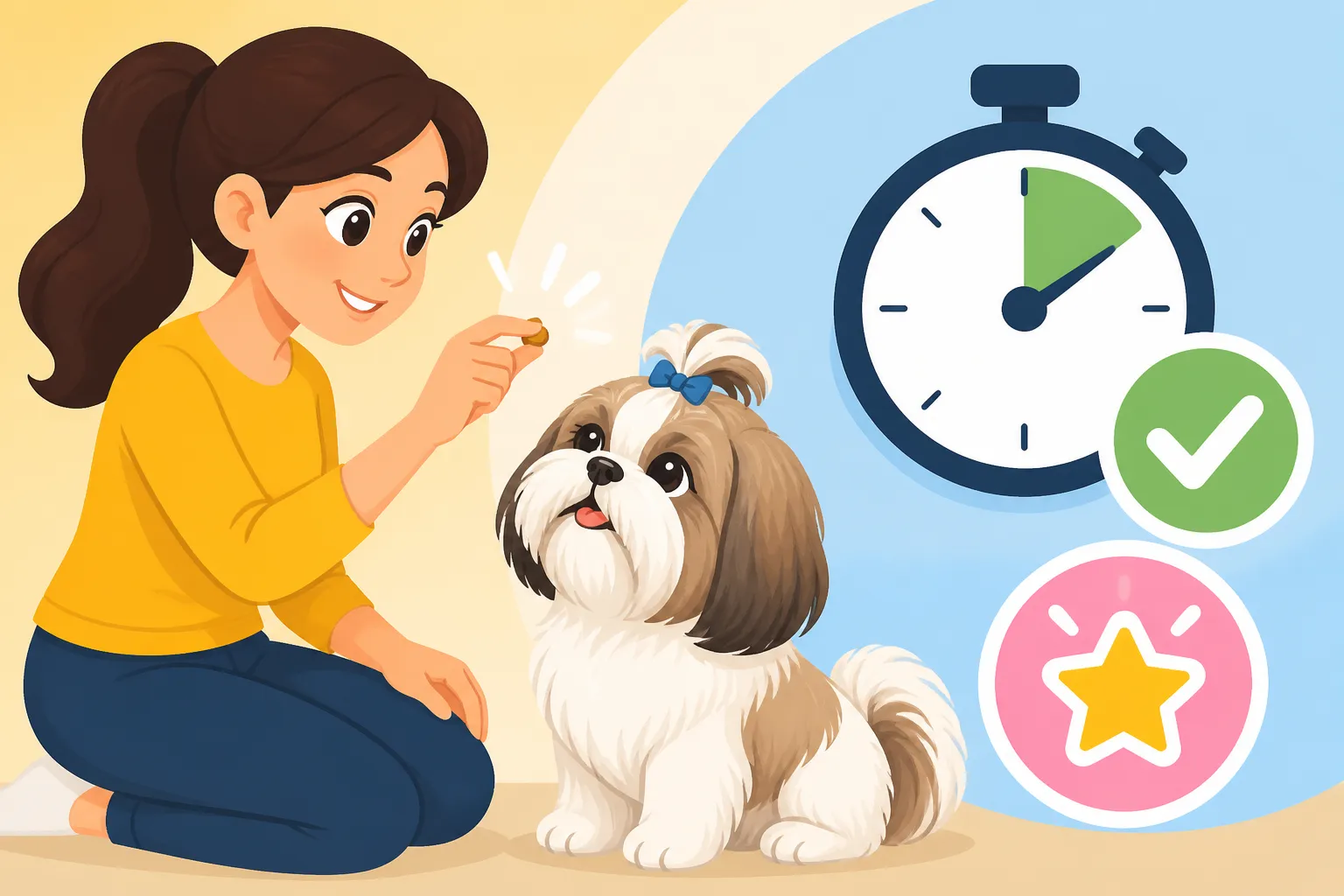
Keeping Shih Tzu Training Sessions Short
Ever notice that adorable, soulful gaze your Shih Tzu gives you… right before their attention completely wanders off to a dust bunny, a distant squirrel, or even their own tail? You're certainly not alone if you've found traditional, long training sessions to be a struggle. Many Shih Tzu owners quickly discover that their little lion dog has a charmingly short attention span, and trying to push past it often leads to frustration for both pup and parent. This guide is all about embracing those quick bursts of focus and turning them into your biggest training asset, showing you exactly how to make short, impactful sessions the cornerstone of your Shih Tzu's learning journey.
Understanding Your Shih Tzu's Attention Span
Shih Tzus are magnificent, affectionate companion dogs, bred over centuries to sit on laps and be adored, not necessarily to perform complex tasks for extended periods. This history, combined with their spirited personalities, directly influences how they learn and interact with training. Trying to force a "one-hour training bootcamp" on a Shih Tzu is usually a recipe for exhaustion and a bored, uncooperative pup.
The Royal Lapdog Mentality: A Breed Apart
Imagine generations of dogs whose primary "job" was to be charming, beautiful, and cuddly. That's your Shih Tzu! Their ancestors were revered in Tibetan monasteries and Chinese imperial courts, living lives of pampered luxury. They weren't bred for herding, hunting, or guarding, which demand sustained focus and problem-solving skills. Instead, their intelligence often manifests as cleverness in getting their way or finding the most comfortable spot on the sofa. This isn't to say they aren't intelligent; they just have a different kind of intelligence, one geared towards social interaction and comfort rather than long periods of instruction.
When you approach training, understanding this inherent "lapdog mentality" is crucial. They are often highly motivated by affection, comfort, and, of course, delicious treats. However, they can quickly decide that a particular exercise isn't worth their precious attention if it becomes repetitive or boring. A Shih Tzu might humor you for a few minutes, especially if you're holding a tasty morsel, but their patience wears thin much faster than a breed designed for working roles. This means our training methods need to adapt to their natural inclinations, rather than trying to shoehorn them into a conventional training mold.
Tiny Brains, Big Personalities: How They Learn
While their heads are small, Shih Tzus pack a huge personality into them, and this personality plays a significant role in their learning style. They can be incredibly smart and capable of learning a wide array of commands and tricks, but they learn best through positive reinforcement and short, engaging interactions. Think of them like a bright, curious toddler—they absorb information quickly in small doses, especially if it's fun and immediately rewarding, but they'll quickly lose interest if the activity drags on or becomes too demanding.
Their learning isn't just about memorizing cues; it's also deeply tied to forming positive associations. If a training session is always short, fun, and ends with success and a reward, your Shih Tzu will be eager for the next one. Conversely, if sessions are long, tedious, or involve any level of pressure, they might start to view training as something unpleasant and resist participating altogether. It’s not stubbornness as much as it is a natural self-preservation of their happy-go-lucky spirit. The key is to leverage their desire for connection and joy, making every learning moment a mini-celebration. What Motivates a Shih Tzu to Work is often found in these positive interactions.
Signs Your Shih Tzu Is Mentally Checking Out
Recognizing when your Shih Tzu is losing focus is the first step to successful short-session training. These aren't always dramatic acts of defiance; sometimes they're subtle cues that your dog is mentally done for now. If you can catch these signs early, you can end the session before frustration builds and preserve their enthusiasm for next time.
One common sign is the "look away." Your Shih Tzu might turn their head, sniff the floor, or stare intently at something completely irrelevant in the distance – a speck of dust, a shadow, a ghost, anything but you. They might also start offering random behaviors that aren't the one you're asking for, like a sit when you're asking for a down, or a bark when you're asking for a stay. Excessive yawning, lip-licking, or scratching (when they're not actually itchy) can also be stress signals indicating they're overwhelmed or bored. A dog that suddenly starts sniffing the ground with great interest, or tries to wander off for a drink of water, is essentially telling you, "My brain is full, please try again later." Don't mistake these for rudeness; they are simply communicating their current capacity.
Why Short Sessions Are the Secret to Shih Tzu Success
For many dog breeds, a 15-20 minute training session might be standard, but for a Shih Tzu, that can feel like an eternity. The magic number for these little dogs often hovers around three to five minutes. This isn't a sign of less intelligence, but rather a reflection of their breed traits and how they best absorb information. Embracing the short session isn't just about managing their attention span; it's about optimizing their learning and strengthening your bond.
Preventing Frustration for Both of You
Imagine trying to learn a complex new skill, like playing a musical instrument or coding, for an hour straight when you've never done it before. You'd likely get frustrated, make mistakes, and eventually dread the practice. It's the same for your Shih Tzu. When training sessions drag on, especially if they're struggling with a particular concept, both of you can quickly become exasperated. Your Shih Tzu might start to shut down, offering no behaviors, or even becoming "stubborn" and refusing to engage. You, in turn, might feel like you're not making progress, leading to your own feelings of discouragement.
Short, focused sessions prevent this downward spiral. By keeping things brief, you minimize the chance for mistakes to accumulate and for your Shih Tzu to become overwhelmed. Each session becomes a quick, positive interaction where success is highly probable. This consistent positive experience builds their confidence and keeps them eager to learn more, fostering a more harmonious training environment. It truly is about setting everyone up for victory, rather than enduring a grueling marathon.
Maximizing Engagement and Retention
It might seem counterintuitive, but shorter training sessions can actually lead to better retention of new skills for a Shih Tzu. When you keep sessions brief, your dog is more likely to remain fully engaged and focused for the entire duration. This means they are actively processing the information and forming stronger neural connections for the commands you're teaching. Think of it as a series of quick, powerful bursts of learning rather than a long, diluted flow.
Ending a session while your Shih Tzu is still eager and successful leaves them with a positive memory of the experience. This builds anticipation for the next session. If you push past their mental limit, they'll likely just be going through the motions, or even actively trying to escape. In those moments, little to no actual learning is happening. By maximizing their engagement during those precious few minutes, you're ensuring that the information truly sticks, making the learning process far more efficient in the long run. This is a core principle behind Keeping Shih Tzu Training Sessions Short.
Building a Positive Training Relationship
Training isn't just about teaching commands; it's a powerful tool for building a deeper, more positive relationship with your Shih Tzu. When every training interaction is a fun, rewarding, and successful experience, your dog learns to see you as a source of good things, guidance, and enjoyment. This strengthens their trust and respect for you.
Conversely, if training becomes a source of stress, confusion, or punishment, it can erode that bond. Long, demanding sessions can make your Shih Tzu wary or even fearful of engaging with you in a learning context. By consistently delivering short, upbeat, and highly rewarding sessions, you reinforce that you are their benevolent leader, always ready to make things enjoyable. This positive association extends beyond training, fostering a generally happier, more responsive, and more confident Shih Tzu who loves to spend time with you, whether you're working on a new trick or just snuggling on the couch. Positive Reinforcement With a Shih Tzu is key to this bond.
| Feature | Long, Infrequent Sessions | Short, Frequent Sessions |
|---|---|---|
| Duration | 15-30+ minutes, once or twice a day | 3-5 minutes, multiple times a day |
| Engagement Level | Decreases over time, risk of boredom/fatigue | High, consistent focus for the duration |
| Mistake Rate | Higher, as dog loses focus and gets tired | Lower, ending before frustration |
| Retention | Can be good, but risk of information overload | Often better, due to concentrated focus |
| Dog's Mood | Can become frustrated, anxious, or indifferent | Eager, excited, confident |
| Handler's Mood | Can become frustrated, impatient | Positive, patient, successful |
| Relationship Impact | Risk of pressure, potential strain on bond | Strengthens bond, builds trust |
| Overall Efficiency | May feel productive, but less effective learning | Highly effective learning, fun for all |
Structuring Effective Five-Minute Training Bursts
Now that we understand why short sessions are so effective, let's dive into how to implement them. It's not just about setting a timer; it's about maximizing every second of those precious few minutes to ensure meaningful learning. The goal is quality over quantity, making each interaction count.
The Power of Play and High-Value Rewards
For a Shih Tzu, training should feel like a game, not a chore. Incorporating elements of play can dramatically increase their engagement. This could mean a quick tug with a soft toy after a successful "come," or a brief chase for a thrown treat. Play releases endorphins and makes the experience inherently fun, solidifying the positive association with training. Your tone of voice is also crucial here—stay upbeat, enthusiastic, and celebratory!
Equally important are high-value rewards. Regular kibble might cut it for some dogs, but for a discerning Shih Tzu, you often need something truly enticing to hold their attention for even five minutes. Think tiny pieces of cooked chicken, cheese, hot dog, or commercially available soft training treats. The key is "tiny"—you don't want to fill them up too quickly, and you want them to be able to gobble it down instantly so the reward comes right after the desired behavior. The novelty of different high-value treats can also keep them more interested. Stocking up on a variety of high-value, pea-sized treats is crucial. Specialized training treats you can easily find on Amazon are often perfect for this. Having a diverse treat pouch keeps things exciting and prevents your Shih Tzu from getting bored with the same old reward. Treat Sizes That Suit a Shih Tzu is a good read on this.
Choosing One Skill Per Mini-Session
Trying to teach "sit," "stay," and "down" all in a single five-minute burst is a surefire way to confuse your Shih Tzu and burn through their attention span. The most effective short sessions focus on one specific skill or concept. This could be:
- Introducing a new behavior: Like luring them into a "sit" for the very first time.
- Practicing an existing behavior: Running through "sit" five times with enthusiastic praise.
- Proofing a behavior: Practicing "stay" for a slightly longer duration or in a slightly new location.
- Building duration/distance/distraction: Focusing solely on holding a "down" for 10 seconds.
By narrowing your focus, you make it crystal clear to your Shih Tzu what you expect. There's no ambiguity, which reduces frustration and increases the likelihood of success. You're building one brick at a time, rather than trying to construct a whole wall in one go. If you're working on something like Crate Training a Shih Tzu Properly, a single session might focus on just having them walk into the crate willingly for a treat, then immediately ending. The next session might focus on closing the door for a second.
Knowing When to End on a High Note
This is perhaps the most critical aspect of short-session training: always end on a high note. The moment your Shih Tzu successfully performs the desired behavior—or even just makes a good attempt and shows positive engagement—give a jackpot reward (several treats in quick succession) and declare the session over. This means they leave the training feeling successful, happy, and eager for the next time.
Resist the urge to push for "just one more time" if you sense their attention wavering. If you end on a note of frustration or disengagement, that negative feeling will carry over. It's better to end after two perfect "sits" when you planned for five, than to push for five and end with a grumpy, distracted pup. By consistently finishing when things are going well, you create a powerful positive association with training. Your Shih Tzu learns that training is fun, rewarding, and always concludes before it gets boring or difficult. This builds incredible momentum for future learning.
Integrating Training into Daily Life
The beauty of short training sessions is how easily they can be woven into the fabric of your everyday routine. You don't need a dedicated, formal "training time" carved out of your day. Instead, think of opportunities that naturally arise, and capitalize on them. This method not only makes training less of a chore for you but also helps your Shih Tzu generalize behaviors, understanding that commands apply everywhere, not just in a specific training spot.
Opportunistic Training: Seize the Moment
Your Shih Tzu's day is full of little moments that can become valuable training opportunities. This is what we call "opportunistic training," and it's incredibly effective for a breed with a short attention span. Instead of thinking you need to set aside a block of time, simply grab a few treats when an opportunity presents itself.
For example, when you're preparing their meal, ask for a "sit" before putting the bowl down. When you're about to put on their harness for a walk, ask for a "stay" for a second. If they spontaneously offer a "down" while you're relaxing on the sofa, reward it! Every time they respond correctly to a known command in a real-life situation, you're reinforcing that behavior and making it more reliable. This kind of spontaneous, positive interaction keeps things fresh and prevents training from feeling like a repetitive drill. It integrates learning seamlessly into their daily life, making it a natural part of interacting with you.
Everyday Routines as Training Goldmines
Beyond spontaneous moments, many daily routines offer built-in training chances. These are activities that happen regularly, providing consistent opportunities for short, purposeful practice. This approach is particularly effective because it links commands to predictable events, making them easier for your Shih Tzu to understand and perform.
Consider grooming time: Instead of just brushing, incorporate commands like "stand," "stay," or even teaching them to lie calmly on their side for brushing. Teaching a Shih Tzu Puppy to Lie on Its Side can start with just a few seconds of practice during daily snuggles. When you pick them up, say "up" and then reward them for being calm in your arms. When you open the door to go outside, ask for a "wait." Mealtime, playtime, preparing for walks, and even just settling down for an evening are all chances to practice a quick "sit," "stay," or "come." By linking these commands to routine events, you're teaching your Shih Tzu to respond reliably in the contexts that matter most, without needing a formal training setup.
The Role of Consistent Micro-Sessions
The power of short sessions lies in their consistency. It's far more effective to do five five-minute sessions throughout the day than one 25-minute session. Each micro-session is a chance for your Shih Tzu to learn or reinforce a single concept. This distributed practice helps solidify learning in their brain and prevents mental fatigue.
Think of it like adding drops of water to a bucket: many small drops eventually fill it, and each drop makes a difference. If you can squeeze in even three to four five-minute sessions a day, you're looking at 15-20 minutes of high-quality training. This might sound like a lot, but remember these are often integrated into other activities. One session might be during breakfast, another before a walk, one during a TV commercial, and another before bedtime. These online programs, like the one offered by BAXTER & Bella, often provide video demonstrations and written guides, making it simple to understand how to conduct a five-minute session and then move on before your pup loses interest. By making these micro-sessions a habit, you'll see remarkable progress in your Shih Tzu's behavior and responsiveness over time. Five Minute Sessions With a Shih Tzu truly are the golden ticket.
Common Pitfalls and How to Avoid Them
Even with the best intentions, it's easy to fall into traps that can hinder your Shih Tzu's training progress. Understanding these common mistakes and actively working to avoid them will ensure your short, positive sessions remain effective and enjoyable for both of you.
Pushing Too Hard, Too Fast
One of the most common mistakes owners make, especially with small, eager-to-please breeds like Shih Tzus, is pushing them too hard, too fast. We get excited when they grasp a new concept quickly and then instinctively want to move onto the next step or demand more repetitions. However, this can backfire dramatically. A Shih Tzu might tolerate a few extra minutes of intense training, but their focus will quickly wane, and they'll become stressed or shut down.
This push can manifest in demanding too many repetitions of a difficult behavior, asking for a longer "stay" before they're ready, or introducing too many new concepts at once. If your Shih Tzu is struggling, it's a sign to simplify, not intensify. Break the behavior down into smaller, easier steps. If they can only "stay" for three seconds, don't ask for ten. Celebrate the three seconds and end there. Remember, successful small steps build confidence, whereas repeatedly failing at a larger step can extinguish their desire to try at all. Patience and empathy for their learning curve are your greatest allies.
Ignoring Body Language Cues
Your Shih Tzu is constantly communicating with you, even if they're not barking or whining. Their body language provides a wealth of information about their mental state, and ignoring these subtle cues can derail a training session. As discussed earlier, signs like excessive yawning, lip-licking, sniffing the ground, turning away, or even a sudden urge to scratch an imaginary itch, are often indicators of stress, boredom, or confusion.
If you miss these signals and continue to push, your Shih Tzu might escalate their communication – perhaps by freezing, trying to escape, or even a soft growl if they feel pressured. By paying close attention to their body language, you can adjust your approach or, ideally, end the session before they become overwhelmed. This demonstrates to your Shih Tzu that you understand and respect their limits, further strengthening your bond and trust. A dog that feels heard and understood is far more likely to engage willingly in future training. Learning to read your dog's subtle cues is paramount to positive training.
Over-reliance on Repetition Without Engagement
While repetition is important for learning, simply repeating a command over and over without genuine engagement from your Shih Tzu will lead to frustration, not mastery. If your dog is performing a command mechanically, without enthusiasm, or because you're physically prompting them every time, they're not truly learning. They're just going through the motions.
This often happens when sessions are too long, or the rewards aren't high-value enough to maintain interest. If your Shih Tzu isn't responding, don't just say the command louder or repeat it endlessly. Instead, evaluate the situation: Is the environment too distracting? Is the treat motivating enough? Are you asking for too much? Is it time to simplify the step? Re-engage them with a quick play session, use a more exciting treat, or go back to a command they know perfectly to build their confidence. The goal is enthusiastic participation, not just compliance. Remember, Why Harsh Corrections Shut a Shih Tzu Down – keep it positive and engaging, and they'll want to participate.
Tools and Resources for Short, Sweet Sessions
Equipping yourself with the right tools and knowing where to turn for guidance can make all the difference in implementing effective, short training sessions with your Shih Tzu. It's not just about what you do, but also what you use to facilitate success.
Choosing the Right Treats and Toys
As we've discussed, high-value treats are non-negotiable for keeping a Shih Tzu engaged in short bursts. But "right" also means appropriate for their size and health. Look for soft, pea-sized treats that are easily chewed and swallowed, allowing for quick delivery and minimal interruption to the training flow. Crunchy treats can take too long to consume, and large treats can fill them up too quickly or distract them. Experiment with different flavors and textures to discover what truly motivates your individual Shih Tzu. Many excellent options, including soft and chewy training treats, are widely available on Amazon.
Beyond food, specific toys can also serve as powerful motivators and rewards. Small, soft squeaky toys, or even a tiny tug toy, can be a fantastic way to end a successful training burst, especially for Shih Tzus who are highly play-motivated. These toys, easily sourced from Amazon, can be used as a special "training toy" that only comes out during your short sessions, making them even more exciting and novel. The key is to find what your dog considers most valuable and use it strategically.
Online Programs Supporting Short Sessions
In today's digital age, there are many fantastic online training resources that naturally align with the concept of short, bite-sized learning. These platforms understand that not all dogs (or owners!) thrive in long, drawn-out lessons and often structure their content accordingly.
Many reputable online dog training programs break down complex skills into easily digestible modules or short video lessons that are perfect for a Shih Tzu's attention span. For instance, platforms like BAXTER & Bella are well-known for their comprehensive online puppy school, which guides owners through various commands and behaviors with short, manageable steps. These programs often emphasize positive reinforcement, provide clear instructions, and sometimes even offer direct support from trainers, allowing you to get personalized advice. They empower you to conduct quick, effective sessions on your own schedule, in the comfort of your home, with guidance tailored for successful learning in short bursts. This can be especially helpful for covering Shih Tzu Puppy Training Month by Month.
Grooming and Handling as Training Opportunities
Grooming and handling are daily necessities for a Shih Tzu, but they can also be powerful, consistent training opportunities when approached correctly. Because these activities happen regularly, they provide built-in moments for short, positive interactions that build tolerance and cooperation.
Think about brushing their coat: instead of just doing it, break it into tiny steps. Touch the brush to their back, treat, release. Touch a paw, treat, release. Slowly build up the duration and area. The same goes for wiping their eyes, cleaning their ears, or trimming their nails. For daily brushing, which is a key part of handling training, ensure you have quality brushes and combs, readily available on platforms like Amazon, that are gentle on their double coat but effective at preventing mats. Getting them comfortable with these tools in short bursts builds tolerance. These aren't just grooming tasks; they're micro-training sessions focused on cooperative care. By making these interactions positive, brief, and rewarding, you teach your Shih Tzu to accept handling willingly, which is invaluable for their health and comfort throughout their lives. This also ties into building confidence for something like The Puppy Check a Shih Tzu Needs at Eight Weeks.
Disclaimer
This article is for general informational purposes only and does not constitute professional advice. Laws, prices and regulations vary by location and change over time. Consult a qualified professional for guidance on your specific situation.