Flea Prevention Dosed at Shih Tzu Weight
It’s a tiny body, a precious package, and when it comes to flea prevention for your Shih Tzu, getting the dosage just right isn't just a suggestion—it's absolutely critical. Many of us fret over whether we're giving too much or too little, especially with such a small breed. This guide will walk you through the nuances of safe and effective flea prevention, specifically addressing how to nail the dosage based on your Shih Tzu's unique weight.
Why Your Shih Tzu's Weight is the Ultimate Dosing Guide
You know your Shih Tzu is special, and their diminutive size means that what works for a Labrador just won't cut it, and frankly, could be dangerous. When it comes to medications, including flea and tick preventatives, dosage is almost always tied directly to body weight. For a small breed like the Shih Tzu, this factor becomes paramount for both safety and effectiveness.
The Dangers of Overdosing a Small Dog
Giving too much of any medication can lead to serious adverse reactions, and for a Shih Tzu, the margin for error is incredibly slim. Their small liver and kidneys have less capacity to process and eliminate excess chemicals compared to a larger dog. Imagine giving a human child an adult dose of medicine – the potential for harm is clear. For our little lion dogs, an overdose might manifest as lethargy, vomiting, diarrhea, tremors, or even seizures. It's a terrifying scenario no pet parent wants to face, and unfortunately, it's a very real risk if dosages aren't meticulously calculated. This is why paying close attention to the specific weight ranges on product labels is non-negotiable. It's not just about stopping fleas; it's about safeguarding their delicate system.
The Risk of Underdosing and Continued Infestation
On the flip side, an underdose might not seem as immediately dangerous as an overdose, but it renders the prevention largely ineffective. If your Shih Tzu isn't getting enough of the active ingredient, those pesky fleas won't be deterred or killed. This means your beloved companion will continue to suffer from itching, skin irritation, and the potential for secondary infections. An underdose can also contribute to a flea infestation in your home, turning a minor nuisance into a major headache for everyone. Think of it as inviting a few guests over, only for them to bring all their friends. It defeats the entire purpose of prevention, leaving your Shih Tzu uncomfortable and still vulnerable to flea-borne diseases. You're spending money, but not getting the protection your dog needs, which can be incredibly frustrating.
Shih Tzu Sensitivities to Medications
Shih Tzus, like many toy breeds, can sometimes be more sensitive to certain medications than larger dogs. While most flea preventatives are extensively tested for safety, individual sensitivities can exist. Some Shih Tzus might experience mild stomach upset, skin irritation at the application site for topicals, or a general feeling of being "off" after receiving a dose. Their brachycephalic (flat-faced) structure can also sometimes influence how they react to things, though less directly with flea prevention. This heightened sensitivity underscores the importance of precise dosing. Knowing your dog's specific weight helps your vet recommend the safest option, minimizing the chance of an adverse reaction. If your Shih Tzu has known allergies or a history of reacting poorly to medications, discussing these concerns thoroughly with your veterinarian is essential before starting any new preventative. Shih Tzu Parasite Prevention at Low Weight is a topic that dives deeper into these unique considerations.
Decoding Flea Prevention Types: What Works for a Shih Tzu?
The market is flooded with options, and it can feel overwhelming trying to choose the right one for your Shih Tzu. From topical solutions to oral chews, each type has its own method of delivery and, crucially, its own dosing protocol tied to weight. Understanding these differences is key to making an informed choice.
Topical Spot-Ons: Precision is Key
Topical spot-ons are liquid medications applied directly to a small area of your dog's skin, usually between the shoulder blades. The medication then spreads over the skin through the oils of the coat. For Shih Tzus, applying these can be a bit tricky due to their dense double coat. You need to make sure the liquid gets onto the skin, not just absorbed by the hair.
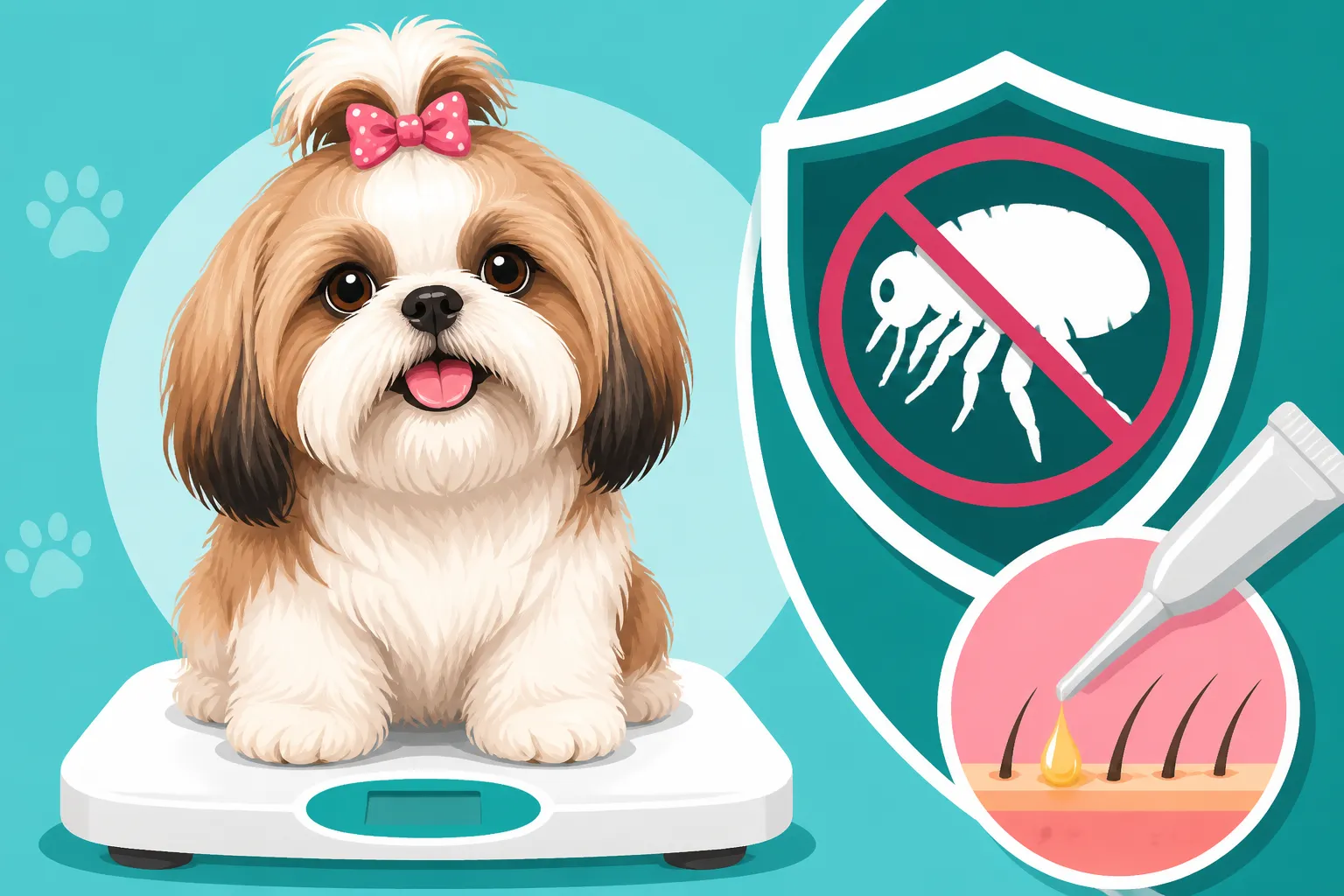
Dosing here is almost always strictly by weight band. You'll find products labeled for "dogs 2-10 lbs," "11-20 lbs," and so on. It's vital to select the exact weight range your Shih Tzu falls into. If your dog is, say, 10.5 lbs and the next dose up starts at 11 lbs, always consult your vet. Don't try to guess or apply half of a larger dose. Some brands, like those you might find on Chewy, offer a variety of weight-specific doses, but the principle remains the same: match the weight band precisely. A common frustration is the worry that your dog might lick the product, especially if they're particularly flexible or if you have multiple pets that groom each other. Always monitor your Shih Tzu after application until the spot is dry, and consider keeping them separated from other pets for a bit.
Oral Medications: The Weight-Based Chew
Oral flea prevention comes in various forms, primarily as tasty chews or small tablets. These are absorbed into your Shih Tzu's bloodstream, killing fleas when they bite your dog. Many owners prefer oral options because they eliminate the mess and concern of topical residue on furniture or being licked off.
Again, weight is everything. Oral preventatives come in very specific dosage strengths, often with narrower weight ranges than topicals. For example, a chew might be for "dogs 5.0-7.5 lbs" and another for "7.6-11.0 lbs." You cannot split these pills or chews unless explicitly directed by the manufacturer and your veterinarian, as the active ingredient might not be evenly distributed. For a picky Shih Tzu, getting them to eat a chew can be a challenge. Some chews are highly palatable, designed to be treated like a treat. If yours is a gourmet, you might need to hide it in a small piece of cheese or a dollop of peanut butter (ensure no xylitol!). It's critical that they consume the entire dose to be effective.
Collars and Shampoos: Different Considerations
Flea collars work by releasing chemicals that repel or kill fleas, either through direct contact with the fur or by being absorbed into the dog's skin and oils. While some newer, long-lasting collars can be effective, they often pose challenges for Shih Tzus. Their long, luxurious coat can interfere with the collar's ability to make proper skin contact, and the collar itself can cause matting or skin irritation underneath. Additionally, if not properly fitted, there's a risk of the collar being chewed on, which could lead to ingestion of chemicals. Shih Tzu Ear and Skin Infections Under the Coat highlights how sensitive their skin can be.
Flea shampoos are designed to kill fleas on contact, providing immediate relief during an active infestation. However, they are not a form of long-term prevention. The effect is temporary, lasting only until the next bath or exposure to fleas. For dosing, shampoos are less about weight and more about thorough application and contact time. You need to lather your Shih Tzu completely, ensuring the shampoo reaches the skin, and leave it on for the recommended time (usually 5-10 minutes) before rinsing. While useful for initial knockdown, they should always be used in conjunction with a lasting preventative.
| Prevention Type | Application Method | Primary Dosing Factor | Common Shih Tzu Specific Challenge |
|---|---|---|---|
| Topical Spot-On | Skin (shoulder blades) | Weight band | Getting product to skin through thick coat; risk of licking/grooming |
| Oral Chew/Tablet | Ingested by mouth | Exact weight band | Palatability; ensuring full dose consumed |
| Flea Collar | Around the neck | Neck size | Coat matting; skin irritation; chewing hazard |
| Flea Shampoo | Bathing | Thorough application | Temporary effect; ensuring full contact time |
Precision in Practice: Administering Flea Prevention Correctly
Now that you understand why weight and type matter so much, let's talk about the practical steps to ensure you're administering flea prevention correctly and safely for your Shih Tzu. This isn't a "set it and forget it" task; it requires diligence.
Weighing Your Shih Tzu Accurately
This might sound obvious, but having an accurate, up-to-date weight for your Shih Tzu is the absolute bedrock of proper dosing. Don't rely on an old vet record from months ago, especially if your dog is still growing or if you suspect any weight changes. A digital kitchen scale can be perfect for smaller Shih Tzus. Simply weigh yourself, then weigh yourself holding your Shih Tzu, and subtract the difference. Alternatively, your vet clinic or even some pet stores like Chewy will have scales you can use. Aim to weigh your Shih Tzu before each dose, especially if they are close to a weight threshold for a different dose. Even a pound or two can make a difference in moving from one weight band to another, potentially impacting the effectiveness or safety of the product. An accurate weight is also crucial for monitoring overall health, like preventing Shih Tzu Obesity on a Sixteen Pound Frame.
Reading Labels: Beyond the Box
Product labels are your primary source of information, but it's easy to overlook details in our busy lives. Don't just glance at the prominent "for small dogs" or "for dogs 5-10 lbs" graphic. Take a moment to read the fine print. Pay attention to:
- Specific weight ranges: Double-check if your Shih Tzu's exact weight falls within the specified range.
- Application instructions: For topicals, this includes where to apply (typically between shoulder blades) and whether to apply to more than one spot. For oral, it's about whether to give with or without food.
- Frequency: Is it monthly, every three months, or different?
- Warnings and precautions: This includes instructions regarding puppies (age and weight limits), pregnant or nursing dogs, and potential interactions with other medications.
- Storage: Proper storage ensures the product's efficacy.
Never assume. If there's any ambiguity, always err on the side of caution and consult a professional.
Consulting Your Veterinarian
Your veterinarian is your best resource for personalized advice on flea prevention. They know your Shih Tzu's medical history, any sensitivities, and the prevalence of fleas and ticks in your local area. They can recommend the most appropriate product, considering factors like:
- Your dog's age and health: Puppies need different considerations than senior Shih Tzus.
- Lifestyle: Does your Shih Tzu spend a lot of time outdoors, or are they primarily an indoor companion?
- Co-existing conditions: Certain health issues might preclude the use of particular medications.
- Other medications: To avoid adverse drug interactions.
Your vet can also demonstrate proper application techniques for topicals, ensuring the medication gets past that beautiful Brushing a Shih Tzu Double Coat Every Day and onto the skin. Don't hesitate to ask questions during your Vet Visit Frequency for a Shih Tzu Past Ten or regular check-ups; they are there to help ensure your Shih Tzu's well-being. They can also advise on comprehensive Shih Tzu Parasite Prevention at Low Weight, ensuring all bases are covered.
Spotting Trouble: What Happens When Dosing Misses the Mark
Even with the best intentions, mistakes can happen, or your Shih Tzu might simply react unexpectedly to a product. Knowing what to look for and what steps to take is crucial for their safety.
Signs of an Overdose
If you suspect your Shih Tzu has received too much flea prevention, act quickly. Symptoms can vary depending on the product, but common signs of an overdose include:
- Gastrointestinal upset: Vomiting, diarrhea, excessive drooling.
- Neurological signs: Tremors, muscle twitching, disorientation, seizures, hyperactivity, or extreme lethargy.
- Skin reactions (for topicals): Intense redness, swelling, burning sensation at the application site.
- Behavioral changes: Restlessness, anxiety, or unusual vocalizations.
If you observe any of these symptoms, especially after a recent application, immediately contact your veterinarian or an emergency animal hospital. Have the product packaging handy so you can provide them with the exact name of the product and the active ingredients. This information is vital for them to determine the best course of action. In some cases, having pet insurance like Healthy Paws can be a tremendous relief for unexpected emergency vet costs.
Signs of Ineffective Prevention
Conversely, if you've underdosed or the product simply isn't working, you'll still see evidence of fleas. This might include:
- Excessive scratching, licking, or biting: Your Shih Tzu might be constantly scratching, especially around the base of the tail, neck, and inner thighs. This can lead to A Shih Tzu Scratching Under a Full Coat and even hot spots.
- Flea dirt: Small black specks on your dog's skin or in their fur, which turn reddish-brown when wet (it's flea feces containing digested blood). A simple way to check is to comb your dog over a white paper towel.
- Live fleas: You might actually spot adult fleas crawling on your Shih Tzu, particularly on the belly or inner thighs.
- Skin irritation or infection: Persistent scratching can lead to red, inflamed skin, scabs, or even secondary bacterial or yeast infections, sometimes mistaken for Shih Tzu Skin Allergies and Hot Spots.
If you're seeing signs of fleas despite using a preventative, first review your dosing and application method. Was it applied correctly? Was the weight accurate? Is the product still within its expiration date? If everything seems correct, it's time to consult your vet. They can help identify if there's a resistance issue in your area, or if a different type or brand of preventative would be more effective for your Shih Tzu.
Emergency Steps
In case of a suspected overdose:
- Stay calm: Panicking won't help your dog.
- Contact your vet immediately: Or an emergency vet clinic. Don't wait to see if symptoms improve.
- Provide details: Tell them the product name, active ingredient, estimated dose given, your dog's weight, and the symptoms you're observing.
- Do NOT induce vomiting unless specifically instructed by a veterinarian, as some chemicals can cause further damage if vomited.
- For topical exposure: If directed, you may be asked to bathe your Shih Tzu with a mild dish soap to remove as much of the chemical from the skin as possible. Be gentle, especially around their face, as Shih Tzu Eye Proptosis, the Emergency Owners Miss is a real concern.
When it comes to the health of your tiny, precious Shih Tzu, precision in flea prevention is non-negotiable. By understanding the importance of accurate weighing, careful label reading, and regular veterinary consultation, you can protect your companion from parasites and potential medication reactions, allowing them to live a comfortable and itch-free life.
Disclaimer
This article is for general informational purposes only and does not constitute professional advice. Laws, prices and regulations vary by location and change over time. Consult a qualified professional for guidance on your specific situation.