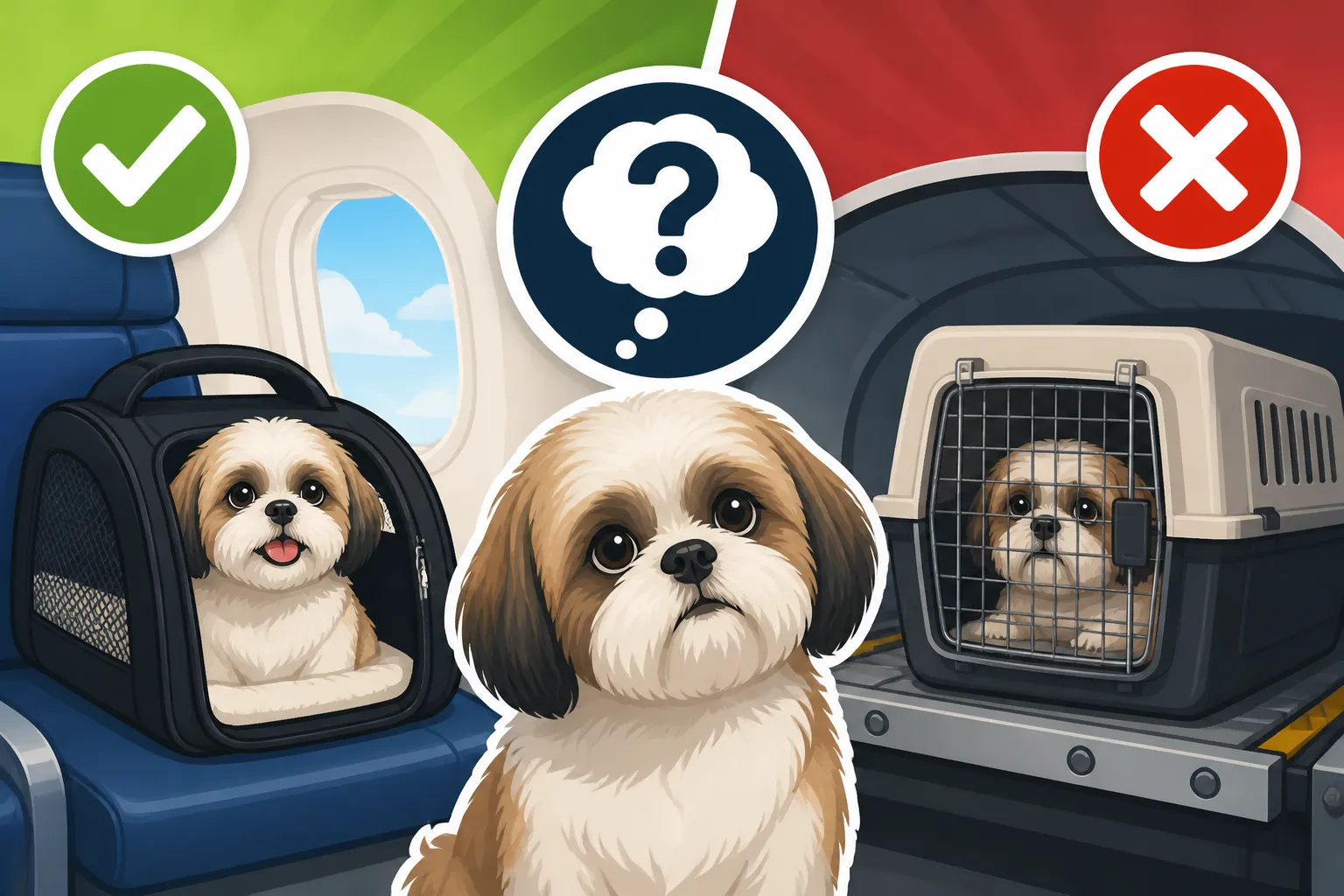
Whether a Shih Tzu Should Ever Fly in Cargo
One of the most agonizing decisions for any Shih Tzu parent is how to manage travel, especially when faced with the necessity of flying. You want your beloved companion with you, but the thought of them alone in the cargo hold can bring a knot to your stomach, and for good reason. This comprehensive guide is here to shed light on the serious risks associated with flying Shih Tzus in cargo and offer safer alternatives, helping you make the most informed decision for your furry family member's well-being.
Why Brachycephalic Breeds Face Extreme Risks in Cargo Holds
Let's be brutally honest: putting a Shih Tzu in the cargo hold of an airplane is a gamble that no responsible owner should take. It's not about being overly dramatic; it's about understanding the fundamental biological and physiological challenges inherent to brachycephalic (short-nosed) breeds like our sweet Shih Tzus. Their unique physical structure, while adorable, creates significant vulnerabilities, particularly in the stressful and often extreme environment of an aircraft's cargo area.
The Unique Anatomy of a Shih Tzu's Airway
A Shih Tzu’s characteristic flat face, while charming, comes with a set of anatomical quirks that directly impact their ability to breathe. Unlike dogs with longer snouts, Shih Tzus have what's known as brachycephalic airway syndrome. This isn't just a fancy vet term; it describes a collection of physical abnormalities that impede proper airflow. Their nostrils are often narrowed (stenotic nares), making it harder for air to enter. The soft palate at the back of their mouth can be too long (elongated soft palate), dangling into the airway and obstructing it, especially when they're stressed or trying to breathe heavily. Some may even have a hypoplastic trachea, meaning their windpipe is narrower than it should be, or everted laryngeal saccules, where tissue in the larynx flips into the airway. You can learn more about these specific challenges in our article on Brachycephalic Breathing in a Shih Tzu. The cumulative effect is like trying to breathe through a pinched straw, all the time.
Temperature Regulation Challenges
Compounding their breathing difficulties is the Shih Tzu's inherent struggle with regulating their body temperature, especially in heat. Dogs primarily cool themselves by panting, a process that involves rapid, shallow breathing to evaporate moisture from their tongues and respiratory tracts. For a Shih Tzu, whose airway is already compromised, this mechanism is far less efficient. Their short snouts mean less surface area for air to pass over and cool before reaching the lungs. They simply can't pant effectively enough to shed heat quickly. This makes them incredibly susceptible to overheating, a condition that can escalate rapidly into life-threatening heatstroke. Imagine being trapped in a warm, poorly ventilated space and struggling to catch your breath – that's a real scenario for a Shih Tzu in a cargo hold. This is a crucial point discussed in depth in Why a Shih Tzu Cannot Cool Itself Well.
Stress and Exacerbated Breathing Problems
The cargo hold is not a calm, quiet place. It's loud, full of unfamiliar smells, vibrations, and often isolated from human comfort. For a sensitive breed like the Shih Tzu, this environment can cause immense stress and anxiety. And here’s the critical link: stress directly exacerbates brachycephalic airway problems. When a Shih Tzu becomes anxious, their heart rate increases, they breathe faster, and their respiratory efforts intensify. This increased effort can cause already compromised tissues in their throat to swell, further obstructing their airway. It's a vicious cycle where stress leads to harder breathing, which leads to more swelling, more anxiety, and potentially, respiratory collapse. The very act of travel and confinement in cargo can trigger a crisis even in a Shih Tzu who appears healthy on the ground.
Airline Regulations and Restrictions on Brachycephalic Breeds
Because of these very real and severe risks, many airlines have implemented strict policies, or even outright bans, on transporting brachycephalic breeds like Shih Tzus in their cargo holds. These regulations are not arbitrary; they are born from tragic incidents where short-nosed dogs have suffered respiratory distress, heatstroke, or even death during air travel.
Major Airline Policies on Brachycephalics
If you've started looking into flying with your Shih Tzu, you've likely already encountered these restrictions. Many major airlines, including United Airlines, Delta Air Lines, and American Airlines, have specific embargoes on brachycephalic breeds for cargo travel. These policies might vary slightly, but the underlying message is clear: the risk is too high. Some airlines might make exceptions for certain service animals, but for a standard pet, cargo is typically off-limits. They understand that the combination of stress, varying temperatures, and the inherent breathing challenges of a Shih Tzu makes it an unsafe proposition.
Seasonal and Temperature Embargoes
Beyond breed-specific bans, airlines also impose widespread seasonal and temperature-related embargoes that heavily impact Shih Tzus. During periods of extreme heat or cold, airlines will refuse to transport any pet in cargo, regardless of breed, if temperatures at origin, destination, or connecting airports fall outside a safe range (typically 45-85°F or 7-29°C). For a Shih Tzu, even temperatures within this "safe" range can be problematic due to their poor heat regulation. A summer trip, even if it's "allowed" by temperature guidelines, could still be incredibly dangerous for a Shih Tzu who is already prone to Shih Tzu Exercise Intolerance in Summer. These embargoes are a blanket attempt to reduce risk, but they highlight just how sensitive the transport environment is for any animal, let alone one with inherent vulnerabilities.
Why Airlines Implement These Rules
Ultimately, airlines implement these rules for a combination of reasons: animal welfare, public relations, and legal liability. No airline wants to be responsible for the death or injury of a beloved pet, and the negative publicity from such incidents can be severe. These policies are a direct response to past tragedies and scientific understanding of brachycephalic physiology. While it might feel frustrating when you're trying to plan a trip, remember that these rules are in place to protect your pet, even if it limits your options. It's a stark acknowledgment that the risks of cargo travel for a Shih Tzu are simply too great to ignore.
The Risks Involved in Cargo Hold Travel for a Shih Tzu
Even if an airline were to hypothetically allow a Shih Tzu in cargo (which is increasingly rare), the environment itself poses a multitude of dangers that extend beyond just breathing problems. It's a complex, unpredictable space that is fundamentally not designed for the comfort or safety of a small, delicate companion animal.
Extreme Temperatures and Lack of Monitoring
As mentioned, Shih Tzus struggle immensely with temperature regulation. While cargo holds are pressurized, their temperature control can be far less precise than the passenger cabin. Fluctuations can occur due to changes in outside air temperature, delays on the tarmac, or issues with the aircraft's internal systems. A few degrees above ideal can quickly become life-threatening for a Shih Tzu in a crate, especially if they are already stressed. Unlike in the cabin where a flight attendant can check on a pet, there is no direct human monitoring of animals in the cargo hold during flight. Any signs of distress, heatstroke, or hypothermia would go unnoticed until the plane lands, at which point it might be too late. The vulnerability of a Shih Tzu in an uncontrolled temperature environment is a primary concern.
Air Pressure and Oxygen Levels
Although cargo holds are pressurized, the air pressure might still differ slightly from the passenger cabin, and oxygen levels can fluctuate. For a dog with a compromised airway, even minor changes in atmospheric conditions can trigger severe respiratory distress. Imagine someone already struggling with asthma being placed in an environment where the air suddenly feels thinner – that's the kind of physiological challenge a Shih Tzu could face. Their already inefficient breathing system might not be able to compensate for these subtle shifts, leading to hypoxia (lack of oxygen) and collapse. Considering the common Shih Tzu Anesthesia Risk From a Flat Face, which involves careful monitoring of oxygen levels, it highlights how sensitive their respiratory systems are to any form of stress or environmental change.
Noise, Vibration, and Psychological Stress
Beyond the physiological, the psychological toll on a Shih Tzu in cargo is immense. The cargo hold is a noisy place, filled with the roar of engines, the clunking of luggage, and the general cacophony of airport operations. The constant vibrations and unfamiliar sounds can be terrifying for a small dog who is used to the safety and quiet of a home environment. Confined in a crate, unable to see or interact with their owner, they experience profound isolation and fear. This psychological stress alone can trigger a cascade of physiological responses, including elevated heart rate, panting, and worsening of any underlying brachycephalic issues. A Shih Tzu is a companion animal, bred for centuries to be by human side; being separated and subjected to such a jarring experience is not just uncomfortable, it's potentially traumatic.
Risk of Injury or Loss
While rare, there's always a non-zero risk of mishandling, injury, or even loss of pets traveling in cargo. Crates can be damaged, animals can escape during transfer, or they can be exposed to extreme weather conditions during loading and unloading. Though airlines strive for careful handling, accidents can happen in the fast-paced, high-volume environment of an airport. The consequences for a small, vulnerable Shih Tzu can be severe, ranging from physical injury to permanent psychological scars, or tragically, not making it to the destination at all.
Alternatives to Cargo Travel for Your Shih Tzu
Given the overwhelming risks, it's clear that flying your Shih Tzu in cargo should be avoided at all costs. Thankfully, there are safer alternatives that prioritize your Shih Tzu's health and well-being.
In-Cabin Travel When Possible
For many Shih Tzus, the safest and most humane way to fly is in the cabin with you. Most airlines allow small pets that can fit comfortably in a carrier under the seat in front of you. This means your Shih Tzu is kept in a climate-controlled environment, close to you for comfort and monitoring. The carrier dimensions are usually strict, so you'll need to measure carefully. Many Shih Tzus fall within the weight and size limits for in-cabin travel, typically around 15-20 pounds including the carrier. Make sure to check airline-specific rules well in advance, as carrier types, fees, and breed restrictions can vary. You’ll want a soft-sided carrier that meets the airline's dimensions for under-seat storage, offering plenty of ventilation. Finding a suitable carrier is key, and our article on Shih Tzu Carriers for Cabin Travel can offer some great advice on what to look for.
Ground Transportation for Longer Journeys
When in-cabin travel isn't an option (perhaps your Shih Tzu is too large for the carrier limits, or you're traveling internationally with stricter rules), ground transportation is often the next best choice. While driving long distances can be a commitment, it allows you complete control over your Shih Tzu's environment. You can manage temperature, take frequent potty breaks, offer water and food, and provide comfort and reassurance. Many people opt for road trips, breaking up the journey with overnight stays in pet-friendly hotels. For those unable to drive, professional pet transport services offer door-to-door ground travel, often in climate-controlled vehicles with experienced handlers. These services prioritize animal welfare and can be a fantastic alternative for cross-country moves.
Staying Home or Finding Pet Sitters
Sometimes, the safest option for your Shih Tzu is not to travel at all. If your trip is relatively short, or if the travel options are too risky, consider leaving your Shih Tzu at home with a trusted pet sitter or boarding them at a reputable, pet-focused facility. A professional pet sitter can come to your home, maintaining your Shih Tzu's routine in their familiar environment. If boarding, choose a facility that is experienced with brachycephalic breeds, offers climate control, and provides plenty of human interaction and monitoring. This ensures your Shih Tzu stays comfortable, safe, and happy while you're away. Our article on Who Will Board a Flat-Faced Shih Tzu can guide you on finding the right kind of care. Always remember that a Shih Tzu, especially one with conditions like Shih Tzu Obesity on a Sixteen Pound Frame or a senior Shih Tzu whose The Senior Panel a Shih Tzu Needs at Ten might show emerging issues, benefits greatly from stability and familiar care.
Comparing Travel Options for Your Shih Tzu
To help you visualize the differences, here’s a quick comparison of the common travel options:
| Travel Option | Pros for a Shih Tzu | Cons for a Shih Tzu | Best Use Case |
|---|---|---|---|
| Cargo Hold | None (avoid at all costs) | Extreme risk of overheating, respiratory distress, stress, injury, or death; minimal monitoring; often prohibited by airlines | Never. |
| In-Cabin Flight | Close proximity to owner; climate-controlled; minimal stress (if well-prepared); direct monitoring possible | Strict size/weight limits; carrier requirements; limited availability; can still be stressful for anxious dogs | Small Shih Tzus meeting airline criteria for shorter flights. |
| Car Travel | Complete control over environment, stops, comfort; owner present; less stressful for many dogs | Time-consuming for long distances; requires pet-friendly accommodation; can be tedious for owner | Any distance within driving range, especially long trips. |
| Professional Ground Transport | Climate-controlled, handled by professionals; less stressful than cargo; door-to-door service | Can be expensive; dog is separated from owner for duration of trip; requires careful vetting of service | Cross-country moves or very long distances when driving isn't feasible. |
| Pet Sitter/Boarding | Dog remains in familiar environment (sitter) or supervised care; no travel stress at all; maintains routine | Separation from owner; cost; requires trusting caregiver; potential for stress in new boarding environment | Short trips, or when travel options are too risky. |
When planning any trip with your Shih Tzu, always consult your veterinarian first. They can assess your dog's individual health, especially considering potential issues like Renal Dysplasia and the Shih Tzu Kidney or Shih Tzu Dental Disease at 13 Percent of the Breed, and offer tailored advice. If you ever find yourself in a situation where you're worried about potential medical emergencies, a good pet insurance policy, like those offered by Healthy Paws, can certainly help mitigate some financial stress, especially with a breed prone to specific health issues. Even if you choose safer alternatives, having coverage from a provider like Healthy Paws can give you peace of mind that you're prepared for unexpected vet bills. Always prioritize your Shih Tzu’s safety and health above travel convenience.
Disclaimer
This article is intended for informational purposes only and does not constitute veterinary advice. Always consult with a qualified veterinarian regarding your Shih Tzu's specific health concerns and before making any decisions related to their travel or care.