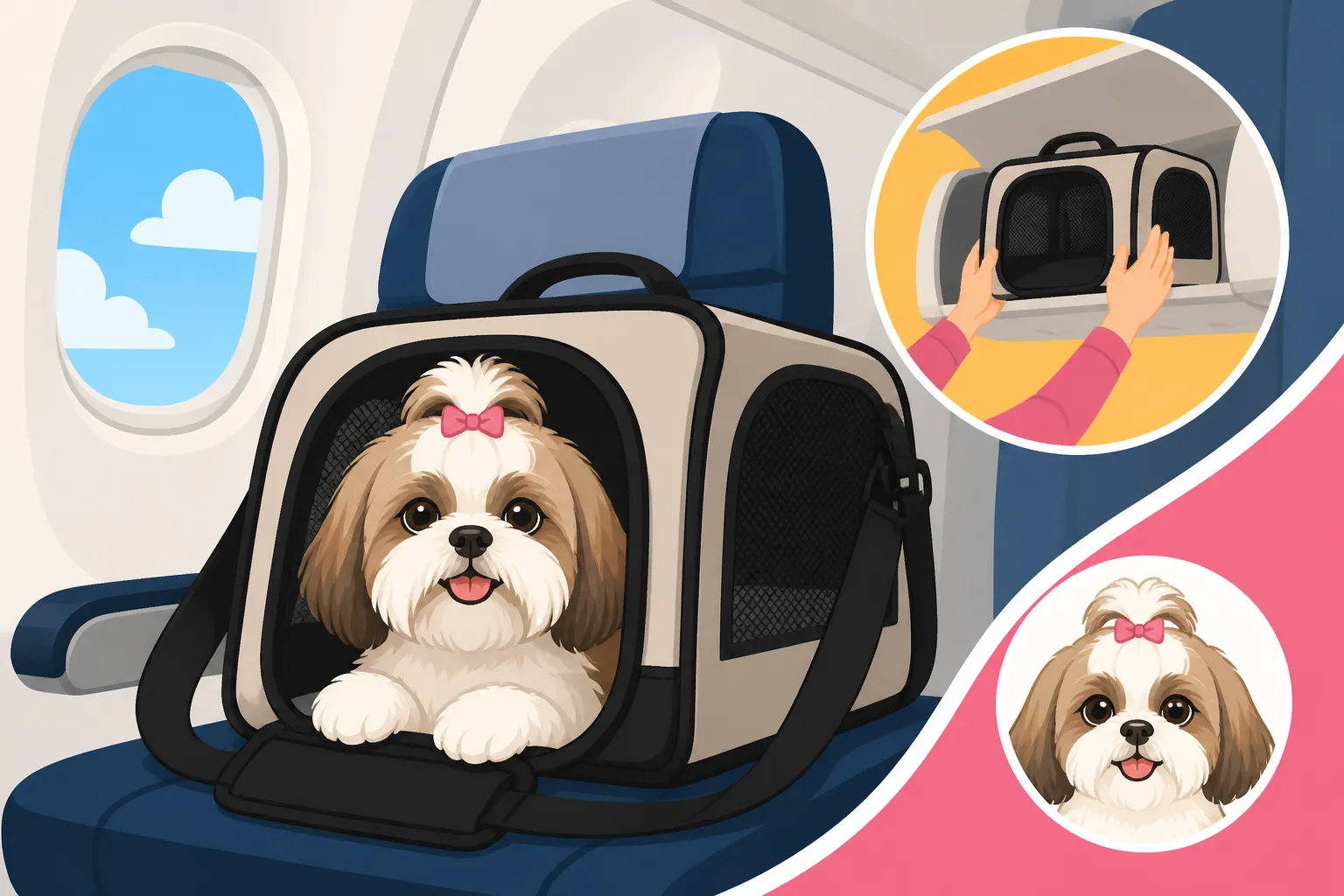
Shih Tzu Carriers for Cabin Travel
Traveling with your beloved Shih Tzu can be an absolute joy, but when it comes to flying in the airplane cabin, the process can feel like navigating a complex maze of rules, restrictions, and anxieties. Many Shih Tzu parents worry about their dog's comfort and safety, especially with their unique breathing needs, not to mention the stress of ensuring the carrier meets ever-changing airline requirements. This comprehensive guide is here to demystify the entire process, helping you choose the perfect carrier and prepare your little lion dog for a smooth and stress-free journey right by your side.
The Unique Challenges of Flying with a Shih Tzu in the Cabin
Bringing your Shih Tzu along on a flight might seem straightforward, but their distinct physical characteristics and emotional needs present particular considerations that other breeds might not face. It's not just about fitting them under the seat; it's about their well-being from check-in to touchdown.
Brachycephalic Breathing and Air Travel
One of the most significant concerns for Shih Tzu owners planning air travel is their breed's brachycephalic (short-nosed) anatomy. These adorable flat faces, while charming, come with a set of respiratory challenges. The compressed airways mean that even slight stress or changes in air pressure and temperature can make breathing difficult. Imagine trying to breathe through a pinched straw – that's often what it can feel like for a Shih Tzu when under pressure. This is why airlines often have stricter rules or even outright bans on brachycephalic breeds traveling in cargo, but even in the cabin, it warrants extra vigilance.
The cabin environment, though controlled, still has lower humidity and can be a source of anxiety, both of which can exacerbate breathing issues. If your Shih Tzu is prone to conditions like an Elongated Soft Palate in a Shih Tzu, they might experience increased snoring or reverse sneezing, which can be unsettling in a confined space. It's crucial to understand that their comfort is paramount, and any sign of struggle means you need to prioritize their safety. Even seemingly minor issues can escalate quickly, so early preparation and awareness are key. You might notice them exhibiting signs similar to Why a Shih Tzu Overheats So Easily even in a temperature-controlled cabin due to stress.
Understanding Airline Cabin Carrier Regulations
Every airline seems to have its own rulebook when it comes to pet travel, and keeping up can feel like a full-time job. The regulations usually cover the carrier's dimensions, construction, and sometimes even the type of pet permitted. Generally, the carrier must be small enough to fit under the seat in front of you, meaning it needs to be flexible enough to squish down slightly if needed, but sturdy enough to maintain its shape and protect your dog.
Most airlines specify maximum dimensions for length, width, and height. For example, a common maximum might be around 18" L x 11" W x 11" H, but this varies wildly. Some carriers, like Southwest or Delta, might have slightly different allowances, and international flights often have even stricter guidelines. It's not enough to measure your existing carrier; you need to check the exact requirements for each leg of your journey with your specific airline and aircraft type well in advance. These rules aren't just suggestions; they are strictly enforced at the gate, and you don't want to be caught off guard needing to buy a last-minute, non-compliant carrier or, worse, being denied boarding.
The Stress of Travel on a Small Dog
For a little Shih Tzu, air travel is a whirlwind of new sights, sounds, smells, and sensations. The bustling airport environment, the strange noises of the plane, the confinement in a carrier for hours – all of this can be incredibly stressful. Dogs, especially those with sensitive temperaments, can experience anxiety, which manifests in various ways, from whining and panting to trembling or even gastrointestinal upset.
It’s important to remember that your calm demeanor will go a long way in reassuring your furry companion. Building a positive association with the carrier long before the travel day is crucial. Think about how you approach Building Alone Time for a Shih Tzu – gradual exposure and positive reinforcement are your best friends here. The goal is to make the carrier a safe, familiar den, not a scary cage. Ignoring the potential for stress or assuming they'll "just get over it" can lead to a miserable experience for both of you.
Choosing the Right Carrier: Comfort, Safety, and Compliance
Selecting the right carrier is arguably the most critical step in preparing your Shih Tzu for cabin travel. It needs to be a comfortable, secure haven for your dog while simultaneously meeting the strict dimensional and structural requirements of the airline.
Key Features of an Airline-Approved Carrier
When you're sifting through carriers, beyond the size, several features are non-negotiable for an airline-approved model. Firstly, excellent ventilation is vital. Mesh windows or openings on at least three sides are usually required, allowing for ample airflow and ensuring your Shih Tzu doesn't overheat. Look for carriers with good quality, rip-resistant mesh.
Secondly, the carrier needs a waterproof bottom. Accidents happen, especially under stress, and you don't want any leaks. A removable, washable fleece pad inside provides comfort and absorbs minor spills. Thirdly, secure closures are a must. Zippers should be sturdy and ideally have a lockable feature or a way to prevent your dog from nudging them open. For added security, some carriers offer a small leash tether inside, which can be a lifesaver in an emergency, keeping your pup safely inside even if a door is accidentally unzipped. Finally, comfortable carrying handles and perhaps a shoulder strap are important for your own ease of transport through the airport. Many reliable options can be found on sites like Chewy, making it easy to compare features and read reviews before purchasing.
Soft-Sided vs. Hard-Sided Carriers for Cabin Travel
For in-cabin travel, soft-sided carriers are almost always the preferred and, in many cases, the only viable option. Their flexibility is key to fitting under the varied dimensions of airplane seats. A soft-sided carrier can often be gently compressed a few inches to slide into a tight spot, something a rigid hard-sided carrier simply cannot do.
Hard-sided carriers, while offering more protection from external impacts, are generally too bulky and inflexible for under-seat storage. They are typically reserved for cargo travel, which, as we discussed, is often not recommended or even allowed for brachycephalic breeds like Shih Tzus due to respiratory risks. The soft-sided carrier should still be robust enough to hold its shape and prevent your dog from being crushed, but its pliable nature is what makes it suitable for the cabin. Look for models with a sturdy frame or wire inserts that keep the top from collapsing onto your dog, even if the sides are soft.
Measuring Your Shih Tzu for the Perfect Fit
This is where many owners go wrong. The carrier must be large enough for your Shih Tzu to stand up, turn around, and lie down in a natural position. Not just crouch or squeeze, but truly stand and turn. To measure your dog, have them stand naturally, then measure their height from the top of their head to the ground. Add a couple of inches for comfort. Then, measure their length from the tip of their nose to the base of their tail. Again, add a few inches.
Compare these measurements to the internal dimensions of the carrier, not just the external ones listed. Remember, airline rules often state the carrier must accommodate these movements comfortably, so even if the exterior fits under the seat, if your dog is cramped inside, it won't be compliant, and more importantly, it won't be humane. An undersized carrier will add to your dog's stress and discomfort, potentially leading to anxiety and panting, which can be problematic given their Brachycephalic Breathing in a Shih Tzu.
Preparing Your Shih Tzu and Carrier for a Smooth Journey
Once you've got the perfect carrier, the real work of preparation begins. This isn't something you can rush in the days leading up to your flight; it requires patience and consistency.
Acclimating Your Shih Tzu to the Carrier
Start introducing your Shih Tzu to their new carrier weeks, if not months, before your travel date. Place the carrier in a common area of your home, with the door open. Make it inviting by putting in a cozy blanket, a favorite toy, and some high-value treats. You can even use a portion of their daily kibble from a brand like Ollie to make it an irresistible snack spot. Encourage them to explore it on their own terms.
Feed meals near or inside the carrier. Toss treats inside. Play gentle games around it. The goal is for them to associate the carrier with positive experiences. Gradually, begin closing the door for short periods while you're still in the room, rewarding calm behavior. Increase the duration slowly, eventually leaving them alone in the carrier for a few minutes at a time. Take them on short car rides in the carrier to simulate movement. This desensitization process is critical to minimizing stress during the actual journey. A dog that is comfortable and relaxed in its carrier is far less likely to exhibit signs of anxiety such as excessive A Shih Tzu Panting in the Vet Waiting Room when faced with the airport environment.
Packing the Carrier: Essentials for the Trip
Beyond your Shih Tzu, the carrier itself needs to be equipped with a few essentials to ensure comfort and address any needs during the flight.
Inside the Carrier:
- Absorbent Padding: A soft, absorbent pad (like a "pee pad" covered by a familiar blanket) at the bottom is crucial for hygiene and comfort.
- Familiar Scented Item: A small blanket or an old t-shirt with your scent can be incredibly reassuring for your Shih Tzu.
- Comfort Toy: A favorite, non-squeaky toy can provide distraction and comfort.
- Small Water Dish: A collapsible or clip-on bowl is ideal for offering water during layovers or if permitted during the flight.
Attached to the Carrier:
- "Live Animal" Label: Most airlines require a "Live Animal" sticker, often provided by the airline or available at pet supply stores.
- Identification: Securely attach a tag with your contact information, destination address, and your dog's name. Include a photo of your Shih Tzu.
- Emergency Contact: Consider adding a card with emergency contact details for yourself and your vet.
- Small Bag of Food: A small, sealed bag of your Shih Tzu's regular food (like a pre-portioned pack from Ollie) is useful in case of delays.
Remember to keep medication, extra wipes, and additional comfort items in your carry-on luggage for easy access.
Pre-Flight Veterinary Checks and Documentation
Before any flight, schedule a visit with your veterinarian. This is non-negotiable. Your vet can assess your Shih Tzu's overall health, particularly focusing on their respiratory system, given the breed's brachycephalic nature. They can confirm your dog is fit for air travel. Many airlines require a health certificate issued by a licensed veterinarian within a specific timeframe (usually 10 days) prior to travel. This certificate confirms your Shih Tzu is healthy enough to fly and up-to-date on all required vaccinations, especially rabies.
Discuss any concerns you have about anxiety with your vet. While some owners consider sedation, it's generally not recommended for brachycephalic breeds due to the potential for respiratory compromise at altitude. Sedatives can lower blood pressure and affect breathing, which is already a concern for Shih Tzus. Your vet might suggest alternative calming aids or techniques. Ensure all your Shih Tzu's Shih Tzu Vaccination and Toy Breed Reactions records are accessible and up-to-date, as this will be part of the documentation needed. This vet visit is also a good opportunity to discuss how to react if you notice signs of distress, similar to knowing What to Do in the First Minutes of a Proptosis for an eye emergency.
On Travel Day: Tips for a Stress-Free Experience
The big day has arrived! With all your careful preparation, you're ready to make the airport and flight as smooth as possible for your Shih Tzu.
Airport Security and Your Shih Tzu
Navigating TSA or airport security with a pet requires a specific approach. When you reach the security checkpoint, you will need to remove your Shih Tzu from their carrier. The carrier will go through the X-ray machine like any other bag. Your Shih Tzu will be carried through the metal detector in your arms. This can be a high-stress moment for both of you.
Practice being held close and calmly walking through busy areas at home. Keep your Shih Tzu on a secure harness and leash (not just a collar, which can put pressure on their delicate trachea) during this process. Some owners even use a small, lightweight sling or "hug shirt" to keep their dog close and feeling secure while their hands are busy with bags. After passing through, immediately return your Shih Tzu to their carrier in a quiet spot away from the main flow of traffic. This minimizes their exposure to the overwhelming sounds and smells of the security area.
Managing Your Shih Tzu During the Flight
Once you're on the plane and settled in your seat, the carrier goes under the seat in front of you. It must remain there for the duration of the flight, with your Shih Tzu inside. You cannot take your dog out of the carrier at any point during the flight. This rule is strictly enforced by flight attendants for safety reasons.
During the flight, periodically check on your Shih Tzu by gently unzipping a small portion of the mesh at the top or side of the carrier to peek in and reassure them with a soft voice. Offer water if permitted and if they seem receptive, but don't force it. The lower humidity in the cabin can contribute to dehydration, so hydration is important when possible. Keep a close eye on any signs of distress like excessive panting, drooling, or restlessness. If you've opted for pet insurance like Healthy Paws, it's good to know you have coverage for potential vet needs that might arise from travel stress, though hopefully, you won't need it.
Potty Breaks and Hydration Considerations
Before you even get to the airport, make sure your Shih Tzu has had a good opportunity to relieve themselves. Airport pet relief areas are often available both inside and outside security. Locate these in advance using the airport's website or app. Give them plenty of time at these spots before boarding.
During layovers, if you have sufficient time, take your Shih Tzu to a pet relief area to stretch their legs and potty. If the layover is short or you cannot leave the secure area, you might need to rely on the absorbent pad in their carrier. For hydration, offer small amounts of water frequently during layovers. If your Shih Tzu isn't typically a big drinker, you might try moistening their lips with a finger dipped in water. Avoid giving them too much water right before boarding to minimize the chance of accidents. Remember, their small bladders mean frequent opportunities are best.
By following these detailed steps, you can help ensure your Shih Tzu's cabin travel experience is as comfortable and stress-free as possible, allowing you to enjoy your journey together without unnecessary worry.
Airline Pet Carrier Size and Feature Comparison
Here's a generalized table comparing common airline requirements and useful carrier features. Always double-check with your specific airline and aircraft type, as rules frequently change.
| Feature / Airline | Common Requirement | Example Carrier Feature | Ideal for Shih Tzus? |
|---|---|---|---|
| Max Dimensions (L x W x H) | Varies widely, e.g., 18"x11"x11" to 20"x12"x12" | Flexible sides, slightly compressible top | Crucial |
| Pet Movement Inside | Must stand, turn, lie down comfortably | Generous internal space for breed size | Absolutely |
| Ventilation | Mesh windows on at least 2-3 sides | Durable, tear-resistant mesh on 3+ sides and top | Essential |
| Leak-Proof Bottom | Required | Waterproof base with removable, washable padding | Critical |
| Secure Closures | Zippers that can't be easily opened by pet | Self-locking zippers or clips; interior leash tether | Very Important |
| Weight Limit (Pet+Carrier) | Varies, often 15-25 lbs (6.8-11.3 kg) | Lightweight carrier construction | Good to check |
| Material | Soft-sided generally preferred for cabin | Durable nylon or polyester fabric | Preferred |
| External ID/Label | "Live Animal" sticker, contact info | Dedicated ID sleeve/pocket, space for tags | Required |
Disclaimer
The information provided in this guide is for general informational purposes only and should not be considered a substitute for professional veterinary advice or current airline regulations. Always consult with your veterinarian before making any travel plans for your Shih Tzu, and verify all pet travel policies directly with your chosen airline, as rules and requirements are subject to change without notice.