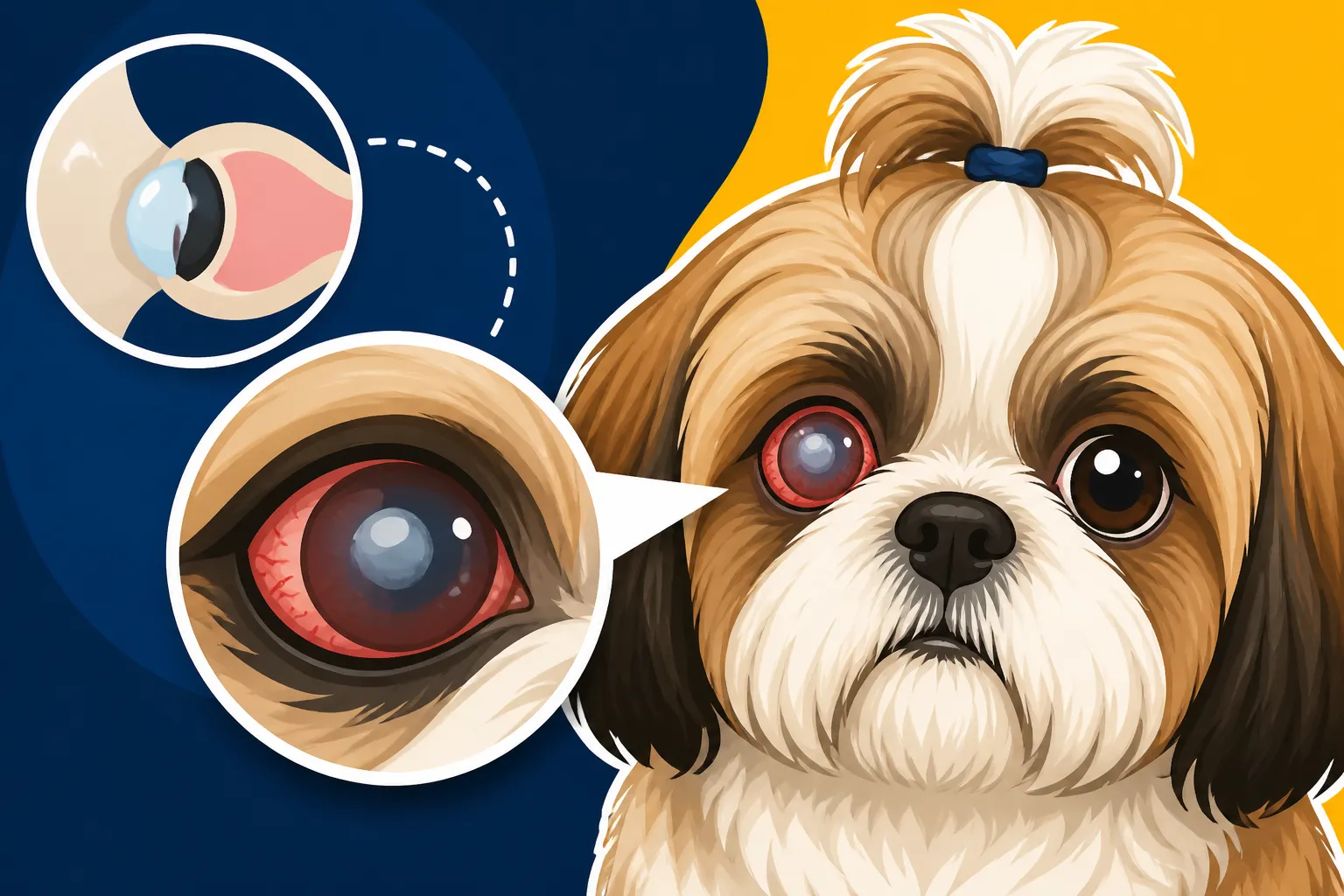
Shih Tzu Corneal Ulcers From a Shallow Socket
It’s a heartbreaking sight for any Shih Tzu parent: your adorable, big-eyed companion suddenly squinting, pawing at their face, or worse, showing a cloudy, painful eye. Those charming, prominent eyes, so central to the Shih Tzu's appeal, are also their Achilles' heel, particularly susceptible to corneal ulcers due to their unique, shallow eye sockets. This comprehensive guide is here to walk you through understanding why this happens, how to recognize the often subtle signs of an ulcer, what urgent steps to take, and how best to prevent these painful occurrences to keep your furry friend comfortable and healthy.
The Unique Vulnerability of Shih Tzu Eyes
If you own a Shih Tzu, you already know they're not built like other dogs. Their endearing flat faces and big, beautiful eyes are characteristic, but they also come with a specific set of anatomical challenges. These features, while undeniably cute, mean their eyes are inherently more exposed and less protected than those of breeds with deeper eye sockets and longer muzzles.
Anatomy of a Shallow Eye Socket and Prominent Eyes
The term "brachycephalic" refers to breeds like the Shih Tzu, with their shortened skull, flattened face, and pushed-in nose. This unique facial structure significantly impacts their eye anatomy. Unlike dogs with longer snouts where the eyes are set deeper within a protective bony orbit, a Shih Tzu's eyes are prominent, often appearing to bulge slightly. This isn't just a cosmetic trait; it means the eye sits in a remarkably shallow socket, offering minimal surrounding bone structure to shield it from trauma. Think of it like a precious jewel set too close to the surface – it's just asking for trouble.
This lack of protection makes the cornea – the clear, outermost layer of the eye – extremely vulnerable. Every bump, every stray branch, every playful swipe from another pet, or even just running too close to furniture, can become a potential source of direct injury. Because the eye protrudes more, it's the first point of contact for many external hazards. It's a constant concern for owners, feeling like you have to shield your precious pup from everything.
The Role of Eyelids and Tear Film in Protection
Beyond the shallow socket, the eyelids themselves sometimes struggle to provide adequate coverage for a Shih Tzu's prominent eyes. In some cases, due to the shape of their skull and eye placement, the eyelids might not fully close, or they might not blink as completely as they should. This can lead to a condition known as exposure keratitis, where parts of the cornea are constantly exposed to air, drying out and becoming irritated. Imagine trying to keep your own eyes moist if your eyelids didn't quite meet – it would be incredibly uncomfortable and lead to problems quickly.
The tear film, a thin layer of tears that coats the eye, is another critical protective barrier. It keeps the eye lubricated, washes away debris, and contains antibacterial properties. However, in Shih Tzus, the tear film can be less effective due to issues like dry eye (keratoconjunctivitis sicca or KCS). When the eye doesn't produce enough quality tears, the cornea loses its natural lubrication and defense, making it much easier for minor irritations to escalate into full-blown corneal ulcers. It’s a bit of a vicious cycle: the shallow socket exposes the eye, and if the tear film isn't doing its job, that exposure becomes even more damaging. Understanding Shih Tzu Corneal Ulcers and Dry Eye is absolutely crucial for any owner.
Recognizing the Signs of a Corneal Ulcer
Detecting a corneal ulcer early can make a huge difference in your Shih Tzu's comfort and recovery. These aren't always glaringly obvious, especially in the initial stages, and it's easy to dismiss subtle signs as just a bit of irritation or a teary eye. But because of the breed's predisposition, it's vital to be vigilant.
Subtle Early Symptoms You Might Miss
Sometimes, the first indications of a corneal ulcer are incredibly subtle, and you might not even realize something serious is brewing. Your Shih Tzu might start squinting ever so slightly, or perhaps blink more frequently than usual. They might rub their face against furniture or your leg more often, or paw at their eye with a front paw. You might notice an increase in tearing, a watery discharge, or even a slight redness in the white part of the eye. The eye might appear a little cloudy, or they might seem sensitive to bright light.
These initial signs can be fleeting and easy to overlook, especially if your Shih Tzu is otherwise acting normally. It's not always a dramatic event where the eye suddenly looks terrible. However, given their vulnerability, any consistent or worsening eye discomfort should raise a red flag. A good habit is to gently check your Shih Tzu’s eyes daily as part of your routine cuddles or grooming. Pay close attention if you notice A Shih Tzu Squinting With One Eye for more than a few hours, as this is often the most common early indicator of a problem.
What a Visible Ulcer Looks Like
As a corneal ulcer progresses, the signs become more apparent and often more distressing. You might start to see a distinct cloudy spot on the surface of the eye, which can range in color from a hazy grey to a noticeable white or even yellow if infection is present. In more severe cases, you might literally see a divot or indentation on the surface of the cornea, indicating tissue loss. Sometimes, you'll observe visible blood vessels "creeping" into the cornea from the edges, a sign the body is trying to heal the damage.
The pain associated with a visible ulcer is usually undeniable. Your Shih Tzu might keep the affected eye tightly shut, refuse to let you touch their face, become withdrawn, or show general signs of discomfort. They may avoid light, their appetite might decrease, and their normal playful demeanor could diminish. If you see these more advanced signs, it's clear something is seriously wrong, and immediate veterinary attention is paramount. The progression from a minor abrasion to a deep, painful ulcer can happen surprisingly quickly in a Shih Tzu due to their anatomical challenges.
Immediate Action and Veterinary Treatment
Spotting an eye problem in your Shih Tzu requires swift and decisive action. A corneal ulcer is not something to "wait and see" about; delays can lead to far more serious complications, including vision loss or even the loss of the eye itself.
First Steps When You Suspect an Ulcer
The moment you suspect your Shih Tzu has a corneal ulcer, your absolute first step is to contact your veterinarian immediately. Do not attempt to self-diagnose or treat with over-the-counter human eye drops, which can be harmful. Avoid rubbing or allowing your dog to rub their eye, as this can worsen the damage or introduce infection. If possible, gently prevent them from rubbing by using a soft E-collar if you have one on hand, but don't delay getting to the vet.
It's tempting to think it's just a minor irritation, but for a Shih Tzu, even a tiny scratch can rapidly turn into a deep, infected ulcer because of their breed-specific vulnerabilities. An untreated ulcer can perforate the eye, leading to irreversible damage, and potentially necessitating an emergency visit. This is precisely why having a robust pet insurance plan like Healthy Paws can be a lifesaver, covering unexpected emergency costs when time is of the essence. You never want to be in a position where you have to choose between your pet's well-being and your wallet. Shih Tzu Eye Proptosis, the Emergency Owners Miss and Shih Tzu Eye Removal Cost are extreme, but real, possibilities if an ulcer is neglected.
Diagnostic Tests and Treatment Options
When you get to the vet, they'll perform a thorough ophthalmic exam. The most common diagnostic tool for corneal ulcers is the fluorescein stain test. This involves applying a special orange dye to the eye. Healthy corneal tissue repels the dye, but any area where the outer layer of the cornea (epithelium) is damaged will absorb the stain, turning a bright green under a blue light. This quickly confirms the presence, size, and depth of the ulcer. The vet will also check for foreign bodies, measure tear production, and assess for other underlying conditions.
Treatment typically involves a multi-pronged approach:
- Antibiotic Eye Drops or Ointment: To prevent or treat bacterial infection, which is a common complication of ulcers. These often need to be applied multiple times a day.
- Pain Medication: Oral pain relievers and/or atropine eye drops (which dilate the pupil to relieve painful muscle spasms) are often prescribed to keep your Shih Tzu comfortable.
- Serum Drops: Sometimes, your vet may ask you to use your dog's own blood serum as eye drops, as it contains growth factors that can help heal the cornea.
- E-Collar: To prevent your Shih Tzu from rubbing or scratching the eye, which could reopen the ulcer or make it worse. This is a non-negotiable part of healing.
For deep ulcers or those that aren't healing with standard medical therapy (known as "indolent ulcers"), surgical interventions may be necessary. These can include a grid keratotomy (gently scratching the surface to encourage healing), a debridement (removing loose unhealthy tissue), or a conjunctival flap surgery, where a piece of the conjunctiva (the pink tissue lining the eyelid) is surgically attached over the ulcer to provide blood supply and protection. The cost and recovery from these procedures can be significant, reinforcing the value of pet insurance in mitigating the financial strain.
Preventing Future Ulcers and Long-Term Care
While some corneal ulcers are simply freak accidents, many can be prevented or managed through diligent care and proactive measures, especially given your Shih Tzu's predisposed anatomy.
Environmental Management and Daily Eye Care
Taking a close look at your home environment can make a big difference. Try to minimize potential hazards that could poke your Shih Tzu's eyes. This means being mindful of low-hanging branches in your yard, sharp corners on furniture, or even aggressive play with other dogs or toys that could result in eye trauma. Keep them on a leash in unfamiliar outdoor areas where hidden dangers might exist.
Daily grooming is also incredibly important. The long hair around a Shih Tzu's face can easily irritate the eyes, collecting debris and increasing the risk of scratches. Regular face trims, either at home or by a professional groomer, are essential to keep hair out of their eyes. This often involves tying a topknot or getting a frequent "puppy cut." Read more about Trimming Face Hair Away From Shih Tzu Eyes to keep your dog comfortable and safe. Additionally, gently wiping your Shih Tzu's eyes twice daily with a soft, damp cloth or veterinary-approved eye wipes can remove any dust, dander, or irritants before they cause problems. If you have a Shih Tzu prone to tear staining, regularly cleaning the area also helps prevent skin irritation that could affect the eye.
Addressing Underlying Issues and Regular Check-ups
Prevention also means being proactive about any underlying eye conditions your Shih Tzu might have. If your dog suffers from dry eye, consistent, lifelong treatment with prescribed eye drops (like cyclosporine or tacrolimus) is critical. These medications help stimulate tear production, ensuring the eye has its natural protective barrier. Ignoring dry eye can leave the cornea chronically vulnerable to ulcers. Many owners find that Dry Eye in a Shih Tzu and Lifelong Drops becomes a regular, but manageable, part of their daily routine.
Another common issue is eyelid abnormalities. Conditions like entropion (eyelids rolling inward) or ectropion (eyelids rolling outward) can cause eyelashes or hair to rub against the cornea, leading to chronic irritation and ulcers. Sometimes, surgical correction is necessary to address these structural issues. You can learn more about these concerns in Shih Tzu Eyelash and Eyelid Problems. Regular veterinary check-ups are paramount for identifying these problems early. Your vet can spot subtle signs you might miss, such as changes in tear production or minor eyelid issues, before they escalate. It's an investment in your Shih Tzu's long-term health and can save you from costly emergency treatments down the road. Pet insurance, such as plans from Healthy Paws, can also be invaluable for covering ongoing treatments for chronic conditions or unforeseen surgeries related to your Shih Tzu's unique eye health needs, allowing you to focus on their care rather than the bill. The breed faces a higher risk for several eye issues, so understanding Brachycephalic Ocular Syndrome in a Shih Tzu is highly recommended for all owners.
Understanding the Difference: Irritation vs. Ulcer
It can be tough for owners to distinguish between a simple eye irritation and something more serious like a corneal ulcer. While only a vet can definitively diagnose an ulcer, knowing the key differences in symptoms can help you decide when to seek immediate care.
Here’s a quick guide to help you differentiate:
| Symptom / Condition | Mild Irritation (e.g., dust, stray hair) | Corneal Ulcer (superficial or deep) |
|---|---|---|
| Onset | Often sudden, may resolve quickly once irritant is removed. | Can be sudden (trauma) or gradual (dry eye, chronic irritation). |
| Squinting/Blinking | Mild to moderate, intermittent. | Moderate to severe, persistent, often keeps eye partially or fully closed. |
| Redness | Mild, usually diffuse. | Moderate to severe, often more concentrated around the cornea. |
| Discharge | Clear and watery, may be slightly increased. | Watery, mucoid, or thick/purulent (yellow/green) if infected. |
| Cloudiness on Cornea | Generally absent, or very faint haze that clears quickly. | Often present, distinct cloudy spot, divot, or white/grey opacity. |
| Pain Level | Mild discomfort, easily distracted. | Obvious pain, sensitive to touch, may vocalize, withdrawn, avoids light. |
| Rubbing/Pawng | Occasional, intermittent. | Frequent, persistent, attempts to rub eye or face on surfaces. |
| Vision Impact | Generally none. | May be impaired, dog might bump into things on affected side. |
| Behavioral Changes | Minimal or none beyond localized irritation. | Noticeable changes: lethargy, loss of appetite, irritability due to pain. |
Remember, if you are ever in doubt, it is always safer to consult your veterinarian. Their expertise and diagnostic tools are essential for protecting your Shih Tzu's precious eyesight. Prompt veterinary attention is the best course of action.
Disclaimer
The information provided in this article is for general informational purposes only and is not a substitute for professional veterinary advice. Always consult with a qualified veterinarian for any health concerns or before making any decisions related to your pet's care.