Shih Tzu Nail Trimming and Paw Hair
One of the often-overlooked aspects of caring for our beloved Shih Tzus is the condition of their paws and nails. Many owners struggle with nails that seem to grow endlessly or with matted hair between the paw pads, leading to discomfort and potential health issues for their little lion dog. This guide will walk you through everything you need to know about keeping your Shih Tzu's paws healthy, from precise nail trimming techniques to managing that unruly paw hair, ensuring your furry friend can walk, run, and play without a hitch.
Why Paw Care is Crucial for Shih Tzus
It might seem like a small detail in the grand scheme of Shih Tzu care, but healthy paws and properly trimmed nails are absolutely fundamental to your dog's overall well-being. Neglecting this area can lead to a cascade of problems that impact their comfort, mobility, and even their posture. It's not just about looking neat; it's about preventing pain and long-term health complications.
Importance of Nail Length: Impact on Posture, Pain, and Joint Issues
Think about how uncomfortable it would be if you had to walk around with shoes that were constantly too tight, pushing your toes back. That's essentially what overgrown nails do to your Shih Tzu's paws. When nails get too long, they hit the ground first when your dog walks. This pressure forces the paw to splay, putting unnatural stress on the toe joints. Over time, this can lead to painful arthritis in the toes and even affect the alignment of their legs and spine. Your Shih Tzu might start shifting their weight, walking on the sides of their paws, or trying to relieve the pressure by adopting an awkward gait. This compensatory movement can exacerbate existing conditions like Shih Tzu Joint Problems in a Toy Frame or even contribute to new ones. A perpetually off-kilter posture is a huge concern for a breed already prone to orthopedic sensitivities.
Moreover, excessively long nails can curve back into the paw pad, causing painful punctures and inviting infections. Imagine the agony of an ingrown toenail, but on all four paws. This can make walking unbearable, turning even a short stroll into an ordeal. Dogs instinctively try to avoid pain, so they might become reluctant to walk, jump, or play, which can then lead to other issues like weight gain or reduced muscle tone. It's a vicious cycle that all starts with nails that are just a little too long. Regular, proper trimming alleviates this pressure, allowing their paws to function as nature intended, promoting comfortable movement and healthy joint alignment.
The Danger of Matted Paw Hair: Slipping, Infections, and Discomfort
Shih Tzus are renowned for their luxurious double coats, and this hair doesn't stop at their legs; it grows vigorously between their paw pads and around their feet. While it looks cute, if left untrimmed, this hair can quickly become matted. Mats between the paw pads act like tiny sponges, trapping moisture, dirt, debris, and even parasites. This damp, dirty environment is a breeding ground for bacteria and yeast, leading to itchy, painful skin infections that can be stubborn to clear up. You might notice your Shih Tzu licking their paws obsessively or even developing Sores a Shih Tzu Chews Into Its Own Own Skin as they try to alleviate the irritation.
Beyond infections, matted paw hair severely impacts their traction. Imagine trying to walk on a hardwood floor with fluffy slippers on – it's slippery and unstable. For a Shih Tzu, this means they can easily lose their footing, especially on smooth surfaces like tile or laminate, leading to slips, falls, and potential injuries. This is a real concern, especially if your Shih Tzu has a long back that is susceptible to issues like Shih Tzu Disc Disease and Sudden Back Pain. Preventing these slips by keeping paw hair trimmed is a simple yet effective preventative measure. The accumulation of hair also makes it harder for their paws to breathe and can cause them to overheat in warm weather, as paws are one of the ways dogs regulate their body temperature. Untrimmed paw hair simply makes life unnecessarily difficult for your precious companion.
Understanding Shih Tzu Nails
Before you pick up the clippers, it's really helpful to understand what you're actually cutting. Shih Tzu nails, like those of all dogs, aren't just dead keratin; they're living structures with sensitive parts. Knowing this will help you approach trimming with confidence and minimize the risk of causing pain.
The Anatomy of a Shih Tzu Nail: Quick, Nail Bed, Black Nails
Each of your Shih Tzu's nails has a blood vessel and a nerve ending running through it, which is collectively known as the "quick." This quick is a highly sensitive part of the nail, and cutting into it is painful for your dog and can cause bleeding. In dogs with clear or light-colored nails, the quick is usually visible as a pinkish area within the nail. This makes it easier to know where to stop clipping, aiming to trim just before the quick begins.
However, many Shih Tzus have black or dark-colored nails, which makes spotting the quick a real challenge. This is where many owners get nervous, and understandably so! When dealing with dark nails, you'll need to trim in small increments, looking at the cut surface. As you clip, you'll see a small, lighter-colored dot appear in the center of the nail, often grayish or white. This indicates you're getting close to the quick. Once you see a tiny, dark, shiny dot at the center of that lighter circle, you're at the very tip of the quick, and that's your cue to stop. Any further, and you risk hitting it. This is why patience and tiny snips are key. Over time, with consistent trimming, the quick will recede further back into the nail, allowing you to trim them shorter without discomfort.
How Often to Trim: Growth Rate and Activity Levels
The frequency of nail trimming can vary quite a bit from one Shih Tzu to another, influenced by their individual nail growth rate and their daily activities. Generally, most Shih Tzus need their nails trimmed every 2 to 4 weeks. If you can hear their nails clicking on hard floors when they walk, they are definitely too long and it's past due for a trim.
Shih Tzus, being a low-energy toy breed, often get less natural wear on their nails compared to larger, more active dogs who might spend hours running on pavement or rough terrain. A Shih Tzu might prefer Shih Tzu Exercise for a Low-Energy Toy indoors or on softer surfaces, which means their nails won't wear down naturally as much. This is why regular trimming is so vital. Dogs that get more walks on concrete might need less frequent trims, while those who spend most of their time indoors or on carpet will likely need more consistent attention to their nails. Establishing a regular routine, perhaps every two weeks, is a good starting point. You can then adjust based on how quickly their nails seem to be growing and how much natural wear they get. Consistency helps keep the quick recessed, making future trims easier and less stressful for everyone involved.
Essential Tools for Shih Tzu Paw Care
Having the right tools can make all the difference between a stressful, awkward experience and a relatively smooth, safe one. Don't skimp on quality when it comes to grooming tools, especially for something as important as nail and paw care. Good tools are safer, more effective, and make the job much easier for you and your Shih Tzu. You can often find a great selection of these on sites like Chewy or Amazon.
Choosing the Right Nail Clippers: Scissor-Style vs. Guillotine, Size
When it comes to nail clippers, you'll generally encounter two main types: scissor-style and guillotine-style. For Shih Tzus, especially given their smaller nail size, scissor-style clippers are often recommended. They offer more control and a clearer view of the nail as you cut, reducing the risk of accidentally cutting too far. Brands like Millers Forge or Safari often produce excellent quality scissor-style clippers that are sharp and durable.
Guillotine clippers, while effective for some dogs, can sometimes pinch the nail if not used perfectly, and they might obscure your view of the quick, particularly with smaller nails. The key is to choose a size that fits comfortably in your hand and is appropriate for your Shih Tzu's nails. Clippers that are too large can be clumsy and intimidating, while those that are too small might not cut effectively. Always opt for sharp clippers; dull blades can crush the nail rather than cutting cleanly, which can be painful and lead to splintering. Replace your clippers when they start to feel dull, just as you would any other sharp tool.
Other Useful Tools: Grinders, Styptic Powder, Paw Balms, Trimmers for Hair
Beyond clippers, a few other items will make your Shih Tzu's paw care routine complete and safer.
- Nail Grinder (Dremel-style tool): Many owners prefer a rotary tool or nail grinder over clippers, especially if their Shih Tzu has dark nails or is sensitive to the clipping sensation. Grinders slowly file the nail down, giving you precise control and allowing you to gradually approach the quick. They also leave a smooth edge, which can be nicer for you and your floors! If you introduce it slowly and positively, many dogs tolerate grinders very well. Just remember to Desensitising a Shih Tzu to Clippers and Dryers carefully.
- Styptic Powder: This is a non-negotiable item for any dog owner trimming nails. Accidents happen, especially when you're learning or dealing with squirmy dogs. If you accidentally cut the quick, styptic powder (like Kwik Stop) will quickly stop the bleeding. It's an essential safety net and should always be within reach before you start trimming.
- High-Value Treats: Seriously, treats are tools! Positive reinforcement is crucial for making paw care a positive experience. Keep a stash of really delicious, small treats (maybe even some freeze-dried salmon or bits of cheese) nearby. Offering these before, during, and after each successful step helps build a positive association. Brands like Ollie often have high-quality, irresistible options that can work wonders for motivation.
- Small, Blunt-Nosed Scissors or Electric Trimmers: For the hair between the paw pads and around the feet, you'll need specialized tools. Small, blunt-nosed grooming scissors are excellent for carefully trimming hair in sensitive areas, as the blunt tips prevent accidental pokes. Alternatively, a small, quiet electric trimmer (often called a "paw trimmer" or "face trimmer") with a narrow blade can be incredibly effective and safer for quickly clearing out dense paw hair without the risk of scissoring skin.
- Paw Balm: After trimming, especially if your Shih Tzu walks on rough surfaces or experiences dry paws, a paw balm can be a great addition to their routine. It helps moisturize and protect their delicate paw pads.
Having this toolkit ready makes the process less daunting and ensures you're prepared for any eventuality. You can often find comprehensive grooming kits that include many of these items on platforms like Amazon, offering convenience and value.
Step-by-Step Guide to Trimming Shih Tzu Nails
Now that you have your tools ready and understand the importance of paw care, let's get into the practical steps of trimming your Shih Tzu's nails. Remember, patience and positive reinforcement are your best friends here.
Preparation and Desensitization: Getting Your Shih Tzu Comfortable
Before you even think about clipping, you need to ensure your Shih Tzu is as comfortable as possible with having their paws handled. This is especially true if you have a puppy or an adult dog new to your home. Start slow and make it positive.
Begin by simply touching their paws gently, praising them, and immediately offering a delicious high-value treat. Do this multiple times a day, slowly increasing the duration and intensity of the touch. Move from just touching the paw to gently holding a paw, then spreading their toes, and eventually touching each nail individually. Always pair the touch with praise and a treat. The goal is for them to associate paw handling with something wonderful. If they pull away or show discomfort, don't force it. Take a step back and try again later with a shorter session.
Next, introduce the clippers or grinder without actually using them. Let your Shih Tzu sniff the tool, then give a treat. Gently touch the clippers to their paws without clipping, followed by a treat. You can even mimic the clipping sound (if using clippers) or turn the grinder on briefly in another room, gradually bringing it closer, always associating the sound with positive things like treats or playtime. Shih Tzu Puppy Training Month by Month is a great time to start this desensitization, building a solid foundation for future grooming. Do this in short, frequent sessions (just a minute or two) over several days or weeks until they are calm and relaxed when the tools are present. This upfront investment in desensitization will save you a lot of stress down the line.
The Clipping Technique: How to Hold, Where to Cut, Dealing with Black Nails
Once your Shih Tzu is comfortable, you can begin the actual clipping. Find a quiet, well-lit space where both you and your dog are comfortable. Having a second person to gently hold and distract your Shih Tzu with treats can be incredibly helpful, especially in the beginning.
- Hold the Paw Securely: Gently but firmly hold one of your Shih Tzu's paws, supporting their weight. Use your thumb on top of the paw and your fingers underneath to isolate a single toe and nail. Press your thumb slightly above the paw pad and your index finger below to extend the nail and make it easier to see.
- Locate the Quick (or Estimate):
- Light Nails: Look for the pink quick. You want to cut just below it, aiming for the white tip of the nail.
- Black Nails: This is trickier. Make tiny, shallow cuts from the very tip of the nail. After each tiny snip, look at the cut surface. You'll see an outer white or gray ring, and as you get closer to the quick, a small, darker circle will appear in the center. Stop when you see this dark dot – that's the quick's beginning. If you're really unsure, just take off the very tip, a tiny bit at a time. It's always better to cut too little than too much.
- Position the Clippers: Hold the clippers so that you are cutting straight across the nail, or at a slight angle upwards if preferred, ensuring a clean cut. Avoid cutting too high up into the curve of the nail.
- Clip Quickly and Confidently: Make a quick, decisive snip. Hesitation can lead to a less clean cut. Immediately praise and offer a treat after each nail, or even after every few nails, especially if your dog is tolerant. If your Shih Tzu is particularly nervous, you might only do one or two nails per session and build up gradually.
- Check for Bleeding: Always have your styptic powder ready. If you accidentally nick the quick, don't panic. Apply direct pressure with the styptic powder (or cornstarch in a pinch) to the bleeding nail. It will usually stop within a minute or two. Comfort your dog, but don't make a huge fuss, as this can reinforce their fear. Take a break and try again another day.
Remember, consistency builds confidence. The more regularly you do it, the easier it will become for both of you.
Grinding for Smoothness: Benefits and Technique
Nail grinders are a fantastic alternative or follow-up to clippers, especially if your Shih Tzu has thick nails, dark nails, or simply dislikes the clipping sensation. The slow, gentle abrasion allows for precise control and a smooth finish, eliminating sharp edges that can scratch you or snag on carpets.
- Introduce the Grinder Slowly: As mentioned in desensitization, introduce the sound and vibration of the grinder gradually. Start by turning it on in another room, then in the same room, then touching it to their body (not nails yet), all while rewarding with treats.
- Hold the Paw and Nail Firmly: Just like with clippers, hold your Shih Tzu's paw securely, isolating one toe. Gently push back any paw hair that might get caught in the rotating head.
- Grind in Short Bursts: Touch the rotating head to the tip of the nail for only a few seconds at a time. Too long in one spot can generate heat, which is uncomfortable for your dog. Lift, check, and repeat.
- Angle the Grind: Angle the grinder to effectively shorten the nail and round off the edges. For black nails, observe the same indicators as with clipping – look for the dark dot appearing as you get close to the quick.
- Praise and Reward: Keep the treats flowing! Make it a positive experience. If your Shih Tzu tolerates the grinder well, you might be able to do all nails in one session. If not, break it into smaller, manageable chunks.
Grinding takes a little more time than clipping but often results in a less stressful experience for dogs who are sensitive to clipping. Many Home Grooming Tools a Shih Tzu Needs lists will include a nail grinder for this reason.
Managing Paw Hair
The glorious Shih Tzu coat extends to their paws, and while it adds to their charm, this hair requires regular attention to prevent matting, slipping, and hygiene issues.
Trimming Hair Between Pads: Tools, Technique, Preventing Matting
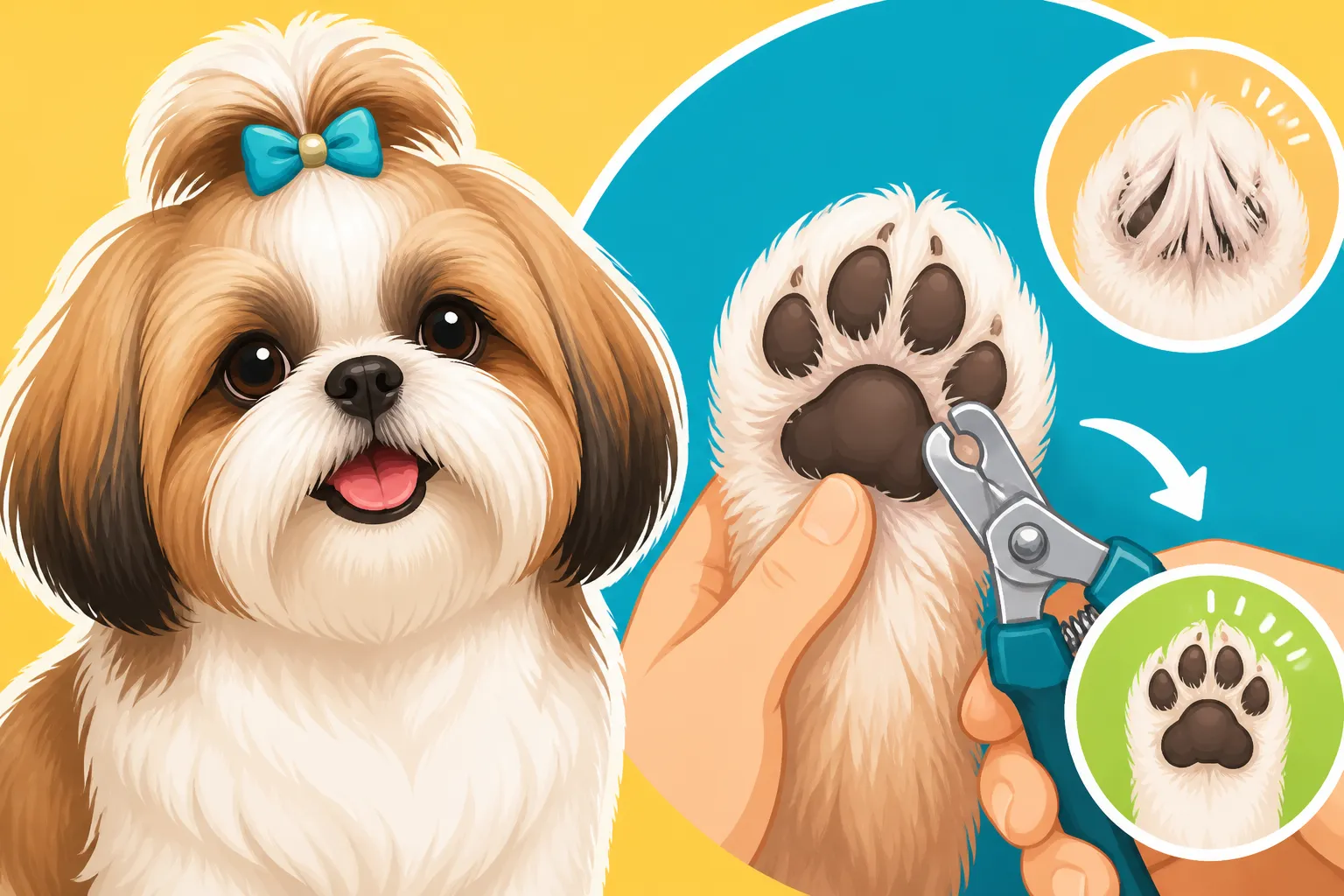
The hair that grows between your Shih Tzu's paw pads is particularly prone to matting and collecting debris. This area needs frequent attention, usually every 2-4 weeks, or whenever you notice the hair starting to protrude past the pads.
- Tools for the Job: You'll need either small, blunt-nosed scissors or a quiet, small electric paw trimmer. The trimmer is often safer and more efficient, especially if the hair is dense.
- Prepare the Paw: Gently spread your Shih Tzu's toes to expose the hair between the pads. Be extra careful here; the skin in this area is thin and easily cut.
- The Trimming Technique:
- Scissors: With blunt-nosed scissors, carefully lift the hair with your fingers and snip away any hair that extends beyond the paw pads. Always point the scissors away from the pads and only cut the tips. Work slowly and methodically.
- Electric Trimmer: If using an electric trimmer, gently place the blade flush against the paw pad and carefully trim the hair, moving outward from the center. Keep the blade flat to avoid nicking the skin. You want to expose the pads so they can get proper traction.
- Preventing Matting: Regular trimming is the best defense against mats. If mats do form, try to gently tease them apart with your fingers or a small comb first. If they are too tight, it's safer to use the electric trimmer to carefully shave them out, always being mindful of the skin underneath. Leaving mats here can lead to painful pressure sores and infections. Ensuring this hair is short also helps with general cleanliness, as it prevents debris and mud from being tracked into the house, which means less Cleaning Shih Tzu Accidents Properly related to dirty paws!
Trimming Hair Around the Paws: Aesthetic and Hygiene Benefits
Beyond the pads, the hair around your Shih Tzu's entire paw can grow quite long, sometimes obscuring their feet entirely. Trimming this hair serves both aesthetic and practical purposes.
- The "Round Foot" Look: Many owners prefer a neat, "round foot" or "cat foot" look for their Shih Tzu. To achieve this, lift the paw and use blunt-nosed scissors to carefully trim the hair around the entire circumference of the paw, following the natural round shape of the foot. Again, only trim the hair that extends past the actual paw.
- Hygiene and Traction: Keeping this hair shorter helps to keep the paws cleaner, reducing the amount of dirt, leaves, or even snow and ice that can cling to the hair. It also contributes to better traction. Long, fluffy hair around the paws can make it difficult for your Shih Tzu to grip surfaces, potentially causing them to Why a Shih Tzu Slips on Wood Floors.
- Regular Maintenance: This outer paw hair might not need trimming as frequently as the hair between the pads, perhaps every 4-6 weeks, or whenever it starts to look shaggy. It's often done during a full grooming session. If you're getting your Shih Tzu professionally groomed, your groomer will typically include this as part of their service. However, if you're grooming at home Grooming a Shih Tzu at Home Instead, it's an important step not to forget.
| Paw Care Task | Frequency | Key Tools Needed | Benefits |
|---|---|---|---|
| Nail Trimming | Every 2-4 weeks | Scissor clippers or grinder, Styptic Powder | Prevents pain, joint issues, improves posture, better traction |
| Hair Between Pads | Every 2-4 weeks | Blunt-nosed scissors or paw trimmer, Fine comb | Prevents matting, infections, improves traction, cleanliness |
| Hair Around Paws | Every 4-6 weeks | Blunt-nosed scissors | Neat appearance, cleanliness, reduces debris collection |
| Paw Pad Inspection | Weekly | Your eyes and fingers | Early detection of injuries, foreign objects, dryness, cracks |
| Paw Balm Application | As needed | Pet-safe paw balm | Moisturizes dry pads, protects from elements |
Addressing Common Challenges and Problems
Even with the best intentions and tools, paw care for your Shih Tzu can present a few hurdles. It's completely normal to encounter resistance or even have an accident now and then. The key is to know how to respond calmly and effectively.
Fear and Anxiety During Trimming: Positive Reinforcement, Professional Help
Many dogs, including Shih Tzus, develop a fear of nail trimming. This can stem from a previous bad experience (like being quicked), the sensation of the clippers, or simply a lack of early desensitization. A fearful Shih Tzu might struggle, try to bite, or even scream, making the experience traumatic for everyone.
If your Shih Tzu is already showing significant fear:
- Revisit Desensitization: Go back to basics. Reintroduce the clippers or grinder without actually trimming. Let them sniff the tools, offer treats. Touch their paws, offer treats. Gradually increase proximity and duration. The goal is to change their emotional response from fear to anticipation of good things. Use very high-value treats, something they absolutely adore.
- Short, Frequent Sessions: Don't try to do all four paws at once. Aim for one nail, or even just touching the clipper to one nail, followed by a shower of praise and treats. End the session on a positive note, even if you only managed one tiny step. Consistency with these mini-sessions will be more effective than infrequent, stressful marathon sessions.
- Muzzle Training: If there's a risk of biting, slowly introduce a comfortable muzzle, making it a positive experience with treats. This is a safety tool for both you and your dog, not a punishment.
- Seek Professional Help: If you're struggling to make progress, or your Shih Tzu's fear is severe, don't hesitate to consult a professional dog trainer or a vet behaviorist. They can offer personalized guidance, teach you advanced desensitization techniques, or even discuss anti-anxiety medications if necessary. A professional groomer might also be a good option; some dogs behave better for a professional than for their owners. Shih Tzu Behavior at the Groomer and the Vet can be very different from home, and a skilled groomer can often work wonders.
Remember, patience is paramount. Forcing the issue will only increase fear and make future attempts harder.
Accidental Quicking and Bleeding: What to Do, Prevention
Hitting the quick is a common mishap, especially with dark-colored nails, and it can be quite alarming when it happens. The key is to remain calm and be prepared.
- Immediate Action: As soon as you see blood, grab your styptic powder. If you don't have styptic powder, cornstarch or flour can work in a pinch, though less effectively. Apply a generous amount of the powder to the bleeding nail and apply firm, direct pressure for at least 30-60 seconds. The bleeding should stop fairly quickly.
- Comfort, Don't Over-Fuss: Your Shih Tzu will likely yelp and pull away. Comfort them gently, but avoid overly dramatic reactions, as this can inadvertently teach them that a little yelp gets them out of grooming. Offer a treat after the bleeding stops to associate recovery with something positive.
- Take a Break: Don't continue trimming that paw, or even other paws, immediately after a quicking incident. Give your dog a break and try again another day. The goal is to rebuild trust.
- Prevention for Next Time:
- Tiny Trims: Especially with black nails, take off only the very smallest tip at a time. "Dusting" the nail is safer than trying to take off a larger chunk.
- Good Lighting: Ensure you have excellent lighting so you can see the nail and quick as clearly as possible.
- Regularity: The more frequently you trim, the more the quick will recede, making it safer to trim shorter. If you only trim every few months, the quick will be much longer.
While quicking is unpleasant, it's usually not a serious medical emergency unless the bleeding is profuse and won't stop (which is rare with small nicks). Always consult your vet if you are concerned about persistent bleeding or signs of infection.
Infections and Irritations: Signs, When to See a Vet
Even with the best paw care, sometimes issues like infections or irritations can arise. It's important to be vigilant and know when to seek veterinary attention.
- Signs of Trouble: Keep an eye out for:
- Licking or Chewing: Excessive licking, chewing, or biting at the paws.
- Redness and Swelling: Inflamed skin between the paw pads or around the nails.
- Discharge or Odor: Pus, foul smell, or abnormal moisture.
- Lameness or Reluctance to Walk: Holding a paw up, limping, or avoiding putting weight on a paw.
- Cracked or Dry Pads: Paw pads that appear overly dry, cracked, or peeling.
- Ingrown Nails: A nail that has grown into the paw pad, causing a wound.
- Common Causes:
- Matted Hair: As discussed, trapped moisture and dirt lead to bacterial or yeast infections.
- Allergies: Shih Tzu Skin Allergies and Hot Spots can manifest on the paws, leading to intense itching and self-trauma from licking and chewing.
- Injuries: Cuts, scrapes, splinters, or punctures from walking on rough terrain.
- Chemical Irritants: Exposure to harsh cleaning products, lawn chemicals, or road salt.
- Fungal Infections: Ringworm, though less common, can also affect the paws.
- When to See a Vet: You should contact your veterinarian if:
- The signs of infection (redness, swelling, pus, odor) worsen or don't improve after a day or two.
- Your Shih Tzu is limping, unable to bear weight, or in obvious pain.
- There's a deep cut, puncture wound, or an ingrown nail.
- You suspect an allergic reaction or a persistent skin issue.
- Your dog is excessively licking or chewing their paws to the point of causing open sores.
Early intervention is always best to prevent minor irritations from escalating into more serious problems. Your vet can diagnose the underlying cause and prescribe appropriate treatment, whether it's antibiotics, anti-fungals, allergy medication, or wound care.
Professional vs. Home Paw Care
Deciding whether to tackle your Shih Tzu's paw care at home or rely on a professional groomer or vet is a common dilemma for many owners. There are definite pros and cons to both approaches, and the best choice often depends on your comfort level, your dog's temperament, and your schedule.
When to See a Groomer: Lack of Confidence, Difficult Dog
There's absolutely no shame in admitting that paw care, especially nail trimming, isn't your strong suit. Many people feel nervous about clipping nails, fearing they'll hurt their dog. This is a perfectly valid concern, and a professional groomer can be a lifesaver.
- Lack of Confidence or Experience: If you're new to dog ownership, or simply feel unsure about the technique, a professional groomer has the training and experience to do the job safely and efficiently. They know how to handle different nail types, including black nails, and are adept at managing squirmy dogs.
- Difficult or Fearful Dog: If your Shih Tzu becomes highly stressed, aggressive, or uncooperative during paw handling, it might be safer and less traumatic for both of you to let a professional handle it. They often have techniques and equipment (like grooming tables and specialized restraints) that can make the process smoother. They're also skilled at reading dog body language and knowing when to take a break or try a different approach. For a severely fearful dog, it might even be worth talking to your vet about sedation for grooming sessions.
- Time Constraints: Life gets busy! If you simply don't have the time to commit to regular home maintenance, scheduling routine appointments with a groomer (perhaps Booking a Shih Tzu Groomer Every Six Weeks) ensures your Shih Tzu's paws are always in good shape.
- Complex Coat Care: Many owners opt for professional grooming not just for nails but for the entire Shih Tzu coat. Since paw hair trimming is a natural part of a full groom, it often makes sense to have it all done at once.
A good groomer will not only trim nails and paw hair but also check for any issues they might spot, like skin irritations or abnormalities, giving you peace of mind.
Benefits of Home Maintenance: Regularity, Bonding
While professional help is invaluable, there are also significant benefits to taking on some or all of your Shih Tzu's paw care at home.
- Increased Frequency and Regularity: The biggest advantage of home care is that you can do it more frequently. Nails often need attention every 2-3 weeks, and paw hair can get shaggy quickly. You can easily do a quick trim every week or two, which helps keep nails shorter and the quick recessed, making each session easier. It's often difficult to get into a groomer that frequently.
- Cost Savings: Professional grooming services, while worth it, do add up over time. Learning to do basic paw care yourself can save a significant amount of money over your Shih Tzu's lifetime.
- Strengthened Bond and Trust: Regular, gentle handling of your Shih Tzu's paws at home, paired with positive reinforcement, builds immense trust between you and your dog. It teaches them that handling isn't scary, and it reinforces your role as a comforting and capable caregiver. This positive association can extend to other areas of handling, such as brushing teeth or cleaning ears.
- Early Detection of Issues: When you're routinely inspecting and handling your dog's paws, you're more likely to notice small cuts, splinters, dry pads, or early signs of infection before they become major problems. You get to know what's normal for your dog's paws.
- Convenience: No need to schedule appointments, drive to the salon, and wait. You can do a quick paw check and trim whenever it's convenient for you and your Shih Tzu, perhaps while watching TV or relaxing together.
Ultimately, a hybrid approach often works best for many Shih Tzu owners. You might do frequent maintenance trims at home, and then schedule a professional groomer every few months for a more thorough tidy-up and a fresh perspective. Whichever route you choose, making paw care a consistent priority will contribute immensely to your Shih Tzu's comfort and long-term health.
Disclaimer
This article is for general informational purposes only and does not constitute professional advice. Laws, prices and regulations vary by location and change over time. Consult a qualified professional for guidance on your specific situation.