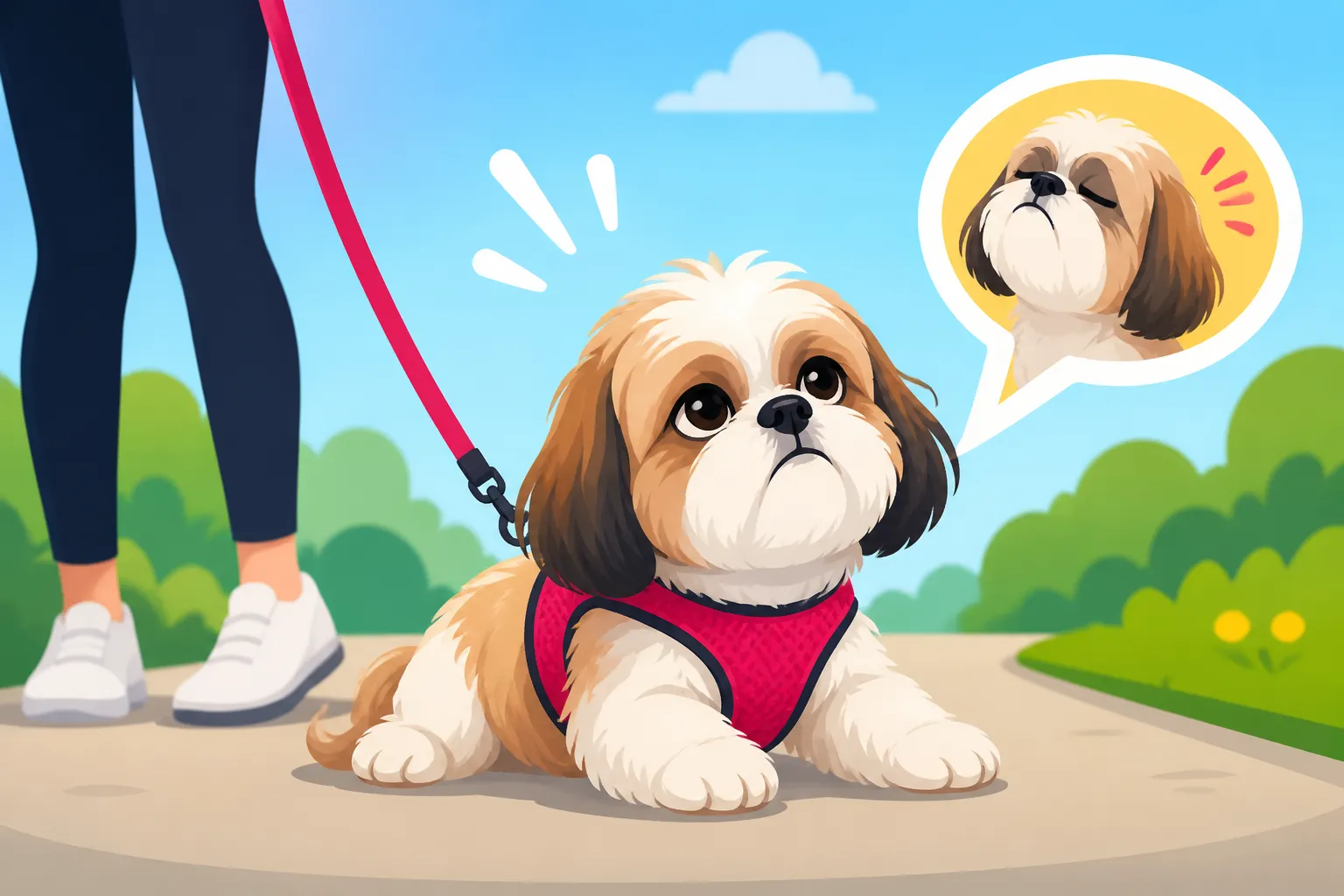
A Shih Tzu That Sits Down Mid-Walk
It can be incredibly frustrating and even a little embarrassing when you're out for a nice walk with your beloved Shih Tzu, only for them to abruptly plop down in the middle of the sidewalk, refusing to budge. One minute they're trotting along, the next they're a fluffy, immovable speed bump, and you're left wondering if they're being stubborn, hurt, or just plain tired. This guide will help you understand the myriad reasons why your Shih Tzu might be staging a sit-down strike mid-walk and offer practical, empathetic solutions to get those little legs moving again.
Understanding the "Why": Physical Reasons Your Shih Tzu Stops Walking
When your Shih Tzu decides to become a furry fixture on the pavement, the first thing to rule out is physical discomfort or pain. These little dogs, while robust in spirit, do have some unique physical considerations due to their breed characteristics. It's never just "stubbornness" without first considering if something is genuinely bothering them.
Brachycephalic Breathing Issues and Overheating
Shih Tzus are a brachycephalic breed, which means they have those adorable flat faces. While cute, this can unfortunately lead to a host of breathing challenges. Their shortened snouts, often accompanied by narrow nostrils (Shih Tzu Stenotic Nares and Noisy Breathing) and an elongated soft palate (The Elongated Soft Palate in a Shih Tzu), make it harder for them to breathe efficiently, especially when they exert themselves. Walking, even a leisurely stroll, requires more effort from them than from a dog with a longer muzzle.
Imagine trying to run a marathon while breathing through a straw. That's a bit what it can feel like for a Shih Tzu when their airway isn't ideal. If they're struggling for air, they'll instinctively stop to catch their breath. This issue is compounded dramatically in warm weather, as Shih Tzus also struggle to cool themselves effectively through panting. They simply don't have the nasal passages to allow for the efficient exchange of heat. So, if your dog stops, starts panting heavily, and seems distressed, overheating or a breathing issue is a strong possibility. It's not just about comfort; it can be a serious health risk. Why a Shih Tzu Overheats So Easily explains this in more detail.
Joint, Back, or Other Pain
Our Shih Tzus are small, but they can suffer from the same orthopedic issues as larger breeds, and sometimes even more so due to their unique body structure. Their long backs are particularly susceptible to disc issues, like intervertebral disc disease (IVDD), which can cause sudden and intense pain. Shih Tzu Back Problems and Disc Disease delves into this. If their back hurts, even a slight bump or an awkward step could trigger pain, leading them to stop and sit or lie down, trying to relieve the pressure.
Joint problems are also common. Patellar luxation, where the kneecap slips out of place (Patellar Luxation in a Shih Tzu), can cause a sudden skip in their step or a complete refusal to bear weight. Hip dysplasia, though less common in toy breeds, can also occur. Arthritis can set in as they age, making every step an ache. If your Shih Tzu is getting on in years, or if their refusal to walk is accompanied by limping, whining, or a reluctance to be touched, it's crucial to consider pain as the underlying cause. Sometimes, the pain isn't obvious until they put weight on a particular limb or move in a certain way. A vet visit is absolutely essential to rule out these possibilities. You wouldn't want to push them to walk if they're genuinely hurting. Shih Tzu Joint Problems in a Toy Frame gives more insight into their joint health.
Fatigue or Age
While Shih Tzus aren't typically known for their boundless energy, they still enjoy walks. However, their stamina might not be as high as you imagine, especially if they're older or out of condition. A young, fit Shih Tzu might happily do a twenty-minute walk, but a senior dog, or one that's a bit overweight, might only manage five or ten minutes before becoming truly exhausted.
For senior Shih Tzus, mobility can decline significantly. Shih Tzu Mobility Decline in Old Age discusses these changes. Their muscles might be weaker, their joints stiffer, and their overall energy levels lower. What seems like a short walk to us might feel like a marathon to them. It's a natural part of aging, and we need to adjust our expectations and routines accordingly. If your dog consistently stops around the same point in the walk, or if they seem generally sluggish beforehand, fatigue might be the culprit.
Behavioral Roadblocks: When Training or Temperament Comes into Play
Once you've cleared your Shih Tzu of any physical ailments, it's time to consider the behavioral side of things. Sometimes, their refusal to walk isn't about pain, but about preferences, fears, or simply a lack of motivation. These are intelligent little dogs with distinct personalities!
Stubbornness or Disinterest
Let's be honest, Shih Tzus can be a little… opinionated. "Stubborn" isn't always the right word, but they definitely have their own ideas about what they want to do (and what they don't). If the walk isn't exciting, or if they'd rather be snuggled on the sofa, they might just decide to halt. Shih Tzu Stubbornness and What It Really Is explains that this often comes from a lack of motivation rather than malice.
They might sit down because they're simply bored, or they've decided the current direction isn't to their liking. Perhaps they've caught a scent they want to investigate, and you're pulling them past it. They might also be "training" you – if stopping always leads to you picking them up or offering a treat, they quickly learn that hitting the brakes yields a reward. Consistency is key here. If you always give in, they'll always try it.
Fear, Overstimulation, or Negative Associations
The world can be a big, scary place for a small dog. A sudden loud noise, a large passing truck, a strange-looking person, or another dog that barks aggressively could all trigger a fear response. When a Shih Tzu is scared, their instinct might be to freeze or bolt, and freezing often looks like sitting or lying down, hoping the threat will pass.
Beyond fear, some Shih Tzus can become easily overstimulated. A bustling street, too many new smells, or a lot of foot traffic can be overwhelming for their senses. They might stop because they need a moment to process everything, or because they're feeling anxious and want to retreat. If they've had a previous bad experience on walks, such as an injury, a scary encounter, or even just being left alone on a walk for too long, they might develop a negative association with the leash or going outside. This isn't stubbornness; it's a learned avoidance behavior.
Lack of Proper Leash Training or Uncomfortable Gear
While Shih Tzus aren't typically strong pullers, proper leash manners are still important. If your Shih Tzu hasn't been consistently trained to walk nicely on a leash, they might just view it as an optional activity. They might pull, dart, or simply stop when they feel like it, without understanding the expectation to keep moving with you. Positive reinforcement training, using small, high-value treats, can work wonders in teaching them to associate walking with good things. For training resources, you might find valuable advice on sites like BAXTER & Bella, which offer comprehensive online programs that can be tailored to small breeds and their unique challenges.
The equipment itself can also be a factor. A collar might put pressure on their delicate neck and airway, making a harness a much safer and more comfortable option for a brachycephalic dog. However, not all harnesses are created equal. Some might chafe, restrict movement, or simply not fit well. A poorly fitting harness can cause discomfort, leading your Shih Tzu to stop and try to escape it, or simply refuse to move forward. Look for harnesses designed for small breeds, preferably those that distribute pressure across their chest rather than their throat. Harnesses That Do Not Mat a Shih Tzu Coat provides good advice on selecting the right one. You can find a wide variety of comfortable, adjustable harnesses on platforms like Amazon, ensuring you get the right fit for your little companion.
Environmental Factors: How Surroundings Affect Your Shih Tzu's Stroll
Beyond internal factors, the world around your Shih Tzu plays a huge role in their willingness to keep moving. We often forget how much external conditions can impact these small, low-to-the-ground dogs.
Weather Extremes: Heat, Cold, and Rain
Shih Tzus are not built for extreme weather conditions. As mentioned, their brachycephalic structure makes them very susceptible to overheating. Hot pavement can also burn their sensitive paw pads, making every step excruciating. If the sun is beating down, or the humidity is high, a sit-down strike is less about defiance and more about self-preservation. Walking a Shih Tzu in Warm Weather details how to manage this.
Conversely, cold weather can also be an issue. While their double coat offers some insulation, a wet, freezing day can still make them uncomfortable, especially if they're clipped short. Puddles and rain are often major deterrents. Many Shih Tzus absolutely despise getting their paws wet or being rained on, and they'll refuse to move an inch. A Shih Tzu That Refuses to Go Outside in Rain is a common complaint among owners. If the weather is truly unpleasant, their refusal to walk is perfectly understandable.
Unfamiliar or Overstimulating Environments
Dogs thrive on routine and familiarity. If you suddenly take your Shih Tzu to a completely new environment – a busy city park, a noisy street fair, or even just a different neighborhood than they're used to – it can be overwhelming. The sheer volume of new sights, sounds, and smells can be too much for them to process, causing them to freeze up. They might be trying to take it all in, or they might be genuinely frightened by the unfamiliarity.
This is especially true for Shih Tzus who haven't had extensive socialization as puppies. A lack of exposure to various environments, people, and other dogs during their critical developmental period can make them more prone to anxiety and fear in new situations. A sudden stop might be their way of saying, "I'm not comfortable here, and I want to go home."
Practical Solutions and Prevention: Getting Your Shih Tzu Moving Again
So, what can you do when your Shih Tzu stages their sidewalk sit-in? A multi-pronged approach often works best, addressing both immediate needs and long-term training.
Rule Out Medical Issues First
Before you try any behavioral fixes, please, please make an appointment with your veterinarian. Describe exactly when and how your Shih Tzu stops, noting any other symptoms like limping, coughing, heavy panting, or changes in appetite. Your vet can check for Shih Tzu Heart Murmurs and Valve Disease, joint pain, back problems, or breathing difficulties. They might recommend imaging, blood tests, or a referral to a specialist. It’s impossible to train away pain or discomfort. If there's a medical reason, addressing that will be the most effective solution.
Adjust Your Walk Routine and Environment
Once medical issues are ruled out, consider your walk schedule. Are you walking at the hottest part of the day? Try early mornings or late evenings in warmer climates. For colder or wet weather, consider a cozy sweater or a raincoat, and keep walks brief. Remember, Shih Tzus are not built for long hikes. Short, frequent walks are generally better. The Short Walks a Shih Tzu Is Built For suggests that even 15-20 minutes might be enough for many.
If your usual route is very busy, try finding quieter streets or a less crowded park. If they get overstimulated, reduce the intensity of the environment gradually. Short trips to new, mildly stimulating places, coupled with lots of positive reinforcement, can help them build confidence.
Training and Positive Reinforcement Strategies
If your Shih Tzu is stopping due to stubbornness or lack of motivation, positive reinforcement is your best friend.
- High-Value Treats: Carry small, irresistible treats. When your Shih Tzu stops, offer a treat to lure them forward a few steps. Reward them generously for moving, even a little. The goal is to make moving a highly rewarding experience.
- Make it Fun: Incorporate play into your walks. Bring a favorite small toy, or occasionally run a few steps to encourage them to follow.
- Vary Your Routes: Sometimes, a change of scenery can reignite their interest. Explore new paths or even just walk in a different direction.
- Consistency: Don't inadvertently reward the stopping. If you pick them up every time they sit, they learn that sitting means a ride. Try to gently encourage them to move on their own, even if it's just for a few steps, before picking them up if necessary.
- Practice "Go": Teach a "let's go" cue at home, rewarding them for taking a few steps with you. Practice this in increasingly distracting environments.
Here's a quick comparison of common reasons and potential solutions:
| Reason for Stopping | Possible Indicators | Solution Approach |
|---|---|---|
| Physical Pain | Limping, yelping, stiffness, reluctance to be touched | Vet check, pain management, modified exercise |
| Breathing/Overheating | Heavy panting, blue gums, lethargy, collapsing | Immediate rest, hydration, walk in cool parts of day |
| Fatigue/Age | Consistent stopping at same point, general slowness | Shorter, more frequent walks, senior support |
| Fear/Overstimulation | Trembling, tail tucked, trying to hide, darting eyes | Desensitization, quieter routes, positive associations |
| Stubbornness/Disinterest | No other symptoms, looking around, resisting leash pull | High-value treats, varied routes, positive reinforcement |
| Uncomfortable Gear | Rub marks, trying to chew or scratch harness/collar | Adjust fit, try a different style of harness (e.g., from Amazon) |
Proper Gear and Training Tools
Ensure your Shih Tzu's harness fits perfectly – snug enough not to slip, but not so tight that it chafes. A front-clip harness can sometimes deter pulling and give you more control, gently guiding them forward. For small dogs, a lightweight, non-bulky harness is ideal. Again, check options available through retailers like Amazon, reading reviews from other small dog owners.
Consider joining an online training program, such as those offered by BAXTER & Bella. They often provide step-by-step guidance that can be incredibly helpful for working on leash manners and building confidence in your Shih Tzu. Sometimes having an expert guide you through the process, especially when you feel stuck, can make all the difference. Shih Tzu Leash Manners on a Harness can also offer good starting points.
Remember, your Shih Tzu isn't trying to be difficult. There's always a reason behind their behavior, and by patiently investigating and addressing those reasons, you can help them enjoy their walks, keeping them happy and healthy for years to come.
Disclaimer
This article is for general informational purposes only and does not constitute professional advice. Laws, prices and regulations vary by location and change over time. Consult a qualified professional for guidance on your specific situation.