Building Alone Time in Five Minute Steps
It’s a scenario many Shih Tzu owners know all too well: the moment you step out the door, even for a quick errand, your sweet companion transforms into an anxious wreck, barking incessantly or, worse, becoming destructive. This often stems from their deeply affectionate and companionable nature, making alone time a real challenge. This guide will walk you through a gentle, step-by-step process, starting with just five-minute increments, to help your beloved Shih Tzu learn to feel safe and settled when you’re not around.
Understanding Shih Tzu Separation Challenges
Shih Tzus were literally bred for companionship; their history is rooted in being lap warmers and regal companions in ancient Chinese palaces. This strong bond, while endearing, also makes them particularly susceptible to separation-related stress when left alone. It's not about being "bad"; it's about their ingrained desire for constant company.
Why Shih Tzus Are Prone to Separation Issues
Our little lion dogs thrive on interaction and being part of every family activity. They’re not often dogs that are content to be left to their own devices for long stretches, especially if they haven't been slowly acclimated to solitude from a young age. Their entire genetic makeup points towards being close to their people. This isn't a flaw in their character; it's a testament to the success of their breeding purpose. Because they bond so intensely, the absence of their human can feel like a profound loss or a genuinely frightening situation for them, rather than just a temporary inconvenience. This intense connection is why topics like Shih Tzu Alone Time and Learning to Tolerate It are so important for owners to understand.
Common Signs of Distress
Recognizing the signs of separation stress is crucial because many owners misinterpret them as naughtiness. If your Shih Tzu is displaying these behaviors when you're gone, it's a cry for help, not an act of defiance:
- Excessive Barking or Howling: This is often the first thing neighbors will complain about. It’s a vocal plea for you to return or for someone, anyone, to come keep them company.
- Destructive Chewing: You might come home to chewed furniture, shoes, or doorframes. This isn't random destruction; it's often a coping mechanism for anxiety, a way to release pent-up stress.
- Inappropriate Urination or Defecation: If your otherwise house-trained Shih Tzu has accidents only when left alone, it's a strong indicator of stress, not a lack of training. It’s a loss of control related to fear.
- Pacing or Panting: You might see this on a pet camera. They can't settle, constantly moving, or panting even when it's not hot, indicating a high level of anxiety.
- Excessive Grooming or Licking: Some Shih Tzus may over-groom themselves, licking their paws or other body parts to the point of irritation, as a self-soothing behavior.
- Refusal to Eat or Drink: While less common, some anxious dogs will ignore food or water left for them until their owner returns.
These signs, especially when they only occur when you’re absent, are clear indicators that your Shih Tzu is struggling with alone time. Ignoring them can lead to escalating anxiety and more severe behavioral issues. You might want to review The Signs a Shih Tzu Cannot Settle Alone for more detailed insights.
The Foundational Steps Before You Leave
Before you even start leaving your Shih Tzu alone for short periods, there are some critical foundational steps to take. These build a strong base of comfort and predictability, making the actual training much more effective. Think of it as setting the stage for success.
Creating a Safe and Comfortable Space
Your Shih Tzu needs a "den" where they feel secure, whether you're home or not. This isn't a punishment; it's their personal sanctuary.
- Crate Training: A well-introduced crate can be a fantastic tool for managing alone time. It provides a small, enclosed space that naturally feels like a den, giving them a sense of security. Make sure the crate is appropriately sized – large enough for them to stand up, turn around, and lie down comfortably, but not so large that they can use one end as a bathroom. Cover the crate with a blanket to make it feel more den-like, and always include a soft bed and a favorite chew toy. The process of Crate Training a Shih Tzu Properly is vital here, ensuring it's a positive experience.
- Designated Safe Zone: If a crate isn't an option, create a small, puppy-proofed area in a quiet part of your home. This could be a laundry room, a section of the living room gated off, or a large playpen. The key is that it's consistently the same place, free from hazards, and equipped with comfort items.
- Comforting Items: Always leave items that smell like you (an old t-shirt, a blanket) in their safe space. This familiar scent can be incredibly reassuring. Long-lasting chew toys, like a Kong filled with frozen peanut butter or a durable Nylabone, are also essential to provide positive distraction. These items help shift their focus from your absence to something enjoyable.
The goal is for your Shih Tzu to associate this space with relaxation and positive experiences, so they see it as a haven, not a place they are banished to.
Establishing a Routine and Predictability
Dogs thrive on routine. When they know what to expect, their anxiety levels often drop significantly. Your departure doesn't have to be a shocking event.
- Consistent Schedule: Try to establish a consistent daily routine for feeding, potty breaks, walks, and playtime. This predictability helps your Shih Tzu understand the rhythm of their day, making your departures feel like a normal part of the schedule, rather than an unpredictable abandonment.
- Pre-Departure Cues: Unintentionally, we often create a "departure ritual" that signals to our dogs that we're about to leave. Jingling keys, grabbing a purse, putting on shoes – these can all trigger anxiety. To desensitize your Shih Tzu, start performing these actions randomly throughout the day without actually leaving. Pick up your keys, put them back down. Put on your shoes, then sit on the sofa. The idea is to break the association between these cues and your actual departure, making them less anxiety-inducing.
- Calm Departures: When it's time to actually leave, make your departure as calm and uneventful as possible. Resist the urge to give a long, emotional goodbye. A simple "Be good, I'll be back" is sufficient. Too much fanfare can heighten their anxiety, making them think something significant (and potentially bad) is happening. Similarly, when you return, avoid an overly enthusiastic greeting right away. Wait a few minutes for them to settle before showering them with affection.
This predictability and calm demeanor on your part help to convey that your departure is routine and nothing to be worried about.
Meeting Basic Needs First
A tired, well-exercised, and relieved Shih Tzu is much more likely to settle down and relax when left alone. This seems obvious, but it’s often overlooked.
- Potty Break: Always ensure your Shih Tzu has had a thorough potty break right before you plan to leave. A full bladder or bowel will only add to their discomfort and anxiety, making accidents more likely. Even if you'll only be gone for a short time, this is non-negotiable.
- Physical Exercise: While Shih Tzus aren't extreme athletes, they still benefit from physical activity. A good walk or a vigorous play session in the yard before you leave can help burn off excess energy. Aim for a brisk 15-20 minute walk, letting them sniff and explore. Remember, due to their brachycephalic (flat-faced) nature, Shih Tzu Exercise Intolerance in Summer is a real concern, so adjust timing and intensity based on weather.
- Mental Stimulation: Mental exercise can be just as tiring as physical exercise, especially for an intelligent breed like the Shih Tzu. Engage them with a short training session, practice some tricks, or use a puzzle feeder. This kind of work can help calm their minds. Consider giving them a puzzle toy when you leave – something they have to work at to get treats. Brands like Kong and other durable treat dispensers available on Amazon are excellent for this.
By ensuring their physical and mental needs are met, you set your Shih Tzu up for a calm, content period of alone time, rather than leaving them with pent-up energy and a worried mind.
The Five-Minute Increment Training Plan
Now that we've laid the groundwork, it's time to implement the core training strategy: gradually increasing alone time in tiny, manageable steps. This method is all about building confidence slowly and systematically.
Starting with Super Short Departures
The key to this method is to start so small that your Shih Tzu barely registers your absence, and definitely doesn't have time to get anxious.
- Literally Seconds: Begin by putting your Shih Tzu in their designated safe space with a special, high-value chew or puzzle toy (like a favorite chew from Amazon). Walk out of sight, close the door, wait for 5-10 seconds, then return. Don't make a big fuss about leaving or returning. If they are calm and quiet, praise them softly and let them out, but still keep it low-key. If they reacted (whining, barking), wait for a brief moment of quiet before returning, if possible, to avoid reinforcing the distress.
- Repeating and Building: Repeat this 5-10 second departure several times a day for a few days until your Shih Tzu consistently remains calm. The goal is for them to realize that you always come back, and nothing bad happens when you step away. This builds a strong sense of trust and predictability.
- The Power of Predictability: The repetition of short absences followed by your calm return is what teaches them that your departures are not permanent. It's about desensitizing them to your absence and making it a normal, non-threatening event. This seemingly tiny step is the most crucial foundation for future success.
This initial phase might feel silly or too slow, but it's where the critical learning happens. Patience here will pay dividends down the line.
Gradually Extending Absence
Once your Shih Tzu is completely comfortable with 5-10 second departures, you can start to slowly increase the duration. Remember, "slowly" is the operative word.
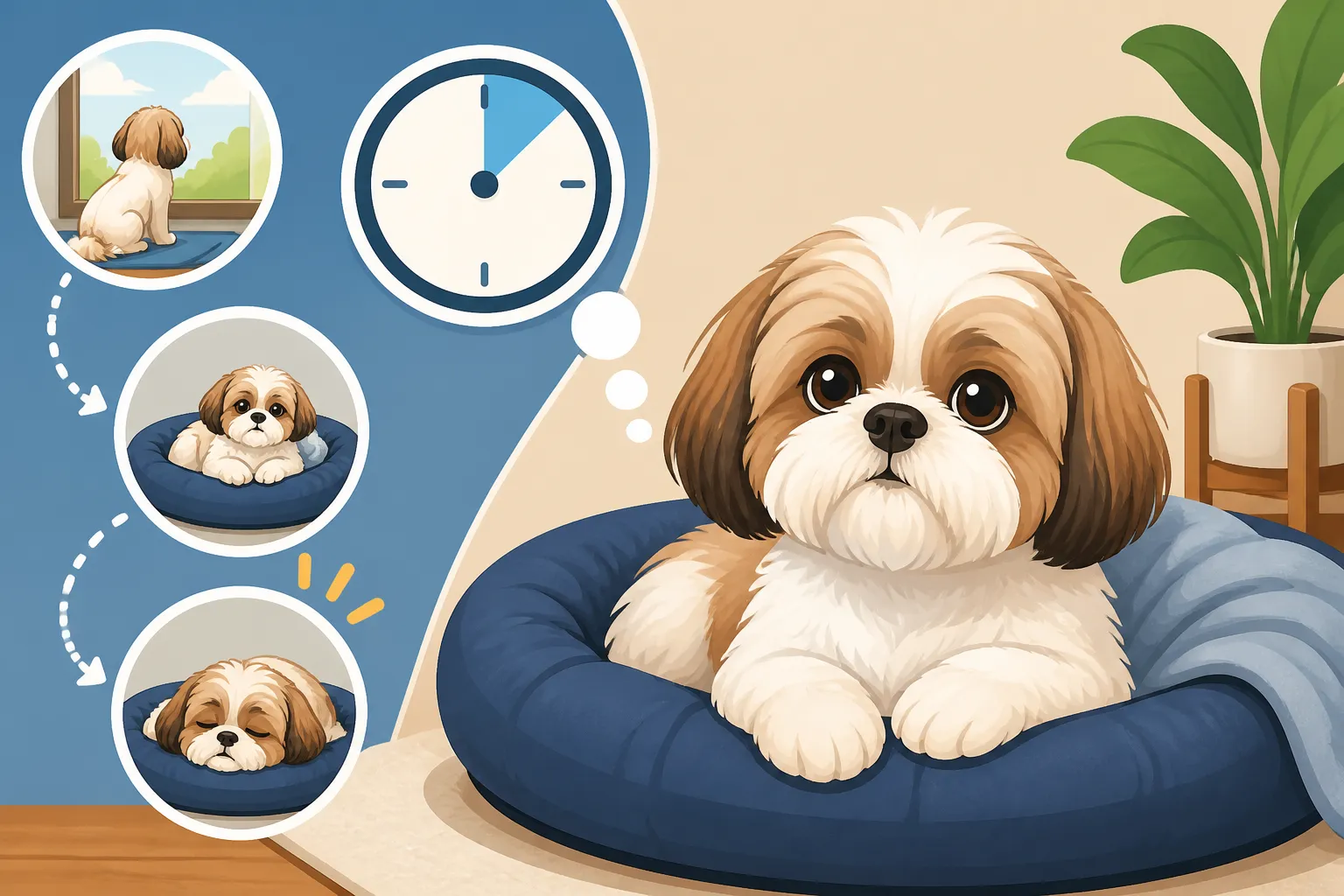
- Adding in Five-Minute Steps: This is where the "five-minute step" strategy comes into play. If they're comfortable with 10 seconds, try 30 seconds. Then a minute. Then two minutes. And so on, incrementing by approximately five minutes at a time. The table below illustrates this progression.
- Monitoring Their Reaction: This is vital. If, at any point, your Shih Tzu shows signs of distress (barking, whining, scratching at the door, pacing), you've gone too far, too fast. The next session, you need to reduce the time to the last duration they were successful with, or even step back further. The goal is to always end on a positive, calm note.
- Varying Your Departures: Don't always leave for the exact same amount of time. Mix it up slightly once they're comfortable. Leave for 10 minutes, then 7, then 12. This prevents them from predicting your exact return and keeps them from escalating anxiety at a specific time mark.
- Using a Camera: Investing in a pet camera can be incredibly helpful. It allows you to observe your Shih Tzu's behavior while you're truly out of sight, giving you objective feedback on how they're coping. You can often find affordable options on Amazon that connect to your phone. Seeing them relax, or identifying when they start to get anxious, helps you fine-tune your timing.
| Session Goal | Duration of Absence | Shih Tzu Behavior Check | Next Step (if calm) | Next Step (if anxious) |
|---|---|---|---|---|
| Initial | 5-10 seconds | Calm, quiet, focused on toy | Increase to 30s | Repeat 5-10s |
| Short Step 1 | 30 seconds | Calm, quiet | Increase to 1 minute | Return to 10s |
| Short Step 2 | 1 minute | Calm, quiet | Increase to 2 minutes | Return to 30s |
| Building | 5 minutes | Calm, quiet | Increase to 10 minutes | Return to 2 minutes |
| Longer | 10 minutes | Calm, quiet | Increase to 15 minutes | Return to 5 minutes |
| And so on… | Increment by 5 mins | Observe carefully | Add 5-10 mins | Go back to previous step |
Remember, consistency and patience are your best friends here. Don't rush the process, and celebrate every small victory. Slowly but surely, your Shih Tzu will learn to trust that you will always come back. This methodical approach helps them build a strong foundation of confidence.
Making Departures and Arrivals Low-Key
This ties back to establishing a calm routine. Your energy is contagious, and if you make leaving or coming home a big deal, your Shih Tzu will mirror that heightened emotion.
- Avoid Emotional Farewells: Before you step out, avoid long, drawn-out goodbyes, coddling, or excessive petting. This often communicates your anxiety or sadness, which your Shih Tzu picks up on, confirming their fear that something bad is about to happen. A simple, confident, and calm "See you later" or "Be good" is all that's needed. Ensure they have their special chew or puzzle toy before you walk out.
- Ignore the Initial Excitement Upon Return: When you first come back, resist the urge to immediately greet your ecstatic Shih Tzu with equal enthusiasm. If they're jumping, barking, and whining, wait a few minutes until they've settled down. Give them a chance to calm themselves. Once they've settled, then you can offer a calm, affectionate greeting. This teaches them that your return is a normal, everyday event, not a cause for frantic celebration, and that calm behavior gets rewarded.
- The Principle of "No Big Deal": The overall message you want to convey is that your coming and going is simply "no big deal." It's just a part of life. By minimizing the emotional weight of your departures and arrivals, you help your Shih Tzu see it as a normal transition, reducing their anxiety. This also applies to internal links like A Shih Tzu Underfoot in Every Room; by fostering independence and calm, you reduce their constant need to be attached.
This "low-key" approach helps normalize your absence, making it less of an emotional rollercoaster for your sensitive companion.
Troubleshooting and Advanced Strategies for Alone Time
Even with the best intentions and consistent training, you might hit a snag or need to consider additional support. That's perfectly normal.
When Progress Stalls or Regresses
It’s easy to get discouraged if your Shih Tzu suddenly regresses or stops making progress. This isn't a sign of failure; it’s an opportunity to re-evaluate.
- Identify Triggers: Think about what might have caused the setback. Did you push too far, too fast? Was there a change in routine? A stressful event? Even a loud noise outside when you were briefly gone can set back progress. Take notes on when your Shih Tzu gets anxious. This information is invaluable.
- Step Back: The most important thing to do when progress stalls is to step back to a duration where your Shih Tzu was consistently successful. Sometimes, you might even need to go back to the very first few seconds. It’s better to build confidence slowly again than to keep pushing and reinforce anxiety. Don't be afraid to take two steps back to take three steps forward.
- Increase Value of Departure Toy: Make sure the treat or chew toy you leave with them is truly high-value and only available when you're leaving. This makes alone time more rewarding. Perhaps try a new type of treat or a different puzzle toy.
- Consistency is Key: Ensure everyone in the household is following the same training plan. Inconsistency can confuse your Shih Tzu and undermine your efforts. If you are struggling with Why Shih Tzu House Training Runs Long, consistency is the answer there too!
Remember, this is a marathon, not a sprint. Every dog learns at their own pace, and setbacks are a natural part of the learning curve.
Enrichment to Keep Them Occupied
A bored Shih Tzu is more likely to develop anxiety or destructive behaviors. Providing engaging activities during your absence is critical for their mental well-being.
- Puzzle Toys: These are fantastic for keeping a Shih Tzu’s mind engaged. A classic Kong filled with peanut butter, cream cheese, or wet food and then frozen, can keep them busy for a good 20-30 minutes. There are many interactive puzzle toys available on Amazon that require your dog to manipulate parts to get treats. These fulfill their natural foraging instincts. You can learn more about suitable options in Puzzle Feeders a Shih Tzu Can Work.
- Long-Lasting Chews: Durable chew sticks or dental chews can also provide a great distraction. Make sure whatever you choose is size-appropriate for your Shih Tzu and safe for them to consume (no small pieces that can be choked on). Always supervise a new chew to ensure it’s safe before leaving them alone with it.
- Scent Games: Hide treats around their safe space for them to sniff out. This engages their powerful sense of smell and provides mental stimulation. Start easy and make it progressively harder as they get the hang of it. This isn't just about reducing anxiety; it’s about providing quality of life even when you’re not physically present.
The goal is to make their alone time a positive, enriching experience, rather than a period of boredom or stress.
Considering Professional Help and Tools
For some Shih Tzus, separation distress can be severe and require more intervention than basic training alone. Don't hesitate to seek help if you're struggling.
- Certified Professional Dog Trainer (CPDT): A trainer specializing in separation anxiety can provide tailored strategies and support. They can help you accurately assess your Shih Tzu’s triggers and develop a personalized plan, which might include specific counter-conditioning and desensitization exercises. If you're looking for guidance, seeking out Finding a Trainer for a Toy Breed might be your next step.
- Veterinary Behaviorist: For severe cases, a veterinary behaviorist (a vet with specialized training in animal behavior) can be invaluable. They can rule out underlying medical conditions and, if appropriate, prescribe anti-anxiety medication to help your Shih Tzu cope during the training process. Medication isn't a magic bullet, but it can significantly lower their anxiety levels enough for the training to be effective.
- Pet Cameras: As mentioned, a pet camera (many good ones can be found on Amazon) is an indispensable tool. It allows you to monitor your Shih Tzu's behavior in real-time, helping you understand their stress signals and refine your training timing. Some cameras even allow two-way audio, so you can speak to your dog, though this should be used judiciously and not relied upon to soothe them.
- Online Training Programs: For structured guidance, some reputable online programs exist. For example, BAXTER & Bella offers comprehensive online training resources, including guidance on separation anxiety, which can be a flexible and accessible option for many owners. These platforms often provide step-by-step videos and support that can complement your efforts.
- Dog Walkers or Daycare (with caution): For longer absences, a trusted dog walker can provide a mid-day break, physical activity, and a potty opportunity. Some Shih Tzus might also benefit from carefully selected doggy daycare. However, remember that due to their unique needs (brachycephalic breathing, small size, potential for Shih Tzu Eye Proptosis, the Emergency Owners Miss), not all daycares are suitable. Always ensure they understand toy breed specific care.
Building alone time for your Shih Tzu is a journey that requires patience, consistency, and a deep understanding of their emotional needs. By following these incremental steps and utilizing available resources, you can help your loyal companion feel secure and happy, even when you're not right by their side.
Disclaimer
This article is for general informational purposes only and does not constitute professional advice. Laws, prices and regulations vary by location and change over time. Consult a qualified professional for guidance on your specific situation.