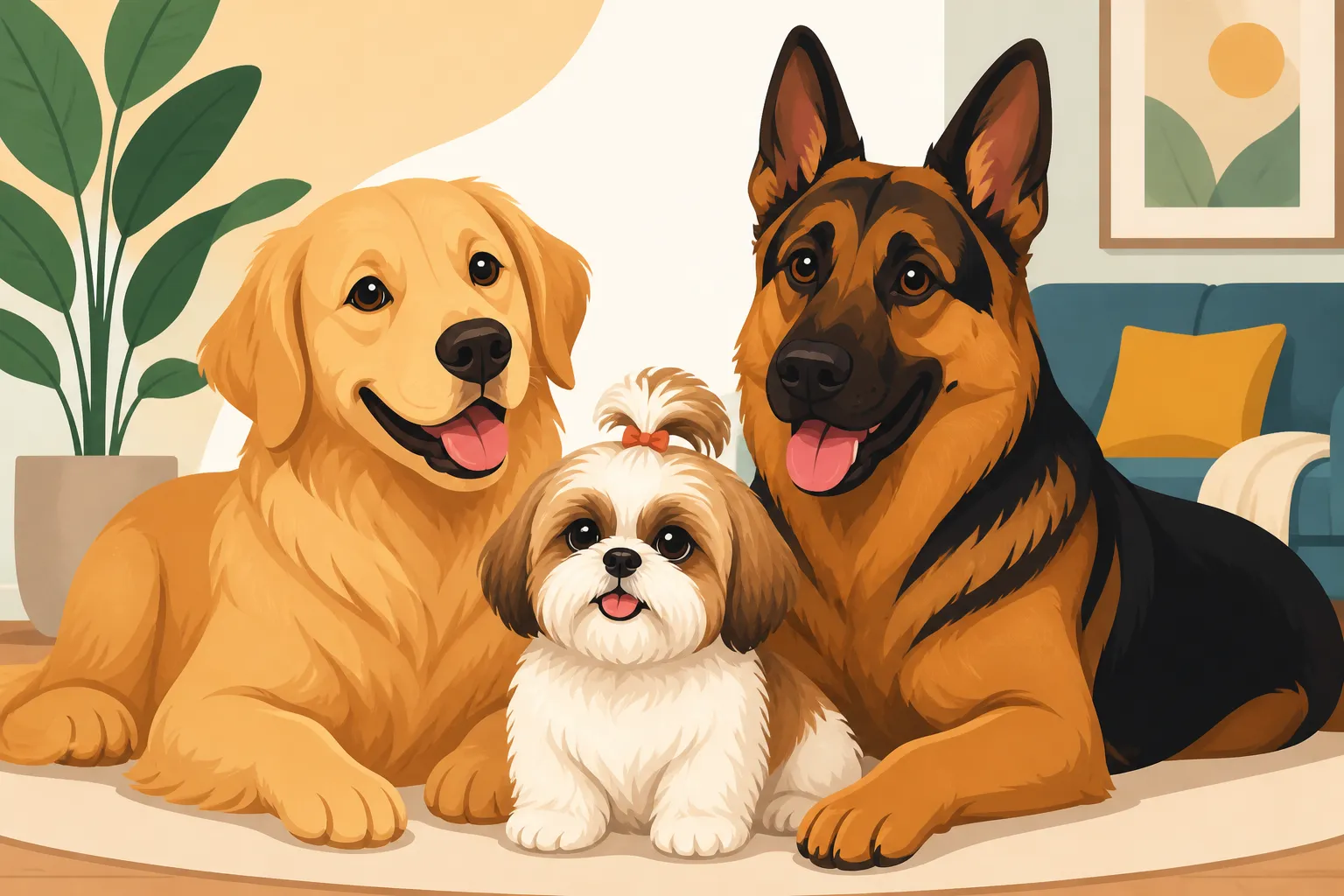
Shih Tzus With Larger Dogs at Home
Bringing a tiny Shih Tzu into a home that already boasts larger canine companions can feel like walking a tightrope – you want everyone to get along, but the size difference brings a constant, underlying worry about safety and harmony. It’s a common scenario that many multi-dog households face, and this guide is here to walk you through how to successfully integrate your adorable, yet delicate, Shih Tzu with bigger pups, ensuring peace and preventing accidental mishaps.
Understanding the Shih Tzu's Place in a Multi-Dog Household
It's natural to fret when you have a little fluffball like a Shih Tzu potentially sharing space and playtime with a much larger dog. The size disparity isn't just a visual thing; it profoundly impacts how they interact and the precautions you need to take.
The Shih Tzu's Innate Temperament and Size Disadvantage
Shih Tzus are renowned for their confident, outgoing, and sometimes utterly fearless personalities. Despite being a companion breed, originally bred to sit on laps and charm royalty, they often don't seem to recognize their own small stature. This can be a double-edged sword when they're around bigger dogs. Their courage is adorable, but it doesn't make them any less fragile. A playful bump from a Lab or a happy tail wag from a Golden Retriever could easily lead to a serious injury for a Shih Tzu, ranging from sprains and fractures to more severe internal damage. Their delicate bone structure and small frame simply aren't built to withstand the same kind of physical contact as a larger, more robust breed. The sheer difference in mass means that even an accidental misstep from a bigger dog could be devastating. It's not about the larger dog being mean; it's about physics and unintended consequences. You, as their dedicated owner, aren't overreacting by being concerned; you're being realistic about the very real risks. The Shih Tzu From Tibetan Temples to American Homes often mentions their history as cherished lap dogs, which reinforces their delicate nature. It's a stark contrast to breeds developed for more rigorous activities. Remember, Why a Shih Tzu Was Bred to Sit on a Lap speaks volumes about their intended role – comfort, not rough-and-tumble play with a much bigger companion.
Why Supervision is Not Enough: Preventing Accidental Injuries
While vigilant supervision is absolutely critical, relying solely on your watchful eye might not be enough to prevent every potential mishap. Accidents, by their very nature, are often sudden and unpredictable. Imagine a larger dog excitedly greeting you at the door, oblivious to the tiny Shih Tzu weaving between your legs, or an innocent game of chase suddenly ending with the larger dog unintentionally stepping on its smaller housemate. These aren't scenarios born of malice or aggression, but simply the consequence of different sizes moving in the same space. Even a seemingly gentle nudge during shared playtime can result in a significant injury. For example, a minor twist or fall could aggravate existing predispositions like Shih Tzu Hip Dysplasia at Toy Size or lead to a disc injury in their long back. This is why beyond constant supervision, creating structured environments and safe spaces is paramount. Think about strategically placed baby gates to divide rooms, allowing your Shih Tzu designated areas where they can relax without the risk of being trodden on or bowled over. Elevated dog beds or dedicated "cuddle caves" within a crate can offer your small dog a retreat where they feel secure and out of harm's way, even if you just step out of the room for a moment. These physical solutions act as an extra layer of protection, acknowledging that even the most well-intentioned larger dog can have a clumsy moment.
Strategic Introductions and Integration
The way you introduce and integrate your Shih Tzu with larger dogs can make all the difference in fostering a peaceful household. Rushing or forcing interactions can lead to anxiety and fear, which are much harder to undo later.
The Crucial First Meeting: Setting the Stage for Success
The initial introduction between your Shih Tzu and a larger dog is a pivotal moment, and getting it right can lay the foundation for a harmonious relationship. Don't just open the door and hope for the best! The key is to make it as low-stress and positive as possible for both animals. Always choose neutral territory for the first meeting – a park, a quiet street, or even a friend's fenced yard that neither dog considers "theirs." Both dogs should be on leashes, and you should have a handler for each dog, ensuring everyone has control. Keep the greeting brief and calm. Allow them to sniff each other, perhaps a quick glance, and then calmly walk them away from each other. Avoid excited voices or overly enthusiastic interactions, as this can heighten arousal and potentially stress for both dogs. Focus on positive reinforcement for calm behavior from both sides – a quiet "good boy/girl" and a small treat can work wonders. If either dog shows signs of stress (lip-licking, yawning, stiff body, turning away), end the session on a positive note before it escalates. Several short, positive interactions are far better than one long, stressful one. It helps both dogs to process the new presence in small, manageable doses. This carefully managed approach is exactly what's needed for Introducing a Shih Tzu to Another Dog, regardless of the size difference.
Creating Safe Zones and Managing Resources
Once the initial introductions have gone well, the next step is to ensure your home environment is set up for success and safety. This means actively managing resources and providing dedicated safe zones for your tiny Shih Tzu. Imagine your Shih Tzu trying to eat next to a larger dog that might accidentally bump their bowl or try to sample their food. This isn't just rude; it can lead to resource guarding issues or stress for your smaller dog. Therefore, separate feeding areas are a must. This could be feeding your Shih Tzu in a crate, behind a baby gate, or even on an elevated surface that the larger dog cannot reach. When it comes to toys, especially high-value ones, it's best to keep them separate initially. A larger dog might not understand the fragility of a small Shih Tzu and could inadvertently injure them during a tug-of-war or an overzealous game of fetch. Provide toys appropriate for each dog's size and play style.
Beyond resource management, creating physical safe havens for your Shih Tzu is non-negotiable. Baby gates are your best friends here. Use them to create sections of the house where your Shih Tzu can roam freely without the larger dog present, offering a genuine sense of security. Elevated beds or even specific Crate and Pen Sizes for a Shih Tzu can become their personal retreat, a place where they know they won't be bothered. Think of it as their 'Shih Tzu spa day' zone. You can find excellent options for durable dog beds, crates, and gates specifically designed for various dog sizes from online retailers like Chewy, ensuring both comfort and safety. These physical boundaries aren't just for preventing accidents; they also allow both dogs to decompress and have their own space, reducing overall household stress.
Ongoing Management and Training for Harmony
Successfully living with a Shih Tzu and larger dogs isn't a one-time setup; it requires consistent effort in training, management, and attentive observation. Think of it as an ongoing commitment to peace and safety for all your furry family members.
Consistent Training and Reinforcement for Both Dogs
Training isn't just for puppies; it's a lifelong endeavor, and it's particularly vital in a multi-dog home with significant size differences. Your larger dog needs to be trained on gentle play and impulse control. Commands like "leave it," "stay," and "settle" become incredibly important. Practice these commands frequently, especially around the Shih Tzu, rewarding calm and gentle behavior. For instance, if the larger dog approaches the Shih Tzu gently, reward them immediately. If they get too boisterous, calmly redirect them or put them in a brief timeout.
Similarly, your Shih Tzu benefits from training to build confidence and understand boundaries. While they might be small, they still need to learn good manners. Teach them a reliable recall and a "place" command so they can go to their safe space when asked. Positive Reinforcement With a Shih Tzu works wonders, using tiny, high-value treats and praise to encourage desired behaviors. Short, frequent training sessions are best, keeping it fun and engaging for your small companion. The goal is not just to prevent negative interactions, but to actively encourage positive ones. You want both dogs to associate each other with good things, building a foundation of mutual respect and, hopefully, affection. Remember, Training a Shih Tzu Bred Purely as a Companion means focusing on cues that foster good house manners and confident social interactions rather than complex tricks.
Recognizing and Addressing Potential Issues
Even with the best intentions and diligent training, you need to be constantly attuned to the dynamics between your dogs. Learning to read their body language is a superpower for any multi-dog owner. Watch for subtle signs of stress or discomfort in either dog. For your Shih Tzu, this might look like tucked tail, flattened ears, excessive yawning, lip-licking, turning away, or trying to hide. For the larger dog, it could be a stiff body, hard stare, growl, or even overly exaggerated play bows that aren't reciprocated.
If you observe these signs, intervene immediately, but calmly. Avoid yelling or creating a tense atmosphere. Simply separate the dogs, redirect them to different activities, or guide the Shih Tzu to their safe zone. The key is to prevent an escalation rather than waiting for one. If a larger dog is playing too roughly, step in and redirect them to a solo chew toy or a game of fetch with you. Never punish a growl from either dog, especially your Shih Tzu. A growl is a communication, telling you they're uncomfortable or feeling threatened. Punishing it teaches them to suppress the warning, meaning they might go straight to a bite next time. Understanding What a Shih Tzu Growl Is Telling You is crucial here; it's a signal, not naughtiness.
If you consistently see signs of anxiety, fear, or persistent rough play, it’s time to call in a professional. A certified dog trainer or a veterinary behaviorist can observe your specific household dynamics and provide tailored strategies. They can help you fine-tune your training, adjust the environment, and even suggest counter-conditioning techniques to change negative associations into positive ones. Especially when it comes to managing Shih Tzu Play Style With Bigger Dogs, an expert eye can be invaluable in ensuring safety.
Daily Life and Activities with Mixed Sizes
Life with mixed-size dogs means consciously integrating them into daily routines and activities, always prioritizing the safety and comfort of your smaller Shih Tzu. It's about establishing clear rules and understanding how different activities might impact each dog.
Supervised Playtime and Safe Exercise
Playtime is essential for all dogs, but when you have a Shih Tzu and larger breeds, it needs careful orchestration. Unsupervised roughhousing is a recipe for disaster. Instead, facilitate safe, structured play. This often means engaging them with appropriate toys rather than letting them physically wrestle. For instance, you might play fetch with your larger dog while your Shih Tzu enjoys a puzzle feeder nearby, or engage in a gentle tug-of-war with the larger dog using a sturdy toy while the Shih Tzu observes from their safe, elevated bed.
The dangers of size disparity become particularly evident during high-energy games. A fast-moving large dog could easily knock over or step on a Shih Tzu without meaning to. When sharing outdoor space, ensure the larger dog knows to be mindful. Many owners find success by having separate playtimes, allowing the larger dog to burn off energy in a more robust way, and then having calmer, more controlled interactions with the Shih Tzu. Indoor games like hide-and-seek with treats or gentle rolling of a soft ball can provide Indoor Play for a Shih Tzu that is safe for their delicate frame and won't put them at risk from a larger playmate. Remember, the type and size of toys also matter. Opt for durable, larger toys for big dogs and smaller, softer options for your Shih Tzu. Chewy offers a wide range of toys for all sizes, making it easy to find appropriate choices for each dog.
Feeding, Grooming, and Vet Visits
Beyond playtime, everyday routines need careful consideration. As mentioned, separate feeding is crucial to prevent food guarding and ensure your Shih Tzu can eat without stress. Elevated bowls, especially designed for smaller breeds, can also make eating more comfortable for your Shih Tzu while keeping their beard cleaner, which you can easily find at online stores like Chewy.
Grooming can also be a challenge if a larger, curious dog is trying to get involved. A Shih Tzu's extensive grooming needs, including daily brushing to prevent matting (as detailed in Brushing a Shih Tzu Double Coat Every Day), often require focused attention. It's best to perform grooming in a quiet space where the larger dog cannot interrupt. This prevents accidental nips or bumps if your Shih Tzu becomes squirmy, and ensures you can focus on the delicate task of maintaining their coat and checking for any skin issues.
Vet visits can be stressful for any dog, but a small Shih Tzu can feel particularly vulnerable. If both dogs need to go at the same time, ensure your Shih Tzu is safely secured in a carrier to prevent accidental bumps or overly enthusiastic greetings from other patients in the waiting room. A nervous Shih Tzu, as described in A Shih Tzu Panting in the Vet Waiting Room, will benefit from feeling secure and protected. When you get home, always supervise the reunion carefully, as both dogs might be a bit out of sorts after their vet trip. Consistency, patience, and thoughtful planning will go a long way in ensuring all your dogs, big and small, live together happily and safely.
| Aspect of Life | Recommendation for Shih Tzu | Recommendation for Larger Dog | General Approach for Harmony |
|---|---|---|---|
| Feeding | Separate, quiet area; elevated bowl | Separate, designated area; appropriate bowl size | Never free-feed; supervise mealtimes if in same room |
| Playtime | Soft, small toys; indoor games; gentle walks | Durable, larger toys; energetic outdoor play | Supervised, structured sessions; separate play if rough |
| Sleeping | Crate, elevated bed, or designated safe zone | Comfortable bed in own space | Teach "place" command for both dogs; no shared beds initially |
| Training | Positive reinforcement; confidence-building | Impulse control; gentle commands; "leave it" | Consistent, short sessions; reward calm interactions |
| Grooming | Dedicated, quiet space; secure on table | Regular brushing; keep calm during Shih Tzu's session | Maintain routines; avoid distractions for Shih Tzu |
| Vet Visits | Carrier for safety; calm approach | Leash control; calm demeanor | Schedule separate if possible; manage greetings carefully |
| Home Environment | Baby gates; elevated furniture; safe zones | Designated areas; respect Shih Tzu's safe zones | Constant supervision; create physical boundaries |
Disclaimer
This article is for general informational purposes only and does not constitute professional advice. Laws, prices and regulations vary by location and change over time. Consult a qualified professional for guidance on your specific situation.