Daily Calories for a Shih Tzu
One of the biggest worries I hear from fellow Shih Tzu parents is about their dog's weight. You look at your fluffy companion, wonder how much to actually feed them, and then feel guilty because they're either perpetually begging or seem to be packing on the pounds despite your best efforts. It’s truly a struggle to balance their love for food with their tiny, often sedentary, bodies, especially when a few extra ounces can make a big difference. This comprehensive guide will walk you through everything you need to know about calculating and managing your Shih Tzu's daily caloric intake, ensuring they stay happy, healthy, and at their ideal weight.
Understanding Your Shih Tzu's Unique Caloric Equation
It’s easy to grab a bag of kibble, look at the back, and just scoop out the recommended amount. But for a Shih Tzu, that generic advice can be wildly off. These little "lion dogs" have unique needs that depend on so much more than just their breed. Ignoring these nuances can lead to health problems down the road, making them either too heavy and sluggish or too lean and lacking energy.
Factors Influencing Calorie Requirements
Think of your Shih Tzu's daily calorie requirement as a deeply personal number, almost like your own. It's not a one-size-fits-all situation, and several key factors come into play. First, age is a huge component. A rambunctious puppy, growing at an incredible rate, burns through calories much faster than a laid-back adult or a senior who prefers napping to playing. Puppies need more fuel for development, while seniors might have a slower metabolism and need less to maintain their weight.
Next, activity level plays a massive role. Does your Shih Tzu zoom around the house, play fetch constantly, and enjoy long walks around the neighborhood? Or are they more of a lap dog, content with short strolls and extensive couch time? A highly active Shih Tzu will naturally require more calories to sustain their energy output compared to a more sedate one. Even indoor play counts! Then there's their metabolism, which can vary from dog to dog, just like in humans. Some Shih Tzus are naturally more efficient at processing food and gaining weight, while others seem to burn everything off effortlessly. Lastly, whether your Shih Tzu is spayed or neutered also impacts their caloric needs. Neutered dogs often experience a metabolic slowdown, meaning they require fewer calories to maintain their weight and are more prone to weight gain if their diet isn't adjusted. This is a common oversight that catches many owners by surprise.
The Dangers of Overfeeding and Underfeeding
Getting your Shih Tzu's caloric intake wrong, in either direction, can have serious consequences. The most common issue, by far, is overfeeding, which leads to obesity. A few extra pounds on a Shih Tzu, which might weigh between 9 and 16 pounds, is like a person carrying an extra 30-50 pounds. That added weight puts immense strain on their delicate joints, exacerbating conditions like Shih Tzu Hip Dysplasia at Toy Size or Patellar Luxation in a Shih Tzu. It also contributes to Shih Tzu Obesity on a Sixteen Pound Frame, making their already compromised respiratory system work even harder. Their quality of life diminishes, they become less mobile, and they’re at higher risk for conditions like diabetes, heart disease, and even certain cancers. It’s a silent threat hidden under all that beautiful hair, making it hard to spot the weight creeping on until it’s a significant problem. Many owners struggle to find Why a Full Coat Hides Shih Tzu Weight Gain until it's too late.
On the flip side, underfeeding can also be detrimental. While less common in pampered pets, a Shih Tzu that isn't getting enough calories might suffer from malnutrition, leading to a dull coat, low energy, a compromised immune system, and an inability to maintain muscle mass. Growing puppies, in particular, need adequate calories and nutrients to develop properly; underfeeding them can stunt their growth and lead to lifelong health issues. They might become lethargic, lose interest in play, and generally appear unwell. Finding that sweet spot, that perfect balance, is crucial for their long-term health and happiness.
Demystifying Calorie Calculations for Your Shih Tzu
Okay, so we know that "a cup a day" isn't going to cut it. How do we actually figure out what our individual Shih Tzu needs? This is where a little bit of math, and a lot of observation, comes into play. Don't worry, it's not rocket science, and your vet can always help you fine-tune the numbers.
The Basic Formula: Resting Energy Requirement (RER)
Veterinarians often start with something called the Resting Energy Requirement (RER) to estimate a dog's baseline caloric needs. This is the energy your Shih Tzu needs just to exist, to keep their organs functioning, their heart beating, and their body temperature regulated, essentially while resting. It's a foundational number that we build upon. The formula for RER is typically (Weight in kg ^ 0.75) x 70. Now, don't let the "kg" and "0.75" scare you! Your vet usually has a chart or a calculator for this, or you can find online calculators that do the heavy lifting. For example, a Shih Tzu weighing 12 pounds (about 5.44 kg) would have an RER around 250-260 calories per day. This is purely for resting, though, not for running around and being a dog!
This RER serves as a starting point. It’s the absolute minimum your Shih Tzu needs. It’s helpful for situations where a dog might be on strict bed rest or recovering, but for daily life, we need to account for everything else they do. This basic number ensures their vital functions are covered before we even consider their daily activities.
Adjusting for Activity and Life Stage: Daily Energy Requirement (DER)
Once you have the RER, you apply a multiplier to get to the Daily Energy Requirement (DER). This is the number that really matters for day-to-day feeding. The multiplier varies based on the factors we discussed earlier: age, activity level, and neuter status.
Here's a general guide for multipliers:
- Puppies (up to 4 months): 3.0 x RER
- Puppies (4 months to adult): 2.0-2.5 x RER
- Intact Adults: 1.8 x RER
- Neutered/Spayed Adults: 1.6 x RER (This is a common one for most pet Shih Tzus)
- Weight Loss: 1.0-1.4 x RER (Your vet will advise here)
- Weight Gain: 1.8-2.0 x RER
- Senior/Inactive: 1.2-1.4 x RER (Lower than adults due to reduced metabolism and activity)
So, if our 12-pound (5.44kg) neutered Shih Tzu has an RER of about 255 calories, their DER would be 255 x 1.6 = 408 calories per day. This is a much more accurate number to aim for than a generic bag recommendation! It accounts for their individual metabolic state and lifestyle. Always remember that these are guidelines; your dog is an individual, and you might need to adjust slightly based on their body condition. For example, a Daily Calories for a Twelve Pound Shih Tzu often falls right into this range.
Why Generic Feeding Guides Fall Short
You’ve probably seen the feeding charts on the back of dog food bags, right? They usually have a weight range and a corresponding cup measurement. The problem is, these are incredibly broad generalizations. They don't account for your specific Shih Tzu's age, whether they're spayed/neutered, or how much they actually move during the day. A 10-pound Shih Tzu who zips around all day isn't the same as a 10-pound Shih Tzu who is essentially a living, breathing pillow.
What’s more, these guides are often formulated for the average dog, which doesn’t often mean a brachycephalic toy breed like a Shih Tzu. Some brands may even lean towards overestimating, encouraging you to buy more food. This is why following these guides blindly can easily lead to your Shih Tzu slowly but surely gaining weight. It's frustrating because you're trying to do the right thing, but the information provided isn't precise enough for your unique little friend. Always perform your own calculations, or better yet, consult with your veterinarian for tailored advice.
Translating Calories into Your Shih Tzu's Bowl
So you have your ideal daily calorie target – let's say 400 calories for our example Shih Tzu. Now, how do you actually make sure that's what ends up in their food bowl each day? This step is where many owners get tripped up, because a "cup" isn't always a cup, and those delicious treats add up quickly!
Deciphering Dog Food Labels
This is where you become a detective, reading the fine print on your dog's food packaging. Every reputable dog food brand will list the caloric content of their food, usually in terms of "kcal/cup" or "kcal/kg." This number is critical. For instance, a bag might say "350 kcal per cup." If your Shih Tzu needs 400 calories per day, you would feed them approximately 1.14 cups of that specific food (400 / 350 = 1.14). If you're using wet food or fresh food, it might be listed as kcal/can or kcal/patty. Brands like Ollie, for example, often provide specific portion sizes tailored to your dog's caloric needs, which can take a lot of the guesswork out. This level of detail is vital because food densities vary wildly. A cup of one kibble might have 300 calories, while a cup of another, perhaps more dense or protein-rich, might have 500 calories. If you're blindly scooping out "a cup" without knowing the caloric content, you could be under or overfeeding by a huge margin.
Beyond calories, also look at the guaranteed analysis. This tells you the minimum percentages of crude protein and fat, and maximum percentages of crude fiber and moisture. While not directly calorie-related, it helps you understand the nutritional profile of the food. For a Shih Tzu, especially one prone to dental issues, you might also want to note the kibble size; a smaller kibble is often easier for their brachycephalic jaws to manage.
The Importance of Accurate Measuring
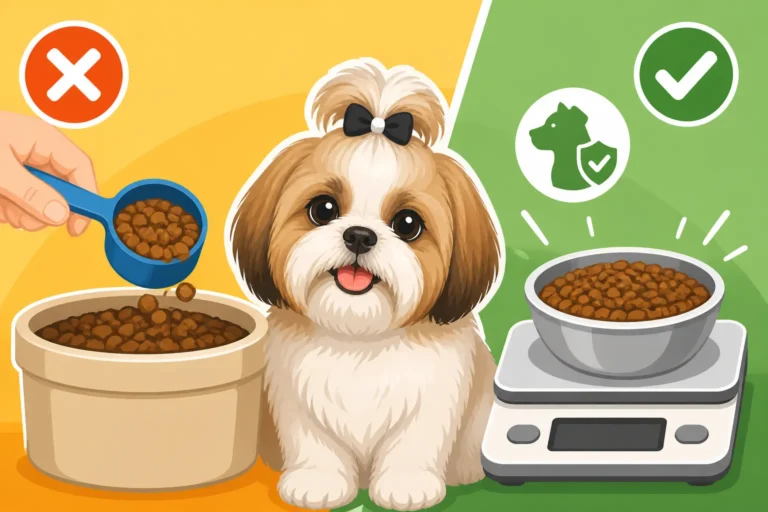
This cannot be stressed enough: accuracy is key! That scoop that came with the food? It might be for a completely different food, or it might not be precisely calibrated to a standard cup measurement. Using a standard kitchen measuring cup is a start, but even then, how you fill it matters. Are you scooping and leveling, or just scooping and mounding? Those little differences add up significantly for a small dog like a Shih Tzu.
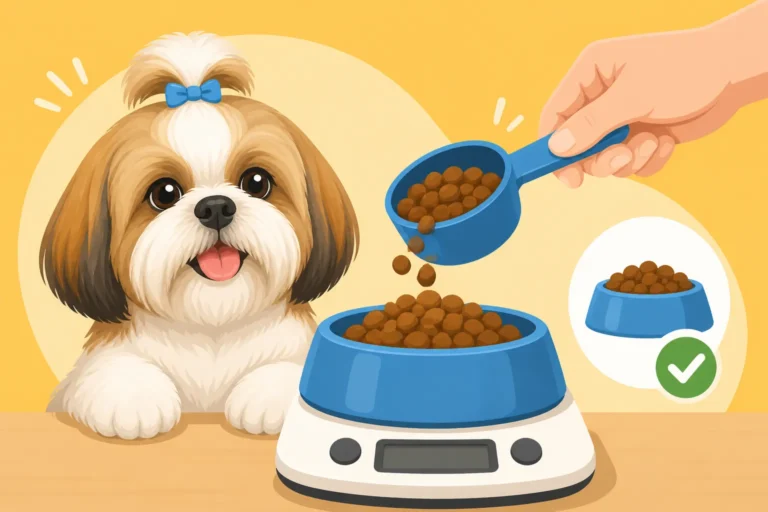
The gold standard for accurate feeding is a digital kitchen scale. These are relatively inexpensive and can be purchased from retailers like Amazon or Chewy. Simply place your dog's empty bowl on the scale, zero it out, and then add food until you reach the desired weight. Most kibbles will have a weight-to-volume conversion (e.g., "1 cup equals approximately 3.5 ounces"). Once you know your Shih Tzu's daily caloric needs, you convert that into a weight of food. For example, if 1 cup of food is 350 kcal and weighs 3.5 oz, then 400 kcal would be roughly 4 oz of food. Weighing ensures you're feeding the exact same amount every single time, eliminating guesswork. It might seem tedious at first, but it quickly becomes second nature and is the most reliable way to manage their intake. It's part of taking control of your Splitting a Shih Tzu Ration Across Two Meals and ensuring consistency.
Incorporating Treats and Training Rewards
This is the sneaky part that often derails the best-laid feeding plans! Those little treats you give throughout the day – for good behavior, for training, or just because they’re cute – all contain calories. And for a small dog, even a single biscuit can represent a significant percentage of their daily allowance. It’s critical to factor these into your overall daily calorie count.
If your Shih Tzu needs 400 calories a day, and you give them 50 calories worth of treats, then their meal portions need to be reduced to 350 calories. Failure to do this means you are effectively overfeeding them by 50 calories every single day, which will absolutely lead to weight gain over time. Choose Treats Small Enough for a Shih Tzu Session and break them into even smaller pieces for training. You can also use low-calorie options like small pieces of cooked carrot or green bean as healthy alternatives. Many owners find success buying specific low-calorie training treats from places like Chewy. Always check the caloric content of any treat you give and adjust accordingly. Transparency about treat intake is vital for maintaining a healthy weight.
Maintaining a Healthy Weight for Your Shih Tzu
Calculating the initial daily calorie requirement is a fantastic first step, but it’s not a set-it-and-forget-it deal. Your Shih Tzu’s body changes over time, their activity levels might fluctuate, and their metabolism can shift. Ongoing monitoring is essential to ensure they stay at their ideal weight.
Regular Weight Checks and Body Condition Scoring
You need to become familiar with what a healthy Shih Tzu feels like, not just what they look like under all that hair. Visual assessment can be misleading due to their dense double coat. This is where regular weight checks and body condition scoring (BCS) come in.
First, weigh your Shih Tzu consistently. Once a month is a good frequency for adults, more often for puppies or if you’re actively managing their weight. Use the same scale, ideally at the same time of day (e.g., before their first meal). Track these weights! A small digital pet scale is a great investment for accuracy. Then, get hands-on with BCS. You want to be able to feel their ribs without pressing hard. They shouldn't be visible (that's too thin), but you should definitely be able to distinguish each rib bone easily with light pressure. Feel their waist: it should tuck in slightly when viewed from above, and their belly should tuck up when viewed from the side. If you have to dig to feel ribs, or if they have no discernible waist, they are likely overweight. Your vet can show you how to do this accurately. Remember Finding Shih Tzu Ribs Under All That Hair is crucial, as their fluff can be very deceiving.
| Body Condition Score | Appearance (Visual) | Palpation (Feel) | Implications |
|---|---|---|---|
| 1 (Emaciated) | Ribs, spine, pelvic bones visible from distance. No fat, obvious muscle loss. | Ribs, spine, pelvic bones easily felt and seen. | Severe malnutrition, serious health concerns. |
| 2 (Thin) | Ribs easily visible. Waist obvious. Some muscle mass but minimal fat. | Ribs easily felt, slight fat covering. | Underweight, may need increased calories. |
| 3 (Ideal) | Ribs felt easily without excess fat cover. Waist apparent. Abdominal tuck. | Ribs easily felt with minimal fat. | Healthy weight, optimal for well-being. |
| 4 (Overweight) | Ribs difficult to feel under moderate fat. Waist less obvious, slight belly sag. | Ribs felt with moderate pressure, significant fat. | Increased risk of health issues, needs dietary adjustment. |
| 5 (Obese) | Ribs not palpable under heavy fat. No waist, obvious abdominal distension. | Ribs very difficult or impossible to feel. | High risk of serious health problems, urgent intervention needed. |
Signs Your Shih Tzu is Overweight or Underweight
Beyond the hands-on assessment, there are other tell-tale signs that your Shih Tzu's weight isn't quite right. If they're overweight, you might notice them becoming less active, perhaps struggling to jump onto the sofa or seeming generally more tired. They might pant more easily, especially after minimal exertion, a concern given their brachycephalic nature. Their gait might change, putting extra strain on their little legs and back, potentially worsening conditions like Shih Tzu Back Problems and Disc Disease. Grooming can also become difficult, as they can't reach certain areas, leading to mats and skin issues. You might also notice their collar or harness fitting more snugly than before, or needing to be adjusted frequently.
If your Shih Tzu is underweight, the signs can be subtler. They might appear lethargic or have a dull, lackluster coat. Their bones might be visibly prominent, even through their fur. They might seem constantly hungry or, conversely, lose their appetite if the underlying cause is a medical condition. A persistent lack of energy, especially in a normally playful pup, is a red flag. Significant weight loss without a change in diet usually warrants a vet visit to rule out underlying health issues, as it could signal something serious like Renal Dysplasia and the Shih Tzu Kidney or other metabolic problems.
Adjusting Food for Weight Management
Once you've identified a weight issue, the good news is you can usually address it with careful dietary adjustments. For weight loss, the key is gradual reduction. Don't cut their food drastically overnight, as this can be unhealthy and make them feel constantly hungry. Work with your vet to determine a new, lower DER target, aiming for about 1-2% body weight loss per week. If your Shih Tzu is 12 pounds, that's just a few ounces a week, which is achievable.
Reduce their current food intake by about 10-15% initially, and then monitor their weight weekly. If they're not losing weight, reduce it a little more. You might also consider switching to a "weight management" or "light" dog food, which is typically lower in calories and higher in fiber to help them feel full. These are readily available on platforms like Chewy or Amazon. Increase their activity slightly if possible and safe for their health. Consistency is crucial; every family member needs to be on board to avoid sneaking extra treats. For weight gain, you'll do the opposite, gradually increasing their food by 10-15% and monitoring. This is often necessary for puppies who are failing to thrive, or adults recovering from illness. Again, a vet's guidance is invaluable here. Remember to make these adjustments slowly and deliberately. How Slowly a Shih Tzu Should Lose Weight is a marathon, not a sprint.
Caloric Needs Across Your Shih Tzu's Life Stages and Health Scenarios
Just as a human baby eats differently from an active teenager or a sedentary senior, your Shih Tzu's dietary needs will evolve throughout their life. What's perfect for a puppy can be detrimental for a senior, and specific health conditions demand very particular caloric and nutrient profiles.
Growing Pups and Their Intense Energy Demands
Shih Tzu puppies are like tiny little energy factories, constantly growing, exploring, and learning. Their bodies are rapidly developing bones, muscles, and organs, which requires a significantly higher caloric intake per pound of body weight compared to adults. They need food that is rich in protein and fat to support this rapid growth, along with essential vitamins and minerals. Puppy foods are specifically formulated with these needs in mind.
A young Shih Tzu puppy might eat 2-3 times their adult portion per pound of body weight! It’s not uncommon for them to need around 50-60 calories per pound of body weight per day, whereas an adult might need closer to 30-40. Typically, puppies are fed three to four small meals a day to help stabilize blood sugar and prevent an upset tummy. Overfeeding a puppy is also possible, leading to rapid growth that can put stress on their developing joints, so while their needs are high, it's still about finding that sweet spot. Regularly weighing your puppy and consulting your vet about their growth curve is important. If you’re unsure, ask your vet about Feeding a Shih Tzu Puppy Through Its Growth and specific recommendations for their age.
Senior Shih Tzus and Their Decreased Requirements
As your beloved Shih Tzu crosses into their senior years, usually around age 8-10, their caloric needs will typically begin to decrease. Their metabolism slows down, and their activity levels naturally tend to decline. They spend more time napping and less time running zoomies. Continuing to feed them the same amount of food they ate as a spry adult will almost certainly lead to weight gain, which is particularly risky for senior dogs who may already be dealing with arthritis or other age-related ailments.
Many senior dog foods are formulated to be lower in calories and fat, but often higher in fiber to promote satiety, and sometimes include joint-supporting ingredients like glucosamine and chondroitin. It's vital to monitor their weight closely and adjust their intake downwards. Aim for 20-30 calories per pound of body weight, or use a senior DER multiplier. However, some senior Shih Tzus might actually lose weight if they have underlying health issues, difficulty eating due to Feeding an Old Shih Tzu With Missing Teeth, or poor nutrient absorption. In these cases, their caloric needs might need to be maintained or even slightly increased with nutrient-dense foods. A biannual vet check-up, including a The Senior Panel a Shih Tzu Needs at Ten, is crucial to tailor their diet as they age.
Managing Specific Health Conditions Through Diet
Diet plays a pivotal role in managing many health conditions that can affect Shih Tzus. For example, dogs with kidney disease, such as Renal Dysplasia in a Shih Tzu Puppy That Will Not Grow, often require a prescription diet that is restricted in protein, phosphorus, and sodium, while still providing adequate calories. These diets are carefully balanced to reduce the workload on their kidneys and slow the progression of the disease. You can find these specialized Kidney Diets for a Shih Tzu through your veterinarian or reputable online pet pharmacies.
Shih Tzus prone to allergies (which can manifest as skin or digestive issues) may benefit from novel protein diets or hydrolyzed protein diets, which aim to eliminate common allergens. This often means carefully chosen ingredients to ensure they aren't eating anything that triggers a reaction, all while ensuring their caloric needs are met. For dogs with digestive sensitivities, a highly digestible, often bland, diet might be prescribed, emphasizing easy-to-process calories. Even conditions like heart disease or diabetes require specific dietary adjustments, often involving controlled sodium or carbohydrate levels. It's absolutely imperative to work closely with your veterinarian if your Shih Tzu has any chronic health condition, as their diet will need to be meticulously tailored. Never attempt to diagnose or treat these conditions with diet alone without professional guidance.
Disclaimer
This article is for general informational purposes only and does not constitute professional advice. Laws, prices and regulations vary by location and change over time. Consult a qualified professional for guidance on your specific situation.