Shih Tzu Entropion and Eyelid Surgery
When your beloved Shih Tzu starts squinting, rubbing at their eyes, or developing a persistent discharge, it’s natural to feel a pang of worry and perhaps a little frustration trying to figure out what’s wrong. These tiny signs can often point to a condition called entropion, where the eyelid rolls inward, causing immense discomfort. This guide will meticulously walk you through understanding entropion, how to spot it, and the surgical solutions available to bring your furry friend relief.
Understanding Shih Tzu Entropion: When Eyelids Turn Inward
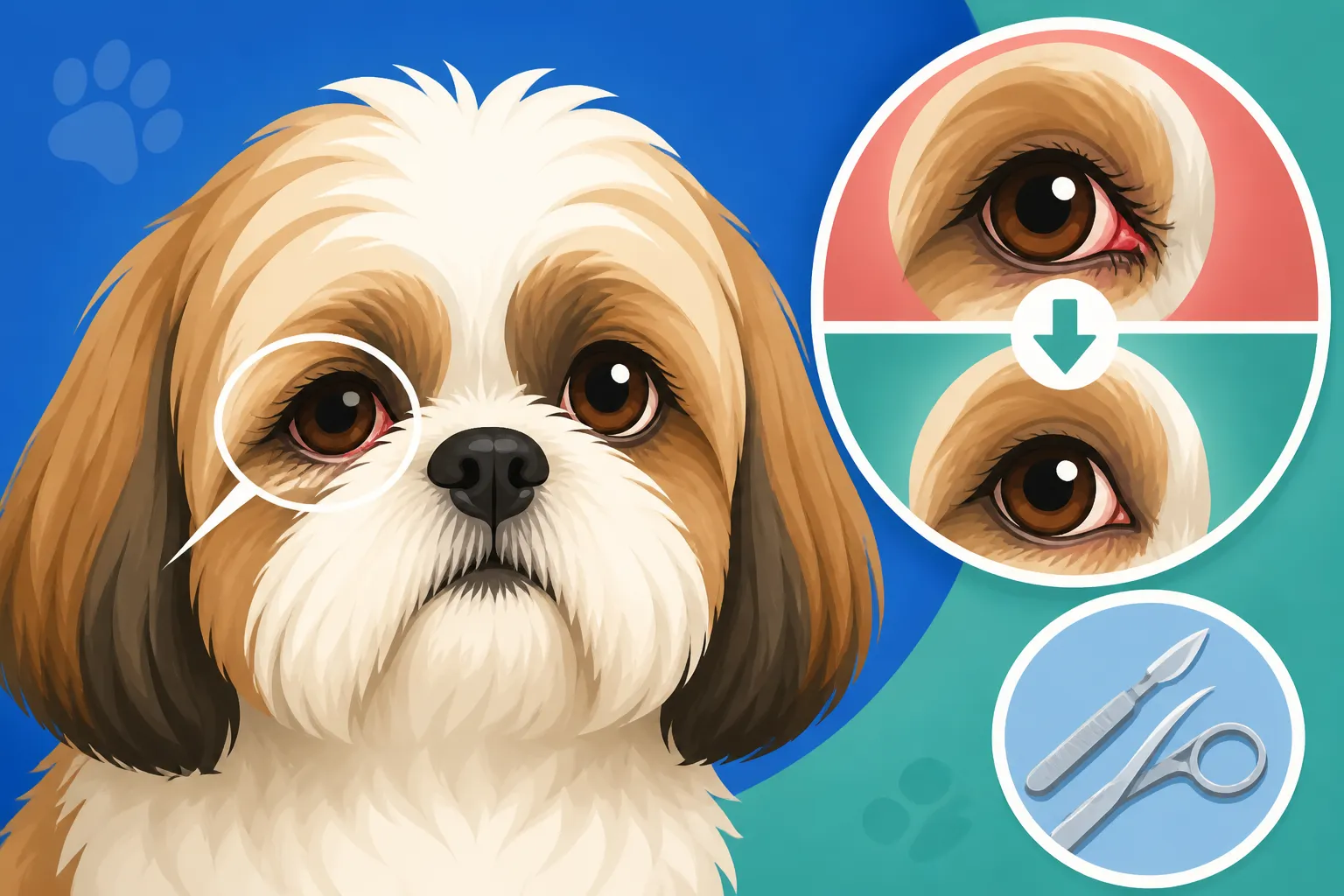
Entropion is a common, and often painful, condition where a portion of the eyelid, usually the lower one, rolls inward towards the eye. Imagine having an eyelash constantly poking your eyeball; that's essentially what your Shih Tzu experiences, but instead of just an eyelash, it's often the entire eyelid margin and all the tiny hairs on it. This constant friction against the delicate surface of the cornea and conjunctiva can lead to a cascade of problems, from chronic irritation to severe vision impairment if left untreated. For us humans, it sounds agonizing, and for our little companions, it truly is.
The Anatomy Behind the Problem in Brachycephalic Breeds
Shih Tzus, like many other brachycephalic (flat-faced) breeds such as Pugs, Bulldogs, and Pekingese, are predisposed to entropion due to their unique facial anatomy. Their adorable flat faces, prominent eyes, and the structure of their orbital sockets play a significant role. The skin around their eyes can sometimes be a bit lax, and the shape of their skull means their eyes are often quite large relative to their eye sockets. This combination can result in an eyelid margin that simply isn't tight enough or is structured in a way that encourages it to curl inward.
It’s not just about aesthetics; it’s about the intricate balance of muscles, skin, and bone around the eye. When this balance is off, the eyelid loses its proper tension and position. This genetic predisposition means that if you're looking for a puppy, it's crucial that any reputable breeder offers full transparency on their breeding dogs' health, including eye health certifications. Always ask to see the parents and inquire about any history of eye issues in their lines, as this can give you a heads-up on potential future problems.
How Entropion Affects Your Shih Tzu's Eyes
The primary issue with entropion is the constant rubbing of the eyelashes and eyelid hair against the cornea. This acts like a tiny, abrasive brush irritating the eye surface with every blink. Initially, this might manifest as mild irritation, but over time, it can lead to much more severe and painful conditions. Think about the cumulative effect of constant micro-scratches. It's not just discomfort; it's a slow, steady assault on one of the most sensitive parts of their body.
This chronic irritation can lead to excessive tearing, as the eye tries to flush out the irritant. It can also cause corneal ulcers, which are open sores on the surface of the eye that can be incredibly painful and, if deep enough, can even rupture the eye. Another common outcome is pigmentary keratitis, where dark pigment migrates onto the cornea as a protective response to inflammation, potentially blocking vision. It’s a vicious cycle where irritation leads to damage, which in turn causes more irritation. Recognizing these signs early is paramount to preventing irreversible damage.
Spotting the Signs: Is Your Shih Tzu Suffering From Entropion?
As a devoted Shih Tzu parent, you’re often the first to notice when something is off with your fur baby. Their eyes are so expressive, and any change can be quite telling. With entropion, the signs can range from subtle to overtly painful, and it’s important to pay attention, even to the small things. Don't dismiss a little squinting as just being tired; it could be their way of telling you something serious is happening.
Observable Symptoms for Concerned Owners
The most common signs of entropion revolve around your Shih Tzu's comfort and the appearance of their eyes. Here's what you should be keeping an eye out for:
- Excessive Tearing (Epiphora): You might notice more moisture than usual around their eyes, or even tear stains running down their face. This is the eye's natural response to irritation, attempting to wash away the offending hairs.
- Squinting or Holding the Eye Shut (Blepharospasm): This is a clear indicator of pain. Your Shih Tzu might partially or completely close the affected eye, especially in bright light, trying to shield it from further irritation.
- Frequent Eye Rubbing or Pawing: If your dog is constantly trying to rub their face against furniture, the carpet, or pawing at their eye, it’s a strong sign of discomfort. Be careful, as vigorous rubbing can actually worsen the problem and potentially lead to Shih Tzu Eye Proptosis, the Emergency Owners Miss if they hit it just right.
- Redness and Inflammation (Conjunctivitis): The whites of their eyes and the inner lining of their eyelids might appear red and inflamed due to the constant friction.
- Mucus or Pus-like Discharge: Beyond clear tearing, you might see thick, yellowish, or greenish discharge, indicating an infection that can develop as a secondary problem from the corneal damage.
- Cloudiness or Opacity of the Cornea: As the cornea becomes damaged, it can start to look cloudy or opaque. This can be a sign of a corneal ulcer or pigmentary keratitis.
- Sensitivity to Light (Photophobia): Dogs with painful eye conditions often shy away from bright lights.
- Vision Impairment: In severe or chronic cases, the constant pain and corneal damage can actually impact their ability to see clearly.
If you observe any of these symptoms, it’s essential to contact your veterinarian promptly. Early intervention can prevent more serious complications and alleviate your Shih Tzu's suffering.
The Damage Caused by Constant Irritation
The persistent rubbing of eyelashes against the eye surface doesn't just cause transient discomfort; it leads to significant physical damage. The primary concern is the development of corneal ulcers. These are essentially open wounds on the surface of the eye, which are incredibly painful and can lead to serious infections. If an ulcer becomes deep, it can even cause the eye to rupture, leading to irreversible damage and potentially the loss of the eye itself. Your vet will usually use a special dye called fluorescein to detect these ulcers, as they're not always visible to the naked eye.
Beyond ulcers, another common consequence for Shih Tzus is Pigmentary Keratitis in a Shih Tzu. This condition involves the deposition of dark pigment onto the cornea in response to chronic inflammation. While it's the eye's attempt to protect itself, this pigment can eventually cover large portions of the cornea, severely obstructing vision. This is particularly prevalent in brachycephalic breeds, whose eyes are often already compromised due to their anatomy, making them more susceptible to this kind of progressive damage. Without intervention, these issues can seriously diminish your Shih Tzu’s quality of life.
Diagnosing Entropion and Exploring Treatment Paths
Discovering your Shih Tzu might have entropion can feel overwhelming, but thankfully, veterinarians are well-versed in diagnosing and treating this condition. The diagnostic process is usually straightforward, and treatment options are generally effective, especially when addressed early. It’s a testament to veterinary medicine that such a painful problem can often be fully resolved.
The Veterinary Examination: What to Expect at the Clinic
When you bring your Shih Tzu to the vet with symptoms suggestive of entropion, the examination will be thorough and focused on their eyes. Your vet will carefully observe your dog's eyelids, looking for the characteristic inward rolling, often more pronounced along the lower lid. They will also assess the overall health of the eye, looking for signs of irritation, redness, or discharge.
A key part of the diagnosis often involves a fluorescein stain test. This non-invasive test uses an orange dye that adheres to areas where the cornea has been damaged or ulcerated. When viewed under a blue light, these damaged areas will glow green, making even tiny abrasions or ulcers clearly visible. This helps your vet understand the extent of the damage caused by the entropion. They might also check tear production (Schirmer Tear Test) to rule out concurrent Dry Eye in a Shih Tzu and Lifelong Drops, as dry eye can exacerbate irritation. Finally, your vet will perform a complete ocular examination, including checking for other common Shih Tzu eye problems like Shih Tzu Corneal Ulcers and Dry Eye or issues with Shih Tzu Eyelash and Eyelid Problems. This comprehensive approach ensures all contributing factors are identified.
Medical Management: Temporary Relief and When It's Not Enough
In very mild cases, or as a temporary measure before surgery, your vet might recommend medical management. This typically involves topical antibiotic ointments or drops to treat any secondary bacterial infections and lubricating eye drops to help reduce friction and keep the eye moist. Anti-inflammatory drops might also be prescribed to lessen swelling and discomfort. In puppies, a temporary procedure called eyelid tacking, where sutures are placed to evert the eyelid, might be done to see if the puppy grows into their facial structure and the entropion resolves naturally.
However, it's crucial to understand that medical management is rarely a permanent solution for true entropion in adult Shih Tzus. It can alleviate symptoms and manage secondary infections, but it doesn't correct the underlying anatomical problem of the inward-rolling eyelid. The constant irritation will likely persist, and the risk of corneal damage will remain. This is where the discussion often turns to surgical correction.
The Necessity of Eyelid Surgery
For most Shih Tzus suffering from entropion, surgery is the only definitive and long-lasting solution. Without it, the chronic pain, recurring infections, and progressive corneal damage will continue, severely impacting their quality of life and potentially leading to permanent vision loss. It's a tough decision for any pet parent to make, but when faced with the alternative of ongoing suffering, it becomes clear.
The goal of entropion surgery is to permanently reposition the eyelid so it no longer rolls inward. This removes the source of irritation, allowing the eye to heal and preventing future damage. While the thought of surgery can be daunting, especially for a small, beloved companion, the relief it brings is immeasurable. Pet insurance providers like Healthy Paws often cover such surgical procedures, significantly easing the financial burden for owners, making this essential treatment more accessible.
Eyelid Surgery for Entropion: What the Procedure Involves
If you're like me, the word "surgery" can conjure up all sorts of anxieties, especially when it involves your little fluffball. But understanding the process can really help alleviate those fears. Eyelid surgery for entropion is a relatively common and usually very successful procedure that brings tremendous relief to affected dogs. Your veterinary ophthalmologist will walk you through every step, ensuring you feel comfortable and informed.
Preparing Your Shih Tzu for Surgery
Before any surgery, your Shih Tzu will undergo a thorough pre-anesthetic workup. This typically includes blood tests to check organ function and ensure they are healthy enough for anesthesia. For brachycephalic breeds like Shih Tzus, anesthesia carries a slightly higher risk due to their unique respiratory anatomy, so your vet will take extra precautions. They might recommend Pre-Anesthetic Testing Before a Shih Tzu Dental or similar comprehensive blood panels. Because of their flat faces, they can be more prone to The Elongated Soft Palate in a Shih Tzu or Shih Tzu Stenotic Nares and Noisy Breathing, which means their airway needs careful management during and after anesthesia. Your vet will discuss these Shih Tzu Anesthesia Risk From a Flat Face considerations with you.
You'll usually be asked to withhold food for several hours before surgery, typically overnight, to prevent nausea and vomiting during anesthesia. Water might be allowed up until a few hours before. On the day of the surgery, your Shih Tzu will be admitted to the clinic, and the veterinary team will prepare them for the procedure, which includes placing an IV catheter for fluids and medications.
The Surgical Process: Correcting the Eyelid
The surgery itself is quite precise. The most common technique for correcting entropion is called the Hotz-Celsus procedure, or a modified version of it. During this surgery, a small, crescent-shaped piece of skin and muscle is carefully removed from the affected eyelid, just below the lash line. Once this tissue is removed, the edges of the incision are meticulously sutured together. This tightens the eyelid and causes it to roll outward into its proper position, preventing the hairs from rubbing against the cornea.
The amount of tissue removed and the tension applied are critical to achieve the correct result – enough to correct the inward roll without everting the eyelid too much (ectropion). This requires a skilled veterinary surgeon, often a board-certified veterinary ophthalmologist. The sutures used are typically very fine and may be absorbable or require removal in about 10-14 days. The goal is to create a permanent correction that allows the eyelid to sit comfortably and protect the eye as it should.
Immediate Post-Surgery Care and Monitoring
Immediately after the surgery, your Shih Tzu will be carefully monitored as they recover from anesthesia. The veterinary team will ensure their breathing is stable and they are comfortable. Pain management is a crucial part of this phase, and they will receive appropriate pain relief medications. The surgical site will be clean, and often an Elizabethan collar (the "cone of shame") will be placed around their neck to prevent them from rubbing or scratching at the incision, which could disrupt the sutures or introduce infection.
You’ll typically pick up your Shih Tzu later the same day or the following morning, depending on the vet's protocol and how well they are recovering. You'll receive detailed instructions for at-home care, including medication schedules and what to watch out for in terms of swelling or unusual discharge. It's a relief for everyone involved once the procedure is complete and the journey to healing can begin. Many pet parents find the cost of such an important procedure manageable with the help of pet insurance plans like those offered by Healthy Paws.
Life After Surgery: Recovery, Long-Term Care, and Prevention
Bringing your Shih Tzu home after surgery marks the beginning of their recovery journey. It's a time for careful attention and lots of TLC, but the payoff is a much happier, more comfortable dog. Understanding what to expect during recovery and how to maintain their eye health moving forward is key to a successful outcome.
Managing the Recovery Period at Home
The first couple of weeks post-surgery are critical for healing. Your Shih Tzu will come home with medications, usually oral antibiotics to prevent infection and pain medication to keep them comfortable. You might also have topical eye drops or oint to apply. The Elizabethan collar is non-negotiable during this period; it’s annoying for them (and sometimes for us!), but it's vital to protect the delicate incision from rubbing or scratching. Seriously, don't take it off unless specifically instructed for feeding or applying medication, and even then, supervise closely.
Activity should be restricted to short, leash-supervised potty breaks. No strenuous play, jumping (which can be hard on a Shih Tzu Back Problems and Disc Disease anyway!), or roughhousing until cleared by your vet. The incision site will likely look a bit swollen and red initially, which is normal, but excessive swelling, discharge, or foul odor should prompt a call to your vet. You'll typically have a follow-up appointment in 10-14 days for suture removal and a check-up to ensure everything is healing correctly. During this time, continue to keep the area clean and follow all medication instructions meticulously.
Potential Complications and What to Watch For
While entropion surgery is generally successful, no surgery is without potential complications. The most common ones to watch out for include:
- Infection: Despite antibiotics, bacterial infections can occur. Look for increased redness, swelling, pus-like discharge, or fever.
- Dehiscence (Suture Breakdown): If your Shih Tzu manages to rub at the incision or if the sutures don't hold properly, the incision could open up. This is why the cone is so important.
- Overcorrection (Ectropion): In rare cases, too much tissue might be removed, causing the eyelid to roll outward. This can lead to dry eye and irritation, potentially requiring further surgery.
- Undercorrection/Recurrence: Sometimes, not enough tissue is removed, and the entropion persists or recurs. This might necessitate a second, minor revision surgery.
- Swelling and Bruising: These are normal immediate post-operative signs but should gradually subside. If they worsen or persist, contact your vet.
Staying vigilant during the recovery period and maintaining open communication with your veterinary team is your best defense against these complications. Remember that your pet insurance, like Healthy Paws, can be a huge help in managing unexpected follow-up care if complications arise.
Preventing Future Issues and Breeder Responsibilities
Once entropion is corrected, the likelihood of recurrence is low, especially with a skilled surgeon. However, responsible pet ownership and awareness of genetic predispositions remain important. If your Shih Tzu had entropion, it's a genetic trait, meaning it's something responsible breeders actively work to minimize.
When choosing a Shih Tzu puppy, always ask about the eye health of the parents and their lineage. Reputable breeders should have their breeding dogs undergo regular eye examinations by a board-certified veterinary ophthalmologist and provide OFA Eye Certification Registry (CAER) certificates. These certifications help identify genetic eye conditions like entropion, Shih Tzu Eyelashes Growing Into the Eye, or cataracts. For more insights on responsible breeding, consider exploring resources like Health Testing a Shih Tzu Breeder Should Do. While you can't prevent all health issues, making informed choices about where your puppy comes from can certainly reduce the risk of inheriting known genetic problems, leading to a healthier and happier life for your furry family member.
| Symptom | Description | Severity | Initial Action | Potential Treatment |
|---|---|---|---|---|
| Excessive Tearing | Constant wetness around eyes, tear staining. | Mild to Moderate | Observe, clean face, consult vet. | Lubricating drops, face cleaning, vet exam. |
| Squinting/Pawing | Partially or fully closing eye, rubbing face frequently. | Moderate to Severe | Consult vet immediately. | Pain relief, diagnostic tests, surgery consideration. |
| Redness/Inflammation | Red whites of eyes, swollen conjunctiva. | Mild to Moderate | Consult vet. | Anti-inflammatory drops, antibiotics if infected. |
| Discharge (Pus-like) | Thick, yellowish, or greenish discharge. | Moderate to Severe | Consult vet immediately. | Antibiotic drops/ointments, cleaning. |
| Corneal Opacity/Ulcer | Cloudiness on eye surface, visible sore (may require fluorescein stain). | Severe | Emergency vet visit. | Intensive topical antibiotics, pain relief, surgery. |
| Vision Changes | Bumping into things, hesitancy, inability to track objects. | Severe | Emergency vet visit. | Address underlying cause, may be irreversible. |
Disclaimer
This article is for general informational purposes only and does not constitute professional advice. Laws, prices and regulations vary by location and change over time. Consult a qualified professional for guidance on your specific situation.