How Dental Disease Weakens a Shih Tzu Jaw
It’s a common misconception that "dog breath" is just a normal part of owning a pup, especially with our adorable Shih Tzus. But often, that pungent smell is a siren call for something far more serious: advanced dental disease that doesn’t just affect their teeth and gums, but can severely weaken their delicate jawbone. This guide is dedicated to demystifying this painful reality, helping you understand the unique challenges your Shih Tzu faces and what you can do to protect their precious smile and underlying bone structure.
The Unique Dental Challenges of a Shih Tzu's Mouth
Shih Tzus, with their charming flat faces and compact jaws, are unfortunately predisposed to a host of dental problems. While their cheerful personalities might make you forget, their physical structure creates an uphill battle for oral hygiene from day one. It's not just about aesthetics; these structural quirks directly impact their vulnerability to severe dental disease and, ultimately, jaw weakening.
Crowded Conditions and Misaligned Bites
Imagine trying to fit a full set of adult human teeth into a child's mouth. That's essentially what a Shih Tzu's jaw experiences. Their mouths are simply too small for the 42 adult teeth they're supposed to have. This overcrowding leads to teeth rotating, overlapping, and growing at odd angles. When teeth are packed so tightly together, they create tiny crevices and sheltered spots where food particles and bacteria can easily get trapped. These areas are incredibly difficult, if not impossible, for regular brushing or even the natural abrasive action of chewing to clean effectively.
Adding to this, many Shih Tzus have an undershot bite, where their lower jaw extends slightly beyond the upper jaw. While a hallmark of the breed's charm, this misalignment further complicates the oral landscape. It can lead to abnormal wear patterns on teeth, or even prevent certain teeth from making proper contact, leaving them more prone to plaque accumulation. This perfect storm of structural issues means that even with diligent home care, a Shih Tzu's mouth is a prime breeding ground for the initial stages of dental disease. You can learn more about this specific challenge in our article on Shih Tzu Tooth Crowding in a Tiny Jaw.
Rapid Plaque and Tartar Buildup
Because of the crowded conditions and their brachycephalic (flat-faced) anatomy, Shih Tzus often breathe more through their mouths than other breeds. This constant air exposure can dry out the oral cavity, which reduces saliva's natural rinsing action. Saliva contains enzymes that help break down food particles and has antibacterial properties. Without this crucial cleansing, plaque — a sticky film of bacteria and food debris — forms much faster and hardens into tartar (calculus) at an accelerated rate.
Tartar is calcified plaque that clings stubbornly to the tooth surface, typically at the gumline. Once tartar forms, it's impossible to remove with a toothbrush alone; it requires professional veterinary scaling under anesthesia. This rapid accumulation means that dental disease can progress swiftly in Shih Tzus. What might take years in another breed can develop in a matter of months in a Shih Tzu, particularly if daily home care isn't consistently applied. The beard and facial hair can also trap moisture and food particles close to the teeth, creating an even more hospitable environment for bacterial growth, as discussed in Breath From a Shih Tzu Beard Against Its Teeth.
The Insidious Progression: From Gums to Bone
Dental disease is not just about bad breath or ugly teeth; it's a progressive infection that, if left unchecked, systematically destroys the support structures of the teeth, including the very bone of the jaw. This silent, painful process can eventually lead to excruciating complications.
Gingivitis to Periodontal Disease
The journey of dental disease often begins innocuously with gingivitis, an inflammation of the gums. Plaque accumulation irritates the gum tissue, causing it to become red, swollen, and prone to bleeding. At this stage, gingivitis is reversible with professional cleaning and improved home care.
However, if plaque and tartar continue to build, the infection deepens. Bacteria migrate below the gumline, forming "pockets" between the teeth and gums. This is the transition to periodontal disease, a more serious and irreversible condition. In these pockets, an anaerobic environment thrives, allowing destructive bacteria to flourish. The body's immune response to this chronic infection, unfortunately, often contributes to the problem. Instead of simply eradicating the bacteria, the inflammatory process begins to break down the tissues and bone surrounding the teeth. This is why Periodontal Disease in a Five Year Old Shih Tzu is such a significant concern.
Bone Loss and Jaw Weakening
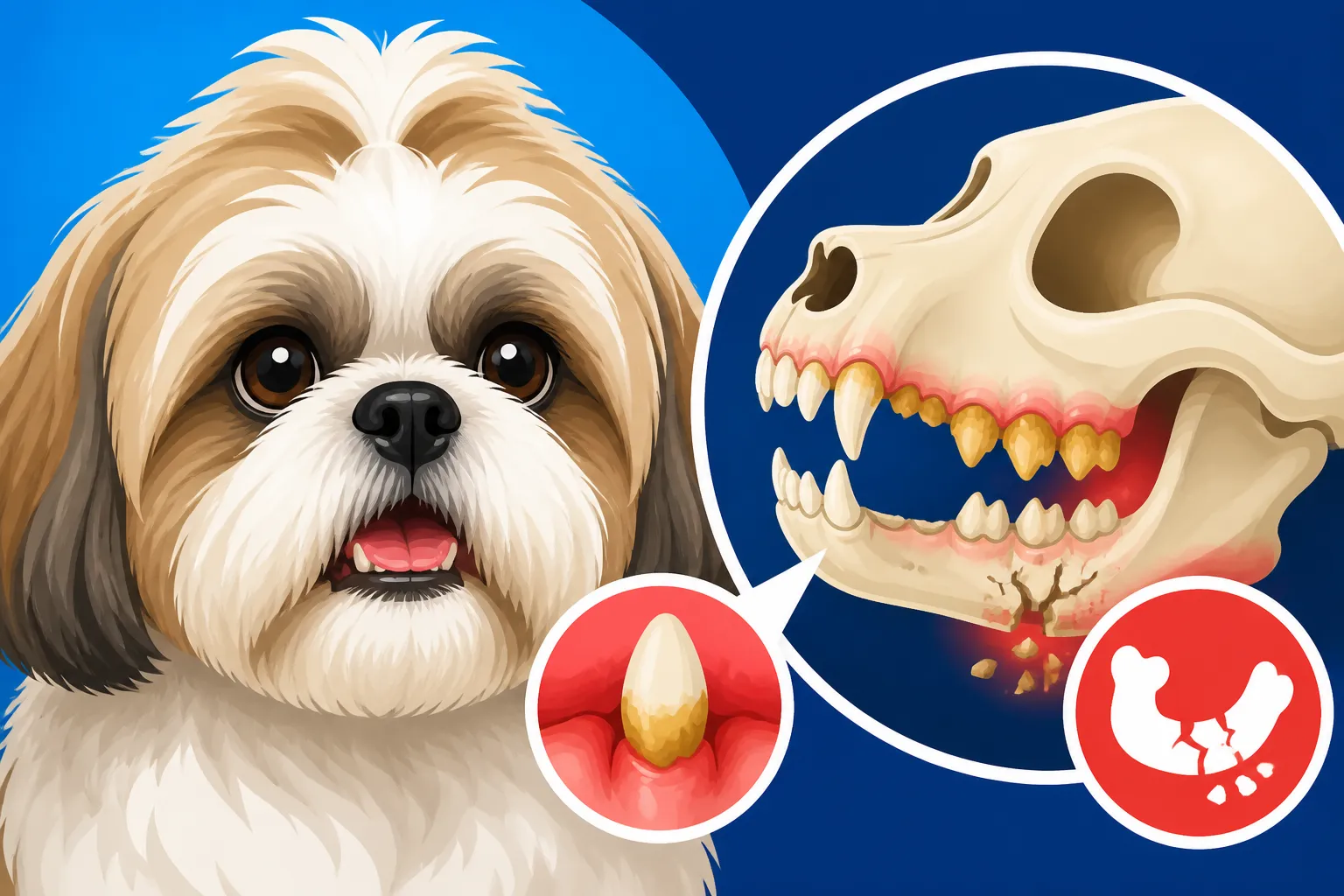
Once periodontal disease takes hold, the bacteria and the body's inflammatory response start to attack the alveolar bone, which is the specialized bone that supports the teeth in the jaw. This process is called bone resorption. As the infection progresses, the bone literally dissolves away. It's a slow, steady erosion, much like sand washing away from the base of a structure.
For Shih Tzus, whose jaws are already petite, this bone loss is particularly devastating. The jawbone, especially the thin mandible (lower jaw), becomes incredibly fragile. Imagine a tree whose roots are slowly being eaten away; eventually, a strong wind or even a slight bump could cause it to topple. In a Shih Tzu, significant bone loss can leave the jaw so compromised that normal activities like chewing hard kibble, playing with a toy, or even an accidental bump could lead to a pathological jaw fracture. This isn't just a crack; it's a break in a bone that has been weakened to the point of structural failure by disease.
Systemic Health Impacts
The consequences of advanced dental disease aren't confined to the mouth. The chronic bacterial infection and inflammation in the oral cavity can have far-reaching effects on your Shih Tzu's overall health. Bacteria from the infected gums can enter the bloodstream and travel to distant organs, including the heart, kidneys, and liver.
While these systemic issues may not directly weaken the jaw, they underscore the seriousness of oral health. A Shih Tzu battling chronic kidney or heart disease, exacerbated by dental bacteria, will have a compromised immune system and overall vitality, making them less resilient to the pain and risk of a weakened jaw. Furthermore, if a jaw fracture does occur, a pet with underlying organ issues will have a much harder time recovering from surgery and anesthesia. This interconnectedness is why vets stress the importance of regular dental care; it’s about more than just a clean smile.
Recognizing Advanced Dental Disease and Jaw Compromise
It can be heartbreaking to discover your beloved Shih Tzu is suffering from advanced dental disease, especially when the signs might have been subtle at first. Knowing what to look for can prompt earlier intervention and potentially prevent more severe complications like a jaw fracture.
Visible Signs and Behavioral Changes
Beyond the infamous "dog breath" – which should always be taken seriously – there are several clear indicators that your Shih Tzu might be experiencing significant dental pain and potentially jaw compromise.
- Reluctance to Eat or Chew: This is often one of the first and most noticeable signs. Your dog might approach their food bowl, sniff it, but then back away. They might try to eat but drop food, or chew only on one side of their mouth. Hard kibble might become impossible, leading them to prefer softer foods or refuse meals altogether.
- Pawing at the Mouth or Rubbing Face: Constant pawing at the face, rubbing their muzzle on furniture or the carpet, or excessive licking of their lips can all be attempts to alleviate discomfort.
- Drooling: Increased drooling, sometimes tinged with blood, is a clear sign of oral pain or infection.
- Swelling: Any swelling around the jaw, under the eyes, or on the sides of the face could indicate an abscess stemming from an infected tooth root. These abscesses are extremely painful and can erode bone.
- Depression or Irritability: Pain can make even the sweetest Shih Tzu withdrawn, grumpy, or less enthusiastic about play and interaction.
- Loose or Missing Teeth: Visibly loose teeth are a late-stage sign, indicating severe bone loss around the tooth root.
- Receding Gums: Gums that appear to be pulling away from the teeth, exposing the roots, are another indicator of severe periodontal disease.
If you observe any of these symptoms, it's crucial to schedule a veterinary examination promptly. Dental issues are often hidden beneath the gumline, and only a professional assessment, including dental X-rays, can truly reveal the extent of the damage.
The Risk of Pathological Jaw Fractures
This is where the concern about a weakened jaw truly hits home for many Shih Tzu owners. A "pathological jaw fracture" isn't caused by a major trauma like being hit by a car; it's a fracture that occurs in a bone already weakened by disease. In a Shih Tzu with advanced periodontal disease, the bone loss can be so severe, particularly in the lower jaw where the roots of the canine and premolar teeth extend deep, that the jaw becomes as brittle as a dry twig.
A simple, everyday action can then trigger the fracture:
- Chewing on a dental chew or a toy.
- Jumping off the sofa and landing awkwardly.
- A playful bump from another pet or even a human hand.
- A vigorous sneeze.
The aftermath of such a fracture is devastating. Your Shih Tzu will be in excruciating pain, likely unable to close their mouth, eat, or drink. Treatment for a jaw fracture often involves complex surgery, wiring the jaw shut, and a long, difficult recovery period involving soft food and strict rest. The cost of such emergency care and specialized surgery can be substantial. This is where pet insurance, like a plan from Healthy Paws, can be an invaluable lifeline, helping to cover the unexpected and often very high costs of such a severe medical emergency, including diagnostic imaging and surgical repair. Understanding the necessary steps for recovery is key, as discussed in Shih Tzu Tooth Extractions and Eating After.
Proactive Care to Protect Your Shih Tzu's Jaw
The good news is that much of the pain and risk associated with dental disease and jaw weakening is preventable. Proactive care, both at home and with your veterinarian, is the absolute best defense for your Shih Tzu.
Daily Home Care
Consistent daily home dental care is the cornerstone of prevention. While it might seem daunting at first, establishing a routine early on can make a world of difference.
- Toothbrushing: This is the gold standard. Aim for daily brushing using a soft-bristled toothbrush designed for dogs and pet-specific toothpaste (never human toothpaste, as it contains ingredients toxic to dogs). Focus on the gumline, where plaque accumulates most rapidly. Even a few minutes a day can significantly reduce plaque and tartar buildup. Start slowly, making it a positive experience with praise and treats. Our guide on Daily Toothbrushing in a Crowded Shih Tzu Jaw offers practical tips.
- Dental Chews and Treats: Choose VOHC (Veterinary Oral Health Council) approved dental chews. These products have been scientifically proven to help reduce plaque and tartar. Remember, not all dental chews are created equal, and some can even be too hard, posing a risk to fragile teeth or even a weakened jaw. Always supervise your dog with chews.
- Water Additives and Oral Rinses: These can offer an additional layer of protection by reducing bacteria in the mouth. They are not a substitute for brushing but can be a helpful supplement.
Professional Dental Cleanings
Even with the most diligent home care, professional dental cleanings are usually necessary for Shih Tzus due to their genetic predisposition to dental issues. Your veterinarian will recommend a schedule, often annually, to maintain optimal oral health.
A professional dental cleaning involves:
- Anesthesia: This is crucial and non-negotiable. Anesthesia allows for a thorough and safe examination, scaling above and below the gumline, and polishing without causing stress or pain to your dog. For a flat-faced breed like a Shih Tzu, there are specific considerations for anesthesia, which you can read about in Anesthesia on a Flat-Faced Shih Tzu.
- Full Oral Exam: While under anesthesia, the vet can carefully examine every tooth and the surrounding gum tissue, which is impossible in an awake dog.
- Scaling and Polishing: Specialized instruments remove plaque and tartar from all tooth surfaces, including below the gumline. The teeth are then polished to create a smooth surface that resists new plaque accumulation.
- Dental X-rays: This is perhaps the most critical part for assessing jaw health. X-rays reveal the hidden damage beneath the gumline, showing bone loss around tooth roots, abscesses, or other pathology that would otherwise go undetected. This is how a vet can identify early signs of jaw weakening.
- Extractions: If severe disease is present, painful or diseased teeth that are beyond saving will be extracted to prevent further infection and bone loss. The cost of these procedures can vary greatly, so understanding What a Shih Tzu Dental Runs at the Vet is important for planning.
Regular professional cleanings, guided by your vet’s recommendations, can halt the progression of periodontal disease, preserve jawbone integrity, and ensure your Shih Tzu lives a more comfortable, pain-free life. Being prepared for these costs is smart planning, and many owners find value in pet insurance providers like Healthy Paws for routine wellness plans or unexpected dental surgery.
Here's a quick overview of the stages of periodontal disease and their impact on your Shih Tzu's jaw:
| Stage of Periodontal Disease | Description | Impact on Jaw Bone & Teeth | Key Signs for Owners | Vet Treatment Required |
|---|---|---|---|---|
| Stage 0: Healthy | Normal, pink gums, no plaque/tartar. | No bone loss. | Good breath, clean teeth. | Daily home care, routine check-ups. |
| Stage 1: Gingivitis | Mild gum inflammation, redness, swelling. | Reversible gum inflammation, no bone loss yet. | Mild bad breath, red gums, some plaque. | Professional cleaning, enhanced home care. |
| Stage 2: Early Periodontitis | Increased inflammation, some bone loss (up to 25%). | Early bone erosion, gum pockets forming. | Noticeable bad breath, bleeding gums, visible tartar. | Professional cleaning, dental X-rays, possibly minor extractions. |
| Stage 3: Moderate Periodontitis | Significant inflammation, moderate bone loss (25-50%). | Moderate to severe bone loss, deep gum pockets, loosening teeth. | Severe bad breath, chronic pain, changes in eating, loose teeth. | Professional cleaning, extensive X-rays, multiple extractions. |
| Stage 4: Advanced Periodontitis | Severe inflammation and infection, bone loss >50%. | Severe bone loss, jaw weakening, high risk of pathological fracture. | Extreme pain, difficulty eating, swelling, pus, very loose teeth, fractured jaw. | Aggressive treatment, multiple extractions, potentially jaw repair surgery. |
Being aware of How Often a Shih Tzu Needs a Dental and ensuring your vet conducts Pre-Anesthetic Testing Before a Shih Tzu Dental are crucial steps in managing this silent threat. Investing in your Shih Tzu's dental health is an investment in their overall happiness and longevity, protecting them from unnecessary pain and severe medical complications.
Disclaimer
The information provided in this guide is for general informational purposes only and is not intended as a substitute for professional veterinary advice. Always consult with a qualified veterinarian regarding your Shih Tzu's specific health concerns and before making any decisions about their care or treatment.