Shih Tzu Behavior Shifts That Mean a Disc Hurts
Shih Tzu behavioral shifts, including movement changes and reluctance to jump, can indicate painful spinal disc problems.
Work with the temperament you have.
House-training and crate work, recall, leash manners, separation anxiety, and the behaviors this breed is wired for.
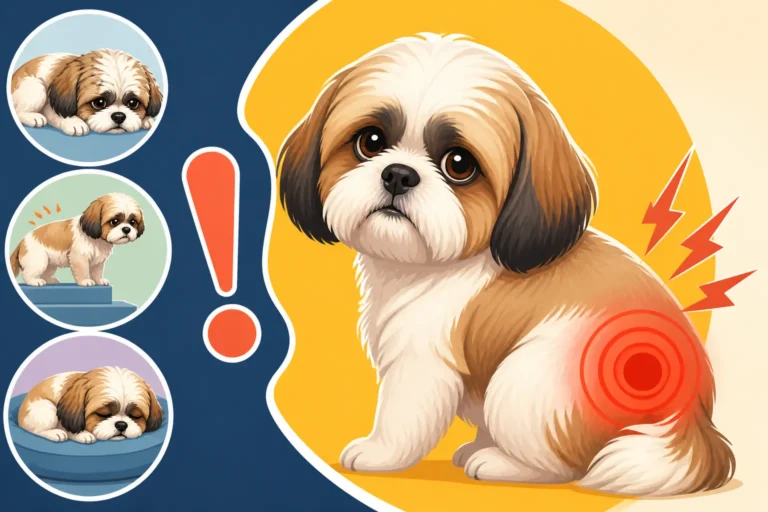
Shih Tzu behavioral shifts, including movement changes and reluctance to jump, can indicate painful spinal disc problems.

Finding a trainer who understands Shih Tzus prevents physical injury and helps owners build better bonds using positive methods.

Shih Tzu stress at groomer and vet appointments stems from sensitive companion history, flat faces, and eye vulnerabilities.

Resource guarding in Shih Tzus explains natural canine protective instincts, warning signals like growling, and gentle training strategies.

Shih Tzu rain aversion stems from breed history and physical discomfort, with practical strategies for wet weather walks.
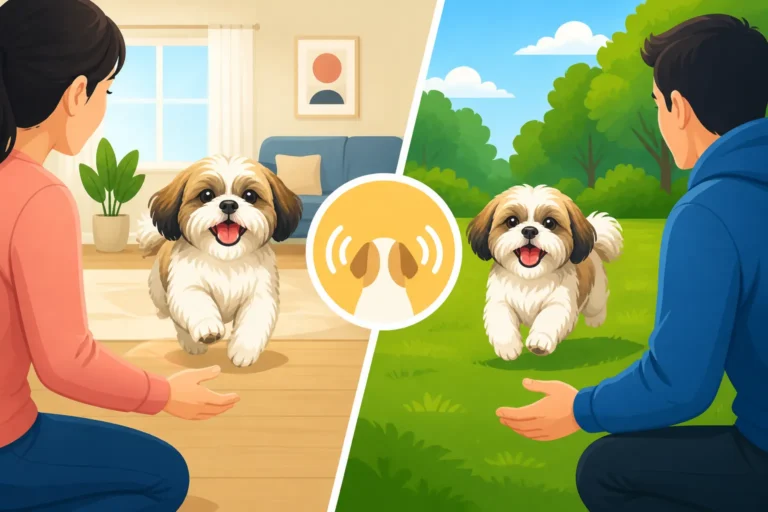
Shih Tzu recall training provides practical strategies and reward methods to teach a reliable come command indoors and outdoors.
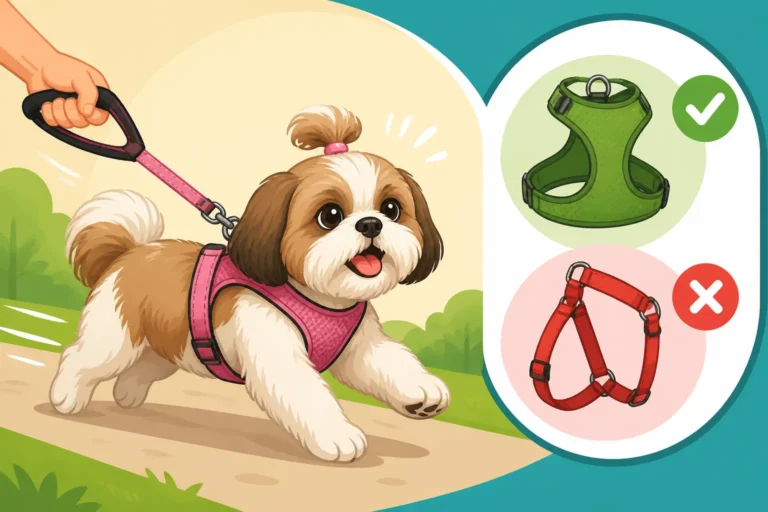
Shih Tzu leash pulling behavior and harness selection protect delicate necks, airways, and prominent eyes from sudden injury.
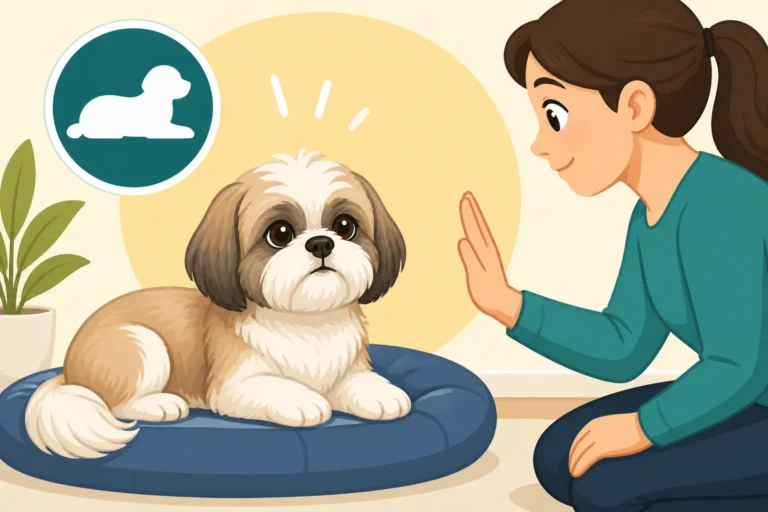
Teaching a Shih Tzu the settle cue stops pacing, panting, and barking while reducing stress and bringing household peace.
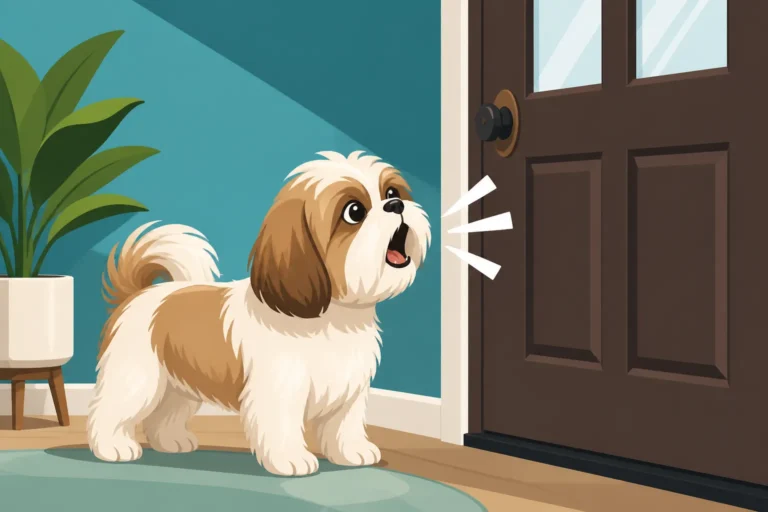
Shih Tzu door barking stems from palace guard instincts, excitement, and learned attention, with realistic strategies to manage it.
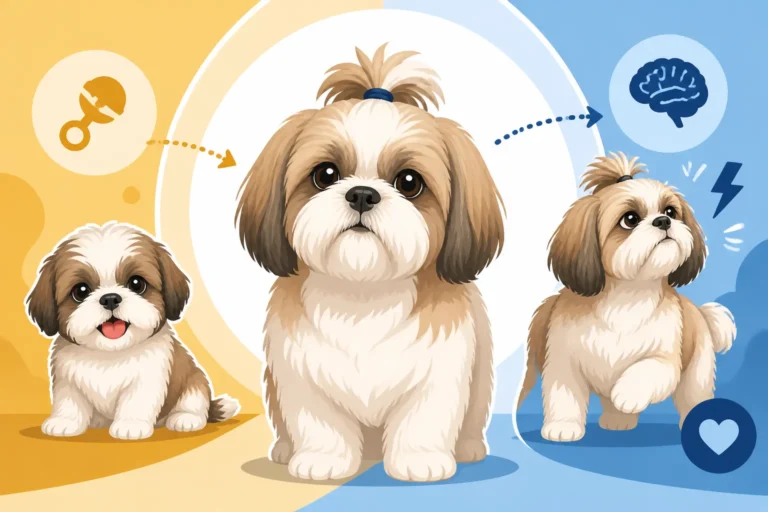
Shih Tzu adolescence begins between six and twelve months, bringing hormonal shifts, boundary pushing, and behavioral changes into their second year.