A Shih Tzu Backsliding on House Training
Shih Tzu house training regression often stems from urinary tract infections, kidney issues, anxiety, cognitive dysfunction, or physical pain.
Work with the temperament you have.
House-training and crate work, recall, leash manners, separation anxiety, and the behaviors this breed is wired for.
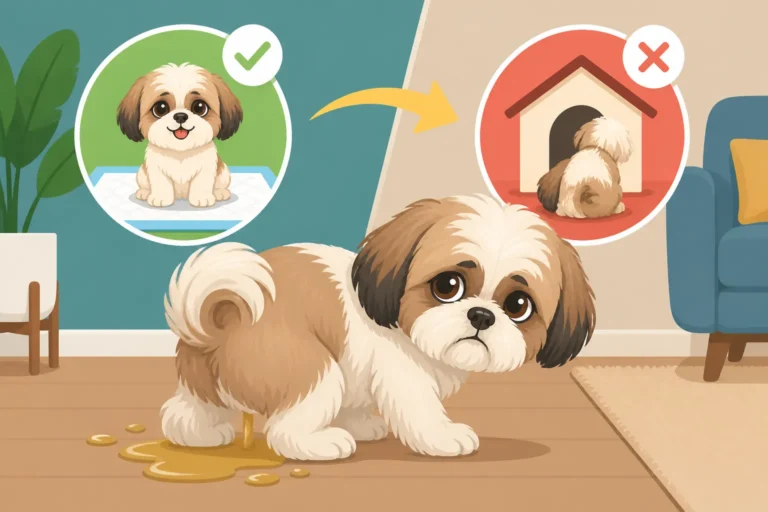
Shih Tzu house training regression often stems from urinary tract infections, kidney issues, anxiety, cognitive dysfunction, or physical pain.

Cold weather reluctance in Shih Tzus stems from small body mass, clipped coats, and brachycephalic respiratory challenges.

Shih Tzu rain refusal stems from waterlogged double coats, tiny stature near puddles, and flat facial breathing challenges.

Indoor grass trays provide apartments and harsh weather with a reliable potty solution for Shih Tzus with tiny bladders.

Potty pad use for Shih Tzus involves evaluating indoor training benefits, drawbacks, and methods to transition away successfully.
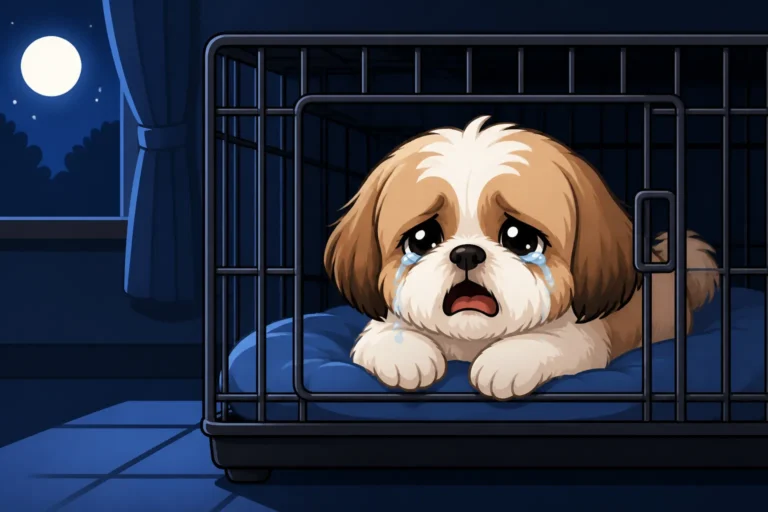
Shih Tzu nighttime crying in crates stems from physical needs, loneliness, or fear, requiring distinct strategies for puppies and adults.
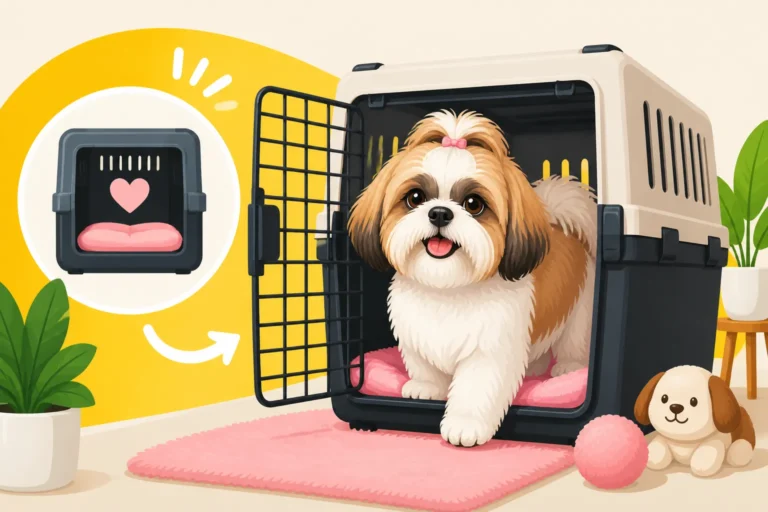
Shih Tzus were bred as lap-warming palace companions, so a crate can feel isolating, and a positive, gradual introduction turns it into a cozy retreat.

Shih Tzu bladder capacity and potty limits depend on age, allowing puppies to hold for two hours and healthy adults to go six hours.

A structured week by week Shih Tzu potty schedule helps owners manage tiny bladders, navigate small breeds, and prevent indoor accidents.

Shih Tzu house training difficulties stem from small bladders, fast metabolisms, stubborn temperaments, and a strong preference for indoor comfort.