Walking a Shih Tzu in Warm Weather
It’s a lovely day, the sun is shining, and you’re itching to take your precious Shih Tzu out for a stroll. But then the nagging doubt creeps in: is it too hot? As a Shih Tzu parent, you know our little lion dogs are particularly susceptible to overheating, and that worry can make you second-guess every outdoor adventure. This guide is here to equip you with all the knowledge and practical tips you need to confidently and safely walk your Shih Tzu, even when the weather starts to warm up.
Understanding Why Warm Weather is Such a Risk for Shih Tzus
We all adore our Shih Tzus for their charming personalities, beautiful flowing coats, and those endearing flat faces. But these very characteristics, which make them so unique and lovable, also put them at a distinct disadvantage when the temperatures rise. It’s not just about them feeling a bit warm; it’s about a serious physiological vulnerability that can turn a pleasant walk into a dangerous situation very quickly. Understanding these inherent risks is the first step to keeping your furry friend safe.
The Brachycephalic Challenge
The most significant factor making warm weather risky for Shih Tzus is their brachycephalic (flat-faced) anatomy. Unlike dogs with longer muzzles, our Shih Tzus have shortened air passages. This means their airways are often compressed, making it harder for them to breathe efficiently even under normal conditions. Imagine trying to breathe through a pinched straw all the time – that's a bit what it's like for them.
When they get hot, dogs primarily cool themselves by panting. This process evaporates moisture from their tongue and respiratory tract, which in turn helps cool their blood. However, for a Shih Tzu, their already compromised airways make this cooling mechanism far less effective. They struggle to move enough air to pant effectively, and the soft tissues in their throat can swell when inflamed by heat, further obstructing their breathing. This leads to a vicious cycle where they pant harder to cool down, which makes them hotter and more distressed. It's truly heartbreaking to see them struggle, and it’s why understanding Brachycephalic Breathing in a Shih Tzu is so crucial for any owner. This breed simply cannot cool itself as efficiently as others, a key point highlighted in Why a Shih Tzu Cannot Cool Itself Well.
The Double Coat Dilemma
While their luxurious double coat is one of their most stunning features, it also acts like a built-in blanket, trapping heat close to their body. This dense inner layer, combined with the longer outer coat, is fantastic for keeping them warm in colder climates, but it becomes a serious liability when the mercury climbs. The coat prevents air from circulating freely against their skin, making it difficult for natural convection to help cool them down.
Many owners consider shaving their Shih Tzu short in the summer, and we’ll get into that a bit more later. However, it's important to remember that even a short coat provides some insulation against the sun's direct rays, and shaving too short can expose their delicate skin to sunburn, creating a different set of problems. It’s a delicate balance, and often the full coat itself, when kept meticulously brushed and free of mats, can actually offer some protection from UV rays, much like a natural parasol.
Tiny Bodies, Big Risk
Shih Tzus are small dogs, typically ranging from 9 to 16 pounds. Their close proximity to the ground means they absorb heat radiating from hot surfaces like pavement or asphalt much more quickly than taller dogs. These surfaces can reach scorching temperatures, far exceeding the ambient air temperature. A small body also has a larger surface area to volume ratio compared to a larger dog, meaning they can heat up faster relative to their size.
Furthermore, their small size and generally lower energy levels can sometimes lead owners to underestimate the impact of heat. A short walk that might be perfectly fine for a larger, more robust breed can be dangerously strenuous for a Shih Tzu in warm weather. Their compact frame and tendency towards Shih Tzu Obesity on a Sixteen Pound Frame can also exacerbate heat stress, as extra weight adds to the workload on their heart and lungs.
Essential Preparations for Warm Weather Walks
Now that we understand why warm weather is such a big deal for our Shih Tzus, let's talk about what we can do to prepare for those unavoidable outdoor moments. Being proactive is your best defense against heat-related issues, and it can mean the difference between a safe outing and an emergency. It's about setting them up for success before you even step out the door.
Timing is Everything
This is arguably the most critical factor. The hottest parts of the day are typically between 10 AM and 4 PM. During these hours, the sun is at its strongest, and pavements have had ample time to absorb and radiate heat. To keep your Shih Tzu safe, you absolutely must adjust your walking schedule.
Aim for early morning walks, ideally before 8 AM, when the air is still cool and the sun hasn't had a chance to bake the ground. The difference in temperature between 7 AM and 11 AM can be dramatic, making the early slot exponentially safer. Similarly, late evening walks, after the sun has set and the pavement has cooled down, are a much better option. Sometimes, especially in peak summer, this might mean waiting until after 8 or 9 PM. It might feel inconvenient for us, but it’s a non-negotiable step for their well-being. Think of it as a commitment to their comfort and safety.
Checking the Pavement Temperature
You know how uncomfortable walking barefoot on hot asphalt feels? Your Shih Tzu feels that, too, but often much worse because their paw pads are thinner and more delicate than the soles of our feet. Hot pavement can cause burns, blisters, and serious discomfort. A common rule of thumb is the "5-second rule": place the back of your hand or bare foot on the pavement. If you can't comfortably hold it there for five seconds, it's too hot for your dog's paws.
Even if the air temperature feels mild to you, the ground temperature can be significantly higher, especially on dark asphalt or concrete. Grass or shaded dirt paths are always preferable, but if you must walk on pavement, you absolutely must check it first. A quick check can prevent painful burns that can take weeks to heal. Remember, Pavement Heat Under a Shih Tzu Foot is a real danger.
Here's a general guide to pavement temperature compared to ambient air temperature:
| Air Temperature (Fahrenheit) | Approximate Pavement Temperature (Fahrenheit) | Risk Level for Paws |
|---|---|---|
| 75°F (24°C) | 100-110°F (38-43°C) | Moderate |
| 80°F (27°C) | 115-125°F (46-52°C) | High |
| 85°F (29°C) | 130-140°F (54-60°C) | Extreme |
| 90°F (32°C) | 145-155°F (63-68°C) | Severe Burns Possible |
Note: These are approximations. Direct sunlight and surface material can significantly increase pavement temperatures.
Hydration and Gear
Always, always carry water for your Shih Tzu. Even for short walks, having fresh, cool water readily available is paramount. Collapsible silicone bowls are a fantastic invention and don't take up much space. You can find many practical options on Amazon. Offer water frequently, even if your dog doesn't seem overtly thirsty. Prevention is key.
Consider investing in cooling gear. Cooling vests or bandanas, soaked in cold water, can help regulate your dog's body temperature. These work by evaporative cooling, mimicking their natural panting mechanism. Just make sure they don't trap heat against the body, but rather allow for air circulation. Some of these products are specifically designed for brachycephalic breeds and can be a real lifesaver on warmer days. You can learn more about Cooling Gear That Suits a Shih Tzu to pick the best options.
Grooming for Heat
The question of whether to clip a Shih Tzu’s coat shorter in warm weather is a common one. While a shorter clip can certainly make daily grooming easier and reduce matting, it’s not always a magic bullet for cooling. A too-short clip, especially shaved down to the skin, can actually expose their sensitive skin to sunburn, which can lead to other health issues, including skin cancer. Their natural coat, when kept free of mats, provides a layer of insulation against both heat and cold, and also protects against UV rays.
If you opt for a shorter style, a "puppy cut" that leaves an inch or two of hair is generally a good compromise. This keeps them tidy, helps with cooling by allowing some air circulation, but still offers a degree of sun protection. Discuss your concerns with your professional groomer, as they can recommend the best cut for your individual Shih Tzu, taking into account their coat type and your local climate. This balance is something we explored in depth in Choosing Between a Full Coat and a Puppy Cut. Regular brushing, even with a shorter coat, is still vital to prevent mats that can trap heat.
During the Walk: Safety First Steps
So, you've timed your walk perfectly, checked the pavement, and you have your water and cooling gear ready. Great! But the vigilance doesn't stop there. Once you're out and about, it's essential to remain hyper-aware of your Shih Tzu's behavior and surroundings. These small, moment-to-moment decisions can make all the difference in keeping them safe.
Keep it Short and Shady
Even during the cooler parts of the day, keep warm-weather walks brief. A short potty break and a quick sniff around the nearest grassy patch is often enough. Forget about long strolls or extended play sessions. Your Shih Tzu is a companion breed, not a long-distance runner, and their Shih Tzu Exercise Intolerance in Summer is a real factor.
Stick to shaded areas as much as possible. Walk under trees, along buildings that cast shadows, or seek out parks with ample natural cover. Avoid open, sunny areas where they'll be exposed to direct sunlight for prolonged periods. Grass is always a better surface than pavement, as it absorbs less heat. If you notice your dog lagging, panting excessively, or seeking shade, it’s time to head home. Better safe than sorry, every single time. Sometimes, even a short twenty-minute walk can be too much when it's warm. For more on appropriate activity levels, consider Twenty Minutes of Walking for a Shih Tzu.
Watch for Warning Signs
Your Shih Tzu can't tell you in words that they're overheating, so it's your job to be their advocate and interpreter. Learn to recognize the subtle, and not-so-subtle, signs of heat stress.
Look out for:
- Excessive panting: While some panting is normal, watch for heavy, rapid panting that seems out of proportion to their activity level.
- Difficulty breathing: This can manifest as loud, labored breathing, snorting, or even reverse sneezing, which can be exacerbated by heat.
- Bright red gums or tongue: This is a classic sign of overheating, indicating increased blood flow as the body tries to cool itself.
- Lethargy or weakness: Your normally spunky Shih Tzu might seem sluggish, unwilling to move, or stumble.
- Excessive drooling: A lot of foamy saliva is another indicator.
- Vomiting or diarrhea: These are more severe signs.
- Wobbly gait or collapse: This is an emergency and requires immediate intervention.
If you notice any of these signs, especially the more severe ones, you need to act immediately. Don’t wait to see if they get better on their own. Recognizing these symptoms early can be life-saving, as detailed in Spotting Heat Trouble in a Shih Tzu.
Emergency Cooling Measures
If your Shih Tzu shows signs of overheating, every second counts. Here’s what you need to do:
- Get to a cool place immediately: Move them into the shade, an air-conditioned car, or inside your home.
- Offer water: Let them drink small amounts of cool (not ice cold) water if they can. Don't force them.
- Apply cool water: Wet their paws, belly, inner thighs, and neck with cool (again, not icy) water. You can use a damp towel or your water bottle. The groin and armpit areas are good spots because large blood vessels are close to the surface there, allowing for quicker cooling of the blood.
- Fan them: Use anything you have to create air movement around them.
- Seek veterinary attention: Even if your dog seems to recover quickly, it’s always best to call your vet. Heatstroke can have delayed effects, including organ damage, that aren't immediately obvious. Your vet can assess their condition and provide further treatment if necessary. Remember, the after-hours emergency vet bill is never fun, but it's essential for their safety.
Training Considerations for Hot Weather Habits
While we focus a lot on the physical aspects of warm weather safety, training and habit-building play a huge role in ensuring your Shih Tzu is comfortable and safe. It's about establishing routines that work with the weather, and finding alternatives for their exercise and mental stimulation.
Teaching Early Morning/Late Evening Potty
Your Shih Tzu thrives on routine, and warm weather often means you have to shift that routine dramatically. If your dog is used to a midday potty break, you’ll need to gradually adjust them to earlier morning or later evening schedules. This might take a little patience and consistency.
Start by gradually shifting their potty times by 15-30 minutes each day until you reach your desired cool-hour schedule. Reward heavily for successful potty breaks during these new times. You might need to make extra trips out, or even set up an indoor potty area (like pee pads or a grass patch system) for emergencies during peak heat, especially if you work and can't be home during the cooler hours. Resources like BAXTER & Bella can offer guidance on adjusting schedules and successful indoor potty training methods, helping you navigate this transition smoothly. They have fantastic resources on positive reinforcement that are perfect for our sensitive Shih Tzus. A Shih Tzu Potty Schedule by Week might need to be adjusted significantly in summer.
Indoor Exercise Alternatives
Since long outdoor walks are often out of the question, you’ll need to find ways to keep your Shih Tzu physically and mentally stimulated indoors. Remember, a bored Shih Tzu can be a mischievous Shih Tzu!
- Short play sessions: Tug-of-war, fetch in a hallway, or simply chasing a toy around the living room can burn off some energy. Keep these brief, especially if your dog is prone to heavy panting.
- Puzzle feeders and enrichment toys: These are fantastic for mental stimulation. Stuff a KONG with frozen peanut butter or cream cheese (check for xylitol!), or use a puzzle feeder to make them "work" for their meal. This tires them out mentally without causing physical overheating.
- Training sessions: Short, fun training sessions, practicing tricks or basic obedience cues, can be very engaging. Again, keep them brief and positive.
- Hide-and-seek: Hide treats or toys and encourage your Shih Tzu to find them. This uses their nose and brain.
These indoor activities are crucial for their well-being and are explored further in Indoor Play for a Shih Tzu. They provide an excellent way to keep your Shih Tzu happy and healthy when outdoor conditions are too risky.
Harness Choice for Comfort
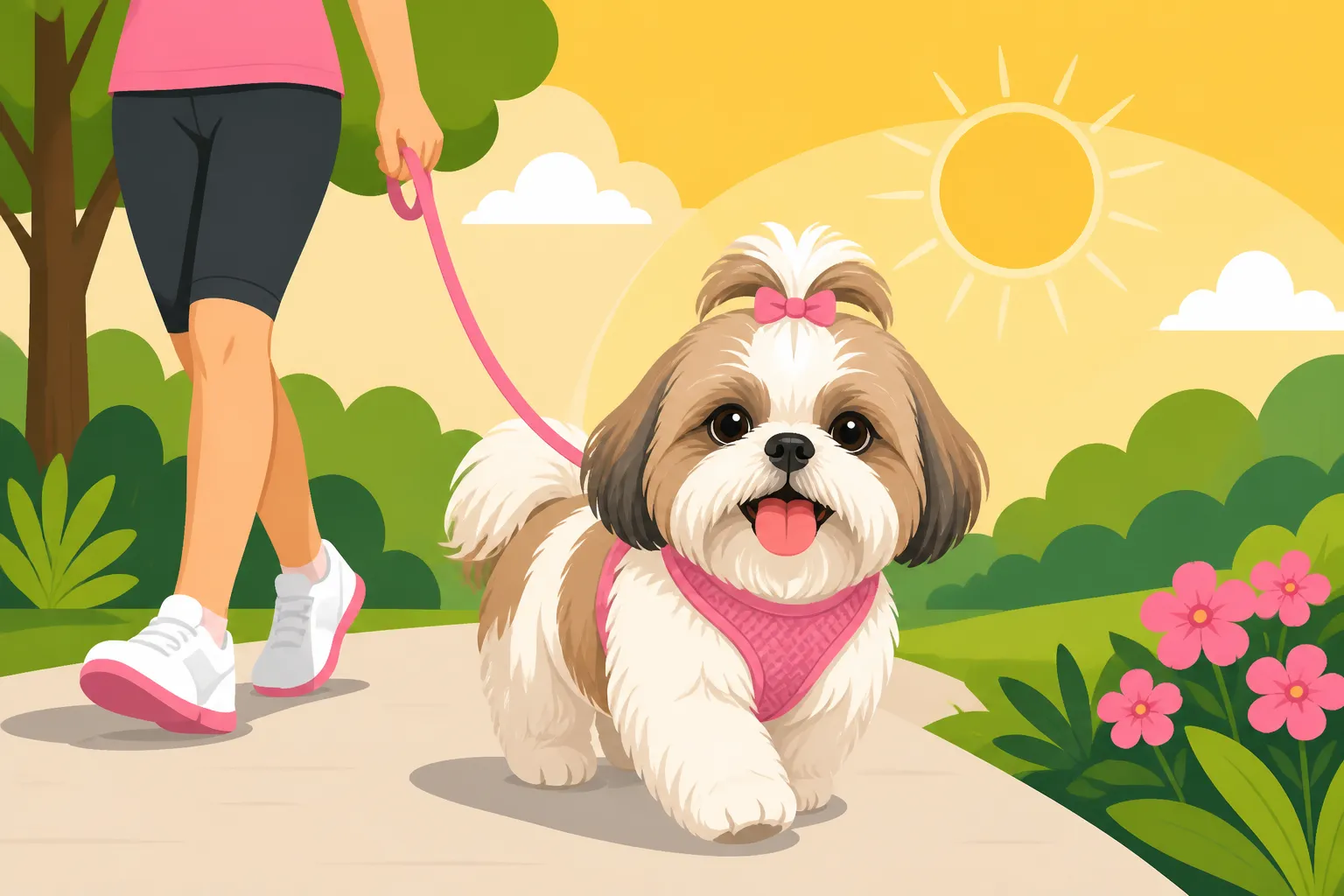
For a brachycephalic breed like the Shih Tzu, a harness is always the preferred choice over a collar, regardless of the weather. In warm weather, it becomes even more critical. A collar puts pressure on their trachea and can exacerbate their already compromised breathing, especially if they pull on the leash or get excited. This is particularly dangerous when they are trying to pant and cool down.
A well-fitting harness distributes pressure across their chest and shoulders, away from their delicate throat. Choose a lightweight, breathable harness that doesn't restrict movement and allows for good air circulation. Avoid heavy, bulky harnesses that might trap heat. Many brands, easily found on Amazon, offer excellent lightweight mesh harnesses perfect for Shih Tzus. Prioritizing a harness over a collar is a crucial decision for their comfort and safety, a topic often discussed in Why a Shih Tzu Should Wear a Harness Not a Collar. Ensure it fits correctly, not too tight or too loose, to prevent chafing and allow for comfortable movement.
Walking a Shih Tzu in warm weather requires diligence, preparation, and a keen eye for your dog's signals. By understanding their unique vulnerabilities and implementing these safety measures, you can ensure that your beloved companion remains happy, healthy, and safe, no matter what the thermometer says.
Disclaimer
This article is for general informational purposes only and does not constitute professional advice. Laws, prices and regulations vary by location and change over time. Consult a qualified professional for guidance on your specific situation.