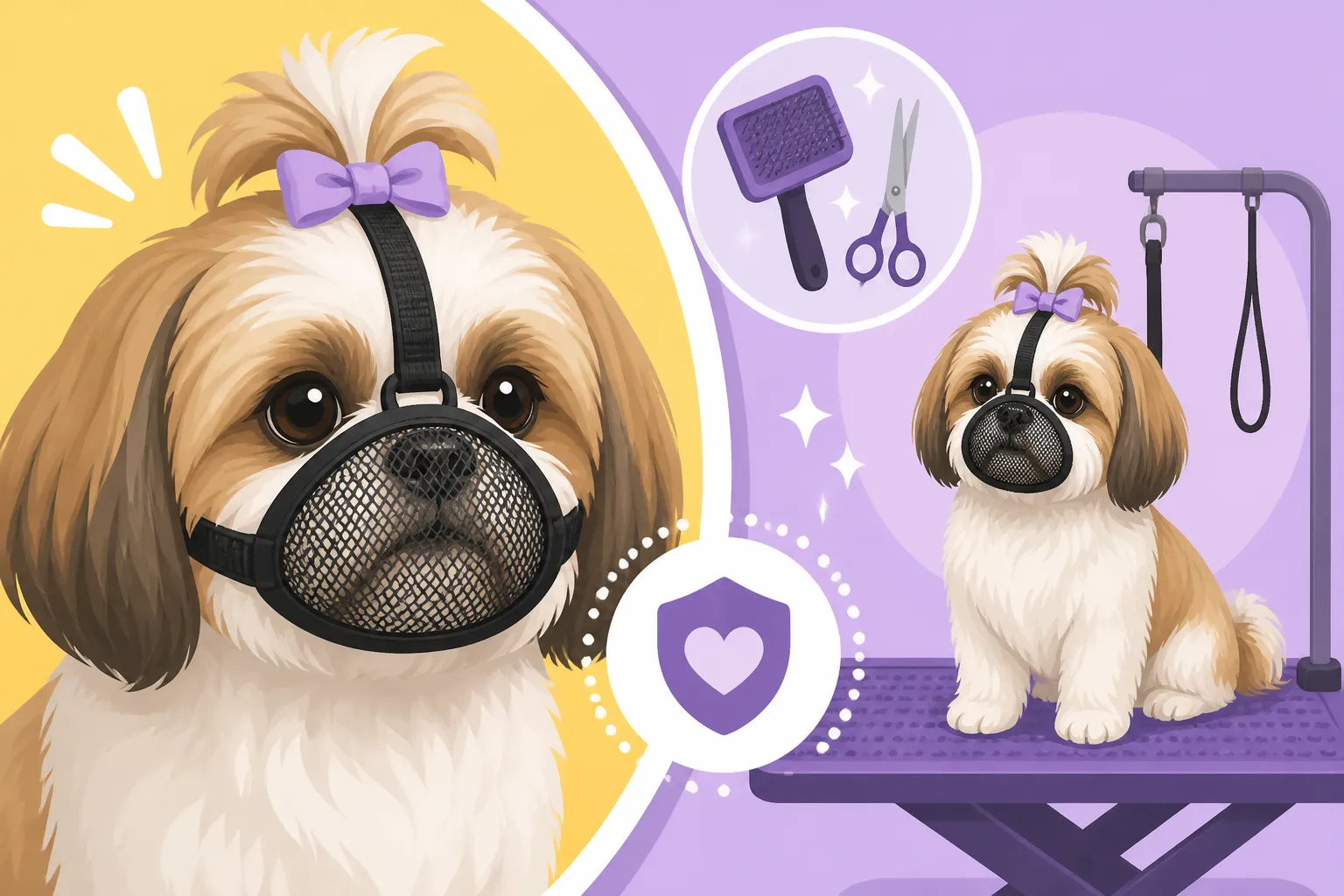
Muzzle Work Before a Shih Tzu Groom
It’s a scenario no Shih Tzu owner wants to face: your beloved companion becomes anxious, growls, or even snaps during grooming, making the experience stressful and potentially dangerous for everyone involved. While it sounds alarming, introducing muzzle work in a positive, gentle way before a grooming appointment can be a game-changer, ensuring safety and reducing your dog's fear of necessary handling. This comprehensive guide will walk you through why and how to make muzzle training a positive part of your Shih Tzu's routine.
Why Muzzle Training Might Be Necessary for Grooming
When we think of muzzles, many of us immediately picture aggressive dogs, but that's a common misconception that does a disservice to many sweet, well-meaning pups. For Shih Tzus, especially during grooming, a muzzle can be a tool for safety, comfort, and reducing anxiety, rather than a punishment.
Protecting Your Shih Tzu and the Groomer
Let's be honest, grooming can be a lot for a little Shih Tzu. They're often sensitive to touch, have long hair that can snag, and those cute, bulging eyes are particularly vulnerable. A groomer needs to work close to their face, trim around delicate areas, and handle paws – all actions that can trigger a fear response in a dog, even one who's normally a cuddle bug. When a dog feels overwhelmed or scared, they might nip, snap, or lunge. This isn't necessarily aggression in the traditional sense; it's often a defense mechanism. A muzzle, when introduced properly, can prevent accidental nips, protecting both your dog from potential injury (like a groomer having to stop mid-clip) and the groomer from bites.
Think about it from the groomer's perspective. They want to do their best work and keep everyone safe. If your Shih Tzu is known to be a little "mouthy" or reactive during certain parts of grooming, a muzzle provides a crucial layer of protection. This can prevent a situation where a groomer might have to decline service or sedate your dog, which nobody wants. It ensures that essential tasks like nail trims, ear cleaning, or even just Getting a Shih Tzu Used to Face Trims can proceed without incident.
Addressing Fear and Anxiety During Handling
Many Shih Tzus develop anxieties around grooming due to past negative experiences, overstimulation, or simply not being desensitized to handling from a young age. Their brachycephalic (flat) faces and long coats make them particularly susceptible to discomfort during certain procedures. Imagine a groomer trying to brush out a mat near an ear or trim paw pads, and your dog recoils or tries to bite. This isn't malice; it's fear.
Introducing a muzzle positively can actually reduce anxiety over time because it creates a predictable routine. Your dog learns that muzzle means treats and gentle handling, and eventually, the muzzle itself becomes a calming signal. Instead of associating the muzzle with impending dread, they can associate it with safety and rewards. This is especially true for dogs who have already had a negative experience, like a painful mat removal or an accidental quicking during a nail trim. The muzzle isn't a gag; it's a tool to facilitate training and make scary situations manageable.
Choosing the Right Muzzle for a Shih Tzu
Selecting the correct muzzle is paramount for your Shih Tzu's comfort and safety. A poorly fitting or inappropriate muzzle can cause distress, hinder breathing, or even fail to prevent bites. We need to focus on types that suit their unique brachycephalic anatomy.
Basket Muzzles vs. Fabric Muzzles
For most long-term wear, especially during grooming, a basket muzzle is almost always the superior choice, even for Shih Tzus. These muzzles allow your dog to pant, drink water, and even take small treats, which is crucial for comfort and for using positive reinforcement during training. They come in various materials like plastic, wire, or silicone. For a Shih Tzu, you'll need a specialized "brachycephalic" basket muzzle designed to fit their flatter snout, providing enough space for their short nose and clear airways. These are often made from soft silicone or flexible plastic to minimize rubbing on their sensitive facial skin.
Fabric muzzles (also known as "grooming muzzles" or "soft muzzles") are often seen as a quick fix, but they should be used with extreme caution and only for very short durations – literally minutes – under direct supervision. These muzzles typically hold the mouth shut, preventing panting, which is a dog's primary way to cool down. For a brachycephalic breed like a Shih Tzu, whose breathing is already compromised, restricting panting can quickly lead to overheating and severe respiratory distress, even in a cool room. They also prevent your dog from taking treats, making positive reinforcement impossible. While some groomers might use them for very quick, unavoidable tasks, they are not suitable for training or prolonged wear.
Here's a quick comparison to highlight the differences:
| Feature | Basket Muzzle (Brachycephalic Specific) | Fabric Muzzle (Standard) |
|---|---|---|
| Breathing | Allows panting, drinking, breathing freely | Restricts panting, can cause overheating |
| Eating/Treats | Allows small treats | Prevents eating treats |
| Duration | Safe for longer periods (with breaks) | Only for extremely short periods (<5 minutes) |
| Comfort | Generally more comfortable if fitted correctly | Can cause anxiety and breathing difficulty |
| Training | Facilitates positive reinforcement training | Hinders positive reinforcement training |
| Fit | Requires careful fitting for length and circumference | Can be difficult to fit on a flat face, often too tight |
| Material | Silicone, plastic, light wire, designed for flat faces | Nylon or fabric straps |
Ensuring a Proper Fit for a Flat Face
Fitting a muzzle on a Shih Tzu's flat face requires precision. You can often find suitable options on Amazon by searching for "brachycephalic dog muzzle" or "Shih Tzu muzzle." You'll need two key measurements:
- Length of Snout: Measure from just below your dog's eyes (where the muzzle will sit) to the tip of their nose. A basket muzzle for a Shih Tzu will be very short in comparison to other breeds, but it still needs to extend slightly past the nose tip.
- Circumference of Snout: Measure around the widest part of your Shih Tzu's snout, typically right under their eyes. Add an inch or two to this measurement to ensure enough room for panting and treat-taking. The muzzle should not be tight around their face or press against their eyes.
When trying on a muzzle, make sure:
- There's enough space in front of their nose for them to open their mouth slightly and pant.
- It doesn't rub against their eyes or impede their vision.
- The straps behind their ears are secure but not too tight. You should be able to comfortably slip two fingers under the straps.
- It cannot be easily pawed off.
Remember, a muzzle should never be painful or cause difficulty breathing. If your Shih Tzu gags, paws frantically at it, or seems unable to breathe normally, remove it immediately and re-evaluate the size and type.
Positive Reinforcement for Muzzle Acceptance
The goal isn't just to get the muzzle on, but to make your Shih Tzu comfortable wearing it. This is where positive reinforcement is absolutely essential. Forget forcing it; we want them to associate the muzzle with good things.
Introducing the Muzzle Gradually and Positively
This process is all about baby steps and high-value rewards. Start in a calm environment with no distractions.
- Initial Introduction: Simply show your Shih Tzu the muzzle. Let them sniff it. Don't try to put it on yet. As soon as they show any interest (a sniff, a glance), mark the behavior with a verbal "yes!" or a clicker, and immediately give a super tasty treat. Repeat this a few times, keeping sessions short.
- Treat Association: Put a high-value treat (like a dollop of peanut butter or cream cheese, or a piece of cooked chicken) inside the muzzle. Hold it out and let your Shih Tzu voluntarily stick their nose in to lick the treat out. Don't push the muzzle onto their face. The moment their nose goes in, even for a second, it's a "yes!" and another treat. You can find excellent high-value training treats from brands like BAXTER & Bella that work wonderfully for this.
- Increasing Duration: Once your Shih Tzu is happily putting their nose in the muzzle to get the treat, start to gradually increase the time their nose is inside. Hold the muzzle for a second longer before they get the treat. Then two seconds, then three. Always reward before they pull their nose out. The key is to remove the muzzle before they show any signs of discomfort or resistance.
- Fastening the Straps: When your Shih Tzu is comfortable having their nose in the muzzle for several seconds, gently bring the straps over their head and fasten them. Immediately give a stream of treats, one after another, while the muzzle is on. Then, unclip the muzzle and take it off. Again, keep this very brief initially – just a few seconds. The moment the straps are fastened, treats should flow.
- Wearing for Longer Periods: Gradually increase the duration of muzzle wear, always pairing it with positive experiences. Put the muzzle on, give treats, play a short game, then take it off. Build up from seconds to minutes. You want your dog to associate the muzzle with good things happening, not just a precursor to something unpleasant.
Remember, always end on a positive note. If your dog shows any signs of stress, go back a step. Patience is your best friend here. Consider enrolling in an online puppy training course, like those offered by BAXTER & Bella, which often cover desensitization techniques that can be applied to muzzle training.
High-Value Rewards and Calm Praise
The treats you use during muzzle training need to be exceptionally high-value – think small pieces of cheese, cooked meat, or commercial soft training treats that your Shih Tzu absolutely adores. Regular kibble usually won't cut it. The reward needs to be enticing enough to overcome any initial hesitation or discomfort. Treat Sizes That Suit a Shih Tzu are usually tiny, so cut them small!
Alongside treats, use calm, encouraging praise. A cheerful "Good dog!" or "Yes!" helps reinforce the positive association. Avoid over-excitement, which can sometimes escalate anxiety. Keep your voice low and soothing. The goal is to create a sense of calm and predictability around the muzzle. Remember, your calm demeanor will go a long way in communicating to your Shih Tzu that everything is okay.
Integrating Muzzle Work into Grooming Sessions
Once your Shih Tzu is comfortable wearing the muzzle for several minutes in a relaxed setting, it's time to introduce it to the grooming routine. This isn't a sudden leap; it's another series of gradual steps.
Practicing Muzzle Wear During Everyday Handling
Before the actual grooming tools come out, practice muzzle wear during short, non-threatening handling sessions. For example, put the muzzle on, give treats, and then:
- Gently touch their paws, as if for a nail trim.
- Lift their ears and peek inside, as if cleaning them.
- Brush their body gently for a few strokes.
Keep these sessions incredibly brief – 30 seconds to a minute initially – and always follow with more treats and praise, then remove the muzzle. This helps your Shih Tzu generalize the positive association from the calm training environment to being handled. The idea is to incrementally build up their tolerance. If you struggle with getting your Shih Tzu to accept daily brushing, check out Handling a Shih Tzu Puppy for Daily Brushing.
This type of desensitization is crucial. Your Shih Tzu needs to understand that the muzzle simply means "we're doing some handling now, and there will be treats." It's not a punishment; it's a cue for a specific activity. You can even find specific brachycephalic muzzles on platforms like Amazon that are lightweight and less intrusive, making these practice sessions more comfortable for your pup.
Gradual Introduction to Grooming Tools and Environment
Once your Shih Tzu is calm while muzzled during basic handling, slowly introduce elements of the grooming experience.
- Sound and Sight: Put the muzzle on, give treats, and then bring out grooming tools like brushes, combs, or even turn on a quiet clipper (far away from them at first). Let them see and hear these things while wearing the muzzle and receiving treats. The idea is to make these objects part of the positive muzzle association.
- Touch with Tools: With the muzzle on, give treats, and gently touch your Shih Tzu with a brush, then a comb. Start with areas they are comfortable with, like their back, and gradually move to more sensitive areas like their face or paws. If you are struggling with A Shih Tzu That Panics at the Clipper, muzzle training can be especially helpful to build their confidence around the sound and sensation.
- Simulated Grooming: Perform very short, simplified versions of grooming tasks while your Shih Tzu is muzzled. For example, a quick brush-through, a single nail clip, or a brief ear wipe. Always follow with generous praise and rewards.
- Professional Groomer: When your Shih Tzu is comfortable at home, discuss your muzzle training efforts with your professional groomer. Many groomers are incredibly grateful for owners who take this proactive step, as it makes their job safer and less stressful. Bring the muzzle with you, and explain the positive conditioning you've done. A good groomer will continue this positive reinforcement during the actual session. They might even have experience with Why a Groomer Turns a Shih Tzu Away, and appreciate your effort to make your dog a better candidate for grooming.
The key is never to rush the process. If your Shih Tzu shows signs of stress (panting excessively, trying to paw at the muzzle, shaking, lip licking, yawning), stop, take a break, and go back to an easier step. The goal is always positive association, making the muzzle a tool for calm cooperation, not coercion. By taking these steps, you're not only making grooming safer but also building trust and confidence in your beloved companion. For more general advice on dealing with the grooming process, consider looking at Shih Tzu Behavior at the Groomer and the Vet.
Troubleshooting Common Muzzle Training Challenges
Even with the best intentions and the highest-value treats, you might encounter some bumps in the road during muzzle training. That's perfectly normal, especially with a sensitive breed like the Shih Tzu. The key is to understand why your dog is reacting and how to adjust your approach.
Dealing with Resistance or Fear
If your Shih Tzu actively resists the muzzle, tries to paw it off, or shows signs of fear (tucking tail, shaking, excessive lip licking, yawning, backing away), it means you've moved too fast. Don't push through it. Forcing the muzzle will only create a negative association and make future training harder.
What to do:
- Go back a step (or two!): If they resist putting their nose in, go back to just showing the muzzle and rewarding for looking at it. If they resist the straps, go back to just having their nose in the muzzle without fastening it, and reward heavily.
- Increase treat value: Is your dog really motivated by the treats you're using? Sometimes, you need to pull out the "big guns"—think tiny pieces of grilled chicken, liverwurst, or squeeze cheese.
- Shorter sessions: Keep training sessions incredibly brief, like 30 seconds to a minute, multiple times a day. Little and often is far more effective than long, frustrating sessions.
- Change location: Sometimes a new, less distracting environment can help. Try a different room in the house or even outside if it's a calm space.
- Patience and consistency: This isn't a race. It might take days or even weeks for your Shih Tzu to become truly comfortable. Every positive interaction, no matter how small, builds their confidence.
Remember, a muzzle is meant to reduce stress, not cause more. If your Shih Tzu is truly terrified, consider consulting a certified professional dog trainer or veterinary behaviorist. They can provide personalized guidance and help identify underlying anxieties.
Making Muzzle Wearing a Positive Experience Beyond Grooming
The more positive experiences your Shih Tzu has with their muzzle, the less likely they are to associate it solely with stressful situations like grooming or vet visits. Think about ways to incorporate muzzle wearing into fun, everyday activities.
Ideas for positive muzzle experiences:
- Mealtime: For a few seconds before their meal, put the muzzle on, give a stream of treats, then take it off and immediately put down their food bowl. This creates a powerful association with a highly anticipated reward.
- Walks: If your Shih Tzu is comfortable wearing it for short periods, try putting the muzzle on for the first few minutes of a walk. They'll be distracted by sniffing and exploring, making it a less focused experience on the muzzle itself. Always make sure it's a basket muzzle that allows full panting and breathing for any exercise.
- Playtime: For a minute or two, put the muzzle on and engage in a low-key play session (no rough tugging). Again, remove the muzzle before they get uncomfortable.
- Relaxation: Put the muzzle on while you're cuddling on the sofa, giving gentle strokes and quiet praise. Let them associate it with calm, affectionate moments.
By diversifying the experiences, the muzzle becomes just another piece of equipment, like their collar or harness, that leads to good things. This broader positive association will carry over to grooming appointments, making your Shih Tzu more cooperative and less stressed when it's time for their professional pampering. The ultimate goal is to reach a point where your Shih Tzu sees the muzzle as a non-event, perhaps even a signal for fun activities or treats.
Disclaimer
This article is for general informational purposes only and does not constitute professional advice. Laws, prices and regulations vary by location and change over time. Consult a qualified professional for guidance on your specific situation.