Practicing Face Trims on a Shih Tzu Puppy
Bringing a lively, adorable Shih Tzu puppy home is one of life's true joys, but soon enough, you realize their fluffy faces can quickly become a tangled mess, obscuring their beautiful eyes and creating discomfort. This guide is all about tackling that challenge head-on, showing you exactly how to introduce and practice gentle face trims with your Shih Tzu puppy right from the start, making it a positive experience for both of you and preventing future grooming battles.
Why Early Face Trimming Practice is Non-Negotiable for Your Shih Tzu Puppy
If there's one thing a Shih Tzu owner learns quickly, it's that their dog's luxurious hair, especially around the face, isn't just for show – it's a constant management task. Neglecting face trims, even for a short time, isn't just about aesthetics; it’s a direct threat to your puppy's comfort and long-term health. Many new Shih Tzu parents don't realize just how vital this routine grooming is until they're facing matted fur, irritated eyes, or even infections.
Think about it: that glorious long hair around their eyes, if left untended, will inevitably fall into their vision. This isn't just annoying; it can constantly rub against the delicate surface of their eyes, leading to serious issues like corneal ulcers. Why Hair in the Eye Damages a Shih Tzu Cornea is a common problem in our breed, and it's entirely preventable with proper grooming. The hair can also trap moisture, food particles, and debris right against their skin, creating a breeding ground for yeast and bacterial infections under the eye or in the folds of their nose. Imagine constantly having something tickling your eye or obscuring your view – it’s uncomfortable, disorienting, and can even affect their confidence and willingness to explore.
Starting early isn't about perfectly sculpting their face from day one. It's about desensitization. When you begin practicing face trims on a Shih Tzu puppy, you're not just trimming hair; you're teaching them patience, trust, and acceptance of being handled around a very sensitive area. A puppy that learns to tolerate face trims calmly will be a much happier dog at the groomer or during routine home care throughout its entire life. On the flip side, waiting until your puppy is older and already uncomfortable or even fearful of handling will make every grooming session a battle, stressing both you and your precious companion. This early training forms the bedrock for all future grooming endeavors, from full body brushes to nail trims. Why Grooming Training Starts the First Week applies to everything, but especially to their sensitive little faces.
Gathering Your Gentle Grooming Toolkit and Setting the Scene
Before you even think about bringing clippers or scissors near your Shih Tzu puppy's face, you need the right tools and, crucially, the right mindset. This isn't a race; it's a marathon of positive associations and tiny, incremental steps. You want to make every interaction with grooming tools feel like a good experience, not a scary one.
First, let's talk about tools. Safety is paramount when working around eyes and delicate facial skin. You'll need:
- Blunt-nosed scissors: These are absolute non-negotiables. The rounded tips drastically reduce the risk of accidental pokes or cuts if your puppy makes a sudden move. Look for small, sharp grooming scissors specifically designed for facial work.
- A fine-toothed metal comb: Essential for gently parting and sectioning hair, and for checking your work.
- A slicker brush: For general coat care and getting them used to the feel of brushing, even if it’s not directly on the face at first.
- High-value treats: Tiny, delicious morsels that your puppy absolutely loves. Think soft, pea-sized pieces of cooked chicken, cheese, or specialized training treats. These are your most powerful allies for positive reinforcement.
- A calm, well-lit space: Choose an area where you can comfortably sit or stand with your puppy, free from distractions. A sturdy table with a non-slip mat is ideal, but for initial desensitization, even sitting on the floor with them can work.
- Optional: A grooming arm and loop: For slightly older puppies or those becoming more comfortable, a grooming arm with a gentle loop (never tight!) can help keep them safely still on a table.
When it comes to training resources, don't feel like you have to go it alone. Programs like BAXTER & Bella offer fantastic online guidance that can walk you through these early socialization and grooming steps with professional insight. They understand how crucial early positive reinforcement is for puppies, and their approach aligns perfectly with building trust. You can find a vast array of blunt-nosed scissors, combs, and brushes suitable for small breeds like the Shih Tzu easily on platforms like Amazon. Just make sure to read reviews and choose reputable brands known for pet grooming tools.
Setting the scene is just as important as the tools themselves. Start by simply having the tools present in your puppy's environment. Let them sniff the blunt scissors, reward them for calm curiosity. Don't immediately try to use them. The goal is for them to associate these items with good things – treats, praise, gentle handling. Gradually introduce touch, starting with just handling their face and head without any tools. Gently stroke their cheeks, lift their chin, and touch around their eyes. Always follow with a treat and soft praise. The more comfortable they are with your hands around their face, the easier the actual trimming will be. Teaching a Shih Tzu Puppy to Lie on Its Side can also be a game-changer for grooming, as it positions them securely and comfortably for you to work.
Step-by-Step: Introducing Your Puppy to Face Trims
This process is all about patience, tiny steps, and making sure your puppy feels safe and rewarded. Never force it, and always end on a positive note, even if you only managed one small snip.
1. Desensitization to Touch and Tools
Begin by getting your puppy accustomed to your hands near their face. This means lots of gentle stroking around their eyes, nose, and muzzle. As you do this, introduce the grooming tools. Let them see the blunt-nosed scissors. Touch the closed scissors gently to their head, then immediately give a treat and praise. Repeat this many times over several days, gradually moving closer to their eyes. You're building a mental bridge: "scissors mean treats!" Don't forget to incorporate the comb as well. Gently comb through the hair on their forehead and around their cheeks, always following with positive reinforcement.
Once they're comfortable with the sight and light touch of the closed scissors, introduce the sound. Gently open and close the scissors a few feet away from them. If they react, move further away, treat, and slowly reduce the distance over time. The goal is for the sound to become mundane, not alarming. This step is crucial because the sudden snip of scissors can startle a sensitive puppy.
2. The "Pretend" Trim and First Snips
With your puppy calm and happy about the presence of tools, you can move to "pretend" trims. Hold the blunt-nosed scissors in the position you would for trimming, near their face, but don't actually cut anything. Just hold them there for a second, then remove them and give a treat. Gradually increase the duration. This teaches them to hold still in anticipation of the treat.
When you're ready for the first actual snip, aim for a single, easy strand of hair that isn't too close to their eyes. It could be a stray piece of hair on their forehead or the side of their cheek. Hold the hair gently with your fingers, away from the skin, and make one quick, confident snip. Immediately follow with your highest-value treat and abundant praise. Seriously, make a huge fuss! One snip is enough for the first session, perhaps even for the first few sessions. The key is that the experience is overwhelmingly positive.
3. Systematic Trimming Around the Eyes and Muzzle
Once your puppy is tolerating single snips, you can start to work systematically. Always ensure your puppy is in a secure, comfortable position. Many owners find it easiest to sit on the floor with their puppy cradled in their lap, or on a non-slip mat on a table.
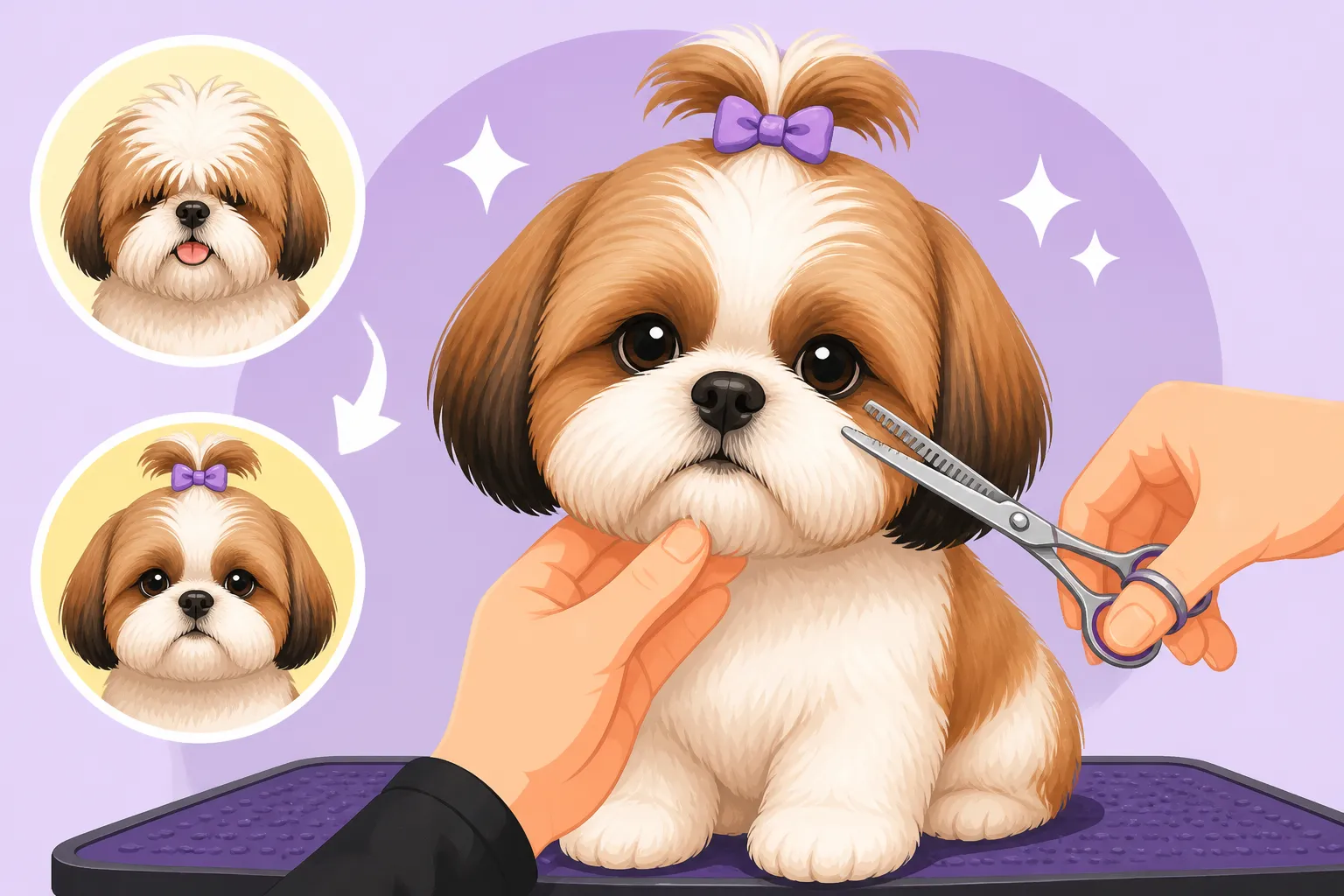
- Around the eyes: This is the most critical area. Use your non-dominant hand to gently hold the hair up and away from their eye. Never cut hair that is pointing directly at their eye. Instead, comb it upwards or outwards. With your blunt-nosed scissors, trim horizontally across the top of their eye, keeping the blades parallel to the floor, or trim vertically, pulling the hair away from the eye and snipping just the tips. Work from the outside corner of the eye inwards. For the inner corner, be extra careful; often just a gentle comb and a very tiny snip is all that's needed to prevent hair from poking the tear duct. Trimming Face Hair Away From Shih Tzu Eyes isn't just grooming; it's preventative medicine.
- Between the eyes (the bridge of the nose): This area can get very shaggy. Comb the hair upwards and carefully trim it to match the eyebrow line, keeping it short enough so it doesn't fall into their eyes.
- Muzzle and beard: While not directly affecting their eyes, keeping the hair around their mouth and beard shorter and tidier can prevent food and moisture from accumulating, which can lead to skin irritation and matting. Use your comb to brush the hair forward and trim the very tips to create a neat, rounded appearance. This will also make Cleaning a Shih Tzu Beard After Wet Food much easier.
Remember, short sessions are best. Five to ten minutes, max, especially for puppies. If your puppy starts to get antsy, stop, give a final treat, and end the session. You can always pick it up again later or the next day. Consistency over duration is key.
Troubleshooting Common Hurdles and Maintaining Progress
Even with the best intentions, grooming a wriggly Shih Tzu puppy can present challenges. It's perfectly normal for puppies to be unsure or even resistant at first.
Dealing with Wiggling and Resistance
The biggest frustration is often the wiggling. A puppy that can't sit still makes delicate face trims dangerous.
- Break it down smaller: If your puppy wiggles after one snip, only do one snip. Then praise, treat, and stop. Gradually work up to two snips, then three.
- Practice restraint: Not forceful restraint, but gentle, supportive holding. Practice holding them firmly but kindly for short periods, away from grooming sessions, rewarding them for stillness. Restraining a Shih Tzu Without Popping an Eye is a crucial skill for all Shih Tzu owners, especially when dealing with grooming.
- Consider a grooming table with an arm: As mentioned, once they're more comfortable with the idea of grooming, a stable grooming table with a non-slip surface and a gentle neck loop can provide security and prevent them from jumping off. Ensure the loop is snug but not tight, allowing them to stand comfortably. Always stay by their side.
- Enlist a helper: If you have someone who can gently hold and reassure your puppy while you focus on the trimming, it can make a huge difference, especially in the early stages.
Addressing Nipping and Biting
Puppies explore with their mouths, and sometimes a nip during grooming is a protest, other times it's just puppy behavior.
- Redirection: If they nip, immediately say "no" calmly, pull your hand away, and offer a suitable chew toy. When they bite the toy, praise them.
- Bitter apple spray: For persistent nipping at your hands, a tiny spritz of bitter apple spray on your fingers can deter them, but use this cautiously and ensure it doesn't get near their eyes.
- Professional help: If nipping is aggressive or becoming a real problem, consider consulting a certified professional dog trainer. They can offer personalized guidance on behavior modification. Shih Tzu Puppy Nipping at Fingers is a common phase that needs gentle, consistent correction.
Building Positive Associations and Consistency
The goal is for grooming to be a normal, uneventful part of their lives.
- Daily mini-sessions: You don't need a full groom daily, but spend a minute or two daily just touching their face, combing a tiny bit of hair, and giving a treat. This keeps the positive association strong and prevents fear from building up between longer sessions.
- Vary the rewards: Don't just rely on treats. Use verbal praise, gentle scratches in their favorite spot, or a quick game with a favorite toy as rewards.
- Stay calm: Your puppy can sense your stress. If you're frustrated, they will be too. Take a deep breath, or better yet, end the session and try again later when you're both relaxed.
- Invest in good quality eye wipes: Regular cleaning around their eyes with a gentle, pet-safe eye wipe can help prevent tear staining and keep the area clean, reducing the need for constant trimming. It's a great habit to build alongside face trims. Shih Tzu Eye Wipes and Tear Stain Products are an everyday essential for our breed.
Maintaining a clear face for your Shih Tzu is not a one-time event; it's a lifelong commitment. Regular, positive grooming sessions will ensure your puppy grows into a happy, well-adjusted adult who tolerates or even enjoys their grooming time. This dedication protects their vision, prevents skin irritations, and strengthens the bond between you and your cherished companion. Over time, you'll both become pros, and those face trims will be just another routine act of love and care.
Disclaimer
This article is for general informational purposes only and does not constitute professional advice. Laws, prices and regulations vary by location and change over time. Consult a qualified professional for guidance on your specific situation.