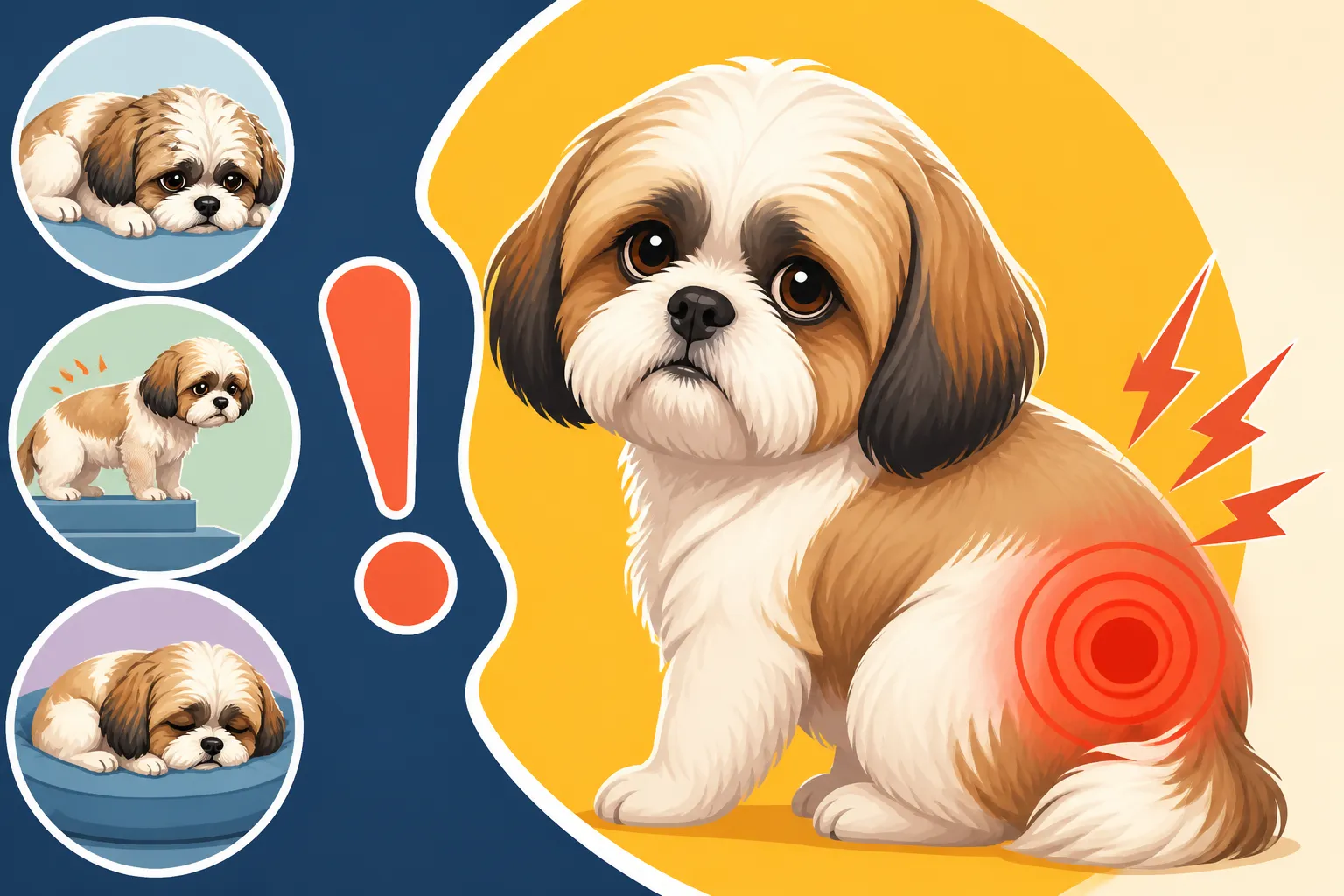
Shih Tzu Behavior Shifts That Mean a Disc Hurts
It’s a heartbreaking moment for any Shih Tzu owner: you see your sweet, spirited companion suddenly hesitate before jumping onto the sofa, or perhaps they let out a small yelp when you try to pick them up. These subtle changes in behavior can be incredibly confusing and distressing, often dismissed as 'just getting old' or a new quirk. However, these shifts are often your Shih Tzu trying to tell you something crucial – they could be experiencing pain, particularly from a disc problem in their sensitive spine. This comprehensive guide will walk you through how to recognize these critical behavioral signs that indicate disc pain, empowering you to seek timely veterinary care and provide the comfort your beloved Shih Tzu deserves.
Understanding Shih Tzu Back Problems
Shih Tzus are charming, loving little dogs, but their unique physical characteristics, while adorable, unfortunately make them prone to certain health issues, especially concerning their spine. Recognizing this inherent vulnerability is the first step in understanding why behavioral shifts can be such strong indicators of pain.
The Fragile Shih Tzu Spine and Disc Disease
Our beloved Shih Tzus belong to a group of breeds known as chondrodystrophic, which essentially means they have disproportionately short legs and long bodies. While this gives them their distinctive, charming appearance, it also makes their spinal discs highly susceptible to degeneration and herniation. Think of their spine like a stack of delicate building blocks, with soft, jelly-filled cushions (intervertebral discs) in between each block, acting as shock absorbers. In chondrodystrophic breeds, these discs can prematurely harden and become brittle, making them prone to rupturing or bulging out.
When a disc ruptures or slips, it can press on the delicate spinal cord, causing immense pain and potentially neurological damage. This condition is known as Intervertebral Disc Disease, or IVDD. It's not always the result of a sudden injury, but often a progressive degeneration that has been quietly occurring for years. A simple misstep, a playful jump off the furniture, or even a sudden twist can trigger a full-blown crisis in an already compromised disc. Understanding Why a Shih Tzu Spine Is Built to Slip is key to appreciating the urgency of any back pain indicators.
The Silent Language of Pain in Dogs
Dogs, by nature, are masters at hiding pain. This instinct goes back to their wild ancestors, where showing weakness could make them vulnerable to predators. Our domesticated Shih Tzus still carry this inherent trait. They don't verbally complain like humans do, and they can't point to where it hurts. Instead, their pain manifests through nuanced behavioral changes, often so subtle that they can be easily missed or attributed to other causes.
It's a frustrating reality for devoted owners, because we want to help, but our dogs aren't always forthcoming. Sometimes, the initial signs of chronic, low-grade disc pain might be so minimal that you just notice your Shih Tzu is "a bit quieter" or "not quite themselves." Acute pain, on the other hand, might lead to more dramatic and sudden behavioral changes, like a sudden yelp. Learning to interpret these silent cues is absolutely critical. We need to become detectives, observing every tiny deviation from their normal joyful selves, because these shifts are often the only clue they provide.
Subtle Behavioral Changes Indicating Discomfort
The earliest signs of disc pain in a Shih Tzu are rarely dramatic. They often manifest as subtle shifts in how your dog moves, interacts, and goes about their daily life. These are the indicators that many owners unfortunately overlook until the pain becomes more severe.
Changes in Movement and Posture
One of the most common early indicators of back discomfort is a reluctance to engage in activities that once brought joy. You might notice your Shih Tzu, who usually races to greet you at the door, is now moving a bit slower, or even stiffly. They might seem hesitant before doing something they used to do without a second thought, like jumping onto the sofa for cuddles or descending the stairs. That slight pause, that moment of contemplation at the edge of a familiar surface, is a red flag. In fact, A Shih Tzu That Will Not Jump on the Sofa is a classic sign of early back pain.
Beyond reluctance, pay close attention to their actual gait and posture. Does your Shih Tzu suddenly walk "like a robot," with stiff, short strides? Do they hold their head lower than usual, almost as if it's painful to lift it? An arched back, or a "hunched" appearance, can also signal spinal discomfort, as they try to relieve pressure. Sometimes, you might even observe trembling or shivering, particularly when they attempt to move or shift their weight. This isn't always about being cold; it can be their muscles spasming in response to pain. Any change in their normal fluid movement, however slight, warrants close observation.
Altered Daily Routines and Activities
Disc pain doesn't just affect movement; it seeps into every aspect of a Shih Tzu's life, subtly altering their routines. A previously playful dog might show less enthusiasm for their favorite toys or shorter bursts of energy during playtime. Their once eager tail wags might be less vigorous, or their greeting less effusive. You might notice they're sleeping more than usual, seeking out quiet, secluded spots, or struggling to get comfortable even in their favorite bed. Restlessness at night, pacing, or frequently changing positions could also indicate that they can't find a pain-free posture.
Even eating and drinking can become difficult if bending their neck and back causes pain. You might see them approach their food bowl gingerly, eat less, or even leave food behind. They might stand awkwardly while drinking, or simply drink less. These aren't just minor inconveniences for them; they are significant discomforts that chip away at their quality of life. Owners who track these changes meticulously often catch the problem early. Consider using a raised bowl, easily found on Amazon, if you notice your Shih Tzu struggling to bend down, as this small adjustment can reveal if bending is the issue.
More Overt Signs of Disc Pain
While subtle changes are the first warning bells, as disc pain progresses, the signs can become much more pronounced and impossible to ignore. These more overt indicators signal a greater level of discomfort and potential neurological compromise.
Vocalizations and Sensitivity to Touch
One of the most alarming signs for any owner is when their usually quiet Shih Tzu begins to vocalize due to pain. A sudden yelp or cry when you attempt to pick them up, or even just lightly touch their back or neck, is a clear distress signal. They might growl or even snap when approached or handled, especially if this is out of character for them. This isn't aggression; it's a defensive reaction born of fear and pain. It's their desperate way of saying, "Don't touch me, it hurts!" This is why A Shih Tzu Snapping Because Its Back Hurts is a sign that demands immediate attention.
You might also observe increased panting, even when they haven't exerted themselves or when the weather isn't warm. Panting can be a physiological response to pain, stress, or anxiety. If your Shih Tzu is normally stoic and now making these sounds or reacting defensively to touch, it's a strong indicator that something is seriously wrong and they are in significant discomfort. Pay attention to their breathing patterns, looking for shallow, rapid breaths or any signs of labored breathing alongside other pain indicators.
Changes in Potty Habits and Control
One of the most distressing and definite signs of more severe disc compression is a change in urination or defecation habits. If your perfectly house-trained Shih Tzu suddenly starts having accidents indoors, it's not always a behavioral issue. Spinal cord compression can affect the nerves that control bladder and bowel function, leading to incontinence. They might dribble urine, or be unable to hold it until they get outside. You might notice them straining excessively to urinate or defecate, or perhaps they assume an odd, uncomfortable posture when trying to go.
In severe cases, a Shih Tzu might completely lose control of their bladder or bowels, which is an absolute emergency. Even if it's just a few "accidents," especially if coupled with other signs of pain, it's crucial to consider a medical cause rather than jumping to conclusions about training lapses. Issues like Shih Tzu Urinary Accidents That Are Medical are often a red flag for neurological problems stemming from disc disease. These changes indicate that the spinal cord damage is impacting crucial nerve pathways, and prompt veterinary attention is vital to prevent permanent damage.
Assessing Severity and When to Act
Understanding the progression of disc disease signs and knowing when to seek urgent veterinary care can make a monumental difference in your Shih Tzu's outcome. Ignoring symptoms or delaying action can lead to irreversible damage.
Grading the Pain and Neurological Deficits
When you bring your Shih Tzu to the vet with suspected disc pain, one of the first things they will do is assess the severity of the condition, often by grading the neurological deficits. This isn't just about pain; it's about how much the spinal cord is being compressed and if nerve function is being lost.
Here's a simplified look at what vets consider:
- Grade 1: Pain only. Your Shih Tzu might be reluctant to move, yelp, or show an arched back, but they still have full use of their legs.
- Grade 2: Mild neurological deficits. You might see some weakness or wobbliness in their hind legs, but they can still walk, albeit unsteadily.
- Grade 3: Moderate neurological deficits. They can still move their hind legs, but they cannot stand or walk without assistance, often dragging their back paws. This is where you might notice Shih Tzu Hind Leg Weakness.
- Grade 4: Severe neurological deficits. They have lost the ability to move their hind legs voluntarily and might have lost bladder/bowel control. They can still feel pain.
- Grade 5: Paralysis with loss of deep pain sensation. This is the most severe grade, where they cannot move their hind legs and have no feeling in their toes, indicating a very serious spinal cord injury.
It's critical for owners to be observant for signs like knuckling (where their paw flips over and they walk on the tops of their toes), dragging one or both hind paws, or a noticeable lack of coordination. These suggest nerve damage and require immediate action.
The Urgency of Veterinary Consultation
Let me be absolutely clear: if you suspect your Shih Tzu is experiencing back pain, even if the signs are subtle, it is an emergency that warrants immediate veterinary attention. Spinal cord damage can progress rapidly, and what starts as mild discomfort can quickly escalate to paralysis if left untreated. Waiting to "see if it gets better" is a gamble with their ability to walk. Early intervention, often involving strict rest and anti-inflammatory medications, can prevent further damage and improve the chances of a full recovery.
If you observe any neurological signs – weakness, wobbling, dragging paws, or loss of bladder/bowel control – you should seek emergency veterinary care without delay. Every hour counts in preserving spinal cord function. Don't hesitate to call your vet or an emergency clinic to get immediate advice. They can guide you on how to safely transport your Shih Tzu to minimize further injury.
| Behavioral Shift | Potential Meaning (Disc Pain) | Urgency Level |
|---|---|---|
| Reluctance to jump/use stairs | Mild discomfort, trying to avoid painful movements | Consult Vet Soon |
| Stiff gait, arched back | Moderate pain, muscle guarding, trying to relieve pressure | Consult Vet Soon |
| Decreased play, increased lethargy | General discomfort, avoiding activity that causes pain | Consult Vet Soon |
| Restlessness, difficulty getting comfy | Persistent pain, unable to find a comfortable position | Consult Vet Soon |
| Yelping/growling when touched | Acute or moderate-to-severe pain, defensive reaction | Urgent Vet Visit |
| Increased panting (no exertion/heat) | Pain response, anxiety | Urgent Vet Visit |
| Accidents indoors (new onset) | Nerve compression affecting bladder/bowel control (mild) | Urgent Vet Visit |
| Hind leg weakness, dragging paws | Neurological deficit, spinal cord compression (moderate) | Emergency Vet Visit |
| Inability to walk, loss of bladder/bowel control | Severe neurological deficit, spinal cord compression (severe) | Emergency Vet Visit |
Managing and Supporting a Shih Tzu with Disc Pain
Receiving a diagnosis of disc pain can be frightening, but with appropriate care and management, many Shih Tzus can recover and lead comfortable lives. It's a journey that requires patience, consistency, and a commitment to protecting their precious spine.
Initial Steps and Veterinary Diagnosis
If you suspect disc pain, the very first thing you need to do is restrict your Shih Tzu's movement immediately. This means strict crate rest. Keep them confined to a small, comfortable crate or pen, only letting them out for short, leashed potty breaks. This often means carrying them outside. The less movement, the better, to prevent further damage to the spinal cord. We have a detailed guide on Crate Rest for a Shih Tzu With a Slipped Disc that can walk you through the specifics.
At the vet, they will conduct a thorough physical and neurological exam. They'll look for signs of pain, assess reflexes, and check their ability to feel and move their legs. X-rays can sometimes show changes in the spine, but often, a more advanced imaging technique like an MRI (Magnetic Resonance Imaging) is needed for a definitive diagnosis of disc herniation. Based on the diagnosis and severity, treatment might involve anti-inflammatory medications, muscle relaxers, and continued strict crate rest. In more severe cases, or if medical management isn't effective, surgery might be recommended to remove the herniated disc material and relieve pressure on the spinal cord.
Long-Term Care and Prevention
Once the initial crisis is managed, the focus shifts to long-term care and preventing recurrence. This often involves significant lifestyle changes to protect your Shih Tzu's delicate spine. One of the most important steps is eliminating jumping. This means introducing Ramps for a Shih Tzu With a Long Spine to access furniture, beds, and even to get in and out of the car. These are readily available on Amazon and are a worthwhile investment.
Weight management is also critical. Every extra pound puts additional strain on their spine, so keeping your Shih Tzu at a healthy weight is paramount. Our article on Shih Tzu Obesity and the Load on Its Back explains why this is so important for their overall health and spinal well-being. Using a proper harness instead of a neck collar is crucial to avoid any pressure on the neck and spine during walks. Many excellent, non-restrictive harness options can be found on Amazon, and resources like BAXTER & Bella can offer guidance on gentle leash training to prevent pulling.
Additionally, your vet might recommend physical therapy, hydrotherapy, or even acupuncture to help strengthen muscles and improve mobility. Joint supplements, often containing glucosamine and chondroitin (also widely available on Amazon), can also be beneficial for long-term joint and disc health, as discussed in Joint Support for a Shih Tzu Back and Knees. Creating a safe, accessible home environment, with non-slip rugs on slick floors and ensuring their sleeping areas are easy to enter and exit, will also contribute significantly to their comfort and spinal protection.
Disclaimer
This article is for general informational purposes only and does not constitute professional advice. Laws, prices and regulations vary by location and change over time. Consult a qualified professional for guidance on your specific situation.