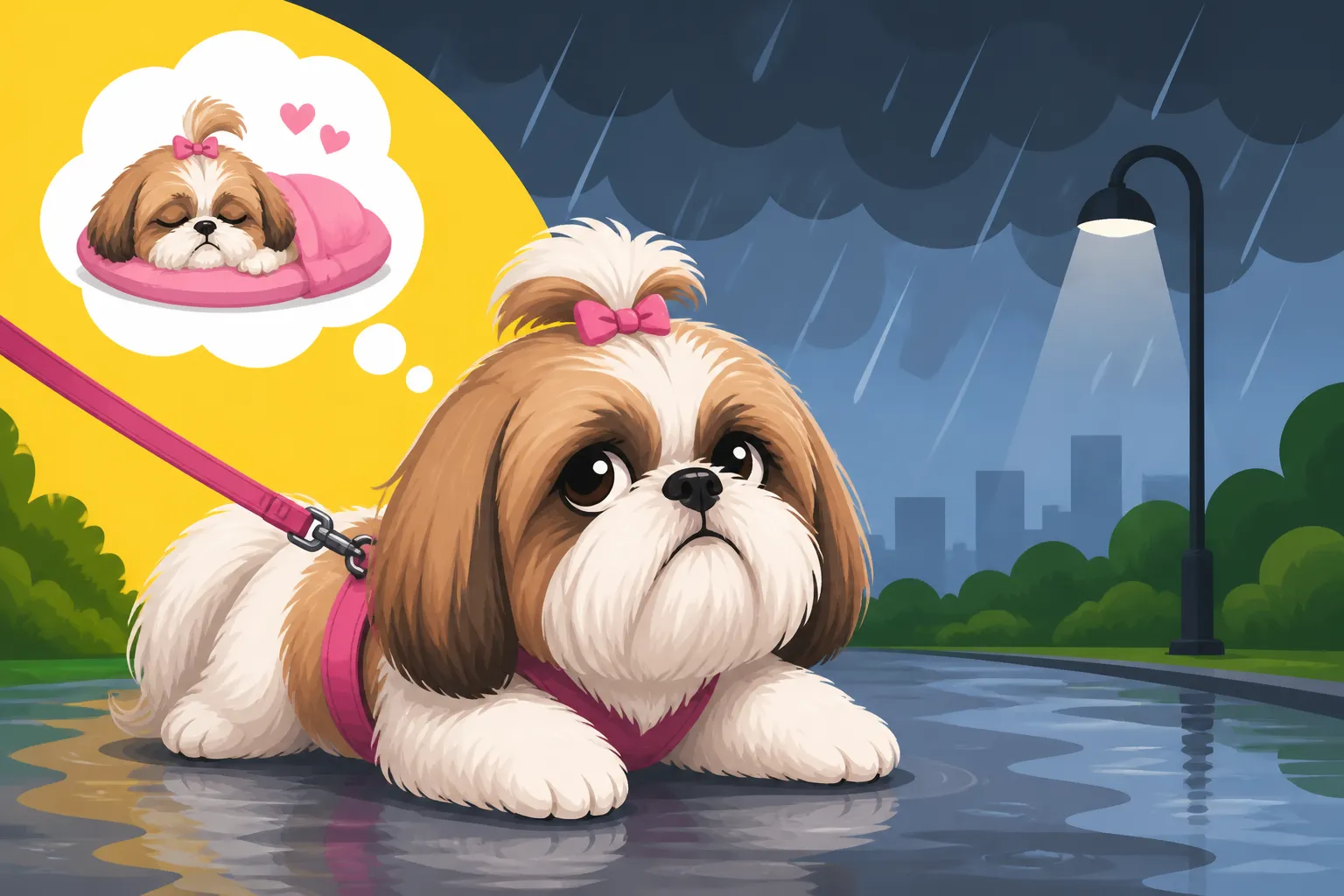
Why a Shih Tzu Refuses to Walk in the Rain
It’s a common scenario for many Shih Tzu owners: you open the door, leash in hand, ready for a walk, and then a light drizzle begins. Your adorable, usually enthusiastic companion suddenly turns into a statue, digging their heels in, or worse, making a dash back inside as if the sky is falling. This guide is here to unravel the mystery of why your Shih Tzu seems to have such a strong aversion to walking in the rain and, more importantly, to offer practical, empathetic strategies to help both of you navigate wet weather walks with a little more ease and a lot less drama.
Understanding the Shih Tzu's Aversion to Rain
Many Shih Tzu owners feel like they're alone in this struggle, but trust me, you're not. This particular quirk is actually quite common in our beloved flat-faced friends. Their unique physical characteristics and historical background play a huge role in why they often turn their tiny noses up at a rainy day stroll. It’s not just stubbornness; it’s a combination of practical discomforts and ingrained predispositions.
Breed History and Preferences
Let’s take a little trip back in time, shall we? The Shih Tzu originated in the palaces of Tibetan monks and Chinese emperors, where they were cherished lap dogs. Their entire existence was centered around comfort, warmth, and being adored indoors. They weren't bred for hunting, herding, or enduring harsh outdoor conditions. Their job was to be companions, often draped in luxurious silks and furs, nestled in laps, and kept far from the mud and damp. This indoor-centric lifestyle, passed down through generations, has instilled a strong preference for dry, comfortable environments.
Think about it: they are literally royalty by heritage! It makes sense that they'd expect a certain level of comfort. This isn't to say every Shih Tzu will hate the rain, but the breed's historical role certainly didn't prepare them for splashing through puddles. Instead, they were accustomed to soft carpets and warm laps. It's a testament to their enduring nature that they still carry some of these preferences, making a simple walk in the rain feel like a monumental imposition.
Sensitive Nature and Discomfort Avoidance
Beyond their regal history, Shih Tzus are often described as having a sensitive temperament. They are observant and can be quite particular about their surroundings. A sudden change in weather, especially one that makes them wet and potentially cold, can be genuinely unsettling. They aren't just being dramatic; they're genuinely seeking to avoid discomfort. This sensitivity extends to many aspects of their lives, from grooming sessions to meeting new people.
When it comes to rain, the cold, wet sensation on their delicate skin and through their dense double coat can be a genuine shock. They might associate the dampness with being miserable, and who can blame them? Nobody enjoys being cold and wet, especially when they're not expecting it. Their sensitive nature means they're quick to pick up on these unpleasant sensations and form negative associations, which then makes them resistant to future rainy outings. It's a simple case of "I didn't like that, so I'm not doing it again."
Physical Discomforts of Rain for a Shih Tzu
It's not just about preference; there are very real physical reasons why rain can be an unpleasant experience for your Shih Tzu. Their unique anatomy, while adorable, isn't particularly well-suited for battling the elements. These physical traits amplify the discomfort, making them even more reluctant to step outside when it's wet.
Long Coats and Matting Woes
One of the most defining features of a Shih Tzu is their magnificent double coat. While beautiful, this long, flowing hair becomes a real burden in wet weather. Water soaks into the outer coat and then the dense undercoat, making them incredibly heavy, soggy, and much colder than they would be otherwise. This isn't just uncomfortable; it's a recipe for disaster when it comes to grooming. A wet Shih Tzu coat mats almost instantly. You can go from a beautifully brushed dog to a matted mess in a single rainy walk.
Imagine trying to walk around with soaking wet, heavy clothes that also start to tangle and pull at your skin. That's essentially what your Shih Tzu experiences. The mats can form quickly behind their ears, under their legs, and along their belly, areas that are already prone to tangles. The thought of the extra grooming work, or even worse, painful de-matting sessions, can put any Shih Tzu owner off rainy walks. For the dog, the feeling of their coat becoming a heavy, matted blanket is truly unpleasant. This is a big reason why Brushing a Shih Tzu Double Coat Every Day is so important, as it helps prevent tangles from becoming severe when wet.
Flat Faces and Breathing Difficulties
Shih Tzus are a brachycephalic breed, meaning they have a charmingly flat face. While this gives them their distinctive look, it also comes with certain challenges, especially in varying weather. When it's raining, their shortened snouts mean that raindrops can easily splash directly into their eyes and noses. This isn't just annoying; it can make it genuinely hard for them to see or breathe comfortably. Water in the nostrils can cause snorting or reverse sneezing, which can be alarming and uncomfortable for them.
Beyond the direct splash, the humidity that often accompanies rain can exacerbate their already compromised airways. Breeds like Shih Tzus can struggle with proper airflow even on a good day. Add in the damp, heavy air, and it can make them feel quite breathless and anxious. This discomfort can quickly override any desire to go outside, as their instinct for self-preservation kicks in. It's not just a dislike; it can feel like a mild struggle to simply exist in the wet conditions. This ties into the broader issue of Brachycephalic Breathing in a Shih Tzu, which makes any environmental stressor more pronounced.
Cold and Damp Sensations
Shih Tzus are small dogs, and their compact size means they can lose body heat more quickly than larger breeds. When their long, absorbent coat gets wet, it strips away their natural insulation, making them feel cold much faster. The combination of cold rain, damp fur, and potentially chilly air can be quite miserable for them. They're built for warmth and comfort, not for braving the elements.
This cold, damp sensation is not just superficial. It can penetrate to their skin, making them shiver and seek warmth. Imagine walking outside in a downpour without an umbrella or a proper coat; you'd probably feel the urge to run back inside, too! This is why a good rain jacket or proper protection can make a huge difference, not just for their comfort but for their overall health, as prolonged dampness can lead to skin irritation under that dense coat.
Psychological Factors and Negative Associations
It's not all physical. Our dogs, like us, learn from experience. If their first few encounters with rain were unpleasant, they're likely to develop a strong psychological aversion. This can manifest as anxiety, fear, or just plain stubborn refusal, making walks a battle of wills.
Fear of the Unknown or Unpleasant Experiences
Dogs, especially sensitive ones like Shih Tzus, can easily develop fears or phobias based on negative experiences. If your Shih Tzu had a particularly cold, wet, or scary experience during a rainy walk—maybe a loud thunderclap, a slip on wet pavement, or just being thoroughly soaked and chilled—they might generalize that feeling to all rainy conditions. This isn't rational in our human terms, but for a dog, a bad past experience is a strong predictor of future discomfort.
This can manifest as a refusal to even step a paw out the door, or a complete shutdown once outside. They might start to associate the sound of rain, the sight of an umbrella, or even just the damp smell in the air with that past unpleasantness. Overcoming this requires patience and positive reinforcement, helping them build new, better associations with wet weather. They need to learn that rain doesn't automatically mean a terrible time.
Owner Anxiety and Reinforcement
Here’s a tough truth: sometimes our own anxiety about the rain or our dog's reaction can inadvertently reinforce their reluctance. If you anticipate a struggle, tense up when you see rain, or get frustrated when your Shih Tzu digs in their heels, your dog picks up on that energy. Dogs are incredibly attuned to their owners' emotions, and if you're stressed, they're likely to feel stressed too.
This can create a feedback loop: you worry about the rain, your Shih Tzu senses your worry and becomes more anxious, which then confirms your worry, and so on. It becomes a self-fulfilling prophecy. To break this cycle, you need to project calm confidence. Even if you're secretly dreading the walk, try to act cheerful and positive. Your positive attitude can make a surprising difference in how your Shih Tzu perceives the situation. This is a common theme in dog training; our dogs often mirror our internal states.
Training and Acclimation Strategies
So, what can you actually do about it? The good news is that with patience, consistency, and the right approach, you can help your Shih Tzu become more comfortable with rainy walks. It’s all about creating positive associations and gradually desensitizing them to the wet weather.
Gradual Desensitization and Positive Reinforcement
The key to overcoming any fear or aversion is gradual desensitization. You can't just throw your Shih Tzu into a downpour and expect them to be okay. Start small. On a rainy day, simply open the door and let them look outside. Give them a treat and praise for calmly observing the rain. Then, take one step outside, offer a treat, and go back in. Slowly increase the time and distance you spend in the rain, always pairing it with high-value treats and enthusiastic praise.
The goal is to make every interaction with rain a positive one. If they take two steps and balk, that's okay. Praise the two steps, give the treat, and try again later. Never force them. Force can create more fear and resistance. Use their favorite treats or toys to motivate them. For ideas on training, you might find resources from BAXTER & Bella helpful, as they often emphasize positive, gradual methods. Remember, Five Minute Sessions With a Shih Tzu are often more effective than longer, frustrating ones.
Making Walks Fun and Rewarding
If walks in the rain feel like a chore for both of you, it’s time to inject some fun! Turn rainy walks into a special occasion. Bring extra-tasty treats that your Shih Tzu only gets during wet weather. Play a short game of fetch under an awning or in a covered area before venturing into the open. End the walk with a cozy towel rub and more treats indoors.
The idea is to counterbalance the discomfort with overwhelming positive experiences. If they know that rain means super yummy treats and a fun little adventure, they might be more willing to brave the damp. Consider incorporating short training bursts during the walk, practicing cues like "sit" or "stay" for a quick treat reward. This keeps their mind engaged and focused on you, rather than solely on the rain. This positive focus can also help with Shih Tzu Leash Manners on a Harness, making the whole experience more pleasant.
Creating a Designated Potty Area
For many Shih Tzus, the biggest issue with rain isn't necessarily the walk itself, but the act of pottying in the rain. They might be unwilling to squat or lift a leg while getting soaked. If your Shih Tzu is primarily refusing to go outside to relieve themselves, consider creating a designated, sheltered potty area. This could be a small section of your yard with an awning, a large umbrella set up specifically for them, or even an indoor grass patch or pee pad for emergencies.
The goal here is to provide a dry, comfortable spot where they can do their business without getting drenched. Once they’ve relieved themselves, the pressure to endure a longer rainy walk might lessen, and you can focus on making short, positive excursions outside. This helps separate the functional need to potty from the recreational aspect of a walk, easing their resistance.
Essential Gear for Rainy Weather Walks
Just like we wouldn't brave a downpour without a raincoat and umbrella, our Shih Tzus benefit immensely from appropriate gear. Equipping them properly can significantly reduce their discomfort and make rainy walks much more tolerable.
Raincoats and Waterproof Attire
A good quality raincoat is arguably the most important piece of gear for a rain-averse Shih Tzu. Look for one that is genuinely waterproof, covers a good portion of their back and belly, and has a hood (though many Shih Tzus dislike hoods). The primary goal is to keep their double coat as dry as possible, minimizing the cold, damp sensation and the risk of matting. Many options are available on platforms like Amazon.
When choosing a raincoat, consider the fit. It should be snug enough to stay on but not restrict their movement or rub their skin. For long-coated breeds, ensure it doesn't chafe or pull their hair. Some owners even opt for full-body suits that cover their legs to maximize dryness. Remember to introduce the raincoat slowly and positively, letting them wear it for short periods indoors with treats before venturing out.
Paw Protection
Wet paws can be just as unpleasant as a wet coat, and they can also track a lot of mud and grime back into the house. Dog booties or paw protectors can be a game-changer for some Shih Tzus. These can keep their paws dry and clean, prevent slipping on wet surfaces, and protect against cold puddles.
However, getting a Shih Tzu to accept booties can be a challenge. Start by putting one bootie on for a few seconds, followed by a treat. Gradually increase the time and add more booties. Make it a fun game! Choose booties that are comfortable, have a good grip, and stay on securely. Again, online retailers like Amazon offer a wide variety of styles and sizes. If booties are a complete no-go, at least have a dedicated paw-wiping station by the door with absorbent towels.
Harnesses and Leashes for Safety
Even in the rain, a proper harness is crucial for a Shih Tzu's safety and comfort. Their delicate necks and brachycephalic breathing mean a collar should never be used for leash attachment. A well-fitting harness distributes pressure across their chest and shoulders, preventing strain on their neck and throat, which is especially important if they are struggling or pulling against the rain. Look for a harness that is quick-drying or made of waterproof materials if possible.
Make sure the harness doesn't rub or cause discomfort, especially when wet, as this can add to their aversion. A comfortable, secure harness is essential for their overall well-being. Why a Shih Tzu Should Wear a Harness Not a Collar delves into this more deeply. When it comes to leashes, a standard nylon or waterproof material is fine. Avoid retractable leashes in wet conditions, as they offer less control, and you want to keep your Shih Tzu close.
When to Reconsider or Adapt Your Routine
Sometimes, despite your best efforts, your Shih Tzu might simply despise the rain. Or perhaps the weather conditions are genuinely too extreme. It’s important to know when to push a little and when to simply adapt and find alternative solutions for their exercise and potty needs.
Assessing Weather Severity
There's a big difference between a light drizzle and a torrential downpour with high winds. Always assess the severity of the weather. Heavy rain, strong winds, or extremely cold temperatures (especially when combined with dampness) can be genuinely dangerous for a small Shih Tzu. They are prone to getting chilled, and their long coats, if soaked, can quickly lead to hypothermia in cold weather.
In these extreme conditions, it's perfectly fine—and often recommended—to skip the outdoor walk. Prioritize your Shih Tzu's safety and comfort. Don't feel guilty about keeping them indoors if the weather is truly bad. Instead, focus on indoor alternatives for exercise and potty breaks. Remember, Getting a Shih Tzu Outside in Cold Weather presents similar challenges, and the same caution applies to heavy rain.
Indoor Exercise Alternatives
If outdoor walks are out of the question due to rain, don't despair! There are plenty of ways to keep your Shih Tzu entertained and exercised indoors. Short games of fetch in a hallway, hide-and-seek with treats, or engaging puzzle toys can provide mental and physical stimulation. Even a quick session of practicing tricks they know, or learning new ones, can be a great way to burn off energy.
Consider creating an "agility course" with pillows and blankets for them to navigate. Indoor activities can also be a wonderful bonding experience. Just because you can't go outside doesn't mean their day has to be boring. For ideas on games, check out Indoor Play for a Shih Tzu. This ensures they still get their needed activity without the stress of the rain.
Embracing Indoor Potty Solutions
For Shih Tzus who absolutely refuse to potty in the rain, indoor solutions can be a lifesaver. This could involve using pee pads, a dedicated indoor grass patch, or a litter box designed for dogs. While not ideal for every owner, it provides a safe and dry option for your dog to relieve themselves without enduring discomfort or holding it for too long.
If you choose an indoor potty solution, ensure it's in a consistent location and that you reinforce its use with praise and treats. This is especially helpful for older Shih Tzus or those with health conditions that make holding it longer challenging. It’s about meeting your dog’s needs, even if it deviates from the traditional outdoor potty routine.
| Reason for Rain Aversion | Description | Solution/Strategy |
|---|---|---|
| Physical Discomfort | Heavy, matted coat; cold/damp sensation; water in eyes/nose. | Raincoat, paw protection, quick towel dry upon return. |
| Brachycephalic Issues | Difficulty breathing in humid air; water splashing in face. | Monitor breathing, provide shelter, minimize exposure. |
| Negative Associations | Past scary/unpleasant experiences (e.g., slipping, cold, loud noise). | Gradual desensitization, positive reinforcement (treats!). |
| Sensitive Temperament | General dislike of changes or uncomfortable sensations. | Make it fun, use high-value rewards, keep sessions short. |
| Owner Anxiety | Dog picks up on owner's stress/frustration about rain. | Project calm confidence, act cheerful and positive. |
| Potty Reluctance | Unwillingness to relieve themselves while getting soaked. | Designated sheltered potty area, indoor potty options. |
| Lack of Fun | Rain walks are purely functional and unpleasant. | Incorporate play, training, and special treats. |
Dealing with a Shih Tzu who hates walking in the rain can test your patience, but remember, they're not doing it to spite you. They're genuinely uncomfortable or fearful. By understanding their unique needs, providing the right gear, and implementing positive training strategies, you can help them navigate wet weather with more confidence and less stress. Sometimes, it's about compromise and finding what works best for your individual little lion dog.
Disclaimer
This article is for general informational purposes only and does not constitute professional advice. Laws, prices and regulations vary by location and change over time. Consult a qualified professional for guidance on your specific situation.