Shih Tzu Alone Time and Learning to Tolerate It
It's heartbreaking to leave your sweet Shih Tzu alone, only to come home to a chorus of barks from your neighbors or a mess that suggests a miniature furry tornado swept through your house. The truth is, while Shih Tzus are bred for companionship, they aren't born knowing how to handle solitude, and many develop real struggles with being left by themselves. This guide is here to walk you through understanding why your Shih Tzu might be struggling with alone time and, more importantly, how you can patiently and lovingly help them learn to tolerate and even enjoy their solo moments.
Understanding Separation Anxiety in Shih Tzus
It’s easy to dismiss a dog’s distress when left alone as "being naughty" or "just missing you." But for many Shih Tzus, the experience of solitude is genuinely terrifying. Understanding the root causes and recognizing the signs are the first steps toward helping your furry friend.
Why Shih Tzus Struggle with Being Alone
Our beloved Shih Tzus were literally bred to be companions. For centuries, they lived in imperial palaces, constantly surrounded by people, often nestled in the laps of royalty. They were, in essence, furry shadow-dogs, their entire purpose being to provide comfort and close companionship. This historical background is deeply embedded in their DNA. Unlike breeds historically tasked with guarding, hunting, or working independently, the Shih Tzu’s genetic blueprint screams, "I am here to be with you!" When that core need for constant connection is unmet, even for short periods, it can trigger a deep-seated anxiety. They haven't had generations of training or selective breeding to cope with solitude; quite the opposite, in fact. This inherent dependence makes them particularly susceptible to distress when left alone, often expressing it in ways that can be frustrating for owners.
Imagine if your entire lineage was about being a constant companion, and suddenly you're expected to be okay by yourself for hours. It’s a huge ask for these little dogs. Their bond with their human is often incredibly strong, and they thrive on that connection. When you leave, it's not just boredom; it can feel like a profound loss or abandonment, even if you're just stepping out for groceries. This isn't a flaw in their character; it's a testament to the success of their breeding as dedicated companions, which unfortunately can manifest as difficulties with alone time in our modern lives.
Common Signs of Separation Distress
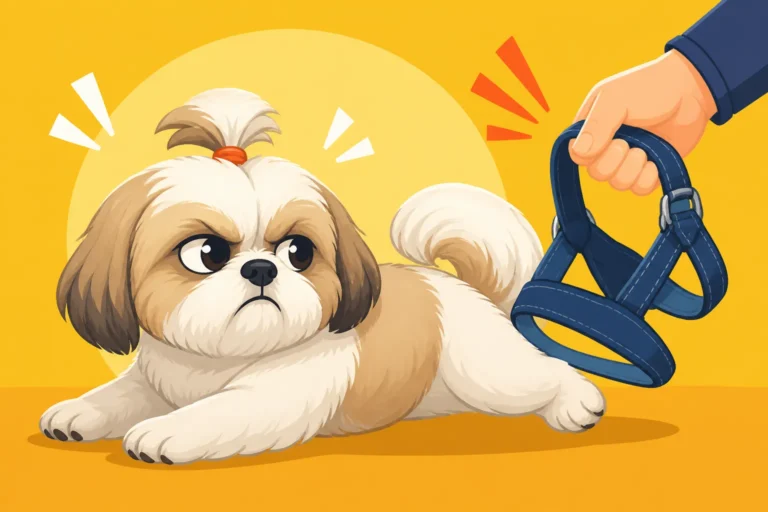
Recognizing the signs of separation distress is crucial, as it often looks very different from just a bored dog. A Shih Tzu suffering from alone time anxiety isn't just seeking attention; they're genuinely panicked. One of the most common indicators is persistent vocalization: endless barking, whining, or even howling the moment you walk out the door or are out of sight. This isn't just a few barks; it's often sustained and frantic, a desperate cry for your return.
Another tell-tale sign is destructive behavior, specifically targeting exits (like chewing on door frames or windowsills) or items that smell like you (your shoes, a blanket from your bed). This isn't just regular puppy chewing; it's often frantic, can lead to self-harm, and is an attempt to escape or relieve overwhelming stress. Accidents indoors, especially from an otherwise house-trained Shih Tzu, can also point to distress. They're not doing it out of spite; it's a loss of control triggered by anxiety. Other signs can include pacing, excessive drooling, trembling, or even trying to block you from leaving. If you suspect this is happening, setting up a camera to Watching a Shih Tzu on Camera While You Are Out can provide invaluable insight into their behavior when you're not there.
The Difference Between Mild Discomfort and Clinical Anxiety
It's important to differentiate between a Shih Tzu who experiences mild discomfort when left alone and one suffering from clinical separation anxiety. Mild discomfort might look like a few minutes of whining after you leave, followed by settling down, perhaps with a favorite toy or a nap. They might be a bit mopey when you return, but generally, there's no frantic destruction or excessive vocalization throughout the entire period of your absence. This type of dog can usually be helped with consistent, positive training.
Clinical separation anxiety, on the other hand, is a much more severe and debilitating condition. These dogs exhibit extreme panic, often from the moment they perceive you are about to leave, continuing throughout your absence. This can involve sustained, frantic barking, destructive attempts to escape that can cause injury, uncontrolled urination or defecation, excessive drooling, or constant pacing and panting. It’s not just boredom; it's a full-blown panic attack. This level of anxiety often requires a more intensive approach, potentially involving veterinary consultation for medication to help manage the panic, alongside a structured behavior modification plan. It's a spectrum, and understanding where your Shih Tzu falls on it helps determine the best course of action.
Building a Foundation for Alone Time Success
Before you even think about leaving your Shih Tzu alone for extended periods, it's crucial to lay down a strong foundation. This isn't just about training them to cope; it's about building their confidence and ensuring their basic needs are met in a way that promotes calm.
Crate Training as a Safe Haven
For many Shih Tzus, a crate can become a den, a safe, personal space where they feel secure. This isn't about punishment; it's about providing a cozy, enclosed area where they can retreat and feel protected. Imagine it like their own little bedroom. When Crate Training a Shih Tzu Properly, you want to introduce it slowly and positively. Make it inviting with soft bedding, a favorite chew toy, and maybe a covered blanket to create a den-like atmosphere. Feed them meals in there, toss treats inside, and never force them in.
The goal is for your Shih Tzu to willingly enter and relax in their crate, viewing it as a comfortable retreat rather than a jail. This takes time and patience, but it's an invaluable tool for teaching alone time. A well-crate-trained Shih Tzu will often choose to nap in their crate even when you're home, demonstrating their comfort and security with the space. For more specific guidance, consider posts like A Shih Tzu Crying in the Crate at Night to understand common issues and solutions.
Establishing a Predictable Routine
Dogs, especially Shih Tzus, thrive on routine. A predictable schedule helps them understand what to expect throughout the day, which can significantly reduce anxiety. When they know when they'll eat, go potty, play, and rest, they feel more secure. Try to keep meal times, potty breaks, and exercise sessions consistent each day.
Before you plan to leave them alone, ensure they've had ample opportunity to relieve themselves. A full bladder or bowel will only add to their stress. A good routine might look something like this: morning potty, breakfast, active playtime, then a quiet wind-down period before you leave. This consistent rhythm helps to normalize your departures and arrivals, making them less alarming because they fit into an expected pattern of events. This predictability is a cornerstone of building a resilient Shih Tzu.
Mental and Physical Exercise Before Alone Time
A tired dog is a good dog, and a mentally stimulated dog is even better. Before leaving your Shih Tzu alone, it's incredibly important to provide both physical and mental exercise. For a Shih Tzu, physical exercise doesn't mean a five-mile run. A brisk 20-30 minute walk, a vigorous game of fetch indoors, or chasing a laser pointer can be enough to expend some physical energy.
Mental exercise is just as vital. This can include short training sessions practicing commands, working on a puzzle feeder, or playing scent games. A mentally tired dog is much more likely to settle down and rest when alone than a dog bursting with pent-up energy. This proactive approach helps to drain their reserves, making them less likely to resort to destructive behaviors or incessant barking due to boredom or excess energy. Remember, a Shih Tzu with a full mind and body is a much calmer Shih Tzu.
Gradual Desensitization: The Training Process
Teaching your Shih Tzu to tolerate alone time is a process of gradual desensitization, much like gently easing someone into a cold pool rather than pushing them in. It's about slowly increasing their comfort with your absence, step by tiny step.
Starting Small: Five-Minute Departures
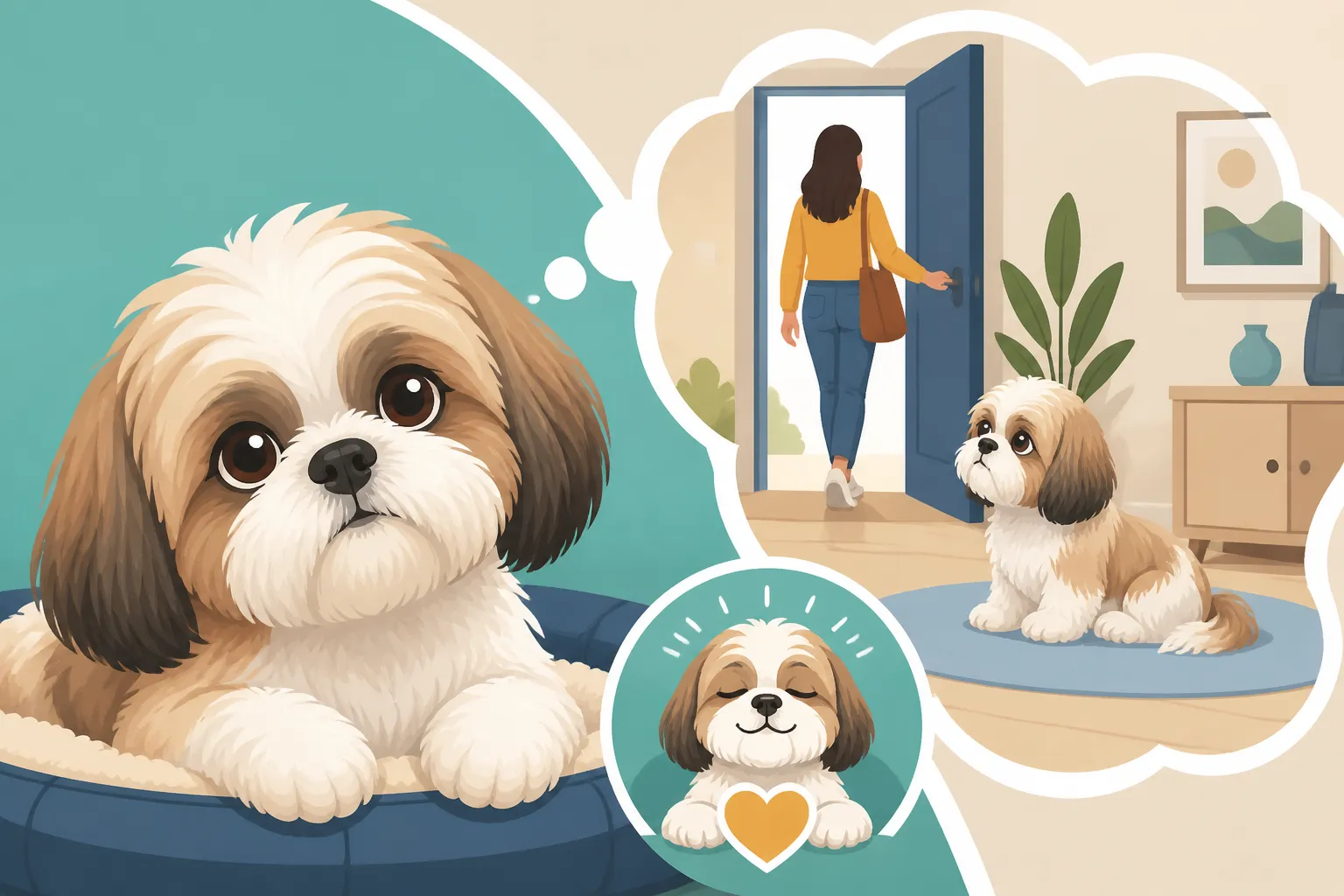
This is where the real work begins, and patience is your absolute best friend. Start by practicing very short departures. The goal is to leave before your Shih Tzu gets anxious and return before they even have a chance to get truly distressed. Think five minutes, or even less, if that's all they can handle. Your departures and arrivals should be as low-key as possible; no dramatic goodbyes or excited greetings. Just walk out, wait a few minutes, then walk back in calmly. The message you want to convey is that your leaving is not a big deal.
You can start by just stepping out of the room for a minute, then two, then five. Gradually, you'll work up to stepping out of the front door. Use cues like picking up your keys and coat, but don't actually leave every time. This helps desensitize them to your "departure cues." When you do leave, make sure they have a special, high-value chew toy or a puzzle feeder that only comes out when you leave. This associates your departure with something positive. The key here is consistency and keeping the duration short enough that they succeed every single time. It's about building a chain of positive associations with your absence.
Increasing Duration and Distance
Once your Shih Tzu is consistently comfortable with short, five-minute departures, you can slowly start to increase the duration. Add another five minutes, then ten, and so on. This is where a pet camera comes in handy, allowing you to monitor their behavior discreetly. You want to observe them and ensure they're staying calm. If you see signs of distress, it means you've gone too far too fast, and you need to dial it back to a duration where they were still relaxed.
Don't just increase the time you're out of sight; vary the scenarios. Sometimes leave for 15 minutes to run an errand, other times just step out to get the mail. The unpredictability of when you leave, coupled with the predictability of your calm return, helps them build resilience. A common mistake is to only practice on weekdays or weekends. Make sure they experience alone time at various times, mimicking real-life scenarios. It's about creating a series of successful, manageable challenges that gradually build their confidence in being by themselves. The online platform by BAXTER & Bella offers structured programs that guide you through these exact steps, often proving immensely helpful for owners seeking a clear, progressive path.
The "Go to Your Place" Cue for Independent Comfort
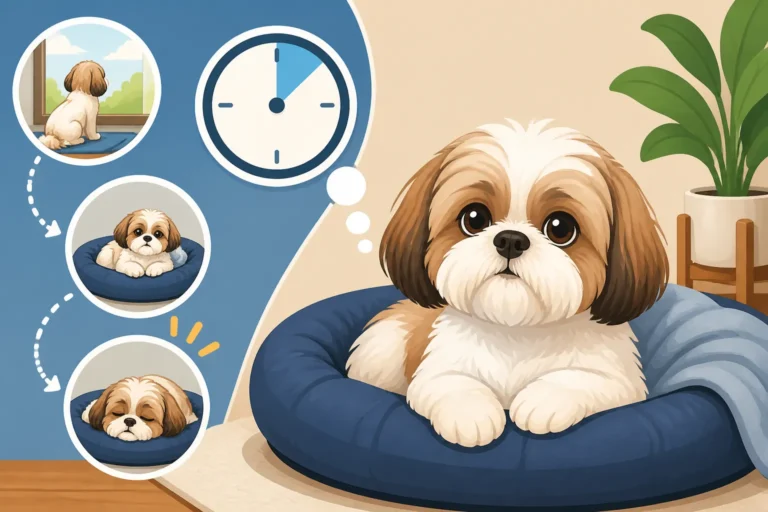
Teaching your Shih Tzu a "go to your place" cue can be incredibly beneficial for alone time training. This cue teaches them to go to a designated spot—like their dog bed, a mat, or their open crate—and stay there calmly. It provides them with an independent activity and a sense of routine, rather than constantly shadowing you.
Start by luring them to their "place" with a treat, then rewarding them as they settle. Gradually add the verbal cue, "place!" or "bed!" Practice this when you're home, rewarding them for staying there for increasing durations. This isn't just for when you're leaving; it's a foundational skill for self-settling. When they're comfortable with this, you can start incorporating it into your departure routine. Ask them to go to their place, give them a high-value chew there, and then calmly leave. This transitions them into alone time with a familiar, positive command, helping them to feel more secure in their designated spot.
Tools and Resources to Aid Alone Time Training
No one expects you to tackle this challenge alone! There are many fantastic tools and resources available that can make the journey smoother for both you and your Shih Tzu.
Interactive Toys and Puzzle Feeders
Boredom is a huge driver of destructive or vocal behavior when a Shih Tzu is left alone. Interactive toys and puzzle feeders can be absolute lifesavers. These toys require your dog to engage their brain and often their paws to extract treats or kibble, providing mental stimulation and a distraction during your absence.
Look for toys that are durable and appropriate for your Shih Tzu's size and chewing style. Options range from KONG-style toys that can be stuffed with peanut butter or wet food and frozen (making them last longer), to treat-dispensing balls, or more complex puzzle feeders available on platforms like Amazon. Introduce these toys before you leave, so your Shih Tzu is already engaged. They help associate your departure with a positive, stimulating activity, transforming potential anxiety into focused play. Just be sure to always choose toys that are safe and cannot be easily chewed into small, ingestible pieces.
Calming Aids and Environmental Support
Sometimes, a little extra help is needed to create a calm environment for your Shih Tzu. Pheromone diffusers, mimicking the natural calming pheromones a mother dog releases, can help reduce anxiety. These plug into an outlet and release a scentless vapor that can have a soothing effect on some dogs.
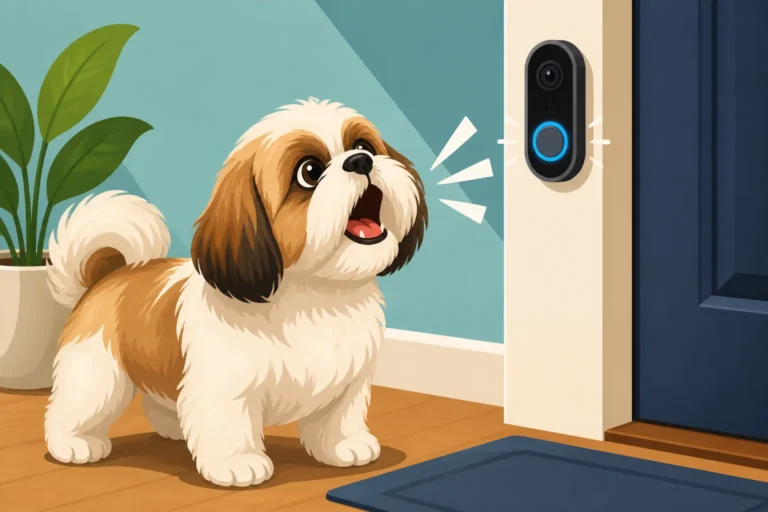
White noise machines or calming music specifically designed for dogs can also be beneficial. They mask outside noises (like neighbors, delivery trucks, or other dogs barking) that might trigger your Shih Tzu's vocalizations or alarm. Some owners find that leaving a light on or drawing curtains can also create a more secure feeling. These environmental adjustments won't cure separation anxiety, but they can significantly reduce stress levels, making your Shih Tzu more receptive to training and helping them relax when you're away.
Online Training Programs and Professional Help
You don't have to navigate alone time training by yourself. There's a wealth of knowledge out there, and sometimes a structured program or professional guidance is exactly what's needed. Online dog training platforms, like BAXTER & Bella, offer comprehensive courses that often include detailed modules on separation anxiety. These programs provide step-by-step instructions, video demonstrations, and often access to trainers for personalized advice, which can be a huge relief for owners feeling overwhelmed.
If your Shih Tzu's anxiety is severe, or if you're not seeing progress with home-based training, don't hesitate to seek professional help. A certified professional dog trainer or a veterinary behaviorist can assess your Shih Tzu's specific situation, rule out any underlying medical conditions, and develop a tailored behavior modification plan. In some cases, a vet might even suggest temporary anti-anxiety medication to help your Shih Tzu cope with the initial stages of training, allowing them to be calm enough to learn new coping mechanisms. Finding a Trainer for a Toy Breed is an excellent resource for choosing the right professional.
| Strategy | Description | Ideal for | Key Benefit |
|---|---|---|---|
| Crate Training | Gradually introduce a secure, comfortable crate as a safe den. | All Shih Tzus, especially puppies | Provides a secure, predictable space; prevents destructive behavior. |
| Routine & Exercise | Establish consistent daily schedules for potty, food, and play; ensure sufficient exercise before alone time. | All Shih Tzus | Reduces uncertainty; expends excess energy; promotes calm. |
| Gradual Departures | Practice leaving for very short, increasing durations; avoid dramatic greetings/goodbyes. | Shih Tzus with mild to moderate discomfort | Builds positive association with departures; prevents panic. |
| Interactive Toys | Provide high-value, durable puzzle feeders or chews when leaving. | All Shih Tzus prone to boredom or mild stress | Engages mind; distracts from anxiety; makes alone time rewarding. |
| Calming Aids | Use pheromone diffusers, white noise, or calming music to create a serene environment. | Shih Tzus sensitive to noise or environmental changes | Reduces overall stress; creates a soothing atmosphere. |
| Professional Help | Consult a certified trainer or veterinary behaviorist for severe anxiety or lack of progress. | Shih Tzus with clinical separation anxiety or persistent issues | Tailored behavior plans; potential medication support; expert guidance. |
Managing Common Setbacks and Challenges
Training a Shih Tzu to tolerate alone time is rarely a straight line of progress. There will be good days and bad days, and it's essential to understand how to navigate these challenges without losing heart.
Dealing with Destructive Behavior
It's truly frustrating to come home to chewed furniture, clawed doors, or destroyed items. When your Shih Tzu engages in destructive behavior, it's almost always a sign of distress, boredom, or pent-up energy, not spite. The first step is to manage their environment. Crate training, as discussed, is invaluable here, as it limits their access to destructible items. If crating isn't an option or they aren't fully crate trained, a puppy-proofed room or an exercise pen can be used to contain them safely. Remove anything valuable or potentially harmful they might chew.
Secondly, ensure you're meeting their exercise and mental stimulation needs before you leave them. A tired Shih Tzu is less likely to resort to destruction. When you return to a mess, resist the urge to scold them. They won't connect the punishment to the act, only to your return, which can worsen their anxiety. Instead, clean up calmly and reassess your training plan. Did you leave them for too long? Was their pre-departure exercise sufficient? Did they have an appropriate, high-value chew? Consistency in providing positive outlets for their energy is key.
Addressing Persistent Barking or Whining
The constant barking or whining can be one of the most challenging aspects of a Shih Tzu struggling with alone time, especially if you have close neighbors. Again, a pet camera can confirm if the barking is incessant or just initial protest. If it's persistent, it's a clear sign of distress. Your goal is to interrupt this pattern.
The "silent departure" technique can be helpful. Don't acknowledge your Shih Tzu when you leave or immediately when you return. Wait until they are quiet for a few seconds before giving a calm greeting. This teaches them that calm behavior, not frantic vocalization, gets your attention. You can also use white noise or calming music to help mask external triggers. If the barking continues even with these measures, it likely indicates a higher level of anxiety that needs a step back in your gradual desensitization training. Never punish barking through physical means or yelling, as this will only intensify their fear and anxiety around your departures. The Signs a Shih Tzu Cannot Settle Alone delves deeper into these vocal cues.
When Alone Time Becomes Too Much: Knowing When to Seek Help
There's a point where diligent home training and environmental management might not be enough. If your Shih Tzu's distress is severe—meaning they injure themselves trying to escape, cause significant property damage, are inconsolable for extended periods, or consistently soil themselves—it's time to seek professional intervention. This isn't a failure on your part; it's recognizing that their anxiety requires specialized support.
A veterinary behaviorist is a specialist who can diagnose clinical separation anxiety and often prescribe medication to help reduce the severe panic, allowing the dog to be calm enough for behavior modification training to actually work. They work hand-in-hand with certified professional dog trainers who can implement advanced desensitization and counter-conditioning protocols. Sometimes, even a gentle Shih Tzu can suddenly develop or worsen anxiety due to underlying medical issues, so a vet check is always a good first step to rule out pain or discomfort. Don't let your Shih Tzu suffer; there are compassionate professionals ready to help.
Long-Term Strategies for a Confident Companion
Helping your Shih Tzu with alone time isn't a one-and-done training session. It's an ongoing commitment to nurturing their confidence and independence, fostering a lifelong sense of security.
Maintaining Consistency as Your Shih Tzu Ages
Just like humans, dogs thrive on consistency. The routines and training methods you establish when they're young or when you first address their alone time issues should be maintained throughout their lives. This doesn't mean you can never deviate from the schedule, but a general framework of predictability helps them feel secure. As your Shih Tzu ages, their needs might change. Senior Shih Tzus might develop vision or hearing loss, which can make them more anxious when left alone, as their world becomes less predictable. Be mindful of these changes and adjust your approach, perhaps by increasing the use of calming aids or shortening alone times.
Even if your Shih Tzu becomes a pro at handling solitude, make sure to reinforce their good behavior periodically. Continue to provide engaging toys, maintain a consistent pre-departure routine, and avoid dramatic departures or greetings. Think of it as regularly topping up their emotional resilience tank. This consistent effort ensures that the peace you've worked hard to achieve regarding their alone time endures for years to come.
How Alone Time Benefits Both Dog and Owner
It might seem counterintuitive for a companion breed like the Shih Tzu, but learning to tolerate alone time is profoundly beneficial for both the dog and the owner. For your Shih Tzu, it builds resilience, self-confidence, and independence. A dog that can relax when alone is a happier, more adaptable dog overall. It means they're not constantly stressed by your departures, and they can genuinely rest and recharge. It also means they won't feel utterly lost or panicked if circumstances require them to be alone for an unexpected period.
For you, the owner, it provides freedom and peace of mind. You can run errands, go to work, or simply step out for a few hours without the crushing guilt or anxiety about what your dog might be doing or how distressed they might be. This mutual benefit strengthens the bond, as both parties can exist confidently, both together and apart. It's about a balanced relationship where companionship is cherished, but independence is also respected and fostered.
The Role of Socialization in Building Resilience
While we're talking about alone time, it might seem odd to bring up socialization, but they are intricately linked. A well-socialized Shih Tzu is generally more resilient and adaptable to various situations, including being left alone. Early, positive exposure to a variety of sights, sounds, people, and other calm, vaccinated dogs helps build their confidence and broadens their comfort zone.
A dog that has only known the inside of its home and the constant presence of its owner can easily become overwhelmed and anxious by novelty, including the novelty of solitude. Puppy classes, like those recommended for a Shih Tzu Puppy Training Month by Month, offer a safe, structured environment for positive socialization. This doesn't mean throwing them into chaotic situations, but rather controlled introductions that teach them the world isn't a scary place. A resilient, well-adjusted Shih Tzu is less likely to view your departure as a cataclysmic event and more likely to settle confidently until your return. Whether a Shih Tzu Should Be Left All Day is a great accompanying read for a holistic view on managing their time.
Disclaimer
This article is for general informational purposes only and does not constitute professional advice. Laws, prices and regulations vary by location and change over time. Consult a qualified professional for guidance on your specific situation.