Finding a Brush That Fits a Shih Tzu Mouth
One of the most frustrating challenges for Shih Tzu owners is trying to keep those tiny, crowded mouths clean. Their unique facial structure and densely packed teeth make regular brushing feel like an impossible mission, often leaving us worried about their dental health. This guide is designed to demystify the process, helping you understand the intricacies of your Shih Tzu's oral anatomy and find the perfect brushing tools to ensure their sparkling smile stays healthy and comfortable.
The Unique Challenges of a Shih Tzu Mouth
If you've ever tried to brush your Shih Tzu's teeth, you've likely come away feeling like you've wrestled a tiny, adorable alligator – and perhaps even felt a bit guilty about how ineffective your efforts seemed. It's not your fault, nor is it entirely your dog's. The truth is, the Shih Tzu breed comes with some inherent anatomical quirks that make dental care a particularly intricate dance. Understanding these unique challenges is the first step toward finding a toothbrush that truly fits and works.
Understanding the Brachycephalic Jaw and Underbite
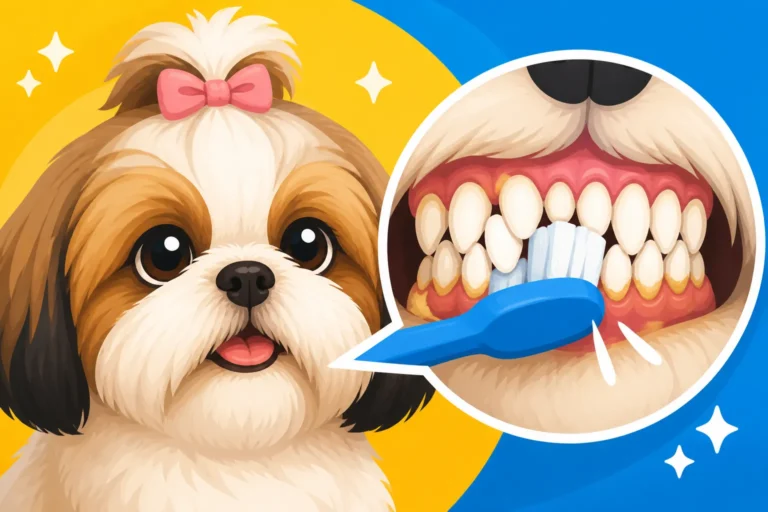
Shih Tzus are a brachycephalic breed, meaning they have those wonderfully charming flat faces. While adorable, this facial structure impacts their oral cavity significantly. Unlike dogs with longer snouts, a Shih Tzu's jaw is shortened, but they still have the same number of teeth—forty-two, to be exact—as a much larger dog breed. Imagine trying to fit all your furniture into a much smaller room; that's essentially what's happening in your Shih Tzu's mouth. This compression often leads to an undershot bite, where the lower jaw extends beyond the upper jaw, and the teeth don't align perfectly. This misalignment creates nooks and crannies where food particles and plaque can accumulate undisturbed, becoming a breeding ground for bacteria. You can see why a standard-sized toothbrush designed for a long-nosed dog simply won't cut it.
The Crowded Nature of Shih Tzu Teeth
Because of their shortened jaws, Shih Tzus frequently suffer from significant tooth crowding. Their teeth are literally packed in, overlapping, rotating, and often not leaving much space between each tooth for proper cleaning action. This isn't just an aesthetic concern; it's a major health issue. When teeth are too close together, it's incredibly difficult for saliva and even kibble to naturally clean the surfaces. More importantly, it becomes a nightmare for you, the owner, trying to navigate a toothbrush into those tight spaces. Why a Shih Tzu Mouth Cannot Hold Forty-Two Teeth explains this phenomenon in more detail. Plaque and tartar build up rapidly in these inaccessible areas, often leading to painful gum inflammation, known as gingivitis, and eventually more severe periodontal disease. It's a silent threat that can take hold surprisingly early in a Shih Tzu's life, sometimes even before they are three years old. This crowding also makes them prone to Retained Puppy Teeth in a Shih Tzu, adding another layer of complexity.
Sensitivity and Resistance to Oral Care
Beyond the physical challenges, many Shih Tzus develop a natural resistance to having their mouths handled, especially if it's been an uncomfortable experience in the past. Their mouths can be quite sensitive, and if a brush is too large, too hard, or applied with too much pressure, it can cause pain or irritation. This can quickly create a negative association with brushing, making future attempts even harder. It's a vicious cycle: the harder it is to clean, the more sensitive their mouth becomes, and the more they resist. Establishing trust and making the experience as gentle and positive as possible is paramount, and the right tool plays a huge role in achieving that. Without it, you might find yourself facing the all-too-common reality of Shih Tzu Dental Disease at 13 Percent of the Breed far sooner than you'd like.
Exploring Different Types of Shih Tzu Toothbrushes
Given the unique anatomy of a Shih Tzu's mouth, a "one-size-fits-all" approach to toothbrushes simply won't work. The market offers a variety of dental tools, each with its own benefits and drawbacks for a tiny, crowded canine mouth. Understanding these options is crucial for making an informed choice that will genuinely help your little lion dog maintain good oral hygiene.
Finger Brushes: Pros and Cons for Small Mouths
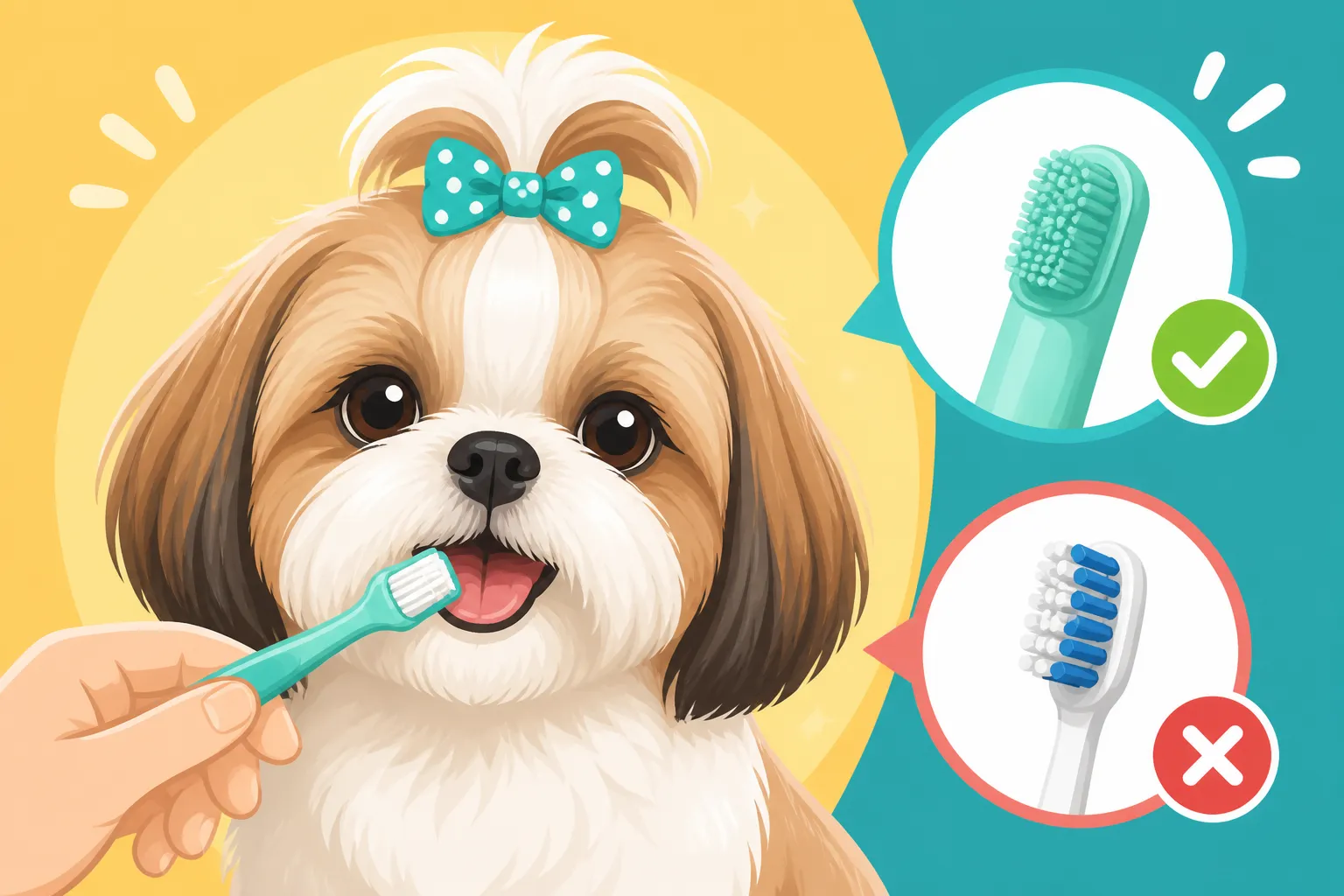
Finger brushes are often the first port of call for new puppy owners or those with particularly sensitive dogs. These soft, thimble-like brushes slip over your index finger, allowing you to use your fingertip to gently rub the teeth and gums.
- Pros: The primary advantage is the direct tactile feel you get. Your finger can better navigate the tight spaces, especially around those back molars and the canine teeth, offering a level of control that a traditional handle might not. The soft rubber or silicone nubs are usually very gentle on sensitive gums, making them ideal for initial desensitization training. Many dogs tolerate them better than a harder-bristled brush, viewing it more as a massage than an invasive procedure. They're also quite affordable and readily available on platforms like Amazon or Chewy.
- Cons: While good for getting your Shih Tzu used to the idea of brushing, finger brushes aren't always the most effective at removing hardened plaque or thoroughly cleaning between severely crowded teeth. The nubs, while gentle, don't always offer the abrasive action needed for a deep clean, especially if Tartar on Shih Tzu Teeth Before Age Three is already setting in. They might be a good starting point, but often need to be phased out or supplemented with something more robust as your dog tolerates it. Additionally, if you have large fingers, even a finger brush can feel cumbersome in a tiny Shih Tzu mouth.
Traditional Small-Headed Toothbrushes
When you think of a dog toothbrush, this is probably what comes to mind: a brush with a handle and bristles. However, for a Shih Tzu, the "small-headed" part is absolutely critical. You're looking for something designed for toy breeds, not just a "small dog" brush which might still be too big.
- Pros: These brushes offer more effective cleaning than most finger brushes due to their fine, soft bristles. They can reach further into the mouth and provide better scrubbing action on tooth surfaces. Many come with a dual-ended design, featuring a larger brush on one end and a smaller, tapered brush on the other, which can be invaluable for navigating the varying sizes of teeth in a Shih Tzu's mouth. Brands like Virbac C.E.T. or Petrodex often have options that fit this description. They give you a bit more reach for the molars in the back of the mouth, which are often the most neglected and plaque-prone.
- Cons: Even "small" dog toothbrushes can be too large for some Shih Tzus, particularly those with extreme crowding or a very prominent underbite. The handle, while offering control, can sometimes be awkward to maneuver in such a tight space, leading to accidental jabbing of gums or cheeks. It takes practice and patience to master the angles needed to reach all tooth surfaces effectively without causing discomfort. Finding a brush head that is genuinely tiny enough to fit comfortably at the back of their mouth, especially for a thorough Daily Toothbrushing in a Crowded Shih Tzu Jaw, is the key challenge here.
Electric or Ultrasonic Brushes for Shih Tzus
While less common for toy breeds due to their size, specialized electric or ultrasonic toothbrushes designed for pets do exist. These work on the principle of high-speed vibrations or ultrasonic waves to break down plaque.
- Pros: When used correctly, these can offer a superior clean, often reaching areas that manual brushing might miss, especially with their micro-vibrations. For dogs that tolerate the sensation, they can make brushing quicker and more efficient. The ultrasonic varieties don't require scrubbing, just contact with the tooth surface, which can be less invasive for some dogs.
- Cons: The main hurdle for Shih Tzus is usually size and noise. Many electric brushes are still too bulky for their small mouths. The vibration or hum can also be unsettling for sensitive dogs, making cooperation difficult. They are significantly more expensive than manual options, and if your dog resists, it's an investment that might not pay off. Furthermore, the skill required to use them safely and effectively in such a small mouth without causing gum irritation is higher. For most Shih Tzu owners, starting with manual options is generally recommended before considering this more advanced, and often more challenging, tool.
| Brush Type | Best For | Pros | Cons |
|---|---|---|---|
| Finger Brush | Puppies, sensitive dogs, initial training | Excellent control, gentle, easy introduction to oral care, affordable | Less effective at deep cleaning, nubs may not thoroughly remove plaque, large fingers may struggle with small mouths, mostly for front teeth |
| Small-Headed Manual | Regular maintenance, reaching tight spots | Better cleaning action, dual-ended options, good for plaque removal | Can still be too large for some Shih Tzus, requires technique for full coverage, harder to maneuver around extreme crowding |
| Electric/Ultrasonic | Advanced cleaning, specific plaque issues | Superior plaque breakdown, efficient, less physical scrubbing (ultrasonic) | Often too large for toy breeds, noise/vibration can be scary, high cost, higher skill required, limited accessibility for crowded areas |
Key Features to Look For in a Shih Tzu Toothbrush
Finding the perfect toothbrush for your Shih Tzu is less about brand names and more about specific design features that accommodate their unique oral anatomy. It’s a bit like trying on shoes – what fits one might pinch another. You’re looking for a comfortable, effective tool that makes the job easier for you and less stressful for your beloved companion.
Size and Shape of the Brush Head
This is, without a doubt, the most critical factor. For a Shih Tzu, the brush head needs to be absolutely tiny. Forget brushes marketed for "small dogs" if they look anything close to what you'd use for a cat; you need something smaller.
- Dimensions Matter: Look for a brush head that is no more than half an inch in length, ideally even smaller, especially if you have a particularly petite Shih Tzu or one with an extreme underbite. The bristles themselves should be arranged in a compact, oval, or teardrop shape rather than a wide rectangular one. This slender profile allows you to maneuver the brush more easily into the tight spaces between their teeth and gums, reaching those notoriously difficult-to-clean molars at the back. A dual-ended brush with one ultra-small head is often an excellent choice, giving you versatility for different areas of the mouth.
- Angle and Reach: The angle of the brush head relative to the handle can also make a difference. A slightly angled head can sometimes make it easier to reach the back teeth without having to open your Shih Tzu's mouth uncomfortably wide. Think about your own toothbrush – some angles work better for reaching wisdom teeth. The same principle applies here. You want a design that allows you to clean effectively without straining your dog's jaw or causing them to recoil. When you're searching on Chewy or even at your local pet store, hold the brush up and imagine trying to fit it into a very, very small space.
Bristle Softness and Material
While effective cleaning requires some abrasion, a Shih Tzu's gums can be quite delicate, especially if they are already prone to gingivitis. The wrong bristles can cause irritation, bleeding, and even more resistance to brushing.
- Extra Soft is Essential: Always opt for extra-soft or ultra-soft bristles. Harder bristles can abrade the gums, causing pain and making your dog dread future brushing sessions. You want bristles that are gentle enough to massage the gum line without causing trauma, yet firm enough to dislodge plaque. If you can find a toothbrush with tapered or "feather-tip" bristles, even better, as these are designed to be extremely gentle while still being effective at reaching below the gum line.
- Material Matters: Most quality pet toothbrushes use nylon bristles, similar to human toothbrushes. Ensure the bristles are densely packed but fine, allowing them to sweep away debris effectively. Avoid anything that feels stiff or rough to the touch. Remember, consistency is key, and if the brushing experience is painful, you won't be able to brush consistently.
Handle Design for Owner Comfort and Control
While the brush head is for your Shih Tzu, the handle is for you. A comfortable, ergonomic handle makes the task much less frustrating and gives you the precision needed for a proper clean.
- Non-Slip Grip: Your Shih Tzu will inevitably move, jiggle, and perhaps even try to back away. A handle with a good non-slip grip, often made of rubberized material, will prevent slips and allow for better control, especially if your hands get a little wet with toothpaste or saliva. This steadiness is crucial when working in such a confined and delicate space.
- Length and Ergonomics: The handle shouldn't be too long or too short. A medium length usually provides a good balance between reach and maneuverability. Some brushes have handles designed with a slight curve or ergonomic shape to fit comfortably in your hand, reducing strain during those concentrated brushing sessions. You want to be able to hold it securely and make small, precise movements without your hand cramping or feeling awkward. Sometimes, a simple, straight handle gives you the most direct control, so it often comes down to personal preference. Look for products on Amazon that highlight ergonomic design for comfort during Getting a Toothbrush Into a Shih Tzu Mouth.
Making Brushing a Positive Experience for Your Shih Tzu
Finding the right brush is a huge step, but it's only half the battle. Even the perfect tiny toothbrush won't do any good if your Shih Tzu fights you tooth and nail every time you try to use it. The key to successful, long-term dental hygiene lies in creating a positive, low-stress experience that your dog learns to accept, or even enjoy. This involves patience, consistency, and a generous dose of positive reinforcement.
Gradual Introduction and Desensitization
You can't just spring a toothbrush on your Shih Tzu and expect instant cooperation, especially if they haven't had much oral handling before. It's a process, and starting slow is absolutely crucial.
- Start with Touch: Begin by simply touching their muzzle, then gently lifting their lips for a few seconds, several times a day. Do this when they are relaxed, perhaps during cuddle time. Reward them immediately with a high-value treat and praise for their tolerance. The goal is to make mouth handling a normal, positive thing.
- Introduce Flavored Toothpaste: Once they're comfortable with lip lifts, introduce a small amount of dog-specific, enzymatic toothpaste (never human toothpaste!) on your finger. Let them lick it off, then gently rub it on their outer teeth and gums with your finger for just a few seconds. This gets them used to the taste and the sensation. There are many delicious flavors available, from poultry to peanut butter, which can be a huge motivator.
- Bring in the Brush: After a few days of successful finger-brushing with toothpaste, introduce the actual toothbrush. Let them lick the toothpaste off the brush first. Then, for just a few seconds, gently touch the brush to one or two teeth, making a small circular motion. Don't try to get every tooth at once. End the session quickly, praise lavishly, and give that high-value treat. Over days and weeks, gradually increase the number of teeth you brush and the duration of the session. Remember, patience is your best friend here. Two Minutes of Shih Tzu Tooth Brushing is an ideal goal, but it might take months to achieve comfortably.
Using Flavored Toothpaste and Rewards
Taste and positive reinforcement are powerful tools in shaping your Shih Tzu's attitude towards brushing. They can turn a dreaded chore into a treat-worthy routine.
- Dog-Specific Toothpaste is a Must: As mentioned, human toothpaste contains ingredients like xylitol and fluoride which are toxic to dogs. Always use a dog-specific enzymatic toothpaste. These are designed to be swallowed and often come in flavors dogs adore. The enzymatic action also helps break down plaque even with minimal scrubbing. Let your dog choose their favorite flavor if possible, as this can make a world of difference. Many pet stores and online retailers like Chewy offer a wide selection.
- High-Value Rewards: Reserve special, extra-delicious treats only for brushing time. This could be a tiny piece of cooked chicken, cheese, or their favorite soft chew. The treat should be given immediately after the brushing attempt, reinforcing the positive association. Verbal praise and gentle petting also go a long way. The reward should be so good that they want to go through the brushing process to get it. This positive conditioning is key to overcoming any initial resistance and making Daily Toothbrushing in a Crowded Shih Tzu Jaw a sustainable habit.
Consistency and Routine for Long-Term Success
Dental care is not a "once in a while" thing; it's an ongoing commitment. Just like you brush your teeth every day, your Shih Tzu benefits most from a consistent routine.
- Establish a Schedule: Aim for daily brushing. If daily is truly impossible, every other day is the bare minimum to make a significant impact on plaque buildup. Pick a time when both you and your Shih Tzu are relaxed, perhaps in the evening when things are winding down, or after their morning walk. Consistency in timing helps them anticipate the routine.
- Short, Sweet Sessions: It's far better to have a short, positive 30-second brushing session every day than a long, traumatic one once a week. Focus on getting the outer surfaces of the teeth first, especially the canine teeth and the premolars/molars where plaque accumulates most rapidly. Don't worry if you don't get every single tooth perfectly clean every time. The cumulative effect of consistent, gentle brushing is what matters most.
- Beyond Brushing: While brushing is paramount, it's also part of a larger dental health strategy. Consider dental chews specifically formulated for small breeds, water additives, or even specialized dental diets recommended by your vet. These can supplement your brushing efforts but are rarely a complete substitute. Regular vet check-ups, where your vet can assess their oral health and recommend professional cleanings as needed, are also vital for the long-term well-being of your Shih Tzu's precious smile. After all, preventing serious issues like Periodontal Disease in a Five Year Old Shih Tzu is far better (and less costly) than treating them.
Disclaimer
This article is for general informational purposes only and does not constitute professional advice. Laws, prices and regulations vary by location and change over time. Consult a qualified professional for guidance on your specific situation.