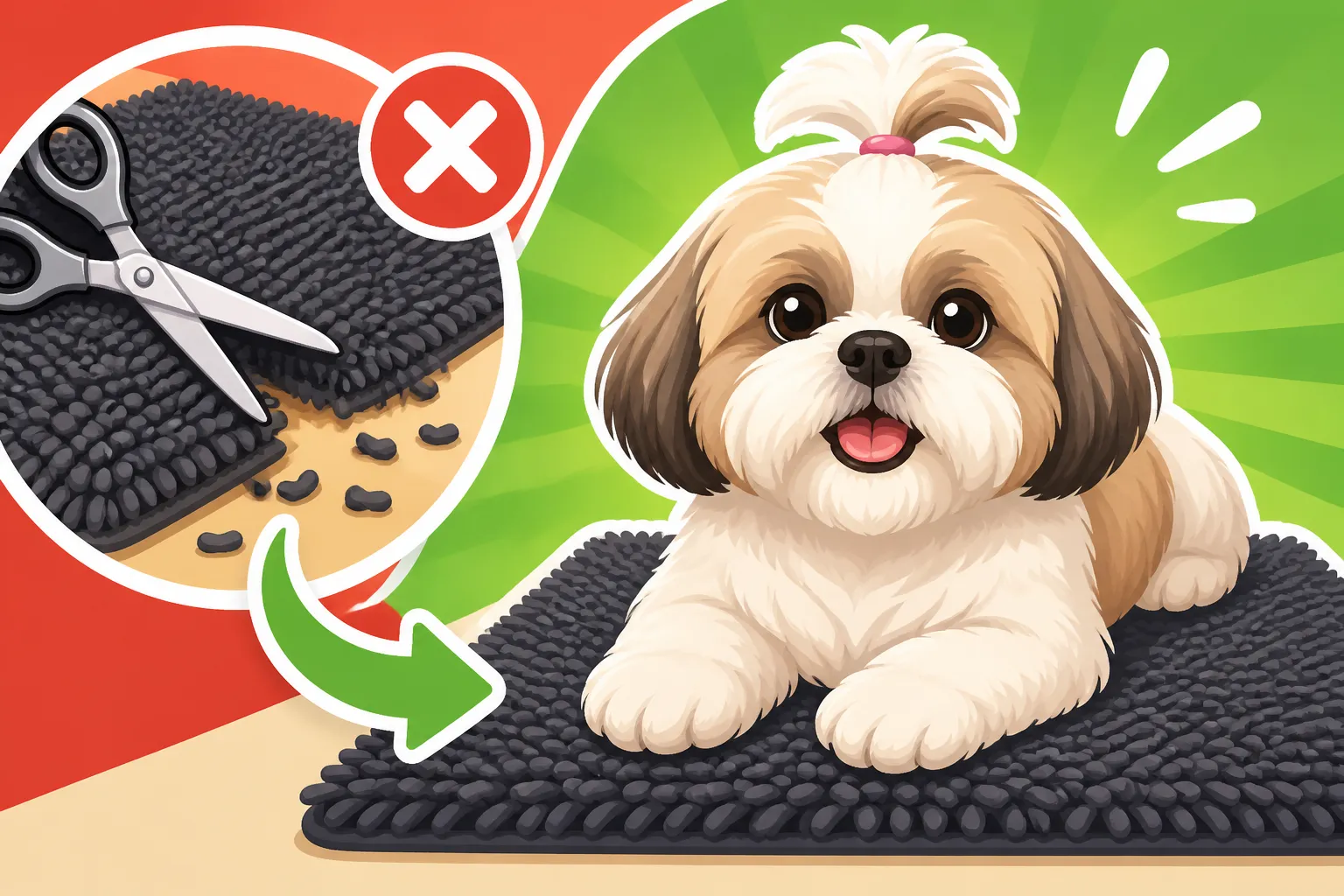
Breaking Up a Mat Without Cutting It Out
Few things are quite as disheartening for a Shih Tzu owner as running your fingers through that beautiful, flowing coat and hitting a solid, impenetrable mat. It's a sudden jolt of guilt and frustration, often accompanied by the terrifying thought of having to cut it out and risk nicking your precious pup. This guide is here to walk you through how to gently and safely break up those stubborn mats without resorting to drastic measures or causing your Shih Tzu unnecessary discomfort.
Understanding Shih Tzu Mats: Why They Form and Where
Shih Tzus are renowned for their magnificent, flowing coats, but this beauty comes with a significant responsibility: regular grooming. When that grooming routine slips, even for what feels like a day or two, mats can appear as if by magic. Understanding why and where they form is the first step to conquering them.
The Double Coat Dilemma
The Shih Tzu possesses a luxurious double coat, which is truly a marvel to behold but also a prime candidate for matting. You see, it's not just one type of hair; it's two working (and sometimes tangling) in tandem. There's the soft, downy undercoat, which is typically finer and denser, providing insulation. Then there's the longer, silkier, often coarser outer coat that gives the Shih Tzu its signature flowing appearance. These two layers, while beautiful, have a tendency to intertwine.
Think of it like this: the fine undercoat hairs are like tiny, fuzzy Velcro hooks, eager to snag onto each other and the longer, smoother outer coat. Add in natural shedding, where loose hairs get trapped within these layers instead of falling out, and you have the perfect recipe for a mat. When these trapped hairs aren't brushed out daily, they begin to knot together, tightening into dense, felt-like masses. Owners often feel that dreaded lump and exclaim, "It feels like they mat overnight!" And honestly, with a Shih Tzu's coat, sometimes it truly does feel that fast. It's a constant battle, and it's absolutely one of the biggest challenges of care & nutrition. The key is consistency, because if you wait too long, those tiny tangles become full-blown mats that are much harder to address.
Common Matting Hotspots
Mats don't just appear randomly across your Shih Tzu's body; certain areas are notorious hotspots due to friction, moisture, and the finer texture of the hair there. Knowing these areas means you can pay extra attention during your daily grooming sessions and catch potential mats before they become serious.
One of the most common places to find mats is right behind the ears. The hair here is often much finer and silkier, and the constant movement of the ears, combined with rubbing against collars or even just sleeping, creates a perfect storm for tangles. You'll also frequently discover mats in the armpits and groin area. These spots experience high friction from movement, and they can also trap moisture, which only exacerbates matting. Similarly, the hair under the chin and around the mouth can mat quickly due to drool, food, and rubbing. The base of the tail, where it often presses against the body, and the area where a harness sits are also prime locations for mats to develop. If you're wondering Where a Shih Tzu Mats First, these are almost always the culprits. Even the pads of their feet, if the hair grows too long, can form tight knots between their toes, making walking uncomfortable. A quick daily check of these zones can save you hours of painstaking detangling later. Ignoring them can lead to painful skin irritation, or even worse, skin infections developing underneath a tightly pulled mat.
Essential Tools for Mat Removal
Approaching a matted Shih Tzu with the wrong tools is like trying to build a house with a spoon—ineffective, frustrating, and potentially damaging. Having the right arsenal of grooming aids is crucial for successfully and gently breaking up mats without causing your furry friend distress. It's all about being prepared and having specialized items ready for when that dreaded mat appears.
Brushes, Combs, and Detangling Sprays
When it comes to breaking up mats, you're going to need more than just your average dog brush. A good quality slicker brush is indispensable. Its fine, wire pins are designed to get down into the dense undercoat and gently separate hairs, especially after you've made a dent in a mat. However, a slicker brush isn't for removing mats; it's for thorough general brushing and fluffing once the mat is gone or loosened. For actual mat work, you'll reach for your metal comb. This tool is your mat detector and initial mat-breaking hero. Look for one with both wide and narrow teeth. The wide-toothed side is excellent for initially working into the outer edges of a mat, while the finer side helps to tease out smaller tangles once the larger mass has been broken down. The Brush and Comb a Shih Tzu Coat Demands will make a world of difference in your grooming routine.
Perhaps the most critical aid in mat removal is a good detangling spray. These sprays work by coating the hair strands, making them slicker and easier to separate without breaking them or causing pain. You apply the spray directly to the mat, not the entire dog, allowing it to penetrate and lubricate the tangled hairs. Brands like Earthbath or Bio-Groom offer excellent detangling sprays that you can find readily on platforms like Chewy or Amazon. Just a few spritzes can significantly reduce the friction, making the job much easier. While the primary goal is to avoid cutting, for very small, isolated, and superficial mats that are truly on the surface and not tight against the skin, tiny, blunt-nosed grooming scissors might be used only to carefully snip into the mat from the edge, never across it, creating channels for your comb. This is a very advanced technique and carries a high risk of injury, so proceed with extreme caution and consider it a last resort before professional help.
Specialized Mat-Breaking Tools
Sometimes, a mat is just too stubborn for fingers, spray, and a comb alone. This is when specialized mat-breaking tools come into play, but it's crucial to use them correctly and with immense care to avoid hurting your Shih Tzu's delicate skin.
One such tool is a mat splitter or mat rake. These tools typically have a series of blunted, hook-like blades that are designed to cut through the mat rather than pull it out. You carefully slide the splitter underneath the mat, close to the skin, and then gently pull it upwards and outwards, allowing the blades to slice through the compacted hair. The trick is to go slowly, working in small sections, always aiming away from the skin. Never yank or force the tool, as this will pull on the surrounding hair, causing pain and potentially skin irritation. Another option is a dematting comb with blades. These combs look like regular combs but have small, inward-facing blades on the teeth. As you comb through a mat, these blades are meant to slice through the felted hair. Again, the danger here is clear: those blades are sharp. You must be incredibly careful to ensure the blades never make contact with your Shih Tzu's skin. Always work on the outermost edge of the mat, teasing apart small sections rather than trying to rake through the whole thing. Patience is paramount with these tools. If your Shih Tzu shows any signs of discomfort or pain, stop immediately. It’s better to leave some matting and seek professional help than to cause injury or make your dog fear grooming. Remember, these tools are for breaking down mats, not for ripping them out, and always go slowly, using the detangling spray to help the process along.
Step-by-Step Guide to Gentle Mat Removal
Removing mats from your Shih Tzu's coat can be a delicate operation, requiring a calm demeanor, a gentle touch, and a systematic approach. Rushing through it will only cause pain and make your dog dread future grooming sessions. Let's break down the process into manageable steps, prioritizing your Shih Tzu's comfort and safety.
Preparation and Safety First
Before you even touch a comb to your Shih Tzu's fur, adequate preparation is key. First, choose a quiet, well-lit space where you and your dog can be comfortable and relatively undisturbed. A grooming table can be ideal, but a comfortable, non-slip surface on the floor or a low table will also work. Gather all your tools: your slicker brush, metal comb (with wide and narrow teeth), detangling spray, and any specialized mat-breaking tools you might need. It's also a good idea to have a small container of cornstarch or baby powder handy, as these can help loosen particularly stubborn mats by absorbing oils and providing slip.
Next, consider your Shih Tzu's comfort. Ensure they have recently had a potty break and are generally relaxed. If they're anxious, a favorite toy or some healthy, small treats (like the ones from Ollie, or even just some small pieces of their regular kibble from Chewy or Amazon) can be a great distraction. You might find it easier to position your Shih Tzu either standing calmly, perhaps on a grooming table if they are accustomed to it, or lying on their side, which can give you better access to certain areas like the armpits or belly. The goal is to make this a positive, or at least neutral, experience. Never try to tackle a large, painful mat when your dog is already stressed or agitated. If your Shih Tzu is not used to standing still for grooming, practicing Standing a Shih Tzu on the Grooming Table in short sessions can be incredibly beneficial for future detangling endeavors.
The "Line Brushing" Technique
Once you're set up, the actual process of breaking down a mat begins with a technique called "line brushing." This method ensures you reach all the layers of the double coat and don't just skim the surface, which is how many mats often get missed until they're severe.
Start by gently parting the coat with your fingers, exposing a small "line" of skin. Work from the bottom of your dog's body upwards, or from the leg up towards the back, or from the face back towards the tail. For example, if you're working on the side of their body, part the hair horizontally near the belly, holding the upper layer of hair up and out of the way. You're going to brush only the section of hair below the part, brushing from the roots all the way to the ends. Once that section is knot-free, you drop a bit more hair down from the section you were holding up, create a new line, and repeat. This way, you systematically work through the coat, layer by layer. When you encounter a mat, spray it liberally with your detangling spray. Let the spray soak in for a moment or two. Then, using your fingers, try to gently pull apart the edges of the mat. Never pull directly on the mat itself, as this will tug on the skin and cause pain. Instead, try to separate the mat into smaller sections. Once you've loosened it a bit, take your wide-toothed metal comb and gently tease the strands from the outer edge of the mat, working your way inward, one tiny bit at a time. The key here is not to force the comb through. If it snags, stop, apply more spray, and try to pick it apart with your fingers or use the very tips of the comb teeth to pick at the outer edge of the tangle.
Working Through Stubborn Mats
Some mats, unfortunately, are just incredibly stubborn. They’ve fused into tight, felted masses that resist fingers and combs alone. This is when you might carefully employ your specialized mat-breaking tools or consider some alternative techniques.
If fingers and the comb are simply not making progress, carefully introduce your mat splitter or dematting comb. Remember, these tools are sharp, so extreme caution is paramount. Position the mat splitter under the mat, close to the skin but ensuring you never touch the skin. With very light pressure, pull the splitter through the mat, aiming to slice it into narrower strips. You’re essentially creating channels within the mat that your comb can then navigate. Always pull away from the body, and work slowly, taking breaks if your Shih Tzu shows any signs of discomfort. For particularly thick, wide mats, some groomers use a technique of cutting into the mat. This involves using blunt-nosed scissors to make a single, careful cut along the direction of the mat, from its outer edge towards the skin, but never cutting across the mat. This cut shouldn't go all the way to the skin but should create a split in the mat, making it easier to pull apart into two smaller sections. These smaller sections are then easier to work with using the comb and detangling spray.
However, there comes a point when a mat is simply too tight, too extensive, or too close to the skin to be safely removed at home. Trying to force these out can cause severe pain, skin bruising, and even lacerations. If you encounter a mat that is deeply embedded, causes your Shih Tzu distress, or is simply too large to tackle, stop. It’s a sign that professional intervention is needed. A professional groomer has specialized tools, techniques, and experience to handle severe matting safely, often by carefully shaving them out. While it might mean a shorter coat than you desired, it prioritizes your dog's comfort and prevents injury. Remember, What a Matted Shih Tzu Costs More to Groom is often due to the extra time, care, and sharp blades required to safely remove extensive mats. Don't feel guilty; sometimes, shaving it all off is the kindest option.
Preventing Future Mats
The best way to deal with mats is to prevent them from forming in the first place. While a Shih Tzu's luscious coat is naturally prone to tangles, a consistent and proactive grooming routine, combined with a few smart adjustments, can dramatically reduce the occurrence of those dreaded felted clumps.
Daily Grooming Routine is Non-Negotiable
For a Shih Tzu, especially one sporting a full, flowing coat, daily grooming isn't just a suggestion; it's an absolute necessity. Their double coat, with its fine underlayer, will tangle and mat with alarming speed if left unattended. Think of it this way: if you skip brushing for even a day or two, especially in areas of high friction or moisture, you're practically inviting mats to form.
Your daily routine should involve a thorough brush-through using a slicker brush and then a metal comb. The slicker brush helps to separate the top and undercoat hairs, while the comb acts as your detector, ensuring no tangles have been missed. Pay extra attention to those common matting hotspots: behind the ears, in the armpits, on the belly, and under the chin. Even if it's just Five Minute Sessions With a Shih Tzu, consistent daily brushing will break up small tangles before they escalate into painful mats. Establishing this routine early, perhaps even when they're a puppy, makes them more tolerant of grooming as adults. Make it a positive experience with praise and small treats. Remember, Brushing a Full Coat Shih Tzu Every Single Day is the single most effective defense against matting, keeping their coat healthy, shiny, and tangle-free.
Regular Professional Grooming and Puppy Cuts
While daily home brushing is crucial, it's rarely enough on its own for a Shih Tzu with a longer coat. Regular professional grooming plays a vital role in keeping their coat in top condition and preventing severe matting. Most Shih Tzus benefit from a professional groom every four to six weeks.
A professional groomer has the expertise, specialized equipment (like high-velocity dryers that help straighten the coat and blast out loose undercoat), and the strength to thoroughly brush and detangle areas you might miss or struggle with at home. They can also perform sanitary trims and keep paw pads clear, which are areas prone to matting. If you find yourself consistently battling mats despite daily brushing, or if the thought of the extensive home grooming overwhelms you, consider opting for a "puppy cut" or a shorter style. The Puppy Cut and What It Saves isn't just about aesthetics; it's a fantastic mat-prevention strategy. By keeping the hair shorter all over, there's simply less hair to tangle, making daily brushing quicker and significantly reducing the chances of severe matting. You can discuss various lengths with your groomer to find a style that suits your lifestyle and your Shih Tzu's comfort. Choosing a Puppy Cut Length for a Shih Tzu involves balancing the adorable look with the practicality of maintenance. It's a pragmatic choice that can greatly improve your dog's comfort and your peace of mind.
Environmental and Lifestyle Adjustments
Beyond brushing and professional grooms, several environmental and lifestyle adjustments can make a big difference in preventing mats. These small changes can reduce friction and moisture, which are primary culprits in mat formation.
First, reconsider your Shih Tzu's collar or harness. A traditional collar, especially if worn constantly, can rub and cause significant matting around the neck and behind the ears. If your Shih Tzu wears a collar for identification, ensure it's lightweight and only worn when necessary. For walks, always use a harness. Look for a harness designed to minimize coat friction; some brands offer harnesses with soft, rounded edges or those that sit away from the densest parts of the coat. A well-fitting harness is less likely to rub and create mats, addressing the issue of Harnesses That Do Not Mat a Shih Tzu Coat. Second, proper bathing and drying are critical. After a bath, always dry your Shih Tzu thoroughly, ideally with a blow dryer on a cool or low-heat setting, while brushing. Damp Shih Tzu Hair and How Fast It Knots is no exaggeration; residual moisture in the undercoat will cause rapid matting as it dries. Ensure their ears, paws, and sanitary areas are regularly trimmed, either by you or your groomer, to prevent tangles and keep things clean. This includes regular Shih Tzu Sanitary Trims and Why They Matter. Lastly, be mindful of environmental factors. Long walks in wet grass, rolling in dirt, or playing roughly with other dogs can all contribute to mats. While you don't want to prevent your Shih Tzu from enjoying life, a quick brush-through after outdoor adventures can catch potential tangles early.
Here's a quick comparison of mat removal tools:
| Tool | Best Use | Caution |
|---|---|---|
| Metal Comb | Detaching small, loose mats; checking for tangles; working from outer edges of mats | Avoid pulling; always hold hair at the base of the mat to prevent skin pull |
| Slicker Brush | General brushing; fluffing coat; separating layers after mat removal | Use gently to avoid brush burn; not for ripping through tight mats |
| Detangling Spray | Lubricating mat for easier separation; reducing breakage | Apply directly to mat, not entire coat; ensure product is pet-safe |
| Mat Splitter/Rake | Slicing through dense, larger mats into manageable sections | Very sharp blades; use extreme caution to avoid skin contact; pull away from body |
| Blunt-Nosed Scissors | Carefully cutting into a mat (never across) to create splits; only for very superficial mats | High risk of skin injury; only for experienced handlers; never cut close to skin |
Disclaimer
This article is for general informational purposes only and does not constitute professional advice. Laws, prices and regulations vary by location and change over time. Consult a qualified professional for guidance on your specific situation.