Which Brush Reaches a Shih Tzu Undercoat
Oh, the magnificent Shih Tzu coat! It's one of their most defining features, isn't it? That flowing, luxurious hair that just screams royalty. But any Shih Tzu parent knows that behind that regal facade lies a daily battle against tangles, knots, and those insidious mats that seem to appear out of nowhere. One of the biggest frustrations is feeling like you're brushing and brushing, yet you're not quite reaching that dense, soft undercoat where all the trouble truly begins. This guide is here to walk you through exactly which brushes are your best allies in penetrating that beautiful double coat and keeping your Shih Tzu tangle-free and comfortable.
Understanding the Shih Tzu Double Coat
Before we even talk about brushes, let's take a moment to truly appreciate (and commiserate over) the unique challenge of the Shih Tzu coat. It's not just hair; it's a finely engineered system designed for warmth and protection, which, while beautiful, requires some serious dedication to maintain. If you've ever found yourself wondering why your dog seems to get matted just by looking at a breeze, it all comes down to this unique coat structure.
The Anatomy of the Shih Tzu Coat
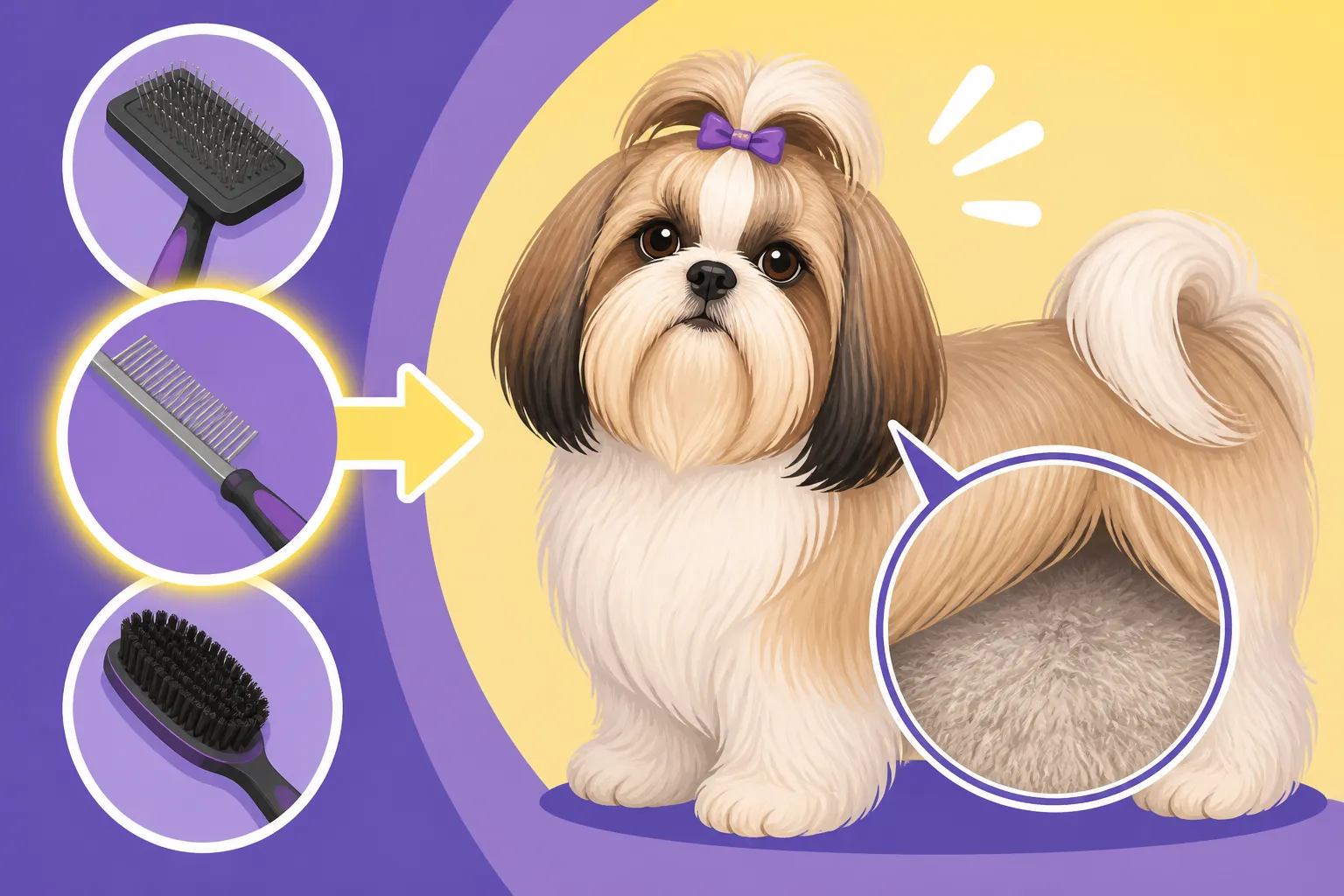
Your Shih Tzu has what's known as a double coat, and that's the key to understanding why brushing correctly is so vital. Imagine two layers of hair working in tandem. The outer layer is comprised of long, silky guard hairs. These are the showstoppers, the ones that give your Shih Tzu that glorious flowing appearance. They're coarser and designed to protect against elements, shedding water and dirt relatively well. Then, underneath this glamorous topcoat, lies the true culprit of matting: the undercoat. This layer is much softer, finer, and incredibly dense, acting like a fluffy insulation blanket.
This combination is what can make grooming a bit of a jigsaw puzzle. The topcoat can easily slide over mats forming in the undercoat, hiding them until they become too severe to ignore. Many owners mistakenly think they're brushing thoroughly because the top layer looks smooth, while the undercoat underneath is quietly forming dense, painful felt. Understanding these two distinct layers is the first step in successful grooming.
Why the Undercoat Is So Prone to Matting
The undercoat's primary job is insulation, and its soft, fine texture is perfect for trapping air and keeping your Shih Tzu warm. However, this very texture is also its downfall when it comes to matting. The individual hairs in the undercoat are much more prone to tangling with each other, especially when they shed. Unlike single-coated breeds where shed hair often falls out, in a double coat, the shed undercoat gets trapped within the dense layers. This trapped, dead hair then starts to weave together, especially with movement, friction from harnesses, or even just sleeping.
Environmental factors also play a huge role. Humidity, moisture from baths (if not dried thoroughly), and even the friction of a Harnesses That Do Not Mat a Shih Tzu Coat can contribute to mats forming quickly. It's a constant battle, and it's why you often hear the advice about Brushing a Shih Tzu Double Coat Every Day. Ignoring the undercoat, even for a few days, can lead to small tangles becoming major problems that are not only uncomfortable for your dog but can also lead to skin issues underneath.
The Essential Tools for Reaching the Undercoat
Alright, let's get down to business: what specific brushes do you need to tackle that challenging undercoat? It's not about having one magic brush, but rather a combination of tools used correctly. Think of it as a small toolkit, each item serving a specific purpose in your grooming routine. Buying cheap, ineffective tools will only lead to frustration and a matted dog, so investing in quality here really pays off. You can often find great options on sites like Chewy or Amazon.
Slicker Brushes for the Top and Undercoat
The slicker brush is arguably your most versatile and essential tool for a Shih Tzu with a double coat. It typically features a rectangular or square head covered with fine, short wires that are slightly angled. These wires are designed to gently penetrate through the topcoat and reach down into the dense undercoat. When choosing a slicker, look for one with flexible pins and a comfortable handle. You want the pins to be able to flex a bit to avoid scratching your dog's skin, but firm enough to get through the hair.
A good slicker brush will help you "line brush" (more on that technique later) and gently pull out loose undercoat and small tangles before they become full-blown mats. It's effective for general grooming and for working on areas prone to matting, such as behind the ears, under the legs, and around the tail. Regular use of a slicker brush is one of the best preventative measures against the rapid matting characteristic of the Shih Tzu coat.
Pin Brushes and Their Role
While the slicker brush is excellent for getting down to business with the undercoat, a good quality pin brush also has its place in your Shih Tzu grooming kit. Pin brushes have widely spaced, longer pins, often with rounded tips, that are set into a soft cushion. They generally don't penetrate as deeply into the undercoat as a slicker brush, but they are fantastic for the initial detangling of the topcoat and for general fluffing and finishing.
Think of the pin brush as your gentle warm-up act. It helps to separate the longer guard hairs and remove any superficial debris or loose hairs from the top layer. For a Shih Tzu with a longer, show-style coat, it can help prevent breakage and maintain that flowing look without pulling. It's also a good choice for dogs with very delicate skin or those who might be sensitive to the firmer feel of a slicker brush for the entire grooming session. While not the primary undercoat tool, it prepares the coat for the deeper work of the slicker and acts as a final polish.
Dematting Tools and Undercoat Rakes
Sometimes, despite your best efforts, a mat will form. For these tougher situations, you might consider a dematting tool or an undercoat rake, but these must be used with extreme caution. Undercoat rakes typically have a single or double row of widely spaced, blunt pins that are designed to pull out loose undercoat without cutting the guard hairs. They can be very effective for heavy shedding periods, allowing you to remove a significant amount of dead undercoat that a slicker might struggle with. However, improper use can irritate the skin or damage the coat.
Dematting tools, often resembling a small rake with sharp, curved blades on one side, are designed to cut through mats rather than brush them out. While they can save a matted area from being completely shaved, they require a very light touch and a clear understanding of how to use them safely. Always use these tools away from the skin, holding the mat at the base to prevent pulling on your dog's skin. If you find yourself needing to use these tools frequently, it might be a sign that your regular brushing routine needs adjustment, or that a trip to a professional groomer is in order. Remember, prevention is always better than trying to fix a mat after it's formed, as these tools can be uncomfortable for your dog if not used correctly.
Here's a quick comparison of these essential brushes:
| Brush Type | Primary Use | Key Feature | Ideal For | Cautions |
|---|---|---|---|---|
| Slicker Brush | Penetrating the undercoat, removing tangles/mats | Fine, angled wire pins, often cushioned | Removing shed undercoat, detangling, line brushing deep into the coat | Use gently to avoid "brush burn" on skin. |
| Pin Brush | Topcoat detangling, fluffing, finishing | Widely spaced pins, rounded tips, cushioned | General grooming, separating topcoat, sensitive areas, long show coats | Less effective for deep undercoat mats. |
| Undercoat Rake | Removing heavy shedding from undercoat | Single/double row of blunt, widely spaced pins | Heavy seasonal shedding, dense undercoats, removing loose hair quickly | Can irritate skin if used too aggressively; not for tangles, only loose hair. |
| Dematting Tool | Cutting through existing mats | Sharp, curved blades | Breaking up severe mats that can't be brushed out | High risk of cutting skin or damaging coat if misused; use as a last resort. |
Mastering the Brushing Technique
Having the right tools is only half the battle; knowing how to use them effectively is where the real magic happens. Brushing a Shih Tzu isn't just a quick once-over; it's a methodical process that requires patience and consistency. Many owners find themselves asking, Getting a Brush Through Both Shih Tzu Layers – and the answer lies in technique.
Line Brushing: The Golden Rule
If there's one technique every Shih Tzu owner needs to master, it's line brushing. This is the secret to reaching that dense undercoat and preventing mats. Instead of just brushing over the top of the coat, line brushing involves separating the hair into horizontal sections, or "lines," and brushing each section from the skin outwards.
Here's how you do it:
- Start at the bottom: Begin at your Shih Tzu's feet or rump, working upwards.
- Part the coat: Use your free hand to part the hair horizontally, revealing a small strip of skin.
- Brush the line: With your slicker brush, brush this exposed section of hair downwards, from the skin to the ends. You'll be brushing both the undercoat and topcoat in this section.
- Move up: Once that section is tangle-free, drop a small amount of hair from the section above it, creating a new "line," and repeat the brushing process.
- Work through the body: Continue this method all over your dog's body, paying special attention to areas like the armpits, behind the ears, and around the sanitary areas Where a Shih Tzu Mats First.
This ensures that every inch of your dog's coat, especially the undercoat, gets thoroughly brushed. It might sound time-consuming, but doing it properly a few times a week (or daily for a full coat) will prevent bigger problems down the line.
Prepping the Coat for Effective Brushing
Before you even touch a brush to your Shih Tzu's coat, a little preparation goes a long way. Never, ever brush a dry, dirty, or completely tangled coat. Doing so can be painful for your dog, break hair, and make existing tangles worse. Think of it like trying to comb your own hair when it's just come out of a wind tunnel – ouch!
First, if your dog is particularly dirty, a bath might be necessary. However, if you bathe your Shih Tzu, it is absolutely critical that you completely dry and brush out the coat while drying. Damp Shih Tzu Hair and How Fast It Knots is a real phenomenon; wet hair mats much faster. Even if you're not bathing, a light misting with a conditioning or Detangler Sprays That Work on a Shih Tzu is highly recommended. These sprays add moisture and lubricate the hair, making it easier for the brush to glide through and minimizing breakage.
Next, do a quick finger check. Gently run your fingers through your Shih Tzu's coat, feeling for any obvious knots or mats. If you find a small tangle, try to gently tease it apart with your fingers first. For slightly larger, but still manageable, mats, you can use a bit more detangling spray and carefully work at the edges of the mat with the very tip of your slicker brush, always brushing away from the skin. For more stubborn mats, if you're comfortable, you might consider carefully using a dematting tool or even a blunt-nosed scissor to cut into the mat, rather than across it, to break it up before brushing. But when in doubt, it's always safer to seek professional help.
Regularity and Patience Are Key
The biggest secret to maintaining a Shih Tzu's undercoat isn't a magical brush; it's consistency and patience. The Shih Tzu's coat is a commitment, and skipping even a few days can mean a significant increase in tangles. For a Shih Tzu in a full, long coat, daily brushing is almost non-negotiable. Even with a shorter "puppy cut," regular brushing a few times a week is essential. Remember, How Many Days Before a Shih Tzu Mats is often fewer than you think!
Turn grooming into a positive experience for your dog. Start with short, gentle sessions when they are puppies, pairing brushing with praise and tiny, high-value treats (Chewy and Amazon offer a fantastic array of suitable training treats). This helps them associate grooming with good things, making future sessions much easier. If your dog is getting antsy, take a break. Don't force it, as that can create a negative association. Your patience will pay off in a happy, mat-free Shih Tzu who tolerates grooming much better. It’s a marathon, not a sprint, when it comes to keeping that undercoat healthy and smooth.
Beyond the Brush: Holistic Undercoat Care
While the right brushes and techniques are paramount, maintaining a healthy Shih Tzu coat, especially the undercoat, involves more than just brushing. It's a holistic approach that includes proper bathing, nutrition, and knowing when to call in the experts.
The Importance of Bathing and Drying
Regular bathing is crucial for keeping your Shih Tzu's coat clean and healthy. Dirt, debris, and skin oils can contribute to matting by making the hair stickier and more prone to tangles. However, the bathing process itself can be a matting culprit if not done correctly. Always thoroughly brush your Shih Tzu before a bath to remove as many tangles and loose hairs as possible. Never put a matted dog in the tub, as water will only tighten existing mats, making them nearly impossible to remove without shaving.
When shampooing, use a gentle, moisturizing shampoo and conditioner formulated for dogs. Work the products gently into the coat, avoiding vigorous scrubbing or circular motions that can tangle the hair. Rinse thoroughly to ensure no residue is left behind, as this can dull the coat and attract dirt.
The drying process is perhaps even more critical than the wash itself. As mentioned before, Damp Shih Tzu Hair and How Fast It Knots is a major issue. Use a high-velocity dryer (if your dog tolerates it and you have one) or a good quality human hairdryer on a cool or low-heat setting. Crucially, line brush your Shih Tzu while drying. This is the only way to ensure the undercoat is completely dry and tangle-free. Blowing the hair dry while simultaneously brushing each section from the skin out prevents mats from forming as the hair dries. This entire process, from shampoo to bone-dry, brushed-out coat, should be a comprehensive part of your Bathing a Full Coat Shih Tzu on Schedule routine.
Nutritional Support for Coat Health
Believe it or not, what you put into your Shih Tzu's body can significantly impact the health and quality of their coat. A well-nourished dog will generally have a healthier, shinier coat that is less prone to excessive shedding and matting. Look for dog foods that list a high-quality protein as the first ingredient and contain essential fatty acids like Omega-3 and Omega-6. These fatty acids are vital for skin health and contribute to a lustrous coat.
Many dog food brands, including those you might find on Ollie, specifically formulate their recipes to support skin and coat health. Sometimes, a supplement like fish oil (always consult your vet first!) can be added to their diet to boost these beneficial fatty acids. While diet alone won't prevent all mats, it certainly lays a strong foundation for a healthy coat from the inside out, making your brushing efforts more effective. A dull, dry, or excessively shedding coat can sometimes be an indicator of dietary deficiencies, so always ensure your Shih Tzu is eating a balanced, high-quality diet.
When to Seek Professional Help
Even the most dedicated Shih Tzu owners will likely need to rely on professional groomers at some point. There's absolutely no shame in it! Groomers have specialized tools, training, and experience that can make a world of difference, especially with a challenging double coat. If you find a mat that you simply cannot get out without causing pain, or if your Shih Tzu's coat is becoming unmanageable despite your best efforts, a professional groomer is your best friend.
They can safely and painlessly remove mats, give your dog a fresh cut (like a practical The Shih Tzu Puppy Cut and Its Upkeep), and even provide advice on your home grooming routine. Regular professional grooming, perhaps every 4-6 weeks, can complement your at-home care, ensuring your Shih Tzu stays comfortable and looking their best. Don't let pride or a desire to save money lead to your dog suffering from severe matting. Their comfort and health should always come first, and a skilled groomer is an invaluable resource in that regard.
Disclaimer
This article is for general informational purposes only and does not constitute professional advice. Laws, prices and regulations vary by location and change over time. Consult a qualified professional for guidance on your specific situation.