Whether a Second Shih Tzu Helps With Anxiety
It's heartbreaking to see your beloved Shih Tzu struggling with anxiety, isn't it? Many of us have been there, watching our little companions pace, whine, or destructively chew when we step out the door. It’s natural to feel desperate for a solution, and often, the thought pops into our heads: "Maybe another dog would help? A friend to keep them company?" This guide will explore that common idea, delving into why it often doesn't work as we hope, and offering more effective, long-term strategies for helping your anxious Shih Tzu find peace.
The Allure of a Companion: Why Owners Consider a Second Shih Tzu
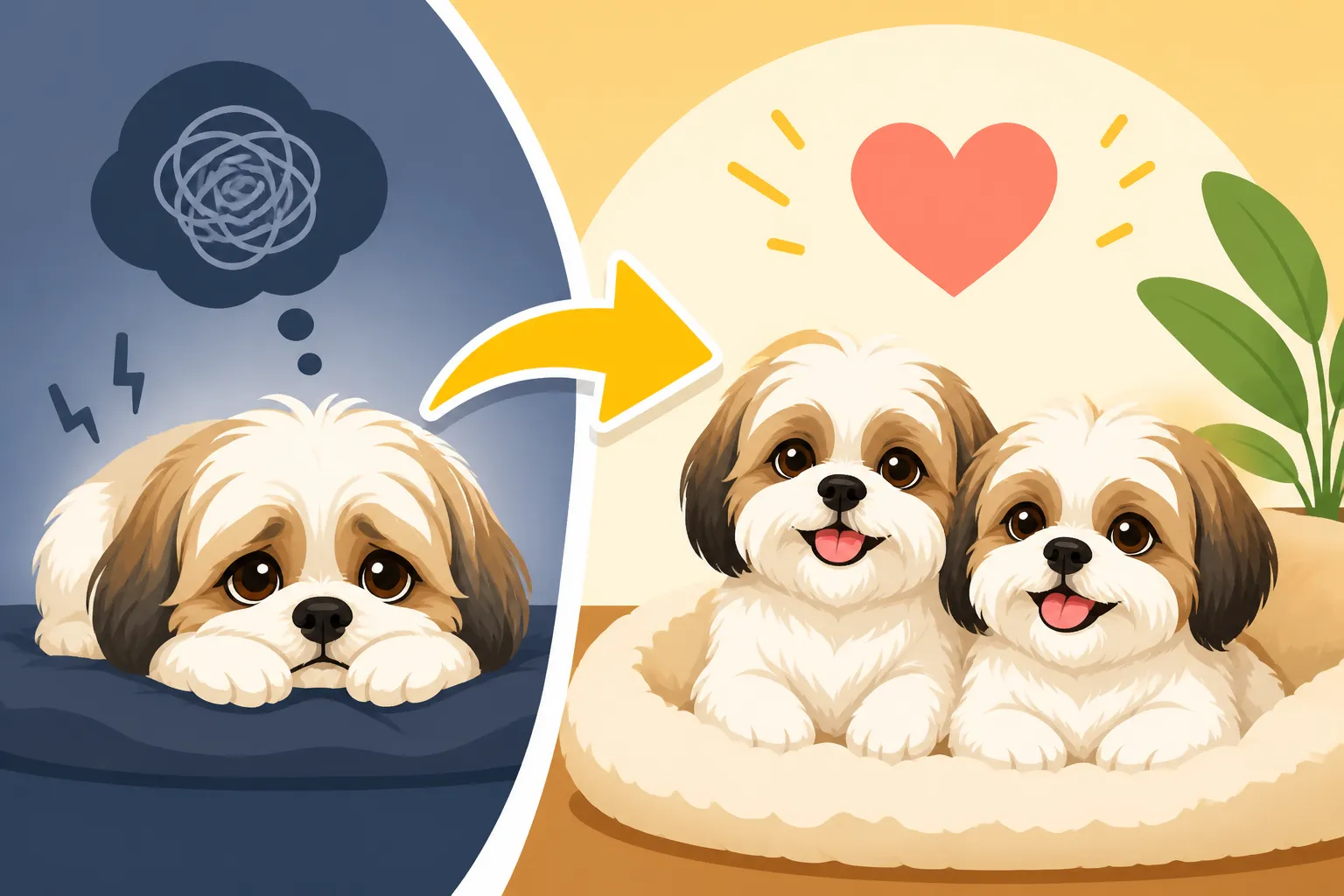
The image of two fluffy Shih Tzus curled up together, keeping each other company while you're away, is incredibly appealing. It taps into a deep human desire to alleviate loneliness, and we often project that onto our pets. If we feel lonely, surely they must, especially if they show signs of distress when we leave.
The Hope for a "Buddy System"
Many owners hope that a second dog will act as a natural "buddy system," distracting the anxious Shih Tzu from its worries about being alone. The theory is simple: if Fido has a playmate, he won't even notice you've gone to work or run errands. You imagine them chasing toys, napping together, or just generally enjoying each other's presence, rather than staring at the door or barking incessantly. This often stems from a place of genuine love and concern, wanting the very best for our furry family members. We want them to be happy and settled, not stressed and upset.
However, dogs are complex creatures with individual personalities and needs. What seems like a logical solution to us can sometimes be far from what they actually need. The anxiety your Shih Tzu experiences is deeply personal to them, tied to their perceived safety and attachment to you, not just a simple lack of companionship.
Common Misconceptions About Canine Companionship
There's a widespread belief that all dogs inherently want other dogs around, especially if they're a social breed. While many dogs do enjoy the company of other canines, it's not a universal cure-all for behavioral issues, particularly anxiety. Often, owners might mistake general boredom or lack of mental stimulation for "loneliness" that only another dog can fix. They might see their Shih Tzu sleeping a lot during the day when they are home and assume it's because they're bored, when it could just be typical dog behavior.
Another misconception is that the new dog will automatically know how to "fix" the anxious dog. We sometimes expect the new dog to model calm behavior, teaching the anxious dog that being alone isn't scary. While some dogs can influence each other's behavior, it's rarely a straightforward transfer, especially when dealing with deeply ingrained anxiety. In reality, the new dog might simply adopt the anxious behaviors, or even become anxious themselves, creating two stressed dogs instead of one. It's crucial to understand that separation anxiety, for example, is not about loneliness in the way humans experience it; it's a panic response related to the absence of their primary attachment figure – you.
Understanding Your Shih Tzu's Anxiety Before Taking Action
Before considering bringing another dog into your home, it's absolutely vital to understand the root cause and specific manifestations of your current Shih Tzu's anxiety. Not all anxiety is the same, and what might alleviate one type could exacerbate another.
Differentiating Types of Anxiety
Anxiety in dogs can present in various forms, each requiring a different approach. The most common type that prompts owners to consider a second dog is separation anxiety. This isn't just a dog being "naughty" when you leave; it's a genuine panic attack. Symptoms include destructive chewing (especially around exits), excessive barking or howling, inappropriate urination or defecation, and even self-harm, all occurring only when the owner is absent. If your Shih Tzu is underfoot in every room, constantly seeking your presence, and becoming visibly agitated when you prepare to leave, these are strong indicators. For more insights into these signs, you might find The Signs a Shih Tzu Cannot Settle Alone very helpful.
Other forms of anxiety might include generalized anxiety (a constant state of worry, often triggered by noise, strangers, or new environments), fear-based anxiety (a response to specific stimuli like thunderstorms, fireworks, or certain people), or even age-related cognitive decline that leads to confusion and unease. A second dog won't help with fear of fireworks, for instance, and could make generalized anxiety worse by adding another unpredictable element to the environment. Understanding which type of anxiety your Shih Tzu is experiencing is the first step toward finding a truly effective solution.
Why Another Dog Might Not Solve the Problem
The harsh reality is that another dog usually doesn't solve existing anxiety and can often make it worse. If your Shih Tzu suffers from true separation anxiety, their distress is focused on your absence, not just the absence of any warm body. They're attached to you as their primary caregiver, and no amount of canine companionship can fill that void. Imagine feeling intense fear when your loved one leaves; would simply having a friendly stranger there truly calm your deep-seated panic? Probably not.
In some cases, the presence of a new dog can even heighten the anxious Shih Tzu's stress levels. They might feel threatened by the newcomer, experiencing jealousy, competition for resources (food, toys, your attention), or a disruption to their established routine and territory. This can lead to new behavioral problems, aggression, or an escalation of the original anxiety. Furthermore, the new dog might pick up on the anxious behaviors, learning to mimic the pacing or barking, creating a household with two anxious dogs instead of one. It's a risk that many well-meaning owners don't fully anticipate.
Potential Challenges of Adding a Second Dog to an Anxious Household
Introducing a new dog is a significant adjustment for any household, but when you already have an anxious Shih Tzu, the challenges can be multiplied. It's vital to consider these potential pitfalls before making such a profound change.
Increased Stress and Conflict
Even if the new dog isn't anxious, the existing Shih Tzu might perceive them as a threat. Imagine your Shih Tzu, who perhaps has always had your undivided attention and a clear run of the sofa, suddenly having to share. This can lead to resource guarding (toys, food, even laps), growling, snapping, or general tension. For a dog already prone to anxiety, this added stress can be overwhelming. Instead of finding comfort, they find another reason to be on edge. This is especially true if the anxious dog hasn't been properly socialized, a common issue in toy breeds who are often protected from the world. If your Shih Tzu has issues meeting other dogs, adding one to the home could be disastrous.
Furthermore, a new dog comes with its own personality and needs. What if the new dog is boisterous and playful, while your anxious Shih Tzu prefers quiet and calm? The mismatch in play styles could lead to conflict, or the anxious dog might simply withdraw, feeling more stressed than before. We often think of Shih Tzus as universally cuddly, but their individual temperaments vary greatly. Introducing a new dog requires careful planning, gradual introductions, and constant supervision to ensure both dogs feel safe and comfortable. Ignoring these steps can lead to a breakdown in household harmony and escalate the initial anxiety you were trying to solve. You might find our post on Introducing a Shih Tzu to Another Dog helpful in navigating this complex process.
New Behavioral Issues in the Existing or New Dog
Bringing a new dog into a home with an anxious resident can inadvertently create new behavioral issues or worsen existing ones. The anxious Shih Tzu might become more clingy, demanding even more attention to compensate for the perceived threat of the newcomer. They might start marking territory indoors if they feel insecure about their space. The original anxiety symptoms, such as barking when alone, could intensify if they now associate your departure with the added stress of managing another dog.
Conversely, the new dog, if not inherently anxious, could learn anxious behaviors from your existing Shih Tzu. Dogs are incredibly adept at observing and mimicking. If the new dog sees the resident dog pacing and whining every time you leave, they might start to adopt those behaviors themselves, especially if they are also left alone together. This creates a cycle where anxiety is reinforced rather than alleviated. You could end up with two dogs needing intensive behavioral modification. It's a big gamble, and one that often doesn't pay off for the anxious dog. Building alone time for even one Shih Tzu is a project, and Building Alone Time for a Shih Tzu provides some practical advice for that.
Financial and Time Commitment of Two Dogs
Let's be realistic: two Shih Tzus mean double the expense and double the time commitment. Every single cost, from food, treats, and toys to vet visits, vaccinations, and grooming, goes up. If either dog develops a chronic health issue, those costs can escalate significantly. We're talking about not just buying an extra bag of kibble, but potentially another round of costly preventative medications, or another dental cleaning down the line.
Beyond the money, consider the time. Training a new puppy or an adopted adult dog takes immense dedication. You'll need to socialize the new dog, house train them (which, let's be honest, can be a marathon with Shih Tzus!), and teach them basic manners. This takes time away from focusing on your anxious Shih Tzu's existing issues. You might find yourself juggling two dogs' needs, leaving less energy and resources for the one who needs the most specialized help. While it's lovely to have two furry faces greet you, the practical implications are substantial, and it’s important to weigh these factors honestly before committing.
Effective Strategies for Managing Shih Tzu Anxiety
Instead of introducing another dog, which can be a risky gamble, focusing on direct, proven strategies for managing your Shih Tzu's anxiety is almost always the more effective path. These methods aim to build confidence and change their emotional response to triggers.
Behavioral Modification and Desensitization
The cornerstone of treating most types of anxiety, especially separation anxiety, is behavioral modification through desensitization and counter-conditioning. This involves gradually exposing your Shih Tzu to their triggers (e.g., your departure cues) in a controlled way, while associating these triggers with positive experiences. For instance, if your Shih Tzu gets anxious when you pick up your keys, you'd pick up your keys repeatedly throughout the day without leaving, perhaps giving them a high-value treat like a smear of peanut butter on a Lickimat (easily found on Amazon). This slowly teaches them that "keys" don't always mean "abandonment."
For separation anxiety, this means starting with very short absences—literally seconds—and gradually increasing the duration only when your Shih Tzu remains calm. You might step out the door, then immediately return. If they stayed calm, you'd increase it to 30 seconds, then a minute, and so on. This process takes immense patience and consistency, but it works by slowly reprogramming your dog's emotional response. It helps them build coping mechanisms rather than just avoiding the problem. A certified professional dog trainer or veterinary behaviorist can provide a tailored plan. For general training guidance, resources like BAXTER & Bella can offer structured online courses that cover these principles and can be adapted for anxious dogs.
| Strategy Component | Description | Benefits for Anxious Shih Tzus |
|---|---|---|
| Desensitization | Gradual, controlled exposure to anxiety triggers (e.g., getting ready to leave), starting at a very low intensity. | Reduces the emotional impact of triggers, teaching your dog they are not dangerous. |
| Counter-Conditioning | Pairing a positive experience (treats, toys) with a previously feared trigger, changing the dog's emotional association. | Replaces fear/anxiety with positive feelings, making the trigger less scary. |
| Predictable Routine | Establishing a consistent daily schedule for meals, potty breaks, walks, and playtime. | Provides security and reduces uncertainty, which can be a major source of anxiety for some dogs. |
| Safe Space | Creating a comfortable, secure den (like a crate or a specific bed) where your dog can retreat and feel safe. | Offers a refuge from stressors and a place to decompress, particularly helpful when alone. |
| Mental Stimulation | Engaging your dog with puzzle toys, training sessions, or scent games. | Reduces boredom, burns mental energy, and can prevent anxiety-related destructive behaviors. |
Environmental Management and Enrichment
Creating a supportive and stimulating environment is crucial for an anxious Shih Tzu. This includes ensuring they have a comfortable, safe space where they can retreat, such as a cozy crate (if they are crate trained and view it as a den) or a special dog bed in a quiet corner. Leaving on soft music or a pet-specific calming playlist can help mask external noises that might trigger anxiety. Some owners use pheromone diffusers or calming supplements, though it's always best to discuss these options with your vet.
Enrichment activities are also incredibly important. An anxious dog often has excess energy that manifests as destructive behavior. Providing mental challenges, like puzzle feeders that dispense kibble, can keep their minds engaged and tire them out in a productive way. Chew toys, particularly those that can be stuffed with safe, frozen treats, can also provide a long-lasting distraction during short absences. These are great to order from Amazon for convenience. Regular, appropriate exercise—even short, leisurely walks—can also help burn off nervous energy. Remember, Shih Tzus aren't built for marathons, so consider The Short Walks a Shih Tzu Is Built For.
Professional Guidance and Veterinary Support
For severe or persistent anxiety, professional help is invaluable. A certified professional dog trainer specializing in fear and anxiety can assess your Shih Tzu's specific situation, identify triggers, and develop a tailored behavior modification plan. They can guide you through the desensitization process and teach you how to read your dog's body language more effectively.
In many cases, veterinary involvement is also critical. Your veterinarian can rule out any underlying medical conditions that might be contributing to the anxiety. For some dogs, anxiety medication can be a game-changer, working in conjunction with behavioral modification to help them reach a state where they are calm enough to learn new coping mechanisms. It's not a "cure," but it can provide a vital window of opportunity for training to be effective. Don't hesitate to reach out to your vet for guidance, especially if you've tried other methods without success, or if your Shih Tzu's anxiety is impacting their quality of life. They can also advise on things like A Shih Tzu That Cannot Relax in the Evening or When a Vet Suggests Medication for a Shih Tzu.
Ultimately, while the idea of a second Shih Tzu as a "fix" for anxiety is tempting, it's rarely the answer. Investing your time and resources into understanding and directly addressing your current companion's needs will yield far more positive and lasting results for their well-being.
Disclaimer
This article is for general informational purposes only and does not constitute professional advice. Laws, prices and regulations vary by location and change over time. Consult a qualified professional for guidance on your specific situation.