What the Undercoat Does on a Shih Tzu
If you’ve ever found yourself staring at your Shih Tzu, a brush in one hand and a knot of hair in the other, feeling utterly bewildered by their coat, you’re not alone. The Shih Tzu's luxurious, flowing hair is beautiful, but it's also incredibly complex, often leading to confusion about how to properly care for it. Many owners, even experienced ones, struggle to understand the nuances of this breed's double coat, particularly the role of the enigmatic undercoat. This guide is here to unravel that mystery, explaining exactly what the undercoat does and how to manage it, so you can keep your furry friend comfortable, healthy, and mat-free.
The Anatomy of a Shih Tzu Double Coat: Beyond Just "Long Hair"
When you look at a Shih Tzu, you see a magnificent cascade of hair, often reaching to the floor. It looks like one glorious, silken curtain, right? But that's where the illusion begins! What you’re actually seeing is a sophisticated two-part system designed by nature to protect and regulate your dog's body. Understanding this distinction is the first step in mastering Shih Tzu grooming.
The Guard Hairs: Your Shih Tzu's Outer Shield
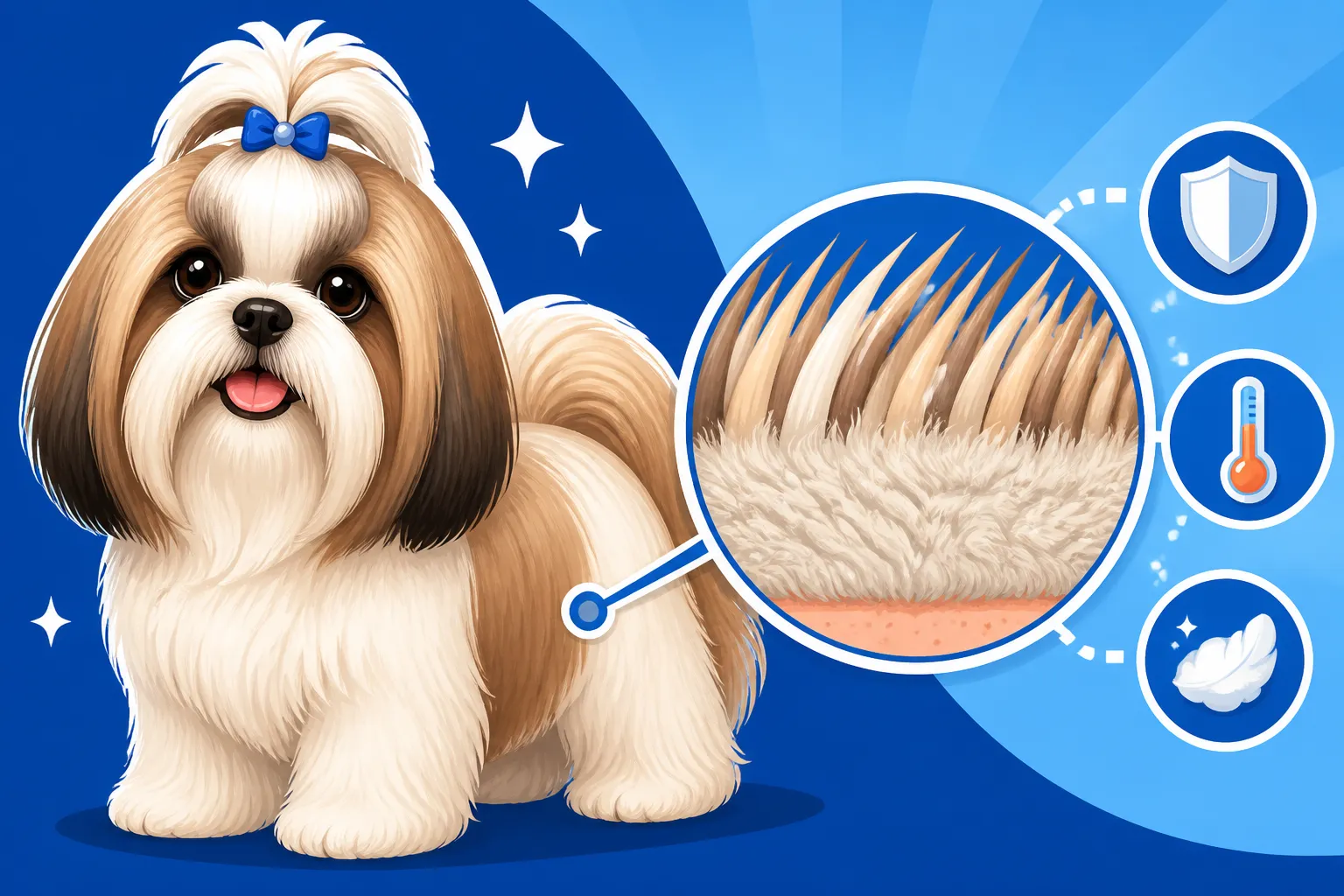
Think of the guard hairs as your Shih Tzu's elegant outer robe. These are the longer, silkier, more prominent strands that give the breed its distinctive flowing appearance. They are beautiful, yes, but they also have a very important job. These topcoat hairs are generally coarser, straighter, and designed to provide a protective barrier against the elements. They help repel water, shield the skin from harsh sunlight, and protect against minor scrapes and thorns.
The texture of these guard hairs can vary slightly, from truly silken to a bit more cottony, depending on the dog's individual genetics. However, their primary function remains consistent: to form that visible, protective layer. When you brush your Shih Tzu and feel the smooth glide of the outer coat, those are primarily the guard hairs doing their thing. They are the first line of defense and contribute significantly to the breed's show-ring standard.
The Undercoat: The Invisible Insulator
Now, let's talk about the unsung hero, or perhaps, the often-frustrating villain, of the Shih Tzu coat: the undercoat. This layer lies hidden beneath those beautiful guard hairs, close to the skin. Unlike the sleek outer coat, the undercoat is typically much shorter, incredibly soft, dense, and has a woolly or downy texture. It’s almost like a layer of fluffy cotton wool that grows abundantly. This dense, fine hair is primarily responsible for the coat's insulating properties, both in cold and warm weather.
Many owners don't even realize it's there until they hit a snag during brushing or see it shed in clumps. The sheer volume and fine texture of the undercoat are what make it such a challenge to maintain. When these soft, shed undercoat hairs get trapped within the living guard hairs, especially if not brushed out regularly, they are the primary culprits behind those notorious, rock-hard mats that can form so quickly. Without proper care, this crucial layer can quickly become a tangled mess, causing significant discomfort for your beloved companion.
Why the Undercoat is a Double-Edged Sword for Shih Tzu Owners
The Shih Tzu's double coat isn't just about looks; it's a testament to its ancient origins, providing essential functions for its survival. However, these very functions can become a source of immense challenge for modern-day owners who need to maintain the coat for health and comfort in a domestic setting.
The Marvel of Insulation: Keeping Cozy and Cool
It might sound counterintuitive, but that dense undercoat is absolutely vital for regulating your Shih Tzu's body temperature, not just in winter, but year-round. In colder climates, the undercoat acts like a built-in down jacket. The millions of fine, crimped hairs trap a layer of warm air close to the body, preventing heat from escaping. This natural insulation keeps your Shih Tzu cozy and protected from the chill, much better than a single-coated breed could manage. It's their natural defense against frosty mornings or a drafty house.
But here’s the often-misunderstood part: the undercoat is equally important for keeping your Shih Tzu cool in warmer weather. This might be hard to believe when you see a long-haired dog panting, but that trapped layer of air actually acts as a thermal barrier against external heat. It prevents the sun's rays from directly hitting the skin, helping to maintain a more stable body temperature. When this system works correctly, it helps them manage heat. However, it's a delicate balance, and their brachycephalic (flat-faced) physiology already puts them at a disadvantage in hot weather. That's why understanding Why a Shih Tzu Cannot Cool Itself Well is so crucial, as their respiratory system plays a larger role in overheating than their coat in many cases. So, while the coat helps, it doesn't make them immune to heatstroke.
The Matting Magnet: Undercoat's Biggest Challenge
Here's where the undercoat can really become a headache. Its super-fine, dense, and slightly woolly texture is a matting magnet. Unlike the smoother guard hairs that tend to shed cleanly, the undercoat hairs, when they naturally shed, often get caught within the longer topcoat. Instead of falling out, they twist and tangle with the surrounding hair, quickly forming knots that can escalate into tight, painful mats. It's a continuous process, making the statement Why a Shih Tzu Double Coat Mats So Fast incredibly accurate.
These mats tend to form in high-friction areas first, like behind the ears, under the legs where they rub against the chest, in the "armpits," and certainly Mats Where a Harness Sits on a Shih Tzu. They can also develop quickly in areas that get wet and aren't thoroughly dried, such as the beard and paws. If left unattended, these small tangles can rapidly grow into large, pelt-like masses that pull painfully on the skin, restrict movement, and can hide a host of skin problems. Mats create a damp, airless environment against the skin, making your Shih Tzu highly susceptible to Shih Tzu Skin Allergies and Hot Spots, yeast infections, and bacterial growth. It's not just an aesthetic issue; severe matting is a serious welfare concern that can lead to significant pain and costly veterinary intervention.
Practical Care: Managing the Shih Tzu Undercoat
Managing a Shih Tzu's double coat, particularly its dense undercoat, requires commitment and the right techniques. It's a daily effort, but one that is absolutely essential for your dog's comfort and health. Let's break down how to keep that undercoat in check.
Brushing Through Both Layers: The Daily Ritual
This cannot be stressed enough: daily brushing is non-negotiable for a Shih Tzu, especially if you want to keep any length to their coat. Merely skimming a brush over the topcoat is simply not enough. You need to get down to the skin, through both layers, to effectively remove shed undercoat and prevent mats from forming. This is what we call "line brushing." Brushing a Full Coat Shih Tzu Every Single Day is the key to success.
Here’s a table of essential tools you'll need and what they do:
| Tool | Purpose | How to Use |
|---|---|---|
| Pin Brush | Glides through the topcoat, detangles larger sections, and gently massages the skin. | Use for initial pass, working in layers. Focus on gently separating the guard hairs without pulling. |
| Slicker Brush | Essential for reaching and removing shed undercoat, breaking up smaller tangles, and fluffing the coat. | Use in short, gentle strokes, working in small sections down to the skin. Be careful not to scratch the skin. Excellent for areas prone to matting. |
| Metal Comb | The ultimate test for thoroughness. Finds small knots and tangles the brushes might have missed. | After brushing, run the comb through the entire coat, from root to tip. If it snags, go back with the slicker brush to resolve the tangle. |
| Detangler Spray | Helps lubricate the hair, making brushing easier and reducing static. | Spray lightly on the coat before and during brushing, especially on areas with tangles. Brands like Chris Christensen or The Stuff are popular and can be found on Chewy or Amazon. |
To perform line brushing, you effectively create horizontal "lines" across your dog's body. Start at the bottom (e.g., a hind leg), part the hair horizontally, and brush the small section beneath the part, ensuring your brush reaches the skin. Then, drop a bit more hair over that section and repeat, slowly working your way up the leg, then the body. This meticulous method ensures you're clearing the undercoat from every inch of your Shih Tzu. Mastering Working a Shih Tzu Coat in Sections will make the process far more efficient and less stressful for both of you. Don't forget to use Detangler Sprays That Work on a Shih Tzu to ease the process, especially if you encounter a stubborn knot.
Bathing and Drying: Avoiding the Undercoat Nightmare
Bathing a Shih Tzu is more than just getting them wet and soapy; it's a critical part of coat maintenance that can either help or hinder your undercoat efforts. Always brush out any mats before bathing. Water will tighten existing mats, making them nearly impossible to remove without shaving.
When shampooing, use a good quality dog shampoo that is hydrating and conditioning. Lather gently, avoiding harsh scrubbing motions that can tangle the hair. Follow up with a rich conditioner, as Why a Shih Tzu Coat Needs Conditioner is paramount. Conditioner helps to smooth the hair cuticles, making them less prone to tangling and easier to brush. Rinse thoroughly, ensuring no shampoo or conditioner residue is left behind, as this can irritate the skin and make the coat feel sticky.
The drying process is arguably the most crucial step. A Shih Tzu must be dried completely, right down to the skin, while simultaneously being brushed. Allowing a Shih Tzu's dense coat to air dry or only partially dry is a recipe for disaster. Damp Shih Tzu Hair and How Fast It Knots almost instantly, creating felted mats that are incredibly difficult to remove. Use a dog-specific forced-air dryer on a cool or low-heat setting, or a human hairdryer on the coolest setting. Brush constantly as you dry, again using the line brushing method, to ensure every strand is dry and separated. If you’re not confident in your home grooming skills for bathing and drying, don't hesitate to seek out professional groomers. They have the tools and expertise to handle this complex coat, and scheduling Grooming a Shih Tzu Every Four to Six Weeks can make a huge difference.
Seasonal Considerations and Coat Length Choices
Shih Tzus are considered "non-shedding" in the same way poodles are; they don't have massive seasonal coat blows like many other breeds. However, they do continuously shed their undercoat and guard hairs, albeit slowly, which is why daily brushing is so important to remove those dead hairs before they cause problems.
Many Shih Tzu owners opt for a shorter "puppy cut" to simplify daily maintenance. While a puppy cut definitely reduces the frequency and intensity of brushing, it's a common misconception that it eliminates the need for undercoat care entirely. Even with a short cut, the undercoat is still present and can mat if not brushed regularly, especially on the body, behind the ears, and in the armpits. The Puppy Cut and What It Saves is primarily time and effort, not the complete elimination of grooming duties. It’s a great option for many owners who want their Shih Tzu to be comfortable and easy to care for without the full commitment of a show-length coat.
It's also important to remember that shaving a Shih Tzu down to the skin, while sometimes necessary for severely matted dogs, can potentially damage the coat over time. The guard hairs and undercoat can grow back at different rates, sometimes leading to a "fuzzy" texture rather than the silky outer coat, and can even compromise the coat's natural insulating abilities if done repeatedly. Always consult with a professional groomer or your vet about the best coat length and care strategy for your individual Shih Tzu, taking into account their lifestyle, your commitment to grooming, and any specific health needs. Products for grooming and food (like a subscription from Ollie for healthy meals, or specialized kibble found on Chewy) can also greatly impact the health and manageability of their coat from the inside out.
Disclaimer
This article is for general informational purposes only and does not constitute professional advice. Laws, prices and regulations vary by location and change over time. Consult a qualified professional for guidance on your specific situation.