Black and White Shih Tzus
Black and white Shih Tzus feature distinct parti-color coats controlled by canine genetics that create unique visual patterns.

Black and white Shih Tzus feature distinct parti-color coats controlled by canine genetics that create unique visual patterns.

Gold and white Shih Tzu coats feature shades from cream to reddish gold, including sable markings on ears, backs, and tails.

Shih Tzu coat colors, from black and liver to gold, explained through genetics, double coats, and pigmentation.

The official Shih Tzu breed standard requires a long, dense, double coat rather than specifying exact hair length.
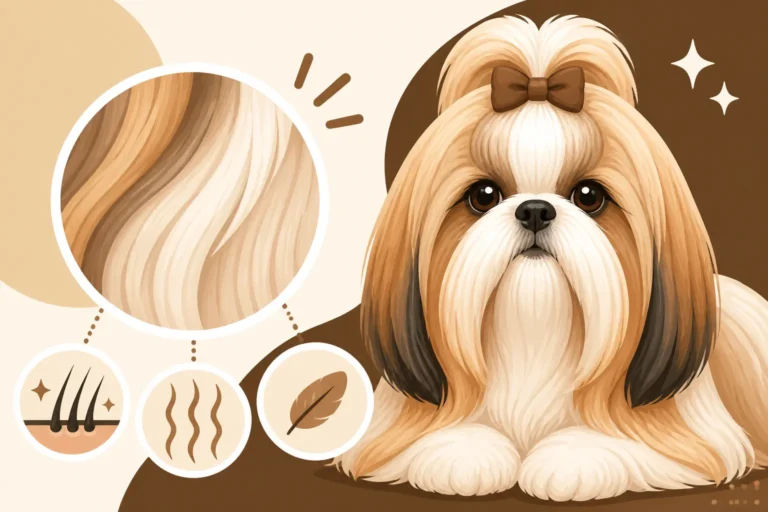
The official Shih Tzu breed standard requires a long, dense, silken, and non-curly double coat with an undercoat.
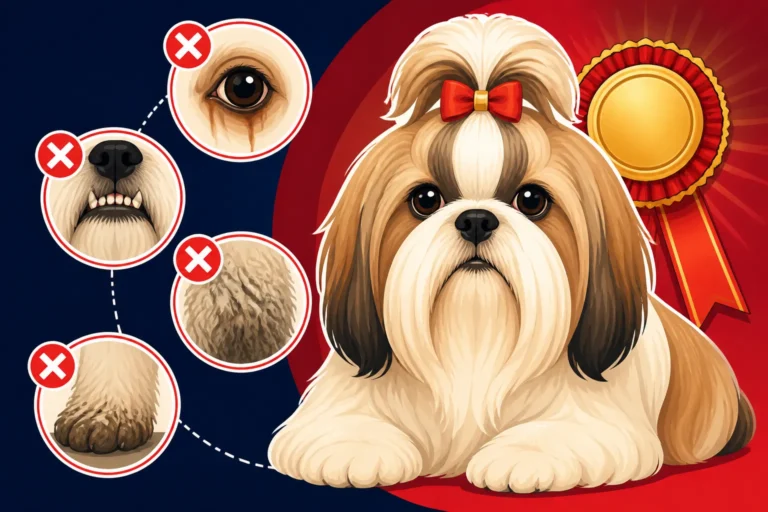
Shih Tzu physical faults and American Kennel Club breed standard traits explain what judges evaluate in the conformation ring.
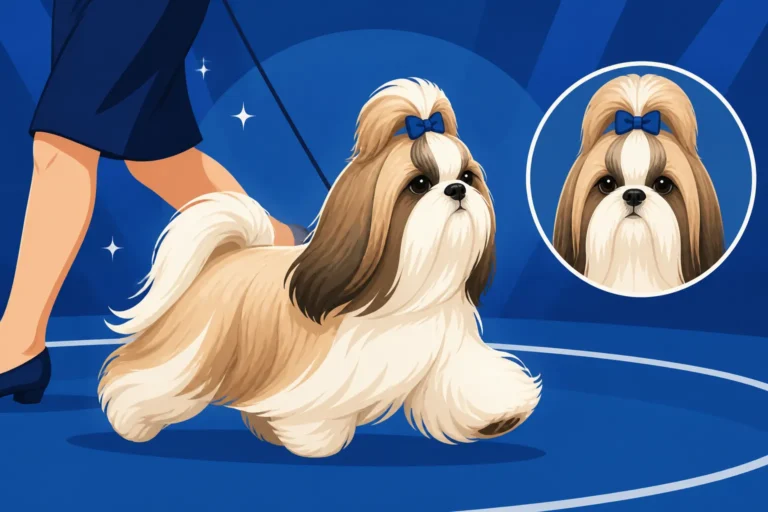
Shih Tzu movement patterns explain the arrogant gait, balanced structure, and proper reach required in the ring.
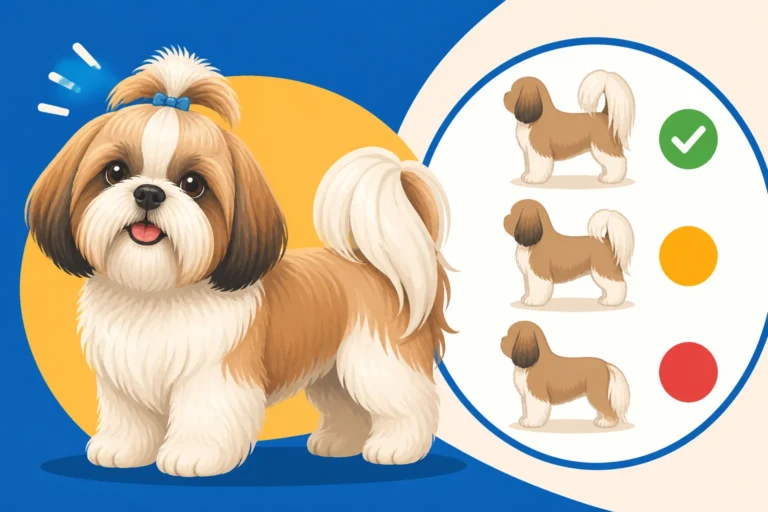
The ideal Shih Tzu tail is a high-set, loosely curled plume resembling a teapot handle that arches over the back.

Shih Tzu ear structure, breed standards, and proper care methods explain how pendant, heavily feathered ears should hang.

Shih Tzu eye placement and skull structure explain their vulnerable health issues and charming facial expressions.