Puzzle Feeders a Shih Tzu Can Work
Many Shih Tzu owners find themselves wondering how to keep their clever little companions engaged beyond walks and cuddles, especially when the weather isn't cooperating or their dog's energy levels are naturally lower. Simply putting food in a bowl every day can miss a huge opportunity to provide valuable mental enrichment, leading to boredom or even behavioral quirks. This guide will walk you through the world of puzzle feeders, showing you how these ingenious devices can transform mealtime into an exciting brain game for your Shih Tzu, boosting their mental well-being and satisfaction.
Why Puzzle Feeders are a Game-Changer for Shih Tzus
It’s easy to think that a small, companion-bred dog like a Shih Tzu doesn't need much more than a cozy lap and a short stroll around the block. While they certainly excel at being wonderful lap warmers, under that sweet exterior is a bright, intelligent mind that thrives on engagement. Puzzle feeders tap into their natural instincts, providing a stimulating challenge that a simple bowl just can't.
The Boredom Busting Power for a Low-Energy Breed
Shih Tzus, while playful, aren't typically known for being high-octane athletes that need hours of intense exercise. Their brachycephalic (flat) faces mean they can overheat easily, and their short legs aren't built for marathons. This reality often limits their physical outlets, leaving their intelligent minds understimulated. When a Shih Tzu is bored, that mental energy has to go somewhere. It might manifest as excessive barking at nothing, destructive chewing on furniture, or even constantly nudging you for attention, which can be endearing at first but exhausting over time.
A puzzle feeder offers a constructive outlet for this untapped mental energy. Instead of passively eating their kibble in thirty seconds flat, they have to use their brains, noses, and paws to figure out how to get their meal. This problem-solving process is incredibly enriching and tiring in a good way. It’s the canine equivalent of solving a sudoku puzzle; it makes them think, process, and work for their reward. Even a twenty-minute session with a puzzle feeder can leave a Shih Tzu feeling more content and settled than a much longer walk might, especially on a sweltering summer day when outdoor activity is limited. Think of it as intellectual exercise that perfectly complements their physical limitations, helping to prevent some of those annoying "acting out" behaviors.
Mental Stimulation Beyond the Daily Walk
While physical exercise is crucial for a Shih Tzu's overall health and happiness, mental stimulation often gets overlooked. A daily walk, while offering new smells and sights, doesn't always challenge their problem-solving skills in the same way. Dogs are natural foragers and problem-solvers; in the wild, they'd spend a significant portion of their day seeking out food. Our domesticated pets rarely get to engage this fundamental drive.
Puzzle feeders reintroduce that element of "work" into their day. They learn cause and effect: if I nudge this piece, a treat might fall out; if I flip this lid, I’ll get a reward. This kind of cognitive exercise builds confidence and teaches them perseverance. It's not just about getting the food; it's about the process of figuring it out. For a Shih Tzu, who might be prone to A Shih Tzu Underfoot in Every Room and demanding attention, having a self-directed activity can be incredibly beneficial. It teaches them a sense of independence and accomplishment. Moreover, consistent mental engagement can help keep their minds sharp as they age, much like how challenging crosswords benefit humans. It’s a wonderful way to ward off cognitive decline in their later years and keep them engaged with the world around them.
Slowing Down Mealtime for Better Digestion
Many Shih Tzus, like other small breeds, can be enthusiastic eaters. A bowl of kibble can vanish in mere seconds, sometimes leading to them gulping air, which can cause digestive upset like gas or bloating. In more serious cases for some breeds, fast eating can be a factor in conditions like bloat, though this is less common in small dogs, it's still beneficial to slow down their eating pace.
Puzzle feeders are excellent for regulating how quickly a Shih Tzu consumes their food. By requiring them to manipulate the puzzle to release small portions of food, it naturally extends mealtime from seconds to several minutes, or even longer for more complex designs. This slower ingestion allows for better digestion, as food is chewed more thoroughly and less air is swallowed. It also helps them feel more satiated. When a dog eats too quickly, their brain doesn't always register that they're full until it's too late, leading to them begging for more food shortly after a meal. By prolonging the eating experience, puzzle feeders give their body and brain time to catch up, leading to a more satisfying and healthier mealtime. It also helps manage their weight, as they're not wolfing down large quantities of food without fully appreciating it, which is important for preventing Shih Tzu Obesity on a Sixteen Pound Frame.
Choosing the Right Puzzle Feeder for Your Shih Tzu
The world of dog puzzle feeders is vast and varied, ranging from simple sniff mats to intricate multi-stage contraptions. Knowing where to start and what to look for can feel a little overwhelming, but finding the right fit for your Shih Tzu is key to making it a positive and engaging experience.
Starting Simple: Entry-Level Puzzles
When you're first introducing your Shih Tzu to the concept of working for their food, you want to set them up for success, not frustration. Start with something that requires minimal effort but still offers a novel experience. Snuffle mats are fantastic entry-level options. These are fabric mats with many folds and pockets where you can hide kibble or small treats. Your Shih Tzu has to use their nose to "snuffle" through the fabric to find the food, which is a very natural and rewarding behavior. There's no complex mechanism to figure out, just pure scent work.
Another great beginner puzzle is a simple treat-dispensing ball or a basic Wobbler-style toy. These usually require your dog to nudge or paw them around to release food. The movements are instinctive, and the reward is immediate and obvious. Look for toys with large openings at first so the food falls out easily, building your Shih Tzu's confidence. You can find a wide variety of these simple toys on platforms like Amazon, making them easily accessible. The goal here is to make the initial experience fun and easy, so they understand the game and want to play again. Overly challenging them too soon can lead to them giving up entirely, missing out on all the benefits.
Graduating to More Complex Challenges
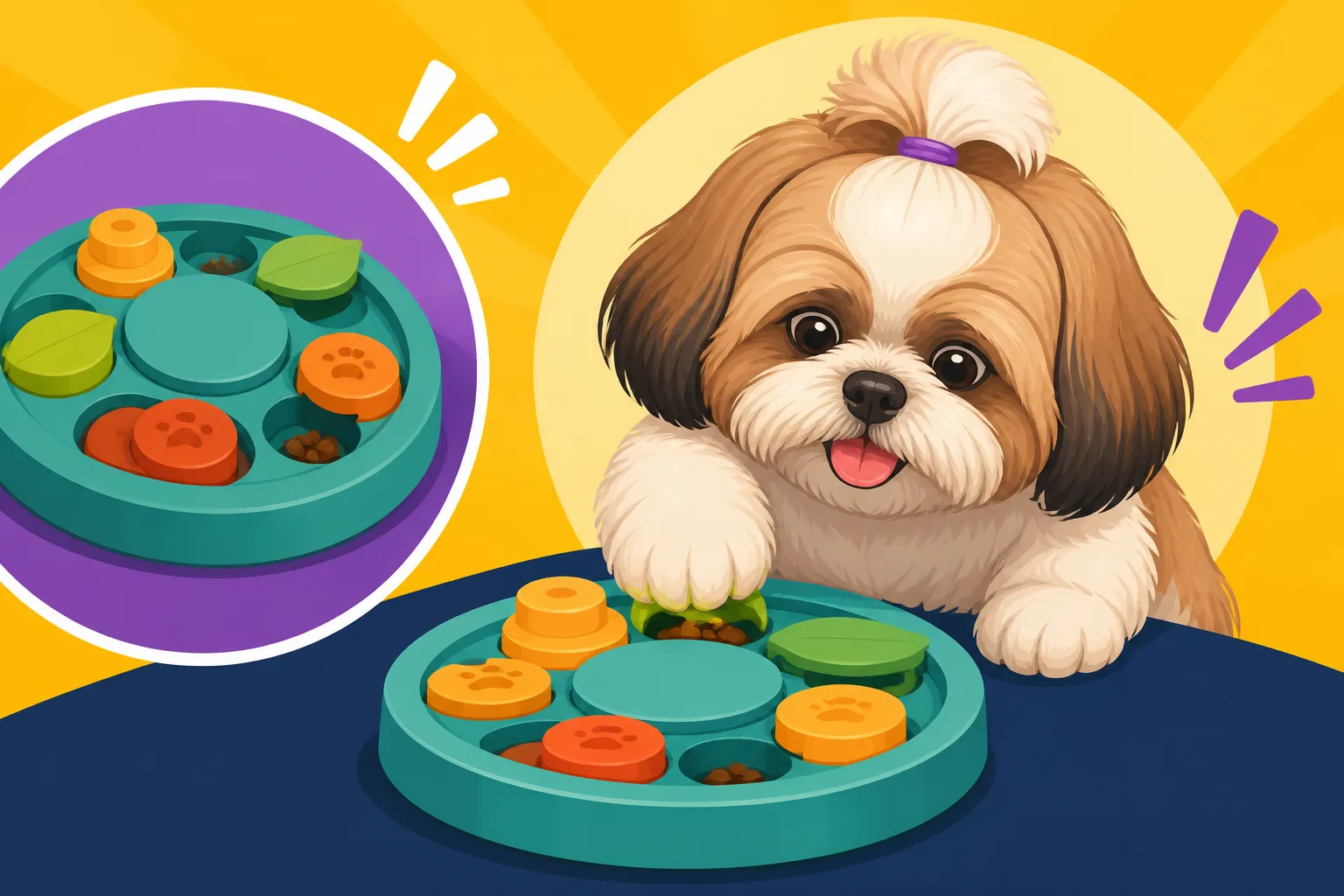
Once your Shih Tzu has mastered the basics and shows enthusiasm for their simpler puzzles, you can gradually introduce more complex designs. These might involve sliding panels, lift-up lids, or multiple steps to access the food. Many brands offer different levels of difficulty, so you can progress as your Shih Tzu's skills improve. For instance, some puzzles might require them to lift a peg and then slide a door, or rotate a wheel to reveal a compartment.
When moving to a harder puzzle, consider showing your Shih Tzu how it works a few times. Don't just hand it over and expect them to know what to do. Guide their paw, lift a lid for them, or show them the sliding motion. Dogs are clever, but sometimes they need a little demonstration to understand the mechanics. Brands like Nina Ottosson have a great range of puzzles with increasing difficulty. Remember, the challenge should still be achievable. If they struggle for more than a few minutes without any success, it might be too hard, and you should step back to an easier version or offer more assistance. The aim is engagement, not frustration, and you want to continue reinforcing that What Motivates a Shih Tzu to Work.
Material Considerations and Safety First
Safety is paramount when choosing any toy or feeder for your dog, and puzzle feeders are no exception. Given that Shih Tzus will be putting their mouths on these items, the materials should be non-toxic and durable enough to withstand chewing, especially if your dog is a more enthusiastic chewer. Look for puzzles made from food-grade plastic, silicone, or natural rubber. Avoid anything with small, easily detachable parts that could pose a choking hazard. Always supervise your Shih Tzu when they are using a new puzzle feeder, particularly one with moving parts, to ensure they are using it appropriately and not trying to chew off pieces.
Cleanliness is another important factor. Food can get stuck in crevices, leading to bacteria growth. Choose puzzles that are easy to disassemble and clean thoroughly, either by hand or in the dishwasher. Some puzzle feeders have intricate designs that are notoriously difficult to clean, which might make them less appealing for regular use. A good, safe puzzle feeder should be sturdy, easy to clean, and free of any sharp edges or potential pinch points that could harm your Shih Tzu’s delicate face or paws.
Introducing Your Shih Tzu to a Puzzle Feeder
Bringing a new puzzle feeder home is exciting, but how you introduce it can make all the difference in whether your Shih Tzu embraces it or decides it's just another weird human contraption. The key is to make it a positive, low-pressure experience right from the start.
Making the First Experience Positive
The very first time you present a puzzle feeder to your Shih Tzu, you want to ensure success. Don't fill it with their entire meal and expect them to figure it out alone. Instead, start by making it incredibly easy. Place just a few highly tempting, small treats or pieces of their favorite kibble in the most accessible parts of the puzzle, or even simply on top of the puzzle itself. For a snuffle mat, scatter the treats lightly on the surface rather than burying them deep. For a treat-dispensing ball, ensure the opening is wide and the treats fall out with minimal effort.
Sit with your Shih Tzu as they explore it. Praise them enthusiastically as soon as they get a treat. Even if they just accidentally nudge it and a treat pops out, make a big deal about it! This positive reinforcement helps them associate the puzzle feeder with good things and a fun, rewarding activity. The BAXTER & Bella online puppy school, for instance, emphasizes making all new experiences positive, and this applies perfectly to puzzle feeders. You want them to think, "Wow, this is fun, and I get yummy things!" not "This is too hard, I give up." Avoid forcing them to interact if they're hesitant; sometimes simply leaving it out with a few visible treats will pique their curiosity.
Tips for Shih Tzus Who Get Frustrated Easily
Some Shih Tzus, bless their hearts, have a shorter frustration tolerance. If they can't figure something out quickly, they might paw at it once or twice and then simply walk away. This isn't stubbornness, but usually a sign that the puzzle is too hard or the reward isn't immediate enough. For these sensitive souls, you'll need to be extra patient and strategic.
First, simplify the puzzle further. Can you leave some treats half-exposed? Can you demonstrate the action repeatedly? For a puzzle with sliding parts, maybe only slide one open and leave it that way, so they only have to push it the rest of the way. Use very high-value treats that are irresistible to your Shih Tzu. If they're working for something they really love, they'll be more motivated to persevere. If they start to get frustrated, gently redirect them or reset the puzzle to an easier stage. Keep sessions short and sweet, ending on a positive note after they've successfully gotten a few treats. Over time, as their confidence grows, they'll be more willing to tackle a bit more of a challenge. Remember, Five Minute Sessions With a Shih Tzu are often more effective than forcing a longer, frustrating interaction.
Integrating Puzzle Feeders into Their Routine
Once your Shih Tzu is happily engaging with puzzle feeders, the next step is to make them a regular part of their day. They can replace one or even both of their daily meal bowls, turning routine feeding into a stimulating event. This isn't just about fun; it’s about establishing a consistent source of enrichment.
Think about when a puzzle feeder would be most beneficial. For instance, if your Shih Tzu gets an afternoon burst of energy or is prone to A Shih Tzu Underfoot in Every Room when you're trying to work, offering a puzzle feeder can provide a much-needed distraction and mental workout. If you're looking for ways to build their confidence during Building Alone Time for a Shih Tzu, leaving them with a favorite puzzle feeder filled with a portion of their meal can help create a positive association with being by themselves. Always ensure they have access to water, especially during extended puzzle-solving sessions. By weaving puzzle feeders into the fabric of their daily life, you’re not just giving them food; you're consistently providing an opportunity for mental exercise and contentedness.
Common Challenges and Troubleshooting
Even with the best intentions and the right puzzle feeder, you might encounter a few bumps in the road. It’s completely normal for dogs, and especially Shih Tzus with their unique personalities, to react differently. Here’s how to navigate some common issues.
When Your Shih Tzu Gives Up Too Soon
It can be disheartening when you invest in a puzzle feeder, and your sweet Shih Tzu just sniffs it once and walks away, or tries it for a minute and then loses interest. This often comes back to either the puzzle being too difficult or the reward not being enticing enough. As discussed, simplify, simplify, simplify. Don’t be afraid to take a complex puzzle and literally leave all the compartments open at first, with treats inside. Let them just take the treats easily. Then, maybe only close one or two, gradually increasing the challenge.
Another critical factor is the treat itself. Are you using their regular kibble? While this is ideal for making it a full meal, some Shih Tzus need a higher incentive to engage, especially initially. Try using small pieces of cooked chicken, cheese, or store-bought training treats they absolutely adore. Once they understand the game and the joy of solving it, you can gradually transition to using their regular kibble. Consistency is also key. Offer the puzzle at the same time each day, perhaps before a nap or when you need them to settle. If they start to chew or try to destroy the puzzle, that’s a clear sign of frustration, and you need to simplify it immediately. Remember, the goal is successful engagement, not a test of their patience.
Keeping the Puzzle Feeder Clean and Appealing
Just like our dishes, puzzle feeders need regular cleaning. Bits of kibble, treat residue, and slobber can accumulate, leading to unpleasant odors and bacteria. If the puzzle feeder starts to smell stale or gets sticky, your Shih Tzu might be less inclined to use it. This is particularly true for items with many nooks and crannies.
Choose puzzle feeders that are easy to clean. Many plastic and silicone options are dishwasher-safe, which makes life much easier. For those that aren't, a good scrub with warm, soapy water and a bottle brush can get into tight spaces. Always rinse thoroughly to remove any soap residue. Ensuring the puzzle is completely dry before refilling it with food will also prevent mold growth. By maintaining a clean puzzle feeder, you're not only ensuring hygiene but also keeping it appealing and safe for your Shih Tzu to interact with. If your Shih Tzu has Breath From a Shih Tzu Beard Against Its Teeth, regular cleaning of their puzzle is even more important to prevent bad smells from lingering.
Overcoming Resource Guarding or Frustration
While puzzle feeders are generally wonderful, some dogs can develop resource guarding tendencies around them, especially if they are particularly high-value. This might manifest as growling when you approach, trying to move the puzzle away, or even snapping if another pet (or person) gets too close while they are "working." If you notice any signs of resource guarding, it’s crucial to address it immediately and gently.
First, ensure you're providing a safe, quiet space where your Shih Tzu can use the puzzle feeder undisturbed. If you have other pets, separate them. During the initial stages, you might even hold the puzzle feeder for them, letting them get treats from your hand, gradually placing it down. Practice "trading" exercises: approach, offer an even higher-value treat, then take the puzzle away briefly and return it. This teaches them that your approach means good things, not theft. If the guarding behavior is severe, consulting with a professional positive reinforcement trainer is highly recommended. For training tips, resources like the BAXTER & Bella program often provide guidance on managing resource guarding through positive methods.
On the other hand, some Shih Tzus might get overly frustrated and try to flip the puzzle or chew on it rather than solving it. This indicates the puzzle is still too hard. Return to simpler methods, and maybe only put a very small amount of food in it, so they don't get overwhelmed. Remember that the journey of learning and enrichment with your Shih Tzu should be joyful and positive, not a source of stress for either of you. Keep an eye on their body language – a relaxed posture and wagging tail are what you’re aiming for!
Disclaimer
This article is for general informational purposes only and does not constitute professional advice. Laws, prices and regulations vary by location and change over time. Consult a qualified professional for guidance on your specific situation.