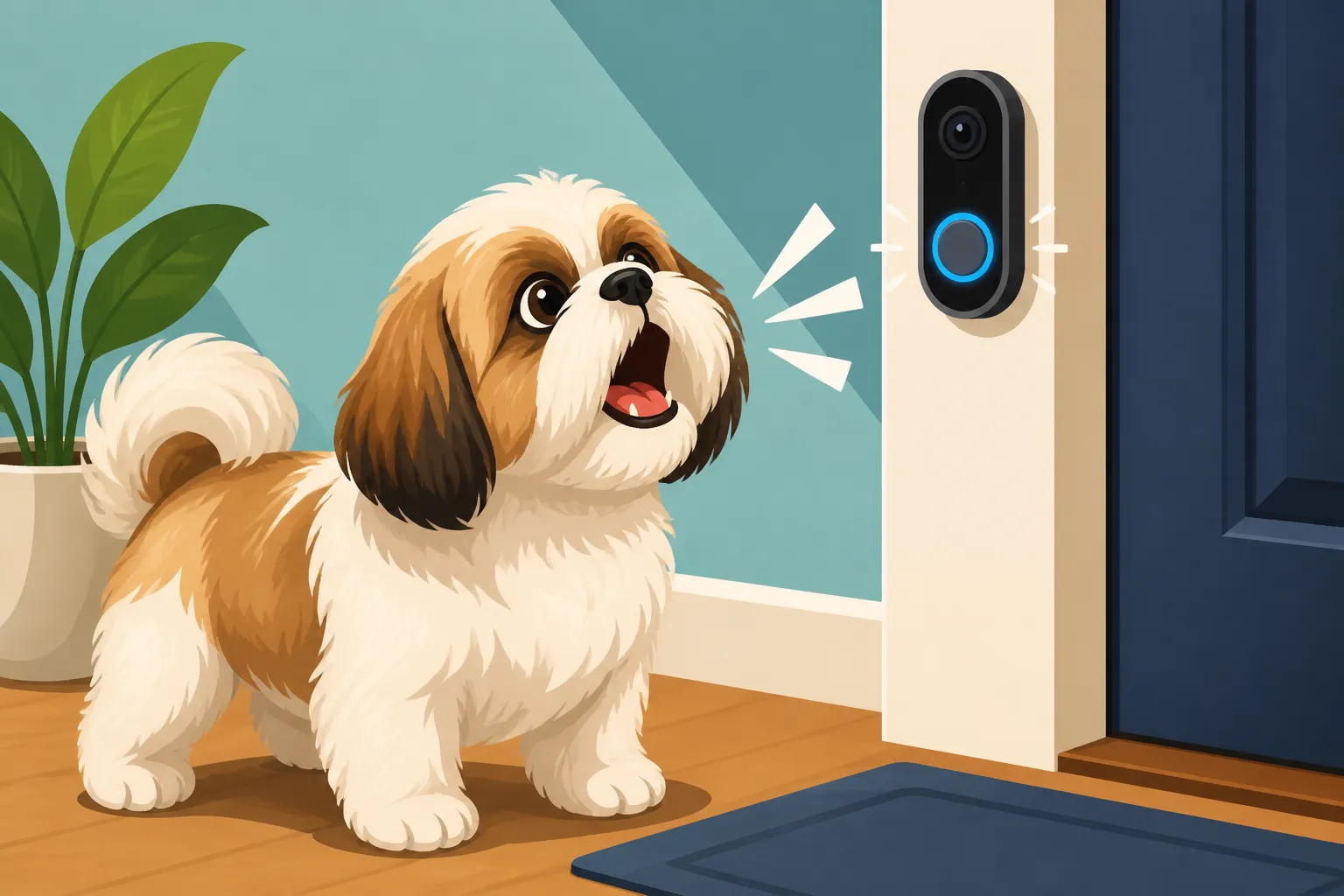
A Shih Tzu Barking at the Doorbell
Oh, the doorbell! That sudden, jarring ding-dong that sends your sweet, fluffy Shih Tzu into an absolute frenzy, transforming them from a serene lap dog into a barking, yapping whirlwind. It's a common and incredibly frustrating scenario for so many Shih Tzu parents, leaving you mortified when guests arrive or scrambling to collect a package while your little companion sounds like they're defending the castle from an invading army. This guide is here to dive deep into why your beloved Shih Tzu reacts this way and, more importantly, how you can help them (and your sanity!) achieve a calmer, more controlled response to that infamous sound.
Understanding Why Your Shih Tzu Barks at the Doorbell
Before we can tackle the barking, we need to understand it. Your Shih Tzu isn't trying to be difficult; they're communicating, even if it's in a way that feels utterly overwhelming. There are several reasons why that doorbell can trigger such a dramatic response in our little lion dogs.
The Territorial Instinct in a Small Package
It might seem counterintuitive for such a tiny, elegant breed, but many Shih Tzus possess a surprisingly strong territorial instinct. Despite their size, they often feel it's their solemn duty to protect their home and their beloved family from perceived intruders. The doorbell, to them, isn't just a sound; it's a clear, unmistakable signal that an "outsider" is approaching their kingdom. They see themselves as the first line of defense, even if that defense consists of a flurry of barks.
Think about their heritage: these dogs were once companions to Chinese royalty, treasured and often carried close. They were, in a way, guardians of their human's personal space and peace. While today's FedEx driver isn't exactly a Mongol invader, your Shih Tzu's instincts can kick in, making them believe their barking is essential to alerting you to a potential threat or, at the very least, scaring off the "intruder." Sometimes, their small stature can even exacerbate this. A little dog might feel the need to be extra vocal and assertive to compensate, convincing themselves they need to make a big impression to be taken seriously.
It’s not uncommon for a Shih Tzu to be highly attuned to changes in their environment, and a sudden, loud sound followed by the appearance of a new person is a significant change. Their barking is often their way of saying, "Hey! Something's happening! And it's on my watch!" This protective impulse, while endearing in its loyalty, can quickly become a nuisance if not properly managed.
Excitement, Anxiety, and Attention-Seeking
While territoriality is a big one, barking at the doorbell isn't always about guarding. Sometimes, it's pure, unadulterated excitement! For some Shih Tzus, the doorbell means someone new is coming to visit – and new people often mean treats, pets, and lots of attention. They might associate the ring with all these wonderful things and bark out of sheer anticipation and joy. This type of barking often sounds a bit different; it might be higher-pitched, more frantic, and accompanied by tail wags and jumping rather than a low, warning growl.
On the flip side, the doorbell can also trigger anxiety or fear. Imagine being a small dog, and a loud, sudden noise erupts, followed by an unknown entity appearing at your home. That can be genuinely startling and stressful. Your Shih Tzu might bark because they are genuinely afraid of the visitor or overwhelmed by the noise and commotion. They might even try to hide after barking, or exhibit other signs of stress like trembling or excessive panting. Understanding the root cause of the barking is key to choosing the right training approach, and for some dogs, the suddenness of the sound itself is a major trigger for fear.
Then there's the attention-seeking component. Let's be honest, when your Shih Tzu starts barking at the doorbell, what's your immediate reaction? You probably rush to the door, perhaps say "No!" or "Quiet!" and give them a pat. To your clever Shih Tzu, any reaction, even a negative one, is still attention. They learn, "I bark, my human comes running!" This reinforces the behavior, making them more likely to bark the next time. It's a classic example of how unintentionally, we can train our dogs to do exactly what we don't want them to do.
The Chain Reaction of Sounds and Sight
Consider the entire sequence of events that typically unfolds when a visitor arrives. First, there's often the subtle sound of footsteps approaching, maybe a car door shutting. Your Shih Tzu, with their keen hearing, might pick up on this before you do. Then, the doorbell rings – a sharp, distinct sound. This causes your dog to rush to the door, barking furiously. In response, you probably rush to the door too, perhaps uttering "Who's there?" or trying to quiet your dog. Finally, the visitor appears, and after a short interaction, they leave.
From your Shih Tzu's perspective, this is a clear chain of cause and effect: footsteps lead to doorbell, doorbell leads to my barking, my barking leads to human rushing, human rushing leads to visitor appearing, and eventually, the visitor leaves. In their mind, their valiant efforts (the barking!) are directly responsible for managing the "threat" and making it go away. This deeply reinforces the barking behavior. They literally believe their barking is effective.
To make matters more complex, many Shih Tzus also have a direct line of sight to the outside world through windows or glass doors. If they see someone approaching before the doorbell even rings, they get an early warning, triggering their territorial or excited response even sooner. This visual cue combines with the auditory one to create a powerful trigger cocktail. To truly address this, we need to break this reinforcing chain and help them form new, calmer associations with the doorbell and approaching visitors.
Practical Strategies to Manage Doorbell Barking
Now that we understand the "why," let's talk about the "how." Training your Shih Tzu to respond calmly to the doorbell is absolutely achievable, but it requires patience, consistency, and a multi-faceted approach.
Desensitization and Counter-Conditioning
This is arguably the most effective long-term strategy for doorbell barking. It involves gradually exposing your Shih Tzu to the doorbell sound in a controlled, low-stress environment while simultaneously creating a positive association with it. The goal is to change their emotional response from alert/anxious/excited to calm/happy/expectant.
Here's how to begin:
- Start with the sound, no one at the door: Record your doorbell sound on your phone, or use a doorbell sound effect app (you can find plenty on your smartphone's app store or even YouTube). This allows you to control the volume and timing.
- Play it softly, reward calmness: Start by playing the doorbell sound very softly, so quiet that your Shih Tzu barely notices it, or hears it but doesn't react. The moment they hear it and remain calm (no bark, no rush), immediately say "Yes!" or click a clicker, and give them a high-value treat. Think tiny pieces of cooked chicken, cheese, or even special soft training treats. The idea is to create a positive link: doorbell sound = delicious reward. Repeat this many times over several short sessions.
- Gradually increase volume: Once your Shih Tzu consistently remains calm at the lowest volume, slowly, slowly increase the volume of the doorbell sound. If they react (bark, look alert), you've gone too fast. Go back to a lower volume where they can succeed. The key is to keep them under threshold – meaning they hear it but don't feel the need to react frantically.
- Introduce mock arrivals: Once they are calm with the sound at a more realistic volume, you can add a person. Start with a family member or friend. Have them ring the doorbell (or play the sound) and as soon as your Shih Tzu hears it calmly, they get a treat. The person does not enter the house yet.
- Practice with entry: In later stages, the person can slowly open the door. The moment your Shih Tzu remains calm, they get a treat. Eventually, the person can step inside, and if your dog stays calm, they get a treat. This is where you're teaching them that the doorbell means good things, not just a frantic alert. This process takes time, sometimes weeks or even months, but it retrains their emotional response. Consistency is paramount.
Management Techniques for Immediate Relief
While you're working on desensitization, you need ways to manage the barking in real-time. These techniques won't fix the underlying issue, but they can significantly reduce the chaos when the doorbell actually rings.
- Blocking visual access: If your Shih Tzu can see people approaching through a window, that's often the first trigger. Consider using frosted window film on lower panes, keeping blinds or curtains closed, or even using baby gates to block access to rooms with street-facing windows. If they can't see the "intruder," they might not react as strongly, giving you precious seconds to intervene.
- Creating a "safe space": Designate a specific, comfortable spot for your Shih Tzu away from the front door – perhaps their crate with a cozy bed, or a mat in another room. When the doorbell rings, immediately direct them to this spot. Reward them with a special, long-lasting chew or Kong stuffed with peanut butter (check ingredients for dog safety, of course) that they only get when they go to their safe space during a doorbell ring. The goal is to give them a calm, quiet place to retreat. You can read more about this in Teaching a Shih Tzu to Settle on a Mat.
- Using a distraction: When you know a delivery is coming or expect a visitor, have a high-value chew or puzzle feeder ready. The moment the doorbell rings, immediately present the distraction. This diverts their attention and gives them something else to focus on. Products you can easily find on Amazon, like treat-dispensing toys, work well for this.
- Masking sounds: Playing calming music or white noise (like a fan) can help muffle outside sounds, including the doorbell, reducing the startling effect. This can be especially helpful if your Shih Tzu is particularly sensitive to sudden noises.
Teaching an Alternative Behavior
Instead of allowing your Shih Tzu to rush and bark, teach them a specific, desirable behavior to perform when the doorbell rings. This gives them a "job" and a clear expectation, replacing the unwanted barking with a polite action.
A popular alternative behavior is "go to mat" or "go to bed."
- Teach "Go to Mat" independently: First, teach your Shih Tzu to go to their mat or bed on cue, without the doorbell involved. Reward them generously for lying down calmly on their mat. Practice this many times throughout the day, in different rooms, so they understand the command. You'll want to use excellent motivators, as discussed in What Motivates a Shih Tzu to Work and making sure to use Treat Sizes That Suit a Shih Tzu for frequent rewards.
- Combine with the doorbell: Once they reliably go to their mat, start combining it with the desensitization process. Play the doorbell sound softly, say your "Go to Mat" cue, and then reward them when they settle there. Gradually increase the volume and introduce mock visitors, always directing them to their mat.
- Reinforce heavily: When a real visitor comes, give your "Go to Mat" cue. As soon as they are on their mat, have the visitor (if appropriate and they are dog-savvy) toss a treat towards them or you can deliver it. The idea is that good things happen when they are calm on their mat, not when they are barking. This helps reinforce the desired behavior. Remember, Positive Reinforcement With a Shih Tzu is always the most effective way to train this breed.
This method gives your Shih Tzu a clear instruction, reducing their perceived need to "figure out" what to do or take matters into their own paws. It empowers them with a positive action.
Tools and Resources to Help Your Training Journey
Sometimes, a little extra help or the right equipment can make all the difference in managing your Shih Tzu's doorbell reactivity.
Training Aids and Environmental Adjustments
Leveraging modern technology and simple environmental changes can be incredibly beneficial.
- Smart Doorbells: Devices like Ring or Nest doorbells often come with settings that allow you to adjust the indoor chime volume or even silence it altogether. This can be a game-changer for desensitization training. You can use your phone to get notifications and then decide when and how your Shih Tzu hears the sound, giving you more control over the training process. For some Shih Tzus, the sheer suddenness and loudness of a traditional doorbell are major triggers, so softening or eliminating that initial jolt can be very helpful.
- Baby Gates or Pens: These simple tools are invaluable for managing your Shih Tzu's access to the front door area. By placing a baby gate a short distance from the door, you can prevent them from rushing and barking directly at the visitor while still allowing them to see or hear what's happening from a safe, controlled distance. This can reduce the intensity of their reaction and give you a moment to implement your training strategies, such as directing them to their mat. You can easily find various styles and sizes on Amazon to suit your home.
- Puzzle Toys and Long-Lasting Chews: As mentioned before, these are fantastic for distraction and redirection. A high-quality puzzle toy filled with kibble or a delicious, durable chew (always supervise to ensure safety and prevent choking) can engage your Shih Tzu's mind and mouth, diverting their attention away from the doorbell. These are best used as part of your "safe space" strategy or when you anticipate a visitor. Look for options on Amazon that are appropriately sized for your Shih Tzu's mouth.
Seeking Professional Guidance
While the strategies above are highly effective, there are times when professional help is the best route. Don't feel ashamed or embarrassed to seek assistance; it shows you're committed to your dog's well-being and your own peace of mind.
- When to Consider a Professional: If your Shih Tzu's barking is extreme, constant, accompanied by aggression (like growling, snapping, or lunging at visitors), or if you've been diligently working on training and seeing no progress, it's time to call in the experts. A professional can assess the specific nuances of your dog's behavior, identify underlying anxiety or fear, and tailor a training plan just for you.
- Types of Professionals: Look for Certified Professional Dog Trainers (CPDT-KA). These individuals have undergone rigorous testing and adhere to ethical, positive reinforcement methods. For more severe cases involving significant fear or aggression, a Veterinary Behaviorist (a veterinarian with specialized training in animal behavior) might be recommended. They can rule out any underlying medical conditions contributing to the behavior and, if necessary, prescribe medication to help manage anxiety while training is underway. You can find more specific advice on Finding a Trainer Who Understands Toy Breeds to ensure you connect with someone who understands the unique temperament of your little companion.
- Online Training Programs: For those who prefer to work at home or need a flexible schedule, comprehensive online training programs can be a fantastic resource. Companies like BAXTER & Bella offer structured, step-by-step guidance using positive reinforcement, often with video tutorials and direct access to trainers. These programs can cover everything from basic obedience to more complex behavioral issues like doorbell barking, all from the comfort of your living room. They are particularly useful for busy owners or those in areas with limited access to local trainers.
| Strategy Type | Best For | Key Action | Expected Outcome |
|---|---|---|---|
| Desensitization | Long-term behavior change | Gradual exposure to doorbell, positive association | Dog becomes calm or indifferent to doorbell |
| Counter-Conditioning | Changing emotional response | Pairing doorbell with high-value rewards | Dog associates doorbell with good things |
| Management | Immediate relief & preventing rehearsal | Blocking views, restricting access, distraction | Reduced barking during actual doorbell events |
| Alternative Behavior | Giving dog a "job" | Teaching "go to mat" or similar on cue | Dog performs polite action instead of barking |
| Professional Help | Severe cases, no progress, aggression | Expert assessment and tailored training plan | Targeted solutions, potentially medication |
Common Pitfalls and Long-Term Success
Training a Shih Tzu, especially for something as ingrained as doorbell barking, is a journey, not a destination. You'll have good days and bad days, but understanding common pitfalls and maintaining a positive outlook will pave the way for long-term success.
Inconsistency is the Enemy of Progress
This is perhaps the biggest hurdle for most owners. Imagine you've been diligently practicing desensitization, and your Shih Tzu is finally showing signs of progress. Then, a delivery driver rings the bell, you're not prepared, and your dog launches into a full barking fit, and you rush to the door without implementing any of your training. That single instance can set you back significantly. Every time your Shih Tzu barks at the doorbell and receives any form of reinforcement (even just your immediate attention, or the visitor eventually leaving), the behavior is strengthened.
It's crucial that everyone in the household is on the same page and committed to the training plan. If one person lets the dog bark it out, while another tries to redirect, your Shih Tzu will become confused and progress will stall. Consistency means consistently rewarding calm behavior, consistently directing them to their safe space, or consistently using your chosen distraction method, every single time the doorbell or an approaching visitor becomes a trigger. It’s tough, especially when you’re busy, but it’s the only way your Shih Tzu will truly understand the new rules. Don't hesitate to remind family members gently, "Remember, we're working on Teaching a Shih Tzu to Settle on a Mat, so let's try this instead!"
Managing Expectations and Celebrating Small Wins
It's vital to have realistic expectations. Your Shih Tzu might never be completely silent when the doorbell rings, especially given their natural inclinations as a companion breed. The goal isn't necessarily absolute silence, but rather a reduction in the intensity, duration, and frequency of the barking. If your Shih Tzu used to bark for five minutes and now only barks for 30 seconds, that's a huge victory! Celebrate those small wins. Acknowledge that barking less, or being easier to redirect, is a sign of progress.
Your Shih Tzu loves being involved with you and their family, and their barking is often a form of communication, even if it's a very loud one. They're telling you something, whether it's "someone's here!" or "I'm excited!" or "I'm a bit nervous!" By providing them with a more appropriate and calmer way to communicate their alert, you're strengthening your bond and helping them feel more secure. Remember that Training a Shih Tzu Bred Purely as a Companion means helping them integrate smoothly into your home life. It’s about guiding them, not squashing their personality. With consistent effort and a boatload of patience, you can transform your doorbell nightmare into a manageable, even polite, alert from your sweet Shih Tzu.
Disclaimer
This article is for general informational purposes only and does not constitute professional advice. Laws, prices and regulations vary by location and change over time. Consult a qualified professional for guidance on your specific situation.