Switching Insurers After a Shih Tzu Eye Claim
It’s a truly disheartening moment when you face a significant health crisis with your beloved Shih Tzu, only to find that your pet insurance company either raises your rates dramatically or, even worse, makes you question if you can ever find adequate coverage again. Especially with a breed prone to specific issues like eye conditions, managing healthcare costs is a constant concern. This guide is here to walk you through the often-confusing landscape of switching pet insurers after your Shih Tzu has already experienced an eye claim, helping you understand your options and what challenges you might face.
Understanding Why Insurers Change Premiums and Coverage After Claims
When you sign up for pet insurance, you're essentially entering into a risk assessment agreement. The insurance company evaluates the likelihood of your pet needing expensive medical care and sets your premium accordingly. For Shih Tzus, who are adorable but come with a predisposition to certain health issues, especially concerning their eyes and breathing, this risk calculation can be particularly impactful. After your Shih Tzu experiences an eye claim, that risk profile shifts, and it's normal for insurers to react to that change. It's not personal; it's just how the numbers work in the insurance world.
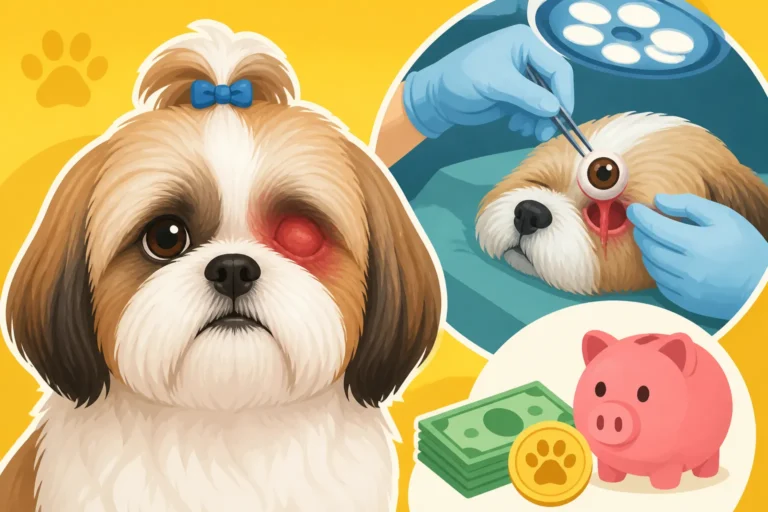
Imagine your Shih Tzu suddenly suffers from Shih Tzu Eye Proptosis, the Emergency Owners Miss, a condition where the eye pops out of its socket. The immediate veterinary care, often involving emergency surgery and follow-up medications, can be incredibly expensive. Your insurance company covers a significant portion of that bill, which is exactly why you have insurance. However, once that claim is processed, your pet now has a documented history of a serious eye condition. From an insurer's perspective, this means the likelihood of future eye-related issues—either a recurrence of the same condition or the development of related complications—has increased.
The Impact of Eye Conditions on Your Policy
Shih Tzus are a brachycephalic breed, meaning they have those adorable flat faces. Unfortunately, this anatomical feature also makes them inherently more susceptible to a range of eye problems. We're talking about things like corneal ulcers, dry eye, and even proptosis, as mentioned. When an insurer sees a claim for any of these, it doesn't just register as a one-off incident. It often flags your dog as having a pre-existing condition, which is a game-changer for future coverage.
For example, if your Shih Tzu had a severe case of Shih Tzu Corneal Ulcers and Dry Eye that required ongoing treatment and multiple claims, your current insurer might view this as a chronic condition. While they will likely continue to cover that specific issue under your existing policy (as long as you keep renewing), they might adjust your premium upwards to reflect the increased risk. If you try to switch to a new provider, that history means that any future eye issues could be classified as pre-existing, and therefore excluded from coverage entirely. It's a frustrating catch-22, because you want the best for your dog, but documenting past illnesses can make future insurance tricky.
How Premiums and Renewals Are Calculated
Insurance companies operate on actuarial data, looking at vast pools of information about breeds, ages, and common illnesses. When your policy comes up for renewal, they re-evaluate your pet's risk. This includes factors like:
- Age: As Shih Tzus get older, their risk of developing age-related conditions increases, naturally leading to higher premiums. You might notice this even without any claims.
- Claims History: This is the big one. A significant claim, especially for a condition that could recur or lead to other problems, signals a higher risk profile. Insurers aren't just looking at the payout amount; they're looking at the type of condition.
- Breed-Specific Risks: Shih Tzus already start with a higher baseline risk for certain conditions due to their genetics and conformation. After an eye claim, this specific risk is amplified in their internal models.
- Geographic Location: Vet costs vary by region, so your address can also influence your premium.
It's a complex equation, but the bottom line is that a prior eye claim for your Shih Tzu will almost certainly factor into your renewal premium. This is why many owners start looking at switching, hoping to find a "fresh start" with another company, but often run into the pre-existing condition wall.
The Challenges of Switching Pet Insurance with a Pre-Existing Condition
The moment your Shih Tzu receives a diagnosis and treatment for a condition like proptosis or a severe corneal ulcer, that condition becomes part of their medical history. This is where the biggest hurdle lies when considering a switch to a new pet insurance provider. It's an issue that impacts pet owners across all breeds, but can feel particularly unfair for Shih Tzu owners, given their breed's unique predispositions.
When you apply for a new pet insurance policy, one of the first things the new insurer will do is request your pet's full medical records from your previous veterinarian. They meticulously review these records for any health issues, injuries, or diagnoses your pet has experienced before the new policy's effective date or before the end of its waiting periods. Any condition documented in those records is generally classified as "pre-existing."
The "Pre-Existing Condition" Dilemma
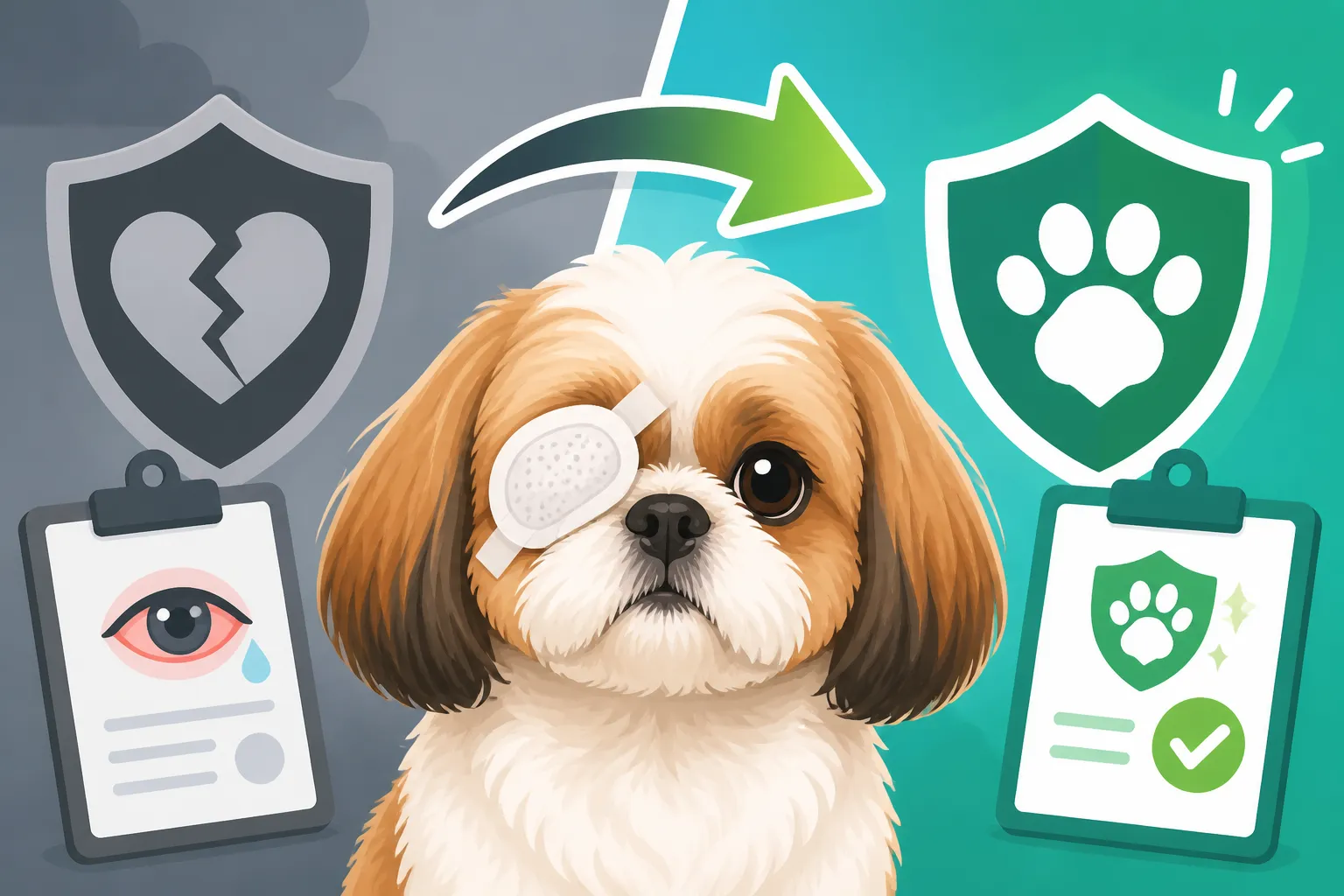
A pre-existing condition is essentially any illness or injury your pet had before enrolling in a new insurance policy or before the waiting period for that policy ended. The frustrating reality is that almost all pet insurance providers will exclude pre-existing conditions from coverage. This means if your Shih Tzu has had an eye claim, any future issues directly related to that eye, or often even the other eye if it's a condition known to be bilateral or recurring (like some forms of Brachycephalic Ocular Syndrome in a Shih Tzu), will likely not be covered by a new policy.
Let's say your Shih Tzu had proptosis in its left eye a year ago, and your current insurance covered the treatment. If you switch to a new company like Healthy Paws, they will review those records. If, six months later, your Shih Tzu develops a severe corneal ulcer in the same eye or even the other eye, the new insurer will likely determine it's related to the previous eye issues and deny the claim. This can be incredibly frustrating and expensive, as you're left to cover the costs out-of-pocket for conditions you thought you were insuring against. This is why it’s critical to understand exactly what Eye Conditions as Pre-Existing on a Shih Tzu Policy mean for your dog’s future care.
Waiting Periods and Policy Gaps
Another significant challenge when switching insurers is navigating waiting periods. Every pet insurance policy comes with waiting periods, which are specific lengths of time you must wait after your policy starts before certain conditions become eligible for coverage. These typically include:
- Accident Waiting Period: Usually short, around 2-3 days.
- Illness Waiting Period: Generally longer, around 14 days.
- Orthopedic Waiting Period: Often the longest, sometimes 6 months or more, for conditions like patellar luxation or hip dysplasia.
If you switch providers, you'll have to go through these waiting periods again. This creates a dangerous "policy gap" during which your Shih Tzu might not have coverage for new illnesses or accidents. For example, if you switch and your dog develops a completely unrelated condition like sudden pancreatitis during the 14-day illness waiting period, the new policy wouldn't cover it. This risk is amplified for a Shih Tzu, who, even after an eye claim, could develop other breed-specific issues like Shih Tzu Back Problems and Disc Disease or Brachycephalic Breathing in a Shih Tzu.
Careful planning is essential if you decide to switch. You might consider overlapping policies for a short time, though that comes with its own cost, or ensure you have an emergency fund ready to cover potential issues during the waiting period.
Navigating Your Options After a Shih Tzu Eye Claim
So, your Shih Tzu has had an eye claim, and you’re feeling the pinch of increased premiums or the worry of future exclusions. It’s a tough spot, and you’re not alone in feeling this frustration. It's not as simple as just shopping around for a better rate anymore. Your primary options usually boil down to either staying with your current provider, accepting more limited coverage, or even considering a self-insurance approach. There’s no perfect answer, but understanding the pros and cons of each path can help you make the best decision for your furry family member.
Staying with Your Current Provider
For many owners, despite the rising costs, remaining with their current pet insurance provider is often the most practical choice, especially after a significant claim for a chronic or recurring condition. The main advantage here is that the condition for which you've already made a claim is likely not considered pre-existing by your current insurer. They were already covering it when it first occurred, so they should continue to do so, albeit potentially at a higher premium.
-
Pros:
- Continued Coverage for Existing Conditions: This is the biggest benefit. Any eye condition that has already been claimed will usually remain covered by your existing policy, assuming you renew it without a lapse. This is crucial for a Shih Tzu with ongoing eye issues or a history of something like Shih Tzu Corneal Ulcers From a Shallow Socket that might require repeated vet visits or lifelong medication.
- No New Waiting Periods: You won't have to endure new waiting periods, meaning your Shih Tzu remains continuously covered for new, unrelated illnesses and accidents.
- Established Relationship: You already understand how your current policy works, their claims process, and what their customer service is like.
-
Cons:
- Increased Premiums: Expect your premiums to rise significantly at renewal after a major claim. Insurers adjust rates based on risk, and a costly eye claim elevates your Shih Tzu's risk profile.
- Potential for Future Exclusions: While the initial claimed condition might be covered, sometimes insurers can become stricter about what they deem "related" conditions. For example, if one eye issue leads to another, they might debate the exact cause.
- Frustration with Cost: It can be hard to swallow higher monthly payments, especially if you feel you're being penalized for using the insurance as intended.
Before making any decision, call your current provider. Ask them directly about their renewal terms, what the expected premium increase will be, and, most importantly, confirm in writing that the eye condition (and any related issues) will continue to be covered. Ask specifically What a Shih Tzu Policy Refuses to Touch in terms of their overall policy.
Exploring Limited Coverage Plans
If staying with your current provider becomes financially unsustainable, or if their terms are simply too restrictive, a more limited coverage plan might be an alternative. These plans are not ideal, as they offer less comprehensive protection, but they can be a stop-gap measure or a way to cover catastrophic events only.
- Accident-Only Policies: These plans cover injuries from accidents (like being hit by a car or falling), but they do not cover any illnesses, including those related to the eyes. For a Shih Tzu with pre-existing eye issues, this means you'd be paying out of pocket for any eye-related veterinary care, but you'd have peace of mind for unexpected accidents.
- Wellness Plans: Some companies, or even some veterinary clinics, offer "wellness plans" that cover routine care like vaccinations, annual exams, and sometimes even dental cleanings. These are not insurance policies for illnesses or accidents. They might offer discounts on some services, but they won't help with emergency eye surgery or chronic conditions. Companies like Chewy sometimes partner with insurance providers or offer their own versions of wellness-like programs, so it's worth exploring the specifics of any such offering.
- High-Deductible, Low-Reimbursement Plans: In some cases, you might find a policy with a very high deductible and/or a low reimbursement rate (e.g., 60-70%). While this means you pay more out of pocket for each claim, the monthly premium can be significantly lower. This option is a gamble; it only makes sense if you have a substantial emergency fund to cover the initial costs.
The drawback to these limited plans is obvious: they leave significant gaps in coverage, especially for a breed like the Shih Tzu, which can develop various health issues throughout its life.
Self-Insuring and Emergency Funds
For some pet owners, especially those with an older Shih Tzu who already has several pre-existing conditions, the cost of pet insurance can become prohibitive. In these situations, "self-insuring" can be a viable strategy. This means you forgo pet insurance entirely and instead commit to regularly putting money aside into a dedicated savings account specifically for your pet's medical expenses.
- How it Works: Set up an automatic transfer from your checking account to a high-yield savings account each month. The amount should ideally be equal to or greater than what you would have paid in insurance premiums. The goal is to build up a substantial emergency fund over time.
- Benefits:
- Complete Control: You have full control over how and when the money is used. No waiting periods, no denials for pre-existing conditions.
- No Premium Hikes: Your "premium" (the amount you save) won't increase just because your Shih Tzu gets sick.
- Money Stays Yours: If your Shih Tzu remains healthy, the money is still yours to use as you see fit.
- Drawbacks:
- Requires Discipline: You must be diligent about saving, and resist the temptation to dip into the fund for other expenses.
- Risk of Catastrophic Costs: If a major event occurs early on, before you've built up a significant fund, you could be facing a huge bill you can't cover. Shih Tzu Emergency Vet Costs Owners Should Expect can quickly run into thousands of dollars for procedures like complicated eye surgeries or emergency care for The Elongated Soft Palate in a Shih Tzu.
- Not for Everyone: This option works best for those who are financially stable, disciplined savers, and have the immediate liquidity to cover an unexpected large vet bill if the fund isn't yet robust.
Many owners combine this with specific strategies for ongoing care. For example, buying prescription diets or specialized grooming tools from retailers like Chewy or exploring fresh food options from services like Ollie might be part of their general pet care budget, rather than relying on insurance.
Appealing to Your Current Insurer
Before you jump ship or resign yourself to limited coverage, it's always worth a thorough conversation with your current insurance provider. Sometimes, you might be able to negotiate or appeal a premium increase, especially if you have been a long-standing, loyal customer.
- Understand the Increase: Ask for a detailed breakdown of why your premium is increasing. Is it solely due to the eye claim, or are other factors like your Shih Tzu's age also playing a significant role?
- Clarify Coverage: Get explicit confirmation in writing about what aspects of the eye condition (and any potentially related future issues) will continue to be covered under the renewed policy.
- Ask About Options: Inquire if there are ways to lower your premium, such as increasing your deductible, adjusting your reimbursement rate, or changing your annual payout limit. Be aware that these changes will mean more out-of-pocket expenses for you, but they can make the monthly premium more manageable.
- Policy Review: Ask if there's an internal policy review process or an appeal mechanism for rate increases. While not always successful, advocating for yourself and your Shih Tzu can sometimes yield positive results.
Remember, clear communication and getting things in writing are your best tools in these discussions.
Tips for Choosing a New Pet Insurance Policy
Let's assume, despite the challenges, you still feel that switching insurers is your best path forward for your Shih Tzu. Perhaps the premium hike from your current provider is simply too much, or you're confident that any future major issues will be unrelated to the previous eye claim. If you're going to dive into the world of new pet insurance policies, especially with a Shih Tzu that has a known health history, you need to be exceptionally diligent in your research. It's not just about the lowest premium; it's about what that premium actually buys you.
The key is to understand that a new policy will not cover anything deemed pre-existing. Your goal is to find a policy that offers robust coverage for new conditions your Shih Tzu might develop and to manage the risk of future costs for those pre-existing issues.
Reading the Fine Print on Exclusions
This is perhaps the most critical step for any Shih Tzu owner, but especially one with a history of eye claims. Every insurance policy has exclusions – things they won't cover. These exclusions can be general (e.g., cosmetic procedures, elective surgeries) or very specific.
- Pre-Existing Condition Clauses: Double-check how each potential new insurer defines "pre-existing conditions." Some might be more generous than others, though this is rare. Look for any stipulations regarding how long a condition must be "cured" or symptom-free before it might be considered for future coverage (though for chronic eye conditions, this is usually not an option).
- Breed-Specific Exclusions: Be on high alert for Brachycephalic Exclusions on a Shih Tzu Policy. Some insurers, due to the inherent health risks associated with flat-faced breeds, might have blanket exclusions or limitations for conditions common to Shih Tzus, such as breathing issues, dental problems, or indeed, eye conditions, even if they're new. Make sure any new policy doesn't penalize your Shih Tzu for its adorable, flat face.
- Waiting Periods: As discussed, factor in the new waiting periods. If your Shih Tzu has had one eye issue, make sure the new policy covers the other eye or unrelated eye conditions after the waiting period, should a new, distinct problem arise.
- Bilateral Conditions: Pay close attention to how insurers handle bilateral conditions – those that can affect both sides of the body (like patellar luxation or, indeed, some eye conditions). If one eye had a problem, some insurers will consider any issue with the other eye as pre-existing if it’s the same type of condition.
Don't hesitate to call the insurance companies directly and ask for clarification on specific scenarios related to your Shih Tzu's health history. Get their answers in writing whenever possible.
Comparing Deductibles, Reimbursement Rates, and Annual Limits
Beyond exclusions, these three factors dictate how much you'll pay out of pocket when your Shih Tzu needs vet care under a new policy.
- Deductible: This is the amount you pay before your insurance coverage kicks in. It can be per incident or annual. A higher deductible usually means a lower monthly premium, but you'll pay more upfront if your dog gets sick or injured. Consider your budget and your Shih Tzu's general health when choosing.
- Reimbursement Rate: This is the percentage of the covered vet bill that the insurance company will pay back to you after you've met your deductible. Common rates are 70%, 80%, or 90%. A higher reimbursement rate means less out-of-pocket for you, but a higher monthly premium.
- Annual Limit: This is the maximum amount the insurance company will pay out in covered expenses during a policy year. Some policies offer unlimited coverage, while others have limits (e.g., $5,000, $10,000, $15,000). For a Shih Tzu, who can rack up significant bills for emergencies or chronic conditions, unlimited or very high annual limits are often preferred to cover things like Shih Tzu Surgery Costs From the Mouth to the Eye.
You might also consider looking into providers like Healthy Paws, which is known for its comprehensive accident and illness plans, but remember to always verify their specific policies on pre-existing conditions and brachycephalic breeds for your individual Shih Tzu's situation.
Utilizing Wellness Plans (If Offered)
While not a substitute for accident and illness insurance, some companies offer optional wellness plans that can be added to your policy or purchased separately. These plans help cover the costs of routine preventative care.
- What They Cover: Typically include annual exams, vaccinations, deworming, routine bloodwork, and sometimes even dental cleanings.
- Not for Illness/Accident: It's crucial to understand that wellness plans do not cover unexpected illnesses, accidents, or the ongoing treatment for pre-existing conditions.
- Value for Money: Evaluate if the cost of the wellness plan outweighs the savings you'd get from paying for those services out of pocket. For a Shih Tzu, consistent preventative care, like regular check-ups and keeping Shih Tzu Dental Disease at 13 Percent of the Breed at bay, is vital.
You might find that major retailers like Chewy or specialty pet food providers like Ollie don't offer traditional insurance but might have partnerships or loyalty programs that can indirectly help with general pet care expenses or specific dietary needs, which can free up funds for medical emergencies.
Considering Accident-Only Policies
If all else fails, or if you simply cannot find an affordable comprehensive policy after your Shih Tzu's eye claim, an accident-only policy is the bare minimum you might consider.
- What They Cover: These policies exclusively cover injuries that result from unexpected accidents. Think broken bones, lacerations, foreign object ingestion, or injuries sustained from a fall.
- What They Don't Cover: They offer no coverage for any illness, chronic condition, or breed-specific diseases, which means any ongoing eye issues, new illnesses, or conditions like Shih Tzu Joint Problems in a Toy Frame would be entirely out-of-pocket.
- Peace of Mind (Limited): While not comprehensive, an accident-only policy can provide some financial safety net against major, sudden, unforeseen trauma. It’s a very limited form of protection, but for some, it’s better than no safety net at all.
Ultimately, the decision to switch insurers after a Shih Tzu eye claim is a deeply personal and often challenging one. It requires careful research, honest self-assessment of your financial situation, and a realistic understanding of what pet insurance can and cannot do once a condition becomes part of your pet's medical history. Remembering to keep The Eye and Kidney Records to Keep on a Shih Tzu meticulously can help with any claims or discussions you have.
Comparative Look at Insurance Options After a Claim
To help clarify the choices you might face, here's a table comparing the general characteristics of staying with your current insurer versus switching to a new one after your Shih Tzu has had an eye claim. This isn't exhaustive, but it highlights the primary considerations.
| Feature / Option | Staying with Current Insurer (After Claim) | Switching to New Insurer (After Claim) |
|---|---|---|
| Coverage for Eye Claim | Typically continues to cover the claimed condition and related issues, subject to policy terms. | Will almost certainly be excluded as a pre-existing condition, and likely any related eye issues too. |
| Coverage for New Illnesses | Full coverage for new, unrelated illnesses (after initial waiting periods, if any). | Full coverage for new, unrelated illnesses, but only after new waiting periods are satisfied. |
| Coverage for Accidents | Full coverage for accidents. | Full coverage for accidents, but only after new waiting periods are satisfied. |
| Premium Impact | Likely to increase at renewal due to increased risk profile. | May appear lower initially (before pre-existing exclusions are considered), but overall value may be less. |
| Waiting Periods | None, as long as policy is continuously renewed. | New waiting periods will apply for all accident and illness coverage. |
| Policy Flexibility | Less, as you're tied to existing terms. Potential for negotiation on deductible/reimbursement. | More flexibility to choose new terms (deductible, reimbursement) for new conditions, but not pre-existing. |
| Pre-Existing Risk | Already established and generally covered for that specific condition. | New conditions will be covered, but any prior condition is instantly excluded. |
| Complexity | Relatively low; continue with existing process. | High; involves extensive research, comparison, and understanding complex exclusion clauses. |
| Risk of Gaps | Minimal to none with continuous renewal. | High risk of coverage gaps during new waiting periods. |
This table should underscore the significant hurdle that pre-existing conditions pose when contemplating a switch. It also emphasizes why staying put, despite a potentially higher premium, often offers more predictable and comprehensive coverage for conditions your Shih Tzu has already experienced.
Disclaimer
This article is for general informational purposes only and does not constitute professional advice. Laws, prices and regulations vary by location and change over time. Consult a qualified professional for guidance on your specific situation.