Tartar on Shih Tzu Teeth Before Age Three
It can be incredibly disheartening, even alarming, to look inside your adorable Shih Tzu's mouth before they've even celebrated their third birthday and already spot that tell-tale yellowish-brown crust forming on their teeth. We often expect dental issues to be a problem for senior dogs, but for our flat-faced companions, tartar can become a significant concern shockingly early in life. This comprehensive guide will explain exactly why young Shih Tzus are so prone to this issue and, more importantly, what proactive steps you can take to keep their tiny teeth healthy and bright.
Why Shih Tzus Are Prone to Early Tartar Buildup
It's not just bad luck that your young Shih Tzu might be developing tartar. Their unique physical characteristics and typical lifestyle contribute significantly to early dental challenges. Understanding these underlying factors is the first step toward effective prevention.
The Crowded Shih Tzu Mouth
The most prominent factor in early tartar accumulation for Shih Tzus is their distinctive brachycephalic skull structure. Imagine trying to fit a full set of 42 adult teeth into a jaw that's designed for a much smaller number. It's a squeeze, to say the least! This leads to severe dental crowding, where teeth overlap, rotate, or are simply too close together. When teeth are crammed in, there's less space for the tongue and saliva to naturally clean their surfaces. Food particles easily get trapped in these tight crevices, creating a perfect breeding ground for bacteria to form plaque, which then hardens into tartar.
The typical undershot bite of a Shih Tzu also plays a role. While charming, this jaw alignment can exacerbate issues, as the upper and lower teeth might not meet properly to provide the natural scraping action that helps clean teeth in other breeds. It’s a challenge their tiny mouths face from the very beginning, often before they've even finished teething. You might want to learn more about how "Shih Tzu Tooth Crowding in a Tiny Jaw" truly impacts their oral health.
Diet and Chewing Habits
What and how your Shih Tzu eats also significantly influences tartar buildup. Many small breed dogs, Shih Tzus included, are fed soft, wet foods or kibble that's too tiny to provide any abrasive cleaning action. While palatable, these softer diets tend to stick to the teeth more readily and don't offer the mechanical scrubbing that larger, crunchier kibbles or appropriate chew toys do.
Furthermore, many Shih Tzus aren't naturally aggressive chewers, or their owners might not offer suitable chew items. Chewing on safe, veterinarian-approved dental treats or appropriate toys helps remove plaque before it can mineralize into tartar. Without this natural or assisted abrasion, plaque has free rein to accumulate. Giving too many soft, sugary treats can also accelerate the problem, providing more fuel for bacteria to thrive on. Consider if your Shih Tzu's daily diet is truly helping or hindering their dental health; often, a few small tweaks can make a big difference.
Genetic Predisposition
While environment and anatomy play huge roles, genetics can also make some Shih Tzus more prone to dental disease than others. Just like humans, some dogs naturally produce more enzymes in their saliva that contribute to plaque hardening faster into tartar. Others may have weaker enamel or a particular oral microbiome that encourages bacterial overgrowth.
This means that even with diligent home care, some Shih Tzus might still develop tartar faster than their peers. It's not a reflection of your care, but simply an inherent biological difference. If you've done everything "by the book" and still see tartar forming early, it's wise to discuss this with your veterinarian to establish a more aggressive professional cleaning schedule. This genetic component underscores why prevention is so crucial from puppyhood, as you might be fighting an uphill battle regardless.
Recognizing Tartar and Its Early Warning Signs
Spotting dental issues early is key to preventing more serious problems like periodontal disease. It's not just about looking for obvious signs, but also being aware of subtle changes in your Shih Tzu's mouth and behavior.
Visual Cues of Plaque and Tartar
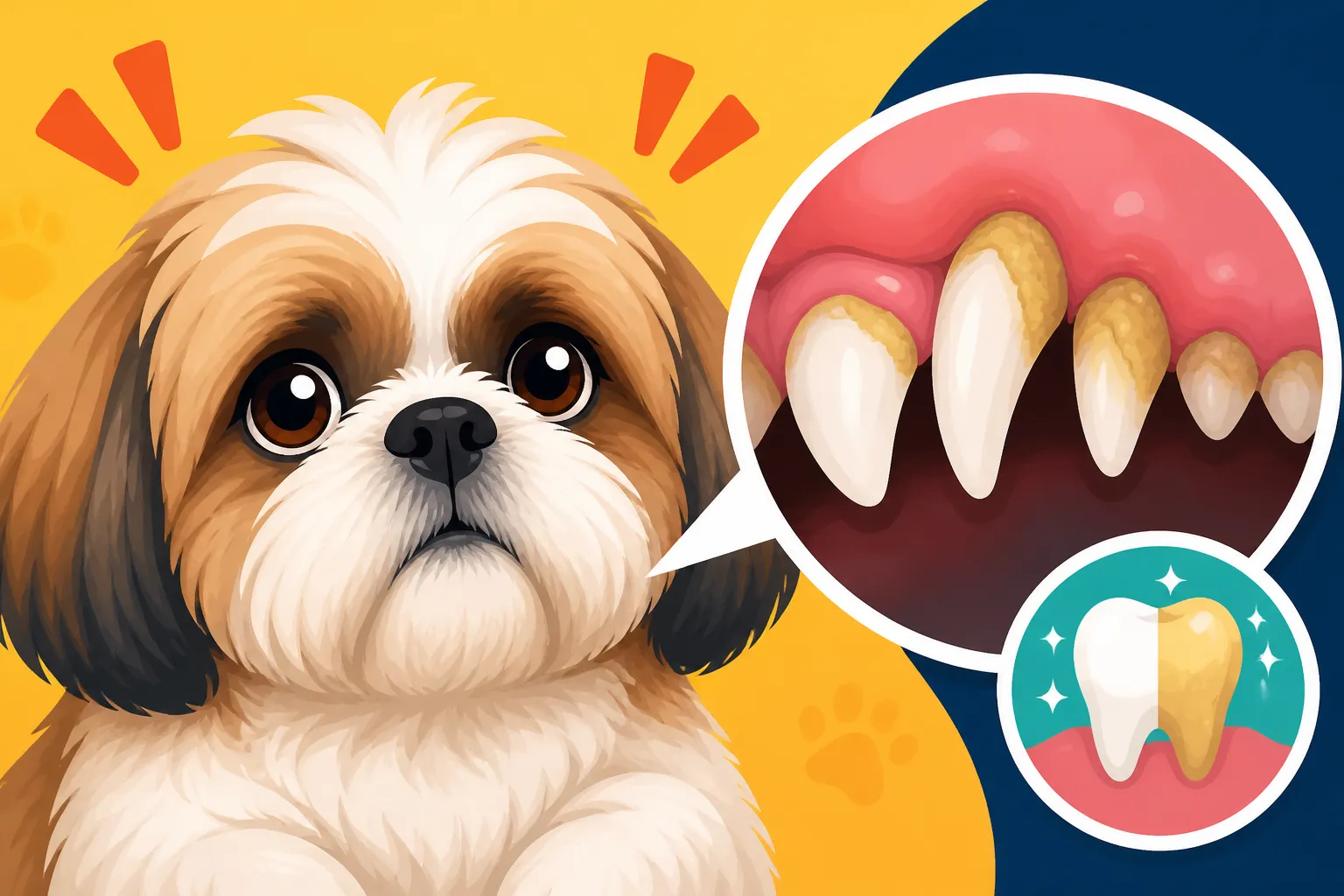
When you look inside your Shih Tzu’s mouth, plaque is a soft, sticky film that’s often hard to see, but it’s the precursor to tartar. Tartar, also known as calculus, is much more visible. It typically appears as a yellowish or brownish crust, especially along the gumline. You'll most commonly see it on the outer surfaces of the upper molars and canines, as these teeth are less exposed to the natural cleansing action of the tongue.
As tartar progresses, it can become thicker, darker, and even greenish-black. It's a hard, mineralized deposit that cannot be brushed off and requires professional veterinary intervention to remove. If you're seeing this kind of buildup in a Shih Tzu under three years old, it's a clear indication that their dental health needs immediate attention. Don't wait for it to get worse, as the progression can be surprisingly rapid in this breed.
Other Indicators of Dental Trouble
Beyond visual tartar, there are several other warning signs that indicate your Shih Tzu might be experiencing dental discomfort or disease. The most common and often the first noticed is persistent bad breath, or halitosis. While some "doggy breath" is normal, an overwhelmingly foul odor is usually a sign of bacterial accumulation and decay in the mouth.
Other signs include red, swollen, or bleeding gums, which point to gingivitis – the earliest stage of periodontal disease. You might notice your Shih Tzu showing reluctance to eat, especially hard kibble or chews, or dropping food from their mouth. They might paw at their face, rub their mouth on furniture, or become unusually quiet or irritable due to pain. Some dogs might even drool excessively or have blood-tinged saliva. If you observe any of these symptoms, it's crucial to schedule a vet visit promptly. These are not just cosmetic issues; they can quickly escalate to more painful and costly problems like "Periodontal Disease in a Five Year Old Shih Tzu" or even tooth loss.
Proactive Strategies to Prevent Early Tartar
The good news is that you have a lot of power to prevent early tartar buildup in your Shih Tzu. Consistent, proactive care at home is the most effective defense against dental disease.
Daily Dental Care at Home
This is the single most important thing you can do for your Shih Tzu's teeth. Brushing their teeth daily, or at least every other day, is crucial. It’s similar to how we need to brush our own teeth to prevent cavities and gum disease. Use a soft-bristled toothbrush designed for dogs or a finger brush, and always use dog-specific toothpaste. Human toothpaste contains ingredients like fluoride and xylitol that are toxic to dogs.
Start slowly and make it a positive experience, especially with a puppy. Introduce the brush and toothpaste gradually, letting them lick the toothpaste off your finger first. Then, gently try to brush a few teeth at a time, focusing on the outer surfaces where tartar accumulates most. Gradually increase the duration as your Shih Tzu gets used to it. The goal is a gentle but thorough scrub along the gumline. Regular brushing helps remove plaque before it hardens into tartar, saving you and your Shih Tzu from future problems. For a more detailed approach, check out our guide on "Daily Toothbrushing in a Crowded Shih Tzu Jaw".
Dental Chews and Toys
While not a substitute for brushing, appropriate dental chews and toys can be a valuable addition to your Shih Tzu's oral hygiene routine. Look for products specifically designed to help clean teeth, often with a slightly abrasive texture or unique shape that scrapes plaque off as your dog chews. Always choose chews that are appropriately sized for your Shih Tzu to prevent choking hazards, and ensure they are soft enough not to damage their teeth but firm enough to provide mechanical action. Too-hard chews can actually break teeth, which would lead to even more significant issues.
Supervision is key with any chew toy to ensure it's being used safely and not consumed too quickly. Products like Greenies or VeggieDent chews are popular choices, but always check with your vet to see which options they recommend for your specific dog. Some toys are even designed with nubs and grooves to massage gums and clean teeth while they play. Choosing "Chews That Suit a Shih Tzu Underbite" is particularly important for this breed to ensure maximum effectiveness and safety.
Diet Modifications
Your Shih Tzu's diet can also play a role in dental health. While many owners opt for wet food, incorporating a high-quality, dental-specific dry kibble can be beneficial. These kibbles are often designed with a larger size and unique texture that encourages chewing and provides a gentle scrubbing action on the teeth as your dog crunches. Some dental diets even have special coatings that help reduce plaque accumulation.
Beyond specialized kibble, consider minimizing soft, sticky treats and table scraps, which can easily adhere to teeth and contribute to bacterial growth. Instead, opt for crunchy, low-calorie dog treats. Water additives formulated to reduce plaque and tartar can also be a useful tool, but they should always be used in conjunction with other dental care methods, not as a standalone solution. Discuss diet options with your veterinarian to find the best balance for your Shih Tzu's overall health and dental needs.
When Professional Dental Cleaning Becomes Necessary
Despite the best home care, professional dental cleanings under anesthesia are often an inevitable part of maintaining a Shih Tzu's oral health, especially given their predisposition to early tartar.
The Importance of Regular Vet Check-ups
Routine veterinary check-ups are not just for vaccinations; they are critical opportunities for your vet to assess your Shih Tzu’s overall health, including their dental status. During these visits, your vet will perform an oral examination, checking for signs of plaque, tartar, gingivitis, and any other abnormalities like "Retained Puppy Teeth in a Shih Tzu" or gum recession.
Vets typically grade dental disease from 0 to 4, with 0 being perfectly healthy and 4 being severe periodontal disease. If your Shih Tzu is showing early signs of tartar buildup, even before age three, your vet might recommend a professional dental cleaning. These regular evaluations allow for early intervention, preventing minor issues from escalating into painful and costly problems. Don't underestimate the expertise of your vet in spotting issues you might miss. It also provides an excellent opportunity to discuss how "How Often a Shih Tzu Needs a Dental" throughout their life.
Understanding Professional Dental Cleaning Anesthesia
Once your vet recommends a professional dental cleaning, it's important to understand what the procedure entails. Unlike home brushing, a professional cleaning is performed under general anesthesia. This allows the veterinary team to thoroughly scale and polish every tooth surface, including below the gumline, where most of the damaging bacteria reside. They use specialized ultrasonic scalers, much like human dentists, to remove hardened tartar.
Many owners, understandably, have concerns about anesthesia, especially for a brachycephalic breed like the Shih Tzu. However, modern veterinary anesthesia protocols are very safe, especially with proper pre-anesthetic testing, which may include blood work and sometimes chest X-rays. Your vet will monitor your Shih Tzu's heart rate, breathing, blood pressure, and oxygen saturation throughout the procedure. While there are always risks with anesthesia, the risks of untreated dental disease, which can lead to pain, infection, and even systemic health issues affecting the heart, kidneys, and liver, often outweigh the anesthetic risks. Learning about "Anesthesia on a Flat-Faced Shih Tzu" can help ease some of these worries. Many owners find peace of mind by exploring pet insurance plans, like those offered by Healthy Paws, which can help cover the costs of these crucial procedures. Understanding these options early on, before major issues arise, can alleviate significant financial stress down the line.
Comparison of Shih Tzu Dental Care Methods
| Method | Description | Effectiveness for Plaque | Effectiveness for Tartar | Cost | Frequency |
|---|---|---|---|---|---|
| Daily Brushing | Manual brushing with dog-specific toothpaste and brush. | High | Low (prevents formation) | Low (supplies) | Daily/Every Other Day |
| Dental Chews/Toys | Specially designed products to scrape teeth as dog chews. | Moderate | Low (prevents formation) | Moderate | Daily/Few times week |
| Water Additives | Solutions added to drinking water to reduce bacteria. | Low-Moderate | Low | Moderate | Daily |
| Dental Diet Kibble | Larger, textured kibble that provides mechanical cleaning. | Moderate | Low (prevents formation) | Moderate-High | Daily |
| Professional Cleaning | Full scaling and polishing under anesthesia by a vet. | High | High | High | Annually/As Needed |
The lifetime cost of keeping a Shih Tzu healthy can add up quickly, especially with common issues like dental disease. Having a plan in place, and considering pet insurance from providers such as Healthy Paws, can certainly make these necessary medical interventions more manageable. No one wants to face a situation where they have to choose between their pet's health and their budget. Comprehensive care, including preventative measures and being prepared for professional cleanings, is the hallmark of responsible Shih Tzu ownership.
Disclaimer
This article is intended for informational purposes only and is not a substitute for professional veterinary advice. Always consult with your veterinarian regarding any health concerns or before making any decisions about your pet's medical care.