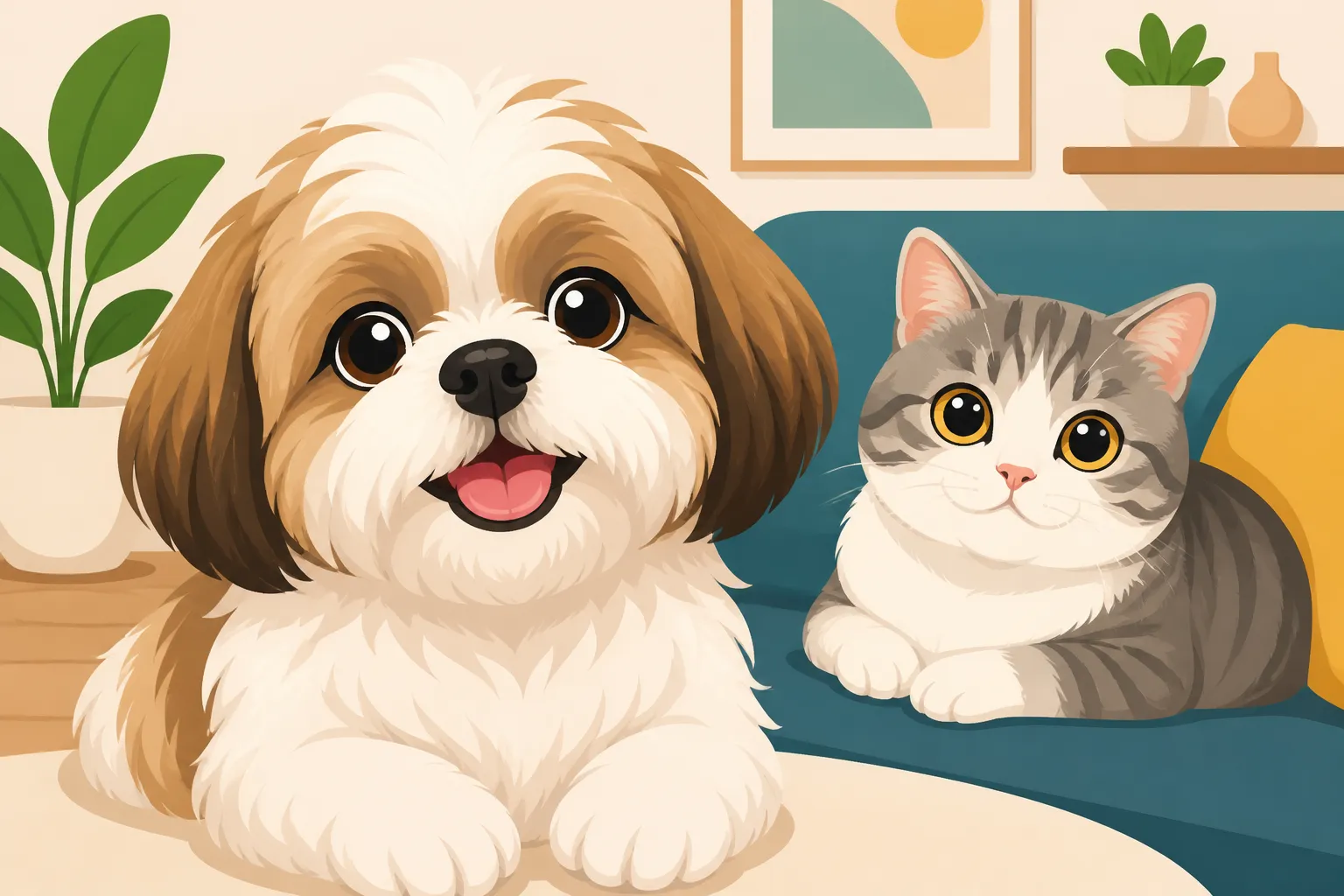
A Shih Tzu and a Cat in One House
Bringing a new furry friend into a home that already has a cat, or introducing a cat to your beloved Shih Tzu, can feel like navigating a minefield of potential disagreements and hissed warnings. Many owners worry about their small, affectionate Shih Tzu's safety around a cat, or how their independent feline will react to a boisterous (or even just curious) new canine housemate. This guide will walk you through the careful steps and thoughtful considerations needed to help your Shih Tzu and cat not just tolerate each other, but hopefully, become companions in a truly harmonious household.
Understanding the Feline and Canine Worlds
Before you even think about putting a cat and a Shih Tzu in the same room, it's crucial to understand their fundamental differences. Dogs and cats communicate differently, have different social structures, and perceive threats and play in distinct ways. Ignoring these innate instincts is a recipe for stress and conflict for everyone involved.
The Independent Spirit of a Cat
Cats, by nature, are often more solitary and territorial than dogs. While they can form strong bonds with humans and other animals, their primary instinct is to protect their personal space and resources. A new animal, especially a dog, can be seen as an intruder. Cats rely heavily on scent, and a sudden new smell can be incredibly jarring. They often prefer to observe from a distance, have vertical escape routes, and appreciate a predictable environment. Their "play" can sometimes involve chasing or pouncing, which, while natural for them, might be misinterpreted by a small dog.
The Companionable Nature of a Shih Tzu
Shih Tzus, on the other hand, were bred centuries ago specifically to be companions. They are often incredibly affectionate, eager to please, and thrive on human interaction. They typically enjoy being part of the family "pack" and may not understand a cat's need for personal space. Their play style is usually less predatory and more about interaction, gentle mouthing, or running in small bursts. However, their small size and delicate build, particularly their prominent eyes and brachycephalic features, mean they can be vulnerable if a cat feels threatened and lashes out. It's a real concern, and one that requires careful management to prevent accidents.
Prey Drive and Play Styles
Even the most gentle cat can have a natural prey drive, and a small, quick-moving Shih Tzu might inadvertently trigger this. A cat's swishing tail can also be an irresistible temptation for a curious dog to chase, leading to a quick swat with claws. Conversely, a Shih Tzu might try to initiate play in a way that a cat finds overwhelming or threatening, such as barking, chasing, or sniffing too intensely. The key is to manage these interactions, teaching both animals appropriate boundaries and providing safe outlets for their natural behaviors. Remember, what one animal considers play, the other might perceive as a threat.
The Art of Introduction: Slow and Steady Wins the Race
Rushing the introduction between a Shih Tzu and a cat is almost guaranteed to end in disaster. Think of it like a carefully choreographed dance; every step needs to be deliberate and mindful of both participants' comfort levels. Patience is not just a virtue here, it's a necessity.
Scent Swapping: The First Hello
Before your Shih Tzu and cat ever lay eyes on each other, they need to "meet" through scent. This is arguably the most critical first step. Start by taking a blanket or towel that has the scent of one animal and placing it in the other's territory. For example, let your Shih Tzu sleep on a small blanket, then place that blanket in your cat's favorite napping spot. Do the same with a cat-scented item for your Shih Tzu. Observe their reactions. Are they curious? Indifferent? Or do they seem stressed, hissing, or growling at the foreign scent? Positive reactions are a good sign. You can even try swapping feeding bowls briefly to intensify the scent association. Products available on platforms like Chewy can sometimes help with odor neutralizers or calming diffusers during this initial phase.
Visual Introductions: From a Distance
Once scent swapping seems to be going well, it's time for visual introductions, but still with a barrier. A baby gate, a glass door, or even a crate for your Shih Tzu can work wonders. The goal is to allow them to see each other without direct physical interaction. Keep these sessions short, maybe 5-10 minutes at first, and always end on a positive note. Distract both animals with treats or toys during these viewings. If either animal shows signs of stress—ears flattened, hissing, growling, tail tucked, rigid posture—end the session immediately and try again later, or go back to scent swapping. Multiple, short, positive interactions are far more effective than one long, stressful one.
Supervised Interactions: Building Trust
When both pets appear calm and interested (or at least tolerant) during visual introductions, you can move to supervised, leashed interactions. Have your Shih Tzu on a leash and harness (Why a Shih Tzu Should Wear a Harness Not a Collar), and be ready to gently guide them away if they become too boisterous or if the cat seems stressed. Ensure the cat has a clear escape route, ideally vertical space like a cat tree or a high shelf. Again, keep these sessions brief and positive, using high-value treats to reward calm behavior from both animals. Never force interaction. If the cat decides to flee, let it. This teaches the cat that it can escape, which builds confidence.
Creating Positive Associations
Every interaction, whether scent, visual, or physical, should be associated with positive experiences. Feed them on opposite sides of a door, gradually moving the bowls closer as they get more comfortable. Offer treats during visual sessions. Play gentle games with each animal separately, ensuring they still get individual attention. If your Shih Tzu is a puppy, Puppy Classes That Suit a Shih Tzu can help with general socialization, though direct cat introductions need specific care. The goal is for them to associate each other's presence with good things—food, treats, praise, and calm environments.
Creating a Harmonious Shared Space
Beyond the initial introductions, ensuring both your Shih Tzu and cat have their own dedicated spaces and resources is paramount for long-term harmony. This minimizes competition and allows each animal to retreat when they feel overwhelmed or simply need a break.
Separate Resources: Food, Water, and Rest
Imagine sharing a home where you constantly feel like your food, bed, or bathroom could be taken by someone else. That's how pets feel without separate resources. Ensure your cat has its own food and water bowls, placed where the Shih Tzu cannot easily access them (e.g., on a counter, a cat tree, or behind a cat-flap access door). Do the same for your Shih Tzu. Feeding a Shih Tzu at Nine to Sixteen Pounds is important, and separate feeding prevents food-related stress. Litter boxes must be kept entirely separate from your dog's access, as some dogs are unfortunately tempted by them. Provide distinct resting spots: a soft bed for your Shih Tzu, and a cozy hideaway or vertical perch for your cat. These sanctuaries are critical for their emotional well-being.
Vertical Space for Cats: An Absolute Must
Cats thrive on vertical territory. Providing cat trees, wall shelves, or even just high furniture allows them to observe their environment from a safe vantage point, away from the floor-dwelling dog. This gives them a sense of security and control, which is essential when sharing space with a new dog. A cat that feels it can escape upward is less likely to feel trapped and lash out. Consider a sturdy cat tree from a retailer like Chewy, ensuring it's stable enough for your cat to leap onto confidently.
Safe Zones for Both Pets
Beyond designated rest spots, each pet should have an area they can go to where the other cannot follow. This might be a separate room with a baby gate for your Shih Tzu, or a room with a cat flap in the door that only your cat can use. These "safe zones" are vital for reducing stress and preventing conflicts. It also means you don't have to constantly supervise every second of their interaction, which can be exhausting for you. Setting Up a Crate a Shih Tzu Will Enter effectively can provide a wonderful safe haven for your dog.
| Aspect | Cat's Needs | Shih Tzu's Needs | Management Strategy |
|---|---|---|---|
| Space | Vertical, private, escape routes | Ground-level, cozy bed, den-like crate | Cat trees, shelves, baby gates, dog crates |
| Food/Water | Elevated, away from dog | Accessible, consistent feeding times | Separate bowls, cat food out of dog's reach |
| Litter/Potty | Clean, private, multiple boxes | Consistent outdoor/indoor potty spot | Litter box in cat-only area, dog potty routine |
| Play | Independent, pouncing, wand toys | Interactive, gentle fetch, lap time | Separate playtimes, safe toys for both, supervised play |
| Safety | Escape routes, no tail pulling | Protection from claws, gentle handling | Clipped cat claws, training for gentle play, supervision |
Common Challenges and Troubleshooting
Even with the best intentions and the slowest introductions, bumps in the road are bound to happen. Knowing how to identify potential issues and address them quickly can prevent minor squabbles from escalating into serious problems.
Chasing and Harassment
A common issue is the dog chasing the cat, or the cat swatting at the dog. If your Shih Tzu is chasing the cat, immediately interrupt the behavior with a verbal cue like "leave it" or by gently redirecting them with a toy or treat. Never scold or punish, as this can create negative associations. Instead, reward them when they are calm in the cat's presence. If the cat is swatting, ensure it has ample vertical space and opportunities to retreat. Keep the cat's claws trimmed to prevent injury to your Shih Tzu's delicate eyes (Shih Tzu Eye Proptosis, the Emergency Owners Miss is a serious concern). For persistent chasing, consider keeping the Shih Tzu on a drag leash (a lightweight leash they wear around the house, allowing for quick, gentle redirection without grabbing their collar) during supervised times.
Resource Guarding
Both cats and dogs can exhibit resource guarding, where they become protective of their food, toys, bed, or even a favored human. If your cat hisses when your Shih Tzu approaches its food bowl, or if your Shih Tzu growls when the cat gets near its toys, you have a resource guarding issue. This is why separate resources are so important. Feed them in entirely separate rooms. If one animal guards you, gently move the other pet away, and reward calm, relaxed behavior from both. Sometimes, offering an even higher value treat or toy to the guarding animal when the other approaches can help create a positive association, but this requires very careful management.
Signs of Stress and Anxiety
It's vital to recognize the signs of stress in both your Shih Tzu and your cat. In Shih Tzus, this might look like excessive licking, yawning, panting (when not hot), pacing, cowering, avoiding eye contact, or even house training accidents. For cats, stress can manifest as excessive grooming, hiding, changes in appetite, litter box avoidance, aggression, or excessive vocalization. If you notice persistent signs of stress, it's a clear signal that the current arrangement isn't working, and you need to dial back the introductions. Your vet can also offer advice and sometimes recommend calming aids or pheromone diffusers. The Signs a Shih Tzu Cannot Settle Alone can sometimes overlap with signs of stress around a new housemate.
When to Seek Professional Help
If you've tried everything—slow introductions, separate resources, positive reinforcement—and your Shih Tzu and cat still aren't getting along, don't hesitate to seek help from a certified professional. A veterinary behaviorist or a certified dog trainer specializing in multi-pet households can assess your specific situation and provide tailored guidance. They can help identify triggers, develop behavior modification plans, and ensure both animals' welfare. Sometimes, a fresh pair of expert eyes is all it takes to find a solution you hadn't considered. Remember, the goal is peace for everyone in the home, two-legged and four-legged alike.
Disclaimer
This article is for general informational purposes only and does not constitute professional advice. Laws, prices and regulations vary by location and change over time. Consult a qualified professional for guidance on your specific situation.