A Shih Tzu Around Toddlers Who Grab
Bringing a curious, rambunctious toddler and a delicate, often reserved Shih Tzu together under one roof can feel like trying to mix oil and water, especially when tiny hands are prone to grabbing and pulling. Many owners worry constantly about their beloved companion's safety and well-being, as well as preventing any accidental nips or scratches. This guide will walk you through understanding why these interactions can be challenging, how to create a harmonious environment, and practical strategies for teaching both your little one and your furry friend to coexist peacefully and respectfully.
Understanding the Shih Tzu's Perspective When Toddlers Grab
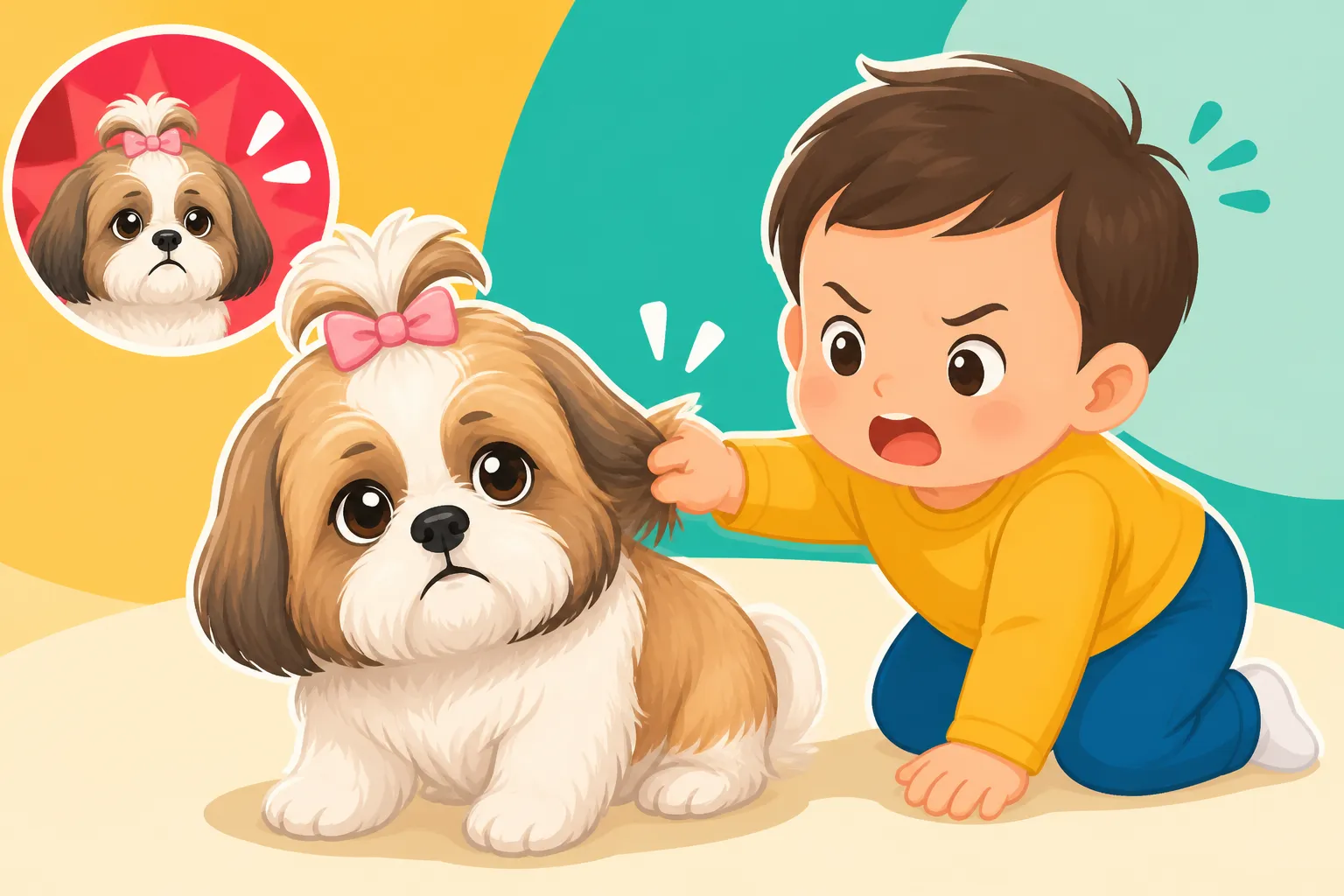
It’s easy to see a cute Shih Tzu and assume they’re always thrilled with human attention, especially from the tiny humans who are often at eye level. However, a Shih Tzu's experience of a toddler can be very different from how they interact with adults. Their small size, delicate build, and often reserved nature mean that sudden, forceful, or persistent grabbing from a toddler can be genuinely frightening, even painful. Understanding this is the first step toward preventing negative interactions.
The Physical Vulnerability of a Shih Tzu
Imagine being only a few pounds, with a long, flowing coat that can easily be snagged, and large, prominent eyes that are surprisingly fragile. That’s the reality for your Shih Tzu. Their compact size, while endearing, makes them incredibly vulnerable to accidental injury from a toddler's enthusiastic, uncoordinated movements. A toddler might not mean any harm when they grab a handful of fur, try to pick up the dog awkwardly, or even just stumble too close, but the consequences for a Shih Tzu can be severe. Their backs, in particular, are prone to issues like disc disease, so being lifted incorrectly or dropped can lead to significant pain or injury. Shih Tzu Back Problems and Disc Disease describes some of these vulnerabilities.
Moreover, their unique head structure, with those beautiful, sometimes bulging eyes, means they are also susceptible to eye injuries. A toddler's finger or a toy could easily poke an eye, or even worse, a forceful grab to the head could, in rare but terrifying instances, lead to proptosis, where the eyeball pops out of its socket. It's a shocking thought, but it highlights why vigilance is so critical. Why a Shih Tzu Eye Can Leave the Socket details this specific concern. They simply aren't built for rough-and-tumble play with unpredictable little ones.
Reading Your Shih Tzu's Subtle Signals
Shih Tzus are generally good-natured, but like all dogs, they have a breaking point. Unlike some larger, more boisterous breeds, a Shih Tzu might not give big, obvious warnings before reacting negatively. They might not growl loudly or snap immediately. Instead, they often show very subtle signs of discomfort or stress that a busy parent might easily miss. Look for things like a frozen posture, lip licking, yawning when not tired, turning their head away, or trying to move away from the toddler. Their tail might be tucked slightly, or their ears might be flattened.
If these subtle signals are ignored, the dog might escalate to a low growl, a snarl, or even a snap as a last resort to communicate that they need space. It’s crucial for adults to learn to read these early warnings so they can intervene before the situation becomes dangerous for either the dog or the child. This is part of understanding Shih Tzu Temperament and the Companion It Was Bred to Be, as they are bred to be gentle but still have canine instincts for self-preservation.
Creating a Safe and Harmonious Environment
Setting up your home so both your Shih Tzu and your toddler have their own space and feel secure is paramount. This isn’t about choosing one over the other; it’s about establishing clear boundaries and management strategies that prevent problems before they start. Think of it as creating zones of peace for everyone.
Designated Safe Havens for Your Shih Tzu
Every Shih Tzu living with a toddler needs at least one, if not several, designated "safe havens" where they can retreat and be completely undisturbed. This could be a crate, a dog bed elevated on a stand, or a separate room with a baby gate. The key is that this space must be strictly off-limits to the toddler. Teach your child from day one that when the dog is in their bed or crate, they are not to be approached, touched, or disturbed. This is the dog's personal sanctuary.
You can make these spaces extra appealing with cozy blankets, favorite toys, or a special chew. Companies like Chewy offer a wide selection of comfortable dog beds and durable crates that can become your Shih Tzu's personal retreat. Regularly encourage your Shih Tzu to use these spaces, especially when the toddler is most active or boisterous. This proactive approach allows your dog to self-regulate and manage their stress levels, rather than being constantly on edge.
Managing Interactions with Physical Barriers
Sometimes, the best interaction is no interaction at all, especially when you can't offer 100% supervision. Baby gates are your best friend here. Use them to create physical barriers between your Shih Tzu and your toddler. You can gate off an entire room, a section of a room, or even just the area around your dog's food and water bowls. This prevents accidental encounters and gives you peace of mind when you need to step away for a moment, whether it's to grab something from the kitchen or answer the door.
Imagine you're trying to cook dinner, and your toddler is toddling around. Instead of having your Shih Tzu underfoot and potentially getting tripped over or grabbed, you can have them comfortably settled behind a gate in the living room. This doesn't mean your dog is banished; it means they are safely managed. Ensure your gates are sturdy and tall enough that your Shih Tzu can't jump over them and your toddler can't push them down. A quick search on Chewy will show you various options for pet-friendly gates, including extra-wide and pressure-mounted designs.
Importance of Consistent Routines
Dogs thrive on routine, and a consistent schedule for feeding, potty breaks, and playtime can significantly reduce stress and anxiety for your Shih Tzu. When a toddler enters the picture, life can become chaotic, but maintaining a predictable routine for your dog helps them feel secure amidst the changes. This includes regular, gentle grooming sessions, which can also be a quiet bonding time away from the toddler.
Ensure your Shih Tzu still gets their daily Shih Tzu Exercise for a Low-Energy Toy and mental stimulation. Even short, supervised walks or indoor play sessions with toys can make a big difference. A well-exercised and mentally stimulated dog is generally calmer and less likely to be stressed by household activity. Moreover, consistent training, even just a few minutes a day using positive reinforcement, can help build your dog's confidence and responsiveness. Positive Reinforcement With a Shih Tzu is key to building a strong, trust-based relationship.
Teaching Your Toddler Gentle Interaction with Your Shih Tzu
This is perhaps the most challenging, yet most crucial, aspect of fostering a positive relationship. Toddlers are still learning about the world, and their actions are driven by curiosity, not malice. It's our job as adults to patiently and consistently teach them how to interact respectfully and safely with their furry family member.
Modeling Gentle Touch and Respectful Behavior
Children learn by example, so it’s essential that you, and any other adults in the home, consistently model the behavior you want your toddler to emulate. Always approach your Shih Tzu calmly and speak in a soft, gentle voice. Demonstrate how to pet softly on the back or shoulder, rather than grabbing at the face, tail, or legs. Show your toddler how to offer a gentle, open hand for the dog to sniff before petting.
Narrate your actions: "Gentle hands for Fluffy," or "Soft pets for Buddy." Repeatedly guide your toddler's hand with your own, showing them the correct way to stroke the fur. If your toddler is too rough, immediately and calmly intervene, removing their hand and redirecting them. Never scold the dog for reacting to rough handling; instead, focus on teaching the child. Over time, these consistent lessons will sink in. This is about Showing a Child How to Carry a Shih Tzu safely, or more accurately, showing them not to carry them, but how to gently interact.
"Petting Zoo" Rules: Supervised, Controlled Interactions
Think of every interaction between your toddler and your Shih Tzu as a highly supervised "petting zoo" experience. This means you are always present, always actively engaged, and ready to intervene at a moment's notice. Never leave a toddler and a Shih Tzu unsupervised, even for a second. Accidents happen incredibly quickly, and even the most patient dog can snap if pushed too far.
During these supervised interactions, keep them short and positive. If your Shih Tzu shows any signs of discomfort (lip-licking, turning away, tensing up), gently end the interaction. You can say something like, "Fluffy needs a break," and guide your dog to their safe space. Always praise both your child for gentle interactions and your dog for tolerating them. The goal is to build positive associations for both parties, rather than allowing negative experiences to accumulate.
Using Commands to Facilitate Calmness
Believe it or not, your Shih Tzu can be part of the training process too, by learning commands that help manage interactions. Teaching your dog a "place" command, where they go to their bed or mat, can be invaluable. You can also work on a "leave it" command for when your toddler drops food or a toy near the dog. This gives your Shih Tzu clear instructions and builds their confidence in knowing what's expected of them.
Practice these commands regularly, away from the toddler, using high-value treats (which you can find a great selection of on Chewy). Once your dog is proficient, you can start incorporating them into managed interactions. For example, if your toddler is getting a bit too excited, you can calmly ask your Shih Tzu to go to their "place." This diffuses tension and provides a predictable outcome for your dog. For more general training guidance, consider Training a Shih Tzu Bred Purely as a Companion.
Supervision, Management, and When to Intervene
Even with the best intentions and training, living with a toddler and a Shih Tzu requires constant vigilance and a clear understanding of when to step in. It’s a dynamic environment, and things can change quickly, so having a plan for management and intervention is essential for everyone's safety and peace of mind.
The "Never Leave Them Alone" Rule
This rule cannot be stressed enough: Never leave a toddler and a Shih Tzu unsupervised, even for a moment. This means if you need to go to the bathroom, answer the phone in another room, or step outside, either the toddler or the dog (or both) needs to be secured separately. Use baby gates, crates, or separate rooms. It's not about distrusting your dog or your child; it's about preventing an accident that could have lifelong consequences for both.
Think of it this way: toddlers are unpredictable, and Shih Tzus, while generally sweet, are still animals with instincts. A momentary lapse in supervision is all it takes for a grab to become a bite, or for a dog to get injured by an accidental fall or rough handling. Prioritizing safety through strict supervision and management is the hallmark of a responsible pet owner and parent.
Recognizing Stress Signals and Intervening Proactively
As discussed earlier, learning to read your Shih Tzu's body language is absolutely vital. If you see your dog showing any of the subtle signs of stress or discomfort – lip licking, yawning, turning away, stiffening, tucked tail, hiding, or even just leaving the room – intervene immediately. Don't wait for a growl or a snap. Proactive intervention protects both your dog and your child.
When you intervene, do so calmly. Separate the dog and the child without drama. You can gently redirect the toddler to another activity or move your Shih Tzu to their safe haven. Reward your dog for calmly leaving the situation. This reinforces that retreating is a good strategy and helps prevent them from feeling trapped or resorting to more aggressive warnings. Sometimes, a Shih Tzu might start to hide from the boisterousness of children, as discussed in A Shih Tzu Hiding From Loud Children.
When to Seek Professional Help
If, despite your best efforts, you find that your Shih Tzu is consistently fearful, aggressive, or showing significant stress around your toddler, or if your toddler is having extreme difficulty learning gentle interaction, it’s time to call in a professional. This could be a certified professional dog trainer, a veterinary behaviorist, or a child behavior specialist. They can offer tailored strategies and hands-on guidance to help your family navigate these challenges.
Don't hesitate or feel ashamed to seek help. These situations can be incredibly complex, and getting expert advice is a sign of responsible pet ownership. A professional can assess the specific dynamics in your home and provide tools and techniques that you might not have considered. They can help ensure a safe, loving environment for every member of your family, whether they have two legs or four.
Below is a table summarizing key considerations for interactions between Shih Tzus and toddlers:
| Aspect | Safe Interaction Practices | Unsafe Interaction Practices (Avoid) |
|---|---|---|
| Supervision | Constant, active adult supervision (within arm's reach) | Leaving them unsupervised, even for "just a minute" |
| Toddler Behavior | Gentle petting on back/shoulder, calm approach, quiet voice | Grabbing fur/tail, poking eyes, loud shouting, running at dog |
| Shih Tzu Space | Designated safe havens (crate, elevated bed) strictly off-limits | No escape routes, dog constantly cornered by toddler |
| Dog's Signals | Recognizing and respecting subtle stress signals (lip-licking, yawning, turning away) | Ignoring dog's body language, forcing interaction |
| Intervention | Proactive separation, calm redirection, positive reinforcement | Scolding the dog, yelling at the child, physical punishment |
| Training | Teaching "gentle hands" to child, "place/leave it" to dog | No boundaries or expectations for either child or dog |
| Management Tools | Baby gates, crates, leashes, positive distraction | Relying solely on verbal commands without physical barriers |
Disclaimer
This article is for general informational purposes only and does not constitute professional advice. Laws, prices and regulations vary by location and change over time. Consult a qualified professional for guidance on your specific situation.