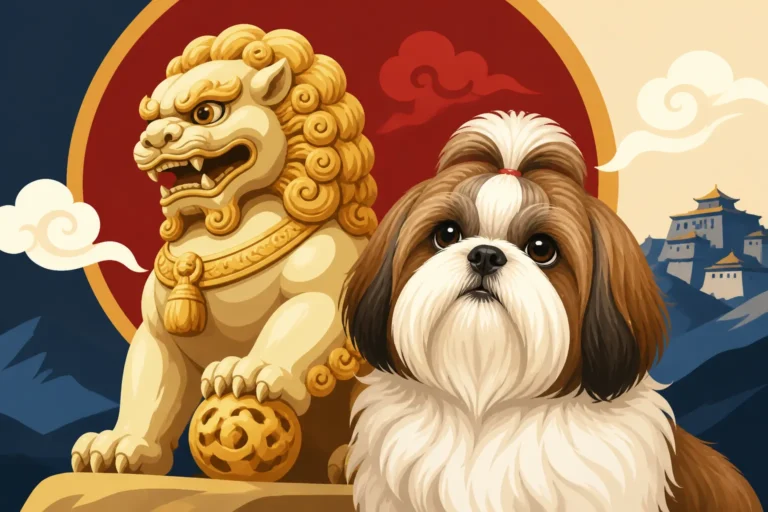
How Shih Tzu Breeding Scattered After 1908
The sudden scattering of Shih Tzu breeding after the death of Empress Dowager Cixi in 1908 left the breed's future uncertain, marking a tumultuous period where these cherished imperial dogs faced the loss of their protected status. This guide will explore the dramatic circumstances that led to the dispersal of the imperial kennels and how these resilient little lion dogs managed to survive and eventually thrive, largely due to the efforts of those outside the Forbidden City walls. Understanding this pivotal moment helps us appreciate the fragility of breed lines and the dedicated individuals who ensured the Shih Tzu's enduring legacy.
The Imperial Kennel: A Legacy on the Brink (Pre-1908 Context)
Before the upheaval, the Shih Tzu was an almost exclusively imperial breed, meticulously maintained within the Forbidden City. These were not just pets; they were living treasures, steeped in cultural and spiritual significance, descendants of dogs gifted from Tibet and further refined in the Chinese imperial court. The very survival of the breed depended on the stability and devotion of its patrons within these privileged walls.
Dowager Empress Cixi's Dedicated Breeding Program
The undisputed patron of the Shih Tzu breed during the late 19th and early 20th centuries was Empress Dowager Cixi. Her passion for these "lion dogs" was legendary, and she presided over an elaborate and highly organized breeding program within the Forbidden City. Under her direct supervision, a dedicated staff of eunuchs, often referred to as "dog masters," was tasked with every aspect of their care, breeding, and even daily rituals. The level of detail and documentation involved was astonishing, with records of lineage, temperament, and health meticulously kept. It was a sophisticated operation aimed at perfecting the breed according to imperial ideals, preserving its unique characteristics and ensuring its continuity. You can learn more about her crucial role in The Empress Who Bred Shih Tzus in the Forbidden City.
The imperial kennels were a world unto themselves, reflecting the empress's specific aesthetic preferences and spiritual beliefs. Each dog was treated with immense reverence, fed the finest foods, and often accompanied by a personal servant. The breeding efforts focused on producing dogs that embodied specific traits: the signature chrysanthemum face, the luxurious flowing coat, and a charming, companionable demeanor. This intense, isolated breeding program, while preserving the breed's purity, also meant that the Shih Tzu's existence was intrinsically tied to the empress and the imperial court itself. As you might imagine, the eunuchs who tended to these precious dogs played a vital, if often overlooked, role, as discussed in What Eunuchs Did in the Imperial Dog Kennels.
The Exclusive World of the Forbidden City Shih Tzu
For centuries, the Shih Tzu remained largely a secret to the outside world, thriving only within the privileged confines of the Chinese imperial court. These dogs were symbols of luxury, status, and sometimes even believed to be carriers of imperial souls. They were companions to emperors, empresses, and high-ranking nobility, rarely seen by commoners, let alone foreigners. Their unique appearance, particularly their long, flowing coats and distinctive faces, made them stand out, further solidifying their place as living works of art within the palace. The entire environment was tailored to their well-being and the display of their beauty.
The care regime for these dogs was extraordinary. Their coats were meticulously groomed, their diets carefully managed, and their living quarters luxurious. This constant attention ensured that the breed developed and maintained its characteristic traits without external influence. The Shih Tzu's very identity was forged in this exclusive, protective bubble. When you consider the deep cultural roots of these dogs, their presence in The Shih Tzu in the Qing Imperial Court was far more than just decorative; it was symbolic of imperial power and mystique. The breed's beauty and gentle nature were highly valued, making them cherished members of the household, rather than working animals.
The Collapse and Dispersal: A Turbulent Aftermath
The year 1908 marked a devastating turning point for the Shih Tzu. With the death of Empress Dowager Cixi, the very foundation of the imperial breeding program crumbled, plunging the breed into an uncertain future. The intricate system that had protected and perfected these dogs for generations suddenly vanished, leaving them vulnerable to the political chaos and shifting tides of Chinese society.
The Death of Empress Cixi and Its Immediate Impact
When Empress Cixi passed away in November 1908, it wasn't just the loss of a powerful ruler; it was the end of an era for the imperial court and, by extension, for the Shih Tzus under her care. There was no successor with the same deep affection or unwavering commitment to the breed, nor the vast resources to maintain the elaborate kennels. The political landscape of China was already volatile, and the imperial system itself was on the brink of collapse, making the welfare of a beloved canine breed a low priority. The infrastructure, the dedicated eunuchs, the meticulous records – all were suddenly without central direction or funding.
In the ensuing chaos and instability, the imperial kennels were left to fend for themselves. The dogs, once pampered and protected, became potential burdens or, conversely, valuable commodities for those looking to profit from the declining empire. Many were likely neglected, while others were simply taken by former palace staff or opportunists. This period represents a truly critical moment for the Shih Tzu, a time when its very existence hung precariously in the balance. It's a stark reminder of how quickly even the most cherished traditions can unravel when their foundational support is removed, a topic also covered in What Happened to the Breed After 1908.
The Dogs Scattered: A Fight for Survival
The scattering of the Shih Tzus after Cixi's death was a desperate struggle for survival. Without the imperial structure to sustain them, many dogs were likely abandoned or died due to neglect. Those who survived were taken by various individuals – some by loyal eunuchs who truly loved them, others by officials, and undoubtedly, some simply by people seeking to salvage what they could from the disintegrating palace. The quality of care these dogs received would have varied enormously, from continued affection to outright neglect or exploitation. This period was marked by a complete lack of oversight, meaning breeding became haphazard and unrecorded.
Imagine these once-regal dogs, accustomed to a life of luxury, suddenly finding themselves in vastly different circumstances. Some might have ended up in bustling marketplaces, others in quiet homes, their imperial lineage largely forgotten or simply not understood by their new keepers. This indiscriminate dispersal led to a dilution of the purebred lines that Cixi had so carefully cultivated. Many of these dogs would have been bred with other small local dogs, losing their distinct Shih Tzu characteristics. The period was a genetic free-for-all, making the task of later breeders to reconstruct the breed even more challenging. It was a true testament to the breed's resilience that any pure lines managed to persist through such a turbulent time.
Foreigners and the Preservation of the Breed
While the internal political turmoil threatened the very existence of the Shih Tzu in its homeland, an unlikely group of saviors emerged: foreign diplomats, military personnel, and travelers stationed in Peking (now Beijing). These individuals, captivated by the breed's charm and exotic beauty, would play a crucial role in safeguarding its future.
The Arrival of Westerners and Their Fascination
In the early 20th century, as China underwent significant political and social upheaval, a growing number of Westerners were present in Peking. These included diplomats, military attachés, and their families, many of whom had access to the fringes of the former imperial court or had contact with individuals who had acquired dogs from the scattered kennels. They were instantly captivated by the Shih Tzu – its distinctive appearance, lively personality, and undeniable regal bearing, which hinted at its imperial past. For many, acquiring a Shih Tzu was not just about getting a pet; it was about holding a piece of a fading, majestic culture in their hands.
These dogs often changed hands through various means, sometimes as official gifts from declining Chinese nobility, other times through less formal transactions involving former eunuchs or palace staff. The mystique surrounding these "lion dogs" only added to their allure for Westerners who recognized their unique beauty and historical significance. It was this fascination, this recognition of their special nature by individuals outside the Chinese cultural context, that began the slow process of moving the Shih Tzu out of immediate danger and onto the world stage. Their curiosity, combined with the chaotic situation in China, created a narrow window of opportunity for the breed's survival.
Smuggling and Export: The Breed's Journey Westward
As the political situation in China continued to deteriorate, many foreigners recognized the precarious position of these beautiful dogs. Realizing that the breed's future was uncertain in its homeland, they began the arduous process of exporting Shih Tzus to their home countries. This was often not a straightforward process; sometimes it involved what could be described as "smuggling" – discreetly moving dogs out of the country, avoiding official channels that might prohibit their removal. It was a testament to the dedication of these early enthusiasts that they undertook such efforts to preserve the breed.
The journey itself was fraught with challenges. Transporting delicate, long-haired toy dogs across continents in the early 20th century was no small feat. Long voyages by ship, often with limited knowledge of proper canine care, meant that only the hardiest individuals survived the trip. Despite these difficulties, several individuals successfully brought Shih Tzus to Europe, particularly to England and Norway. These few surviving dogs became the foundation stock for the entire Western Shih Tzu population. Their arrival marked the beginning of dedicated breeding efforts in the West, where enthusiasts began to study, record, and actively promote the breed. You can trace some of these initial steps in Shih Tzus Smuggled Out of China and read about their establishment in Europe in The First Shih Tzus in England and Norway. The story of How the Shih Tzu Reached the West is truly a tale of perseverance.
The Legacy of Dispersal: A Narrow Genetic Foundation
The scattering of the imperial Shih Tzus, while ensuring the breed's survival, also left a profound and lasting impact on its genetic makeup. The immediate consequence was the creation of a very small foundational gene pool, a factor that continues to influence the breed's health and characteristics even today.
The Small Number of Founding Dogs
When we talk about the Shih Tzu population outside of China, it’s crucial to understand that it originated from an incredibly small number of individuals who made it out of the chaotic post-imperial era. Experts believe that the entire Western Shih Tzu population, which forms the basis for virtually all Shih Tzus around the world today, can be traced back to just a handful of dogs—possibly as few as fourteen, including a male and thirteen females. This tiny group represents a severe genetic bottleneck. While these dogs carried the precious imperial bloodlines, their limited number meant a significantly reduced genetic diversity compared to what would exist in a large, unconstrained population. This situation is further elaborated upon in The Small Founding Group Behind Every Shih Tzu and How Fourteen Dogs Rebuilt the Shih Tzu.
This narrow genetic foundation has both positive and negative implications. On the one hand, it allowed dedicated breeders to quickly establish a recognizable and consistent breed type, focusing on the desired characteristics of the imperial Shih Tzu. On the other hand, it means that many modern Shih Tzus are quite closely related, increasing the potential for certain hereditary health conditions to become more prevalent within the breed. It underscores the immense responsibility of ethical breeders to screen for these conditions and work to maintain what genetic diversity they can within the established lines. Understanding this history is vital for appreciating the breed's journey from near extinction to global popularity.
Rebuilding Efforts and the Road to Recognition
Once these precious few Shih Tzus reached Western shores, a dedicated community of enthusiasts took on the monumental task of rebuilding and stabilizing the breed. This wasn't just about breeding dogs; it was about carefully documenting lineages, establishing breed standards, and advocating for their recognition by major kennel clubs. These pioneers faced significant challenges, including the scarcity of breeding stock and the need to differentiate the Shih Tzu from similar Tibetan breeds like the Lhasa Apso, which were also making their way to the West at the time. Their efforts were driven by a deep admiration for the breed and a commitment to preserving its unique heritage, a testament to the dedication involved when The Shih Tzu Believed Extinct in China After 1949.
The process involved meticulous record-keeping, selective breeding to refine and stabilize physical traits, and extensive networking among the few owners and breeders. Gradually, as more dogs were successfully bred and litters were produced, the breed began to find its footing. National breed clubs were formed, dedicated to the promotion and protection of the Shih Tzu. These clubs played a vital role in formalizing the breed standard, which detailed the ideal appearance, temperament, and structure of the Shih Tzu, ensuring consistency. Eventually, these tireless efforts culminated in official recognition by major kennel clubs, such as the American Kennel Club (AKC) in 1969, marking a new chapter for the Shih Tzu as a beloved and recognized companion breed across the globe, as seen in AKC Recognition of the Shih Tzu in 1969. The journey of the Shih Tzu from the imperial palace to The Shih Tzu From Tibetan Temples to American Homes is truly remarkable.
A Timeline of Shih Tzu Dispersal and Preservation
Here's a brief overview of the key events related to the scattering and subsequent preservation of the Shih Tzu breed:
| Year/Period | Event | Impact on Shih Tzu Breeding |
|---|---|---|
| Pre-1908 | Imperial Kennels under Dowager Empress Cixi | Centralized, highly controlled, and documented breeding |
| November 1908 | Death of Empress Dowager Cixi | Loss of primary patron, beginning of imperial kennel dissolution |
| Post-1908 | Political instability and collapse of Qing Dynasty | Dispersal of dogs, indiscriminate breeding, loss of records |
| Early 1900s – 1930s | Foreigners acquire and export Shih Tzus from China | Breed's physical survival outside of China begins |
| 1930s | First breed clubs established in Europe (e.g., England, Norway) | Formalized breeding efforts begin, establishment of standards |
| Mid-20th Century | Continued breeding efforts; few founding dogs form Western lines | Genetic bottleneck created, shaping modern Shih Tzu population |
| 1969 | AKC (American Kennel Club) recognizes the Shih Tzu as a distinct breed | Breed gains widespread popularity and formal status in the US |
Disclaimer
This article is for general informational purposes only and does not constitute professional advice. Laws, prices and regulations vary by location and change over time. Consult a qualified professional for guidance on your specific situation.