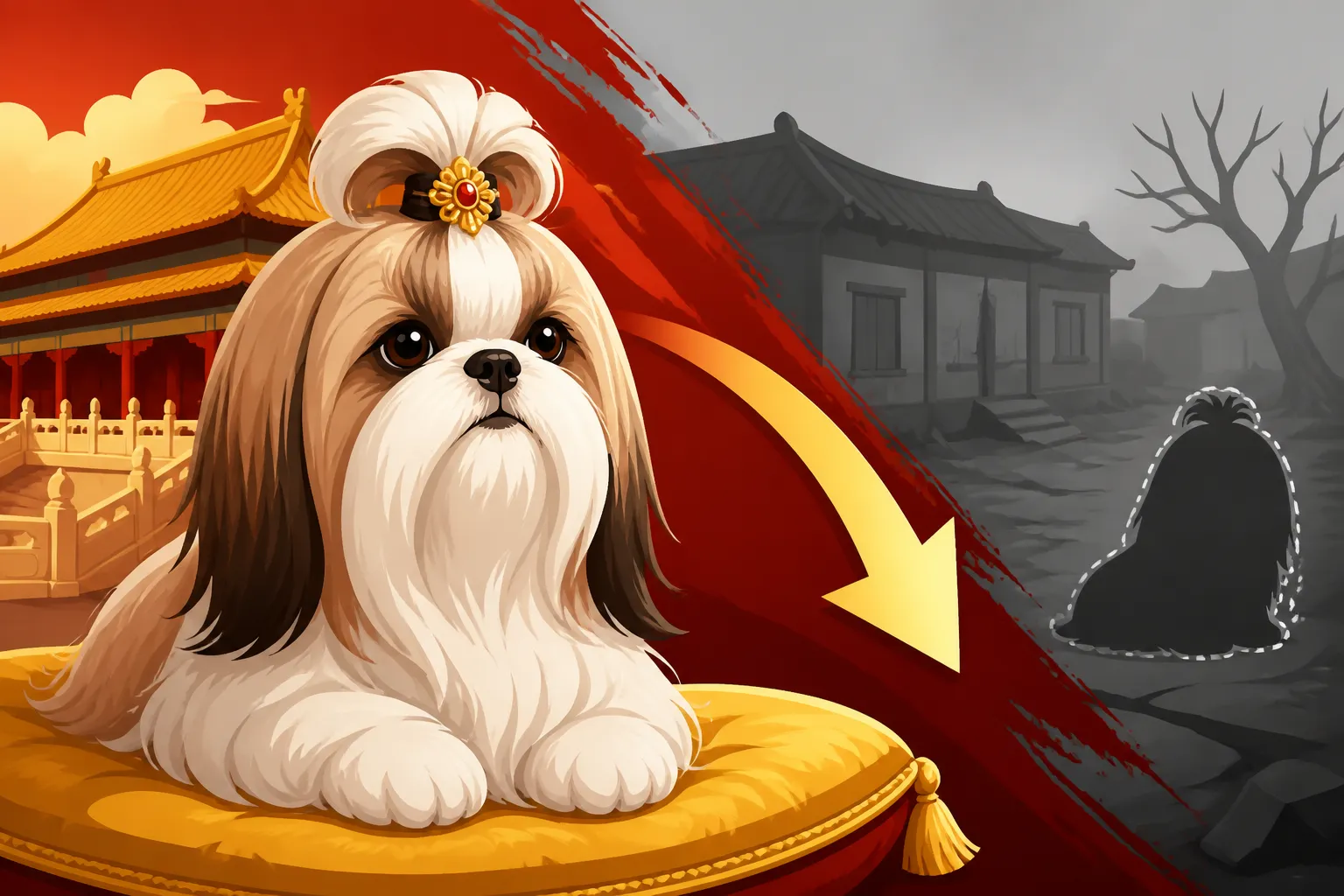
Why the Breed Vanished in China After 1949
It's a really heartbreaking thing to consider, but the beloved Shih Tzu, a breed so deeply intertwined with China's imperial past, practically vanished from its homeland after 1949. For owners and enthusiasts who cherish these fluffy companions today, it’s a stark reminder of how much political and societal upheaval can impact even the most treasured aspects of culture. This guide will explore the complex historical, political, and cultural reasons why this ancient and cherished breed all but disappeared in the very country that birthed it.
The Imperial Origins and Fragile Existence
To truly understand why the Shih Tzu disappeared from China, we first need to appreciate its unique place in Chinese history. These weren't just common street dogs; they were symbols of prestige, luxury, and spiritual significance, almost exclusively confined to the imperial court.
Imperial Privilege and Palace Life
For centuries, the Shih Tzu and its ancestors were bred within the opulent walls of the Forbidden City and other imperial palaces. They were the pampered companions of emperors, empresses, and high-ranking nobility, often referred to as "Lion Dogs" or "Chrysanthemum Dogs." The Shih Tzu From Tibetan Temples to American Homes details this rich heritage. These dogs lived a life of extraordinary privilege, attended by eunuchs, fed the finest foods, and often celebrated in art and poetry. Empress Dowager Cixi, in particular, was famously devoted to her Shih Tzus, even having eunuchs dedicated solely to their care and breeding. You can read more about her influence in Dowager Empress Cixi and Her Shih Tzu Kennel. This deep connection to the imperial family was a double-edged sword: it ensured their survival and refinement for centuries, but it also made them inextricably linked to a specific, soon-to-be-outdated power structure. They were, in essence, living symbols of a bygone era.
The Fall of the Qing Dynasty and Early 20th Century Dispersal
The collapse of the Qing Dynasty in 1912 marked the beginning of the end for the Shih Tzu's exclusive palace life. With the imperial court dismantled, many of these dogs were no longer protected within the Forbidden City. Some were tragically lost, some fell into the hands of ordinary citizens (who were largely unprepared for their demanding care), and a precious few were taken out of China by foreign visitors and diplomats. What Happened to the Breed After 1908 explores this pivotal period. This initial dispersal was a slow erosion, but it was nothing compared to the cataclysm that was to come. Without the structured breeding programs and dedicated care of the imperial kennels, the breed's numbers dwindled within China itself, becoming a rare sight even before the mid-century.
Mid-20th Century Upheaval and Cultural Shifts
The early to mid-20th century in China was a period of immense turmoil, marked by relentless conflict and radical societal transformation. These events had a devastating impact on many aspects of Chinese life, including the fate of its indigenous dog breeds.
The Chinese Civil War and World War II
From the 1930s through the 1940s, China was ravaged first by the Second Sino-Japanese War (part of World War II) and then by a brutal Civil War. These conflicts brought widespread destruction, famine, and displacement. When people are struggling simply to survive, feed their families, and find shelter, the luxury of owning a pet, especially one as high-maintenance as a Shih Tzu, becomes unthinkable. Food, resources, and even space were scarce. Many pets would have been abandoned, fallen victim to starvation, or even been consumed out of desperation. The infrastructure for breeding, showing, or even simply caring for a companion animal crumbled under the weight of national crisis. It wasn't just the Shih Tzu; many traditional Chinese breeds faced similar existential threats during this tumultuous time.
The Communist Revolution and Cultural Shift
The Communist victory in 1949 and the establishment of the People's Republic of China brought about a profound ideological shift. The new government aimed to dismantle the old feudal and imperial structures, promoting a society based on collectivism and revolutionary ideals. Anything associated with the "bourgeois" or "decadent" lifestyle of the former ruling classes was viewed with suspicion, if not outright hostility. Pets, particularly pampered lapdogs like the Shih Tzu, were seen as symbols of extravagance and unproductive consumption.
Consider the prevailing mindset: in a society striving for equality and national strength through labor and self-sacrifice, keeping a dog purely for companionship – and a dog that required significant grooming, special food, and dedicated attention at that – ran entirely counter to the new ethos. It was a societal judgment, a silent pressure to conform that meant many pet owners chose to part with their animals rather than face social censure or worse.
The Great Leap Forward and Cultural Revolution: The Final Blow
While the initial cultural shifts were significant, it was the subsequent political campaigns of the Great Leap Forward and, especially, the Cultural Revolution that delivered the final, crushing blow to the Shih Tzu population within China.
Suppression of Bourgeois Lifestyles
The Cultural Revolution (1966-1976) was a particularly brutal period aimed at purging traditional and capitalist elements from Chinese society. Red Guards, often zealous young people, were mobilized to destroy the "Four Olds": Old Customs, Old Culture, Old Habits, and Old Ideas. Owning a pet, particularly a breed historically linked to the imperial court, was explicitly labeled a "bourgeois" pastime. It wasn't just frowned upon; it could be dangerous.
Individuals found with pets could be publicly shamed, their animals confiscated, or even worse, face accusations of being "counter-revolutionaries." The sight of a fluffy, decorative dog was considered an affront to revolutionary purity. Imagine the fear: a family might have deeply loved their Shih Tzu, but the risk of keeping it far outweighed the joy. Homes were raided, possessions deemed "bourgeois" were destroyed, and any lingering ties to the old ways were systematically severed. In this climate, to protect themselves and their families, many people made the agonizing decision to let their pets go.
Practical Challenges and Survival
Beyond ideology, there were stark practical realities. The Great Leap Forward (1958-1962), a disastrous economic and social campaign, led to widespread famine and incredible hardship. Millions perished due to starvation, and food shortages were endemic. In such dire circumstances, there was simply no way to feed a pet. Any available food was for human survival. The idea of dedicating scarce resources to an animal, particularly one that wasn't a working dog (like a guard dog or herding dog, which also faced challenges but sometimes had a perceived utility), was unimaginable and impractical.
Here's a comparison of how different periods impacted pet ownership:
| Period | Societal Context | Impact on Pet Ownership (especially Shih Tzus) |
|---|---|---|
| Imperial Era (Pre-1912) | Palace luxury, status symbol, spiritual reverence | Protected, pampered, highly valued, exclusive to nobility. |
| Early Republic (1912-1949) | Political instability, limited infrastructure | Dispersal from palaces, decline in numbers, few taken abroad. |
| Civil War/WWII (1930s-1940s) | Widespread conflict, famine, survival focus | Mass abandonment, starvation, focus on human survival. |
| Post-1949 Communist Era | Ideological shift, collectivism, anti-bourgeois | Pets seen as luxury/decadence, owners faced social pressure and censure. |
| Cultural Revolution (1966-1976) | Extreme ideological purge, destruction of "Olds" | Active persecution of pet owners, confiscation/killing of pets, breed near extinction. |
It was a perfect storm of ideological condemnation and absolute practical impossibility that led to the breed's near total eradication within China. No systematic extermination program was specifically aimed at Shih Tzus, but the relentless pressure against anything deemed "bourgeois" and the sheer struggle for survival ensured their demise.
The Breed's Legacy and Reintroduction
Despite the grim reality within China, the Shih Tzu did not disappear entirely from the world. Its survival is a testament to the foresight and love of a few individuals who managed to bring these precious dogs out of the country before the political changes sealed their fate.
The Small Founding Group Behind Every Shih Tzu
The Shih Tzus that exist today in homes around the globe are descended from a remarkably small gene pool. The Small Founding Group Behind Every Shih Tzu highlights that just fourteen dogs (seven males and seven females) are believed to be the foundation stock for virtually every modern Shih Tzu. These were the dogs that were either gifted to Westerners, bought by diplomats, or, in some rare cases, Shih Tzus Smuggled Out of China during the early 20th century, primarily before the mid-1940s. These few individuals, taken to countries like England, Norway, and later America, were the genetic lifeline of the entire breed. Without them, the Shih Tzu might indeed be nothing more than a historical footnote, seen only in ancient paintings.
Breeders in the West meticulously worked to preserve and grow the population, focusing on healthy lines and maintaining the distinct characteristics of the breed. It was a slow, dedicated effort to ensure that the beauty and charm of these "Lion Dogs" would not be lost forever. How Fourteen Dogs Rebuilt the Shih Tzu really delves into this incredible story of preservation and dedication.
Modern-Day Shih Tzus in China and Worldwide
Today, the Shih Tzu has, in a sense, made a quiet return to China. With economic reforms and a relaxing of stringent ideological controls, pet ownership has seen a resurgence in many Chinese cities. People are once again discovering the joy of companionship, and breeds like the Shih Tzu, once banned or condemned, are making their way back into homes, often imported from Western breeding lines.
Globally, the Shih Tzu thrives. They are beloved companions, known for their affectionate nature and charming personalities, and their Shih Tzu Popularity in the AKC Toy Group speaks volumes about their widespread appeal. You'll find them on Chewy and other pet supply sites, adorned with all sorts of grooming accessories, special diets, and cozy beds – a far cry from the bare existence many would have faced during the Cultural Revolution. However, this return is not without its echoes of the past; the breed's history serves as a poignant reminder of its resilience and the profound impact of human events on even the smallest of lives. The Shih Tzu's journey from imperial palace to near extinction in its homeland, and then to global popularity, is a truly remarkable tale.
Disclaimer
This article is for general informational purposes only and does not constitute professional advice. Laws, prices and regulations vary by location and change over time. Consult a qualified professional for guidance on your specific situation.