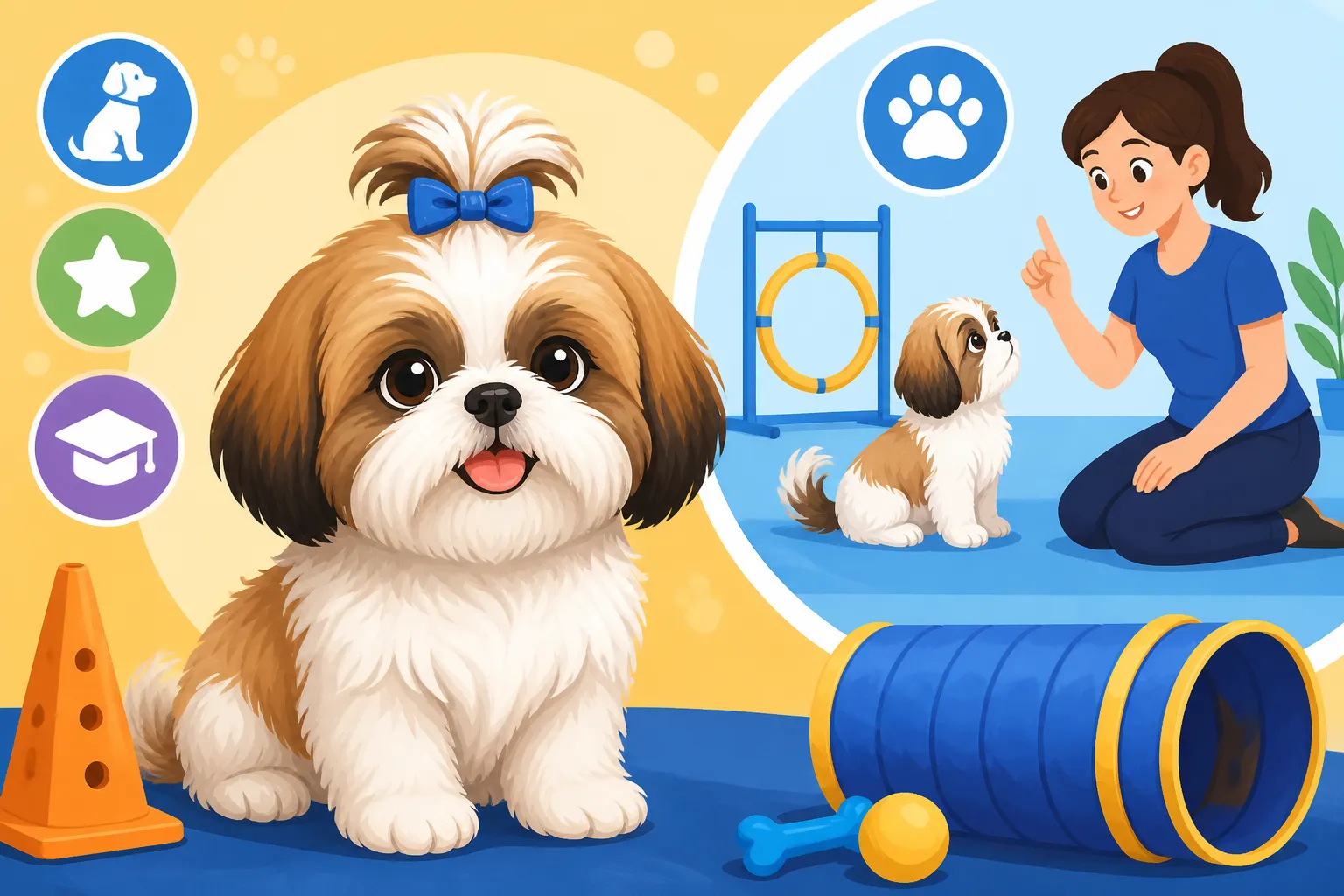
Puppy Classes That Suit a Shih Tzu
Bringing home a tiny Shih Tzu puppy is an absolute joy, but it can also bring a lot of questions, especially when it comes to training. Many new owners wonder if typical puppy classes, often filled with rambunctious bigger breeds, are really the right fit for their delicate little lion dog. This guide will walk you through what kind of puppy classes truly suit a Shih Tzu, ensuring they get the socialization and training they need without being overwhelmed.
Why Puppy Classes Matter for a Shih Tzu, Despite Their Size
It’s easy to look at a fluffy, adorable Shih Tzu puppy and think they just need cuddles and gentle play at home. But overlooking formal puppy training can set your little one up for challenges down the road. Puppy classes aren't just about teaching "sit" and "stay"; they're crucial for developing a well-adjusted, confident adult dog.
Early Socialization and Exposure to the World
One of the biggest benefits of puppy class for a Shih Tzu is early, controlled socialization. You might worry about your tiny pup being trampled by a Labrador puppy, and that's a very valid concern! However, the alternative—keeping them isolated—can lead to a fearful or reactive dog. Puppyhood is a critical window for your Shih Tzu to safely experience new sights, sounds, people, and, most importantly, other dogs of various sizes and temperaments.
Think about it: your Shih Tzu will encounter all sorts of things in their life, from the loud rumble of a vacuum cleaner to the boisterous enthusiasm of a child, or the looming presence of a larger dog on a walk. A good puppy class provides a structured environment where these experiences can be positive, building resilience instead of fear. The goal isn't just to make them love every dog, but to teach them polite manners and to be comfortable and calm in different situations. This exposure, done correctly, helps prevent common anxieties and fear-based aggression that can unfortunately develop in undersocialized small breeds. Remember, there's a The Shih Tzu Socialization Deadline that's crucial to hit during their early months.
Building Confidence and Life Skills
Beyond just social graces, puppy classes are fundamental for building your Shih Tzu's confidence. In a supportive class environment, they learn problem-solving skills, how to focus amidst distractions, and gain a sense of accomplishment. These aren't just obedience commands; they are life skills. For example, learning to "stay" with other puppies around helps them develop impulse control. Learning to walk politely on a leash in a distracting environment prepares them for real-world walks.
Instructors in these classes often incorporate fun exercises that build body awareness and coordination, which is important for any dog, especially one with a longer back like a Shih Tzu. These early lessons empower your Shih Tzu to navigate the world with a calm, curious demeanor rather than a fearful or overly excitable one. It helps prevent them from becoming the kind of dog that barks incessantly at strangers or nips out of fear. A confident Shih Tzu is a joy to live with, and these classes lay that groundwork.
Strengthening the Bond with Your Tiny Companion
Training your Shih Tzu is a partnership, and puppy classes are an excellent way to deepen that bond. When you work together as a team, celebrating successes and navigating challenges, you build a foundation of trust and understanding. It's not just your puppy learning; you're learning how to communicate effectively with them, how to motivate them, and how to read their body language.
Using positive reinforcement, as most good puppy classes do, makes training a fun game for both of you. It's about rewards and praise, not punishment, which is vital for a sensitive breed like the Shih Tzu. This shared experience fosters a stronger, more loving relationship, making your Shih Tzu more eager to please and more attuned to your cues. It’s also an opportunity for you to ask questions and get expert advice on common puppy challenges like nipping, house training, or dealing with separation anxiety.
What to Look For in a Shih Tzu-Friendly Puppy Class
Knowing that puppy classes are beneficial is one thing; finding the right one for your Shih Tzu is another. Not all classes are created equal, and what works for a Golden Retriever might not be ideal for a delicate Shih Tzu.
Small Class Sizes and Toy-Breed Specific Options
This is probably the most critical factor for Shih Tzu owners. A class packed with large, boisterous breeds can be terrifying and potentially dangerous for your small puppy. Imagine your little fluffball trying to keep up with a rambunctious Boxer pup during playtime! Look for classes that explicitly state small class sizes—ideally no more than 4-6 puppies—to ensure individual attention and a less overwhelming environment.
Even better, some training facilities offer "small breed" or "toy breed" specific puppy classes. These are gold! In such a setting, your Shih Tzu can socialize with other dogs of a similar size, learning appropriate play without the risk of accidental injury. If a dedicated small breed class isn't available, ask about designated "small dog playtimes" during a general class, or if instructors actively manage play to prevent any one puppy from being overwhelmed. It's about ensuring positive interactions, not just any interactions. Knowing how to facilitate Shih Tzu Play Style With Bigger Dogs is key for the instructor.
Positive Reinforcement and Gentle Handling Methods
For a Shih Tzu, a breed known for its sensitive nature and desire to please, positive reinforcement is not just preferred, it's essential. Any class that uses harsh corrections, scolding, or intimidating methods should be avoided at all costs. These tactics can be incredibly damaging to a Shih Tzu's confidence, making them fearful, shut down, or even reactive.
A good puppy class will focus on reward-based training, using treats, praise, and toys to encourage desired behaviors. Instructors should teach you how to motivate your Shih Tzu effectively. This might involve clicker training, which many Shih Tzus absolutely thrive on because it clearly marks the desired behavior. They learn that good things happen when they do what you ask, making training a joyful experience. Understanding Why Harsh Corrections Shut a Shih Tzu Down is paramount for any trainer working with this breed.
Qualified, Empathetic Instructors
The instructor is the heart of any puppy class. For a Shih Tzu, you need someone who not only understands dog behavior but also has specific knowledge of toy breeds and brachycephalic (flat-faced) dogs. This means they should be aware of a Shih Tzu's physical limitations, such as their susceptibility to overheating or potential breathing difficulties during energetic play. They should prioritize your puppy's comfort and safety above all else.
Look for instructors with recognized certifications (e.g., CPDT-KA, KPA-CTP) which indicate professional competence and adherence to ethical, humane training practices. An empathetic instructor will observe each puppy individually, adapting exercises as needed, and will never force a shy puppy into an uncomfortable situation. They should be excellent communicators, patiently explaining techniques and offering constructive feedback. Don't be afraid to interview potential trainers or observe a class beforehand. You are looking for someone who can help your Shih Tzu thrive, and Finding a Trainer Who Understands Toy Breeds is critical.
Here’s a quick comparison of what to look for and what to avoid:
| Feature | Shih Tzu-Friendly Class (Seek Out) | Unsuitable Class (Avoid) |
|---|---|---|
| Class Size | Small (4-6 puppies), often toy-breed specific | Large (8+ puppies), mixed sizes without separation |
| Training Methods | Positive reinforcement, clicker training, treats, praise | Harsh corrections, leash jerks, scolding, dominance theory |
| Instructor Approach | Certified, experienced with toy breeds, empathetic, observant, patient | No formal certification, generic approach, pushes puppies to interact |
| Playtime Management | Supervised, gentle play, size-matched groups, breaks for resting | Uncontrolled free-for-all, larger dogs overwhelming smaller ones |
| Environment | Calm, clean, climate-controlled, safe surfaces | Overly noisy, chaotic, slippery floors, potential hazards |
| Focus | Building confidence, positive associations, owner education | Strict obedience, competitive, ignores individual puppy needs |
Preparing Your Shih Tzu for Success in Puppy Class
Even with the perfect class, your Shih Tzu needs a little preparation from you to get the most out of the experience. A bit of foresight can make all the difference for a smooth and positive first day.
Health and Grooming Preparations
Before enrolling in any group class, ensure your Shih Tzu puppy is up to date on all their necessary vaccinations, especially their distemper/parvovirus series and kennel cough (Bordetella). Most reputable facilities will require proof of vaccination for the safety of all puppies. They also need to be on a good parasite prevention program. Discuss this with your vet to make sure your pup is fully protected before mixing with other dogs. This ensures your puppy is ready for Shih Tzu Vaccination and Toy Breed Reactions.
Beyond health, a little grooming prep goes a long way. Your Shih Tzu will be handled by the instructor, and possibly by other friendly students. Get them used to having their paws touched, ears checked, and generally being gently examined. Practice short brushing sessions. If their face fur is long, tie it up in a temporary topknot or use a soft clip so they can see clearly and aren't distracted by hair in their eyes. This makes the experience less stressful for everyone involved.
Gear and Goodies for Class
You'll need a few essential items for class:
- Harness, not a collar: A comfortable, well-fitting harness is crucial for a Shih Tzu. Collars can put pressure on their delicate necks and airways, especially for a brachycephalic breed, and are not recommended for leash training. A front-clip harness can also help gently guide your puppy without strain. You can find a wide range of suitable options on Amazon.
- Plenty of high-value treats: Bring a variety of small, soft, irresistible treats. Think tiny pieces of cooked chicken, cheese, or specialized training treats. These should be easily swallowed and highly motivating. For training, size really matters – you want them small enough that your Shih Tzu can eat them quickly without getting full or distracted. Consider Treats Small Enough for a Shih Tzu Session.
- A comfy mat or bed: This provides a designated "safe space" for your Shih Tzu during breaks or when you're listening to the instructor. It teaches them to settle down in a new environment, a valuable skill!
- Water and a portable bowl: Keep your Shih Tzu hydrated, especially if the class involves active play.
- Poop bags and paper towels: Accidents happen, especially with puppies. Be prepared.
Managing Expectations and Consistency at Home
Puppy class is an amazing tool, but it's just the beginning of your training journey. Don't expect your Shih Tzu to be perfectly behaved after just a few sessions. Consistency is key! The techniques and concepts you learn in class need to be practiced daily at home in short, frequent bursts. Think of Five Minute Sessions With a Shih Tzu throughout the day rather than one long, arduous session.
The class teaches you how to train; it's up to you to implement it. Embrace the learning process, be patient with your puppy (and yourself!), and celebrate every small success. If you feel like you need extra help between classes, or want to continue training once the course is over, online resources like BAXTER & Bella offer virtual training programs and support that can be incredibly helpful for maintaining consistency and learning new skills from the comfort of your home. They provide structured lessons you can follow at your own pace.
Common Concerns and How to Address Them
It’s normal to have worries when taking your Shih Tzu to a new environment like a puppy class. Let's tackle some common concerns that owners often face.
Overwhelmed or Shy Shih Tzus
Some Shih Tzus are naturally more outgoing, while others are a bit more reserved or easily overwhelmed. If your puppy is shy, tucking behind your legs, or showing signs of stress (lip licking, yawning excessively, trying to hide), it’s crucial not to force interactions. A good instructor will respect this and guide you on how to make the experience positive without pushing your pup too far.
Strategies include:
- Creating a safe zone: Let your Shih Tzu stay on their mat or in their carrier for observation during parts of the class.
- Controlled introductions: Instead of a free-for-all, arrange for one-on-one, calm introductions with another equally calm puppy.
- Focus on individual skills: Prioritize teaching them "sit," "stay," and "look at me" exercises, rewarding them heavily for focus on you, even if they're not actively playing with others.
- Advocate for your dog: Don't hesitate to tell the instructor if you feel your Shih Tzu is getting too stressed. Their comfort and safety are paramount.
The goal is to build positive associations, not create traumatic ones. For some Shih Tzus, simply being in the same room as other dogs and people, observing quietly and getting treats, is socialization enough at first.
Managing the "Crazy" Puppy Energy
While Shih Tzus are not typically high-energy dogs, puppies, regardless of breed, have bursts of zoomies and excitement. Your Shih Tzu might get overstimulated in class, leading to excited barking, nipping, or trying to jump on other puppies. This is normal puppy behavior, but it needs to be managed.
Here's how to handle it:
- Short breaks: If your Shih Tzu gets too wound up, take a short "time out" on their mat or in a quiet corner until they settle.
- Redirection: If they're nipping, redirect their attention to a suitable chew toy. Remember, teaching a Shih Tzu appropriate play includes Swapping a Shih Tzu Puppy Onto a Chew Toy.
- Calm exercises: Incorporate calm settling exercises into the class, such as "down" or "stay" on a mat, rewarding them for stillness.
- Consistent routine: Ensure your Shih Tzu is well-exercised (a short walk or indoor play before class) and has had a potty break, but not so tired they're cranky.
An experienced instructor will have strategies for managing a room full of puppies and will help you learn how to handle these bursts of energy effectively.
Continuing Education After Puppy Class
Completing puppy class is a fantastic achievement, but it's just the tip of the iceberg! Training is an ongoing process that benefits both you and your Shih Tzu throughout their life. Many owners stop after basic manners, but there's so much more your Shih Tzu can learn and enjoy.
Consider these options for continuing your Shih Tzu's education:
- Basic Manners II/Adolescent classes: These classes build upon the foundation learned in puppy class, introducing more advanced cues, greater distractions, and refining existing behaviors.
- Trick training: Shih Tzus love to learn, and trick training is a fantastic way to engage their minds and strengthen your bond. Teaching them "wave," "spin," or "bow" can be incredibly fun indoors. Consider Tricks Worth Teaching a Shih Tzu Indoors.
- Canine Good Citizen (CGC) prep: This program is designed to reward dogs who have good manners at home and in the community. It's a great goal for any well-adjusted Shih Tzu.
- Therapy dog work: With their gentle nature and love for people, many Shih Tzus excel as therapy dogs. Once they're well-socialized and have good manners, this can be a wonderfully rewarding path for both of you. It showcases why Shih Tzus Working as Therapy Visitors are so special.
- Online resources: Platforms like BAXTER & Bella offer a wealth of knowledge and structured courses, allowing you to continue training at home, addressing specific behavioral issues, or just having fun with new challenges.
Ultimately, puppy classes are an invaluable investment in your Shih Tzu's future, provided you choose the right environment and commit to the ongoing journey of training and socialization.
Disclaimer
This article is for general informational purposes only and does not constitute professional advice. Laws, prices and regulations vary by location and change over time. Consult a qualified professional for guidance on your specific situation.