A Shih Tzu and a Toddler in the Same Room
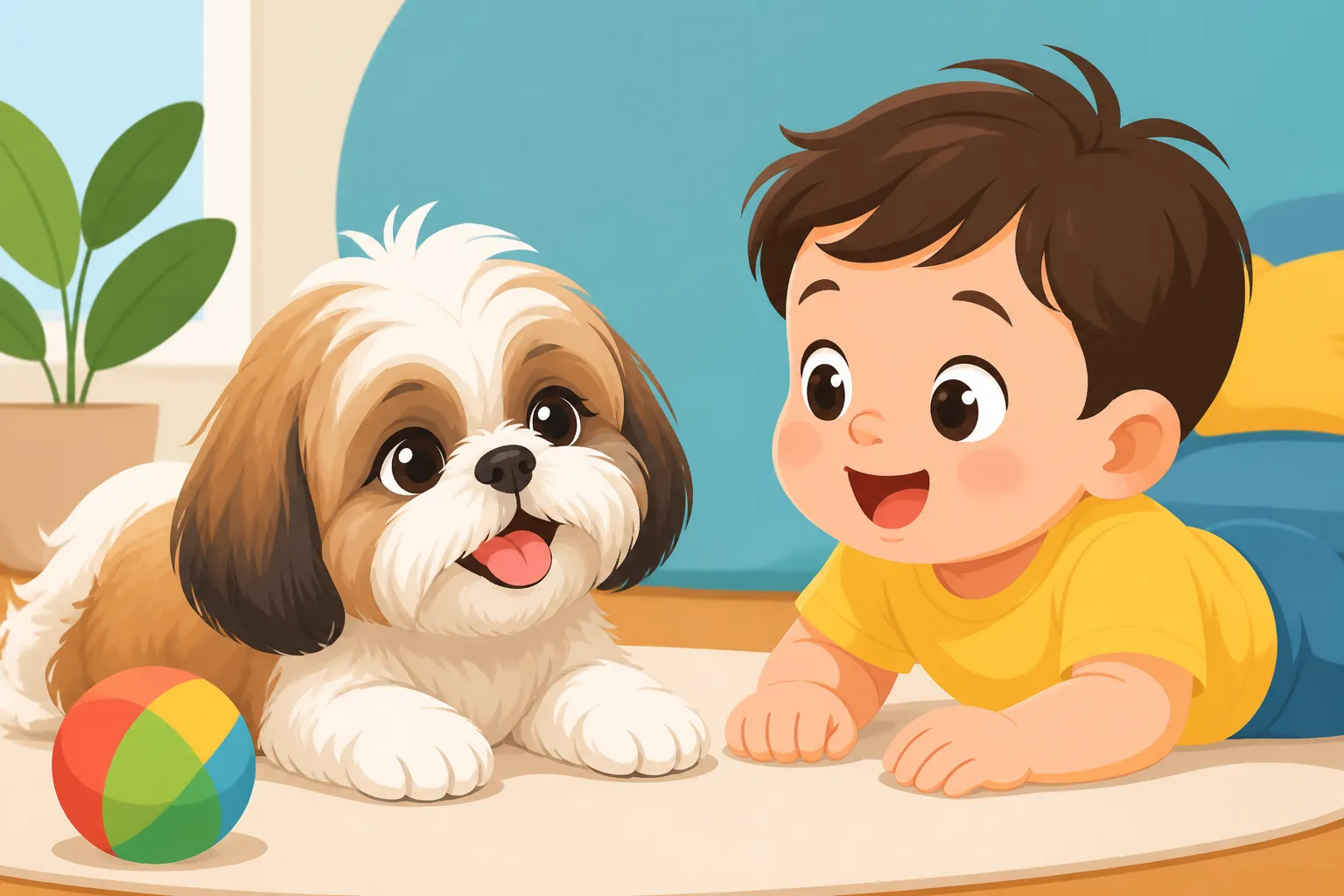
Bringing an unpredictable toddler and a small, sensitive dog into the same living room can feel like balancing a flickering flame next to a pile of dry leaves. Your Shih Tzu boasts a sweet demeanor, but their shallow eye sockets, long spines, and compact frames make them exceptionally vulnerable to clumsy toddlers who are still mastering basic body control. This guide walks you through every boundary, safety setup, and behavioral technique needed to keep both your child and your dog safe, happy, and stress-free under one roof.
The Safety Dynamics of a Small Dog and a Developing Child
Living with a toy breed and a toddler requires an honest look at physical realties. Shih Tzus are compact, heavy-bodied companions built primarily for affection, but their physical structure means they cannot absorb the kind of unintentional roughhousing that a larger breed might shrug off. At the same time, toddlers lack the fine motor skills and impulse control necessary to gauge their own strength.
Physical Vulnerabilities of the Shih Tzu Frame
The very traits that make your dog so adorable also make them physically delicate when placed next to a toddler who is learning to walk, run, and throw toys. Their prominent, shallow-set eyes leave them susceptible to scratch injuries or direct blows from stray plastic toys, which can lead to severe ocular trauma or even conditions like Rough Play That Puts a Shih Tzu Eye at Risk. A toddler grabbing a fistful of facial hair or poking around the face can cause immediate harm before an adult across the room has time to step in.
Beyond their eyes, the physical length of their spine creates distinct structural risks. Shih Tzus are prone to spinal complications like Shih Tzu Back Problems and Disc Disease. If a child attempts to pick up the dog around the ribcage or falls onto their midsection, the resulting impact can cause severe pain or spinal misalignment. Understanding these physical limits helps you realize that supervising interactions isn’t just about preventing bites; it is about protecting your dog from permanent physical injury.
| TODDLER STAGE | DOG RISK LEVEL | KEY PHYSICAL HAZARDS | RECOMMENDED MANAGEMENT |
|---|---|---|---|
| Crawling (6-12m) | Moderate | Tail pulling, ear grabbing, | Physical playpens, baby |
| cornering dog on floors | gates, raised dog beds | ||
| Early Walker (12-18m | High | Falling on dog, snatching | Constant active supervision |
| toys, eye poking | zero unsupervised floor time | ||
| Run & Jump (18-36m) | High to Very High | Throwing objects, running at | Structured boundary rules |
| dog, cornering, loud noises | safe retreat zones, training |
Understanding Toddler Motor Skills and Impulse Control
Toddlers explore their environment through tactile touch and sudden movement. When a young child sees a fluffy dog, their natural reaction is to reach out, grab, squeeze, or lean over the animal. They do not possess the cognitive ability to recognize that a dog is an organic creature with feelings and pain receptors rather than a soft, inanimate plush toy.
When a toddler drops a heavy wooden block or loses their balance, they instinctively throw their hands out to break their fall. If your dog is resting nearby on the rug, a falling toddler can easily crush a paw or strike the dog’s neck. This lack of physical control means you cannot simply rely on telling a child to “be gentle.” You must actively manage the physical space between them to prevent accidental collisions from happening in the first place.
Early Warning Signs of Dog Stress and Pain
Many parents assume a dog will bark or growl as a clear warning before reacting negatively toward a child. In reality, dogs communicate discomfort through subtle body language long before they make a sound. Learning to read these quiet signals allows you to intervene while everyone is still safe.
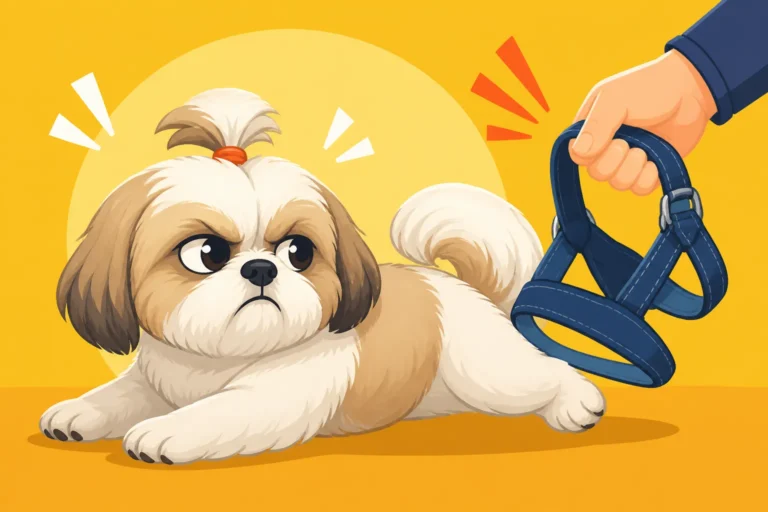
When observing Shih Tzu Behavior With Small Children, look for subtle stress markers such as lip licking, yawning when not tired, turning the head away, or showing the whites of their eyes (often called whale eye). If your dog stiffens their body, holds their tail low, or rolls onto their back in an attempt to pacify the child, they are overwhelmed. Ignoring these early signs forces the dog to escalate their warnings, which can lead to growling or sudden snapping out of sheer self-defense.
Setting Up Physical Boundaries and Supervised Spaces
Relying purely on verbal commands to keep a toddler and a dog apart is a recipe for frustration. A realistic management strategy relies heavily on physical barriers, dedicated dog zones, and smart room layouts that prevent unwanted collisions before they start.
Creating Safe Retreat Zones for Your Dog
Every dog living with young children needs a space where they are entirely untouched by little hands. This retreat zone must be strictly off-limits to your child. A sturdy, gated area, a covered crate tucked into a quiet corner, or an indoor playpen gives your dog a place to escape when the toddler’s energy becomes too intense.
When your dog moves to their safe zone, enforce a absolute household rule: the toddler is never allowed to approach, reach through, or lean over the barrier. You can browse high-density, multi-panel baby gates on Amazon to easily divide up open-plan living rooms without feeling completely disconnected from your family. Knowing they have a secure space allows your dog to stay calm, as they won’t feel forced to defend themselves when feeling overwhelmed.
Managing Floor Time and Shared Play Areas
Unrestricted shared floor time between a toddler and a small dog should never happen. When your child is playing on the rug with blocks, cars, or noisy electronic toys, your dog should be placed behind a playpen fence, resting on a raised bed out of reach, or engaged in a quiet activity nearby.
If you choose to let them share the room without a physical fence, implement a double-management approach. One adult must focus entirely on the child, while another keeps an eye on the dog’s subtle body movements. If you need to step away to answer the door or check on dinner, separate them immediately. A few seconds of distraction is all it takes for a toddler to stumble over a resting dog or pull an ear.
Environmental Controls and Protective Equipment
Using environmental barriers effectively keeps daily management simple and stress-free. Portable exercise pens are invaluable for creating flexible indoor boundaries. You can easily order heavy-duty, fold-flat playpens on Amazon to instantly construct temporary safe zones in whichever room your family gathers.
Additionally, elevate your dog’s resting spots. Shih Tzus love lounging on plush surfaces, but a dog bed placed directly on the living room floor makes them an easy target for a curious, crawling child. Utilizing raised furniture platforms, secure sofa ramps, or elevated pet cots allows your dog to relax comfortably above toddler hand level while still remaining part of the family circle.
Teaching Mutual Manners and Positive Interactions
Long-term harmony requires active teaching for both the human child and the canine companion. While your child learns how to respect animals, your dog should be learning that the toddler’s presence brings good things, safety, and delicious treats.
Teaching Your Toddler Gentle Touch Protocols
Children need physical guidance to learn proper touch. Rather than using vague instructions like “be nice,” teach your toddler specific, repeatable movements. The best stroke for a small dog is a gentle touch along their side or shoulder, entirely away from the head, face, tail, and paws.
Practice these movements on a stuffed animal before allowing your child to touch the real dog. Hold your toddler’s hand in yours, guiding their open palm in smooth, slow strokes down the toy’s side while whispering “soft touch.” When you transition to the dog, keep your hand over your child’s at all times. If your child tries to grab, pat heavily, or poke, calmly lift their hand away and direct their attention back to a toy.
If you ever catch your child squeezing or leaning over the dog, immediately intervene and separate them. Never wait to see if the dog will tolerate it, as tolerance can erode quickly when a dog feels cornered or stressed.
Reward-Based Conditioning for Your Shih Tzu
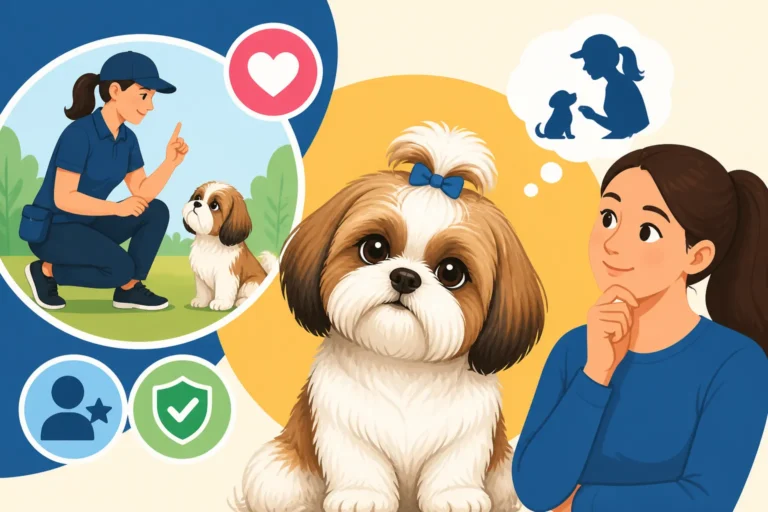
Your dog should view your toddler as a source of safety and pleasant experiences, not unpredictable noise and pain. You can build this positive association through systematic classical conditioning. Whenever your child enters the room, moves across the floor, or makes sudden noises, quietly feed your dog high-value, small treats.
Keep a jar of small, low-calorie treats on a high shelf out of your child’s reach. When the toddler giggles, runs, or drops a toy, immediately toss a treat to your dog. Over time, your dog learns to look to you for a reward whenever toddler-driven chaos breaks out, shifting their emotional reaction from anxiety to calm focus.
Teaching core household cues like “place” or “go to your mat” is essential for managing shared spaces. You can practice Teaching a Shih Tzu to Settle on a Mat during quiet moments so your dog knows exactly where to go when the toddler gets overly active.
What to Do When Boundaries Are Crossed
Despite your best efforts, there will be moments when your child moves too fast or your dog reacts defensively. If your dog growls, snaps, or stiffens, treat it as vital feedback rather than a behavioral failure. A growl is a healthy, non-violent communication signal that your dog has hit their absolute limit.
Never punish your dog for growling. Scolding a dog for expressing discomfort teaches them to skip the warning growl next time and move straight to a bite. Instead, calmly remove the child from the immediate area, step between them, and give your dog space to decompress. Assess what led to the boundary breach so you can update your physical layout and prevent it from happening again.
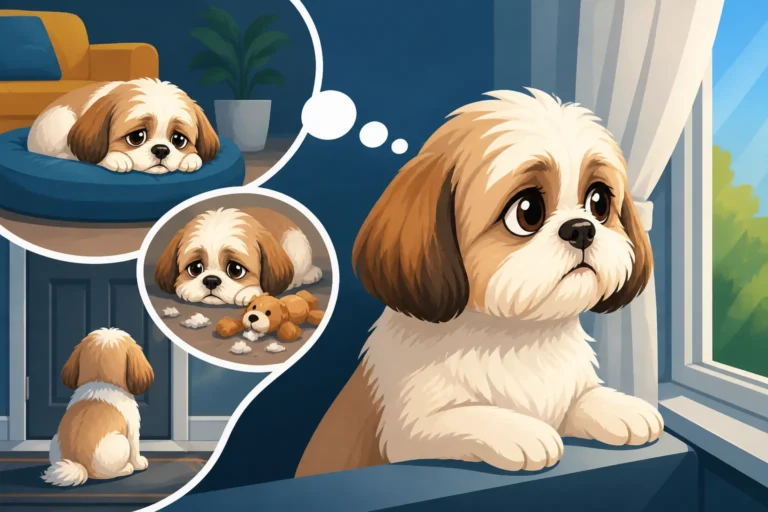
If you notice your dog hiding, withdrawing, or becoming hyper-vigilant around simple toddler noises, take immediate steps to increase physical separation. A dog that continually retreats, such as A Shih Tzu That Hides From Loud Children, is telling you that the current setup feels overwhelming and needs adjustment.
Long-Term Coexistence and Household Routines
As your child grows and your dog ages, their dynamic will naturally shift. Establishing consistent daily routines around food, play, and rest protects everyone while building a foundation of mutual trust that lasts for years.
Establishing Feeding and Resting Rules
Food and high-value chew toys are primary triggers for defensive behavior in dogs. A toddler wandering near a eating dog is one of the leading causes of preventable pet bites in the home. Enforce an absolute rule that your dog is fed exclusively in a gated, secure space where no children are allowed.
This boundary applies to the child’s food as well. Toddlers frequently drop high-fat, salty, or hazardous human food from high chairs, creating a chaotic environment where the dog rushes in to grab scraps. Keep your dog in a separate room during child mealtimes, or secure them in their playpen until the floor has been picked up and swept clean.
Resting times require the same strict boundaries. Sleeping dogs can startle violently if touched suddenly, especially toy breeds resting on a comfortable rug or bed. Ensure your child understands that when the dog is sleeping or laying on their mat, they must be left completely alone.
Handling Behavioral Shifts and Physical Discomfort
As dogs age, their tolerance for environmental stress drops, particularly if they are experiencing hidden physical discomfort. A Shih Tzu suffering from undetected joint stiffness or spine pain will react much faster to an accidental toddler bump than a young, healthy dog would.
Watch closely for subtle changes in your dog’s physical movement. If your dog suddenly avoids the child, resists being picked up, or shows signs of pain like A Shih Tzu Yelping When You Lift It, schedule a thorough veterinary exam right away. Pain completely shifts a dog’s emotional threshold, and a gentle companion can turn into A Gentle Shih Tzu That Suddenly Snaps if they feel threatened while dealing with a sore joint or slipped disc.
Professional Support and Training Options
Navigating dog-and-child dynamics can be complex, and there is no shame in seeking guidance from certified professionals. If you ever feel uncertain about your dog’s reactions, or if you want step-by-step guidance on setting up reliable household manners, professional coaching provides tailored solutions for your home layout.
Enrolling in specialized online family coaching programs like BAXTER & Bella can help you build structured, reward-based training habits right from your living room. Their digital curriculum guides parents through practical boundary setting, child-dog safety protocols, and obedience foundation cues without requiring you to haul a small dog and a toddler to an in-person class.
For complex behavioral issues or rising defensive reactions, look for certified specialists by Finding a Trainer Who Understands Toy Breeds. Working with a professional who uses force-free methods protects your dog’s emotional wellbeing while keeping your child completely safe.
Educating your family, maintaining physical boundaries, and respecting your dog’s structural sensitivities turns your living room from a high-stress zone into a peaceful, safe space for both your toddler and your Shih Tzu to thrive together.
Disclaimer
This article is for general informational purposes only and does not constitute professional advice. Laws, prices and regulations vary by location and change over time. Consult a qualified professional for guidance on your specific situation.