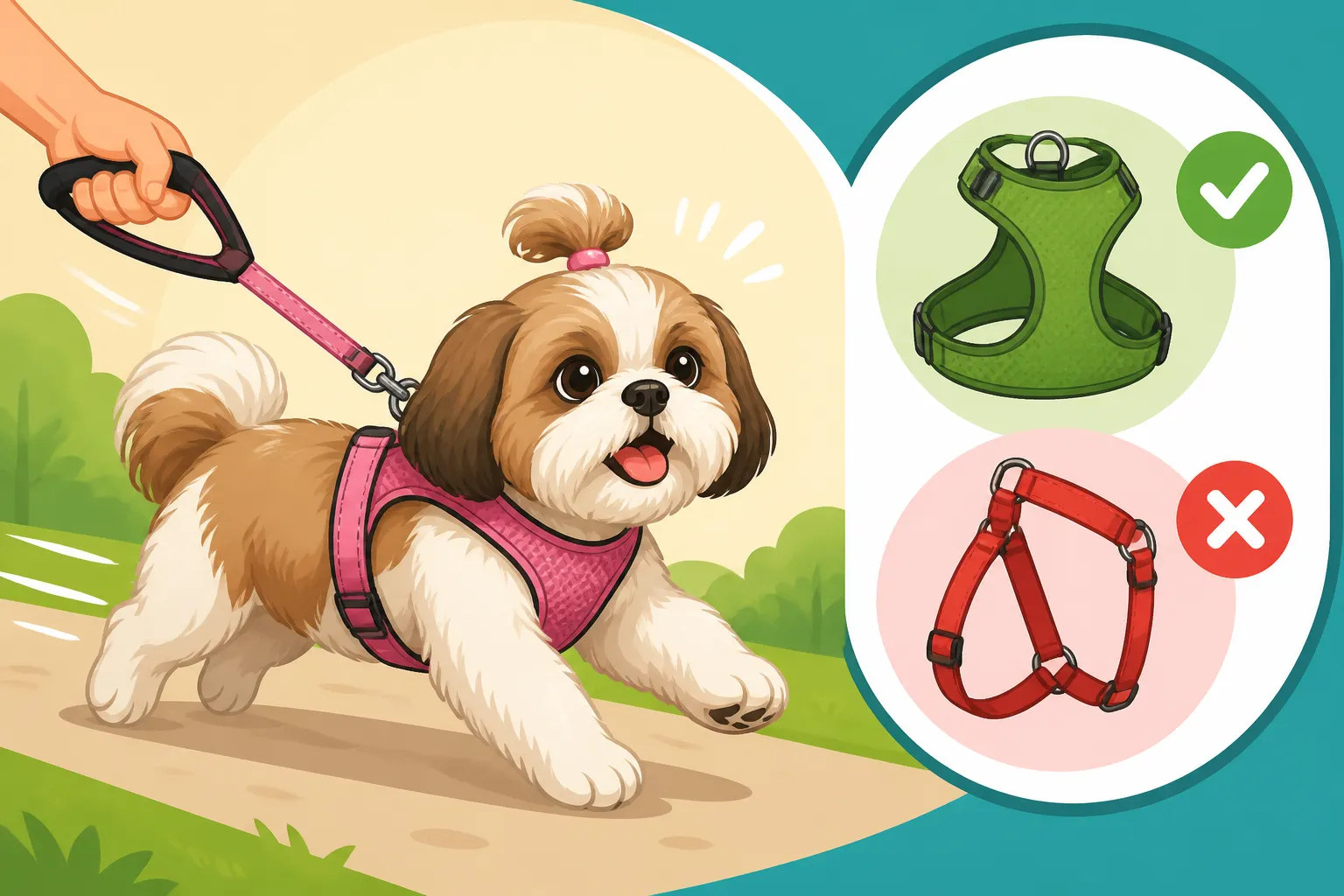
Shih Tzu Leash Pulling and Harness Choice
One of the most common frustrations I hear from Shih Tzu owners is the struggle with leash manners. It’s easy to feel like you’re constantly being dragged, or worse, worried about your little companion’s delicate neck and those precious, prominent eyes. This guide will walk you through understanding why your Shih Tzu might be pulling, how to choose a harness that actually works for their unique build, and practical training tips to make walks enjoyable for both of you.
Understanding Why Your Shih Tzu Pulls on the Leash
It might seem baffling why a small dog with such tiny legs can exert so much force, but a Shih Tzu’s enthusiasm, curiosity, and sometimes even anxiety can lead to quite a bit of tugging. It's not usually about dominance or trying to "lead the pack" – it's often much simpler than that.
The World is Full of Interesting Smells
Imagine being nose-level with every blade of grass, every crack in the pavement, and every discarded crumb. For your Shih Tzu, a walk isn't just exercise; it's a sensory overload, a grand adventure through a landscape of fascinating scents. Every lamppost tells a story, every bush is a potential treasure trove of sniffs. It’s no wonder they want to dive headfirst into it all, pulling against the leash to get to the next exciting aroma. This intense drive to explore with their nose can make them seem oblivious to the gentle tug on their harness.
They're not being disobedient; they're simply following their instincts. We often forget how much a dog experiences the world through scent, and for a Shih Tzu, those little legs carry them closer to the ground, amplifying every smell. If you've ever tried to pull your Shih Tzu away from a particularly interesting spot, you know the feeling of meeting stubborn resistance. It's their natural canine drive to investigate, and it's a powerful one.
Excitement, Fear, or Just Plain Energy
While Shih Tzus are often described as low-energy companions, they still have bursts of excitement, especially when it comes to walks. The sight of a squirrel, another dog, or even a new person can trigger a surge of energy, prompting them to lunge or pull. This isn't necessarily a behavioral problem; it's just plain enthusiasm. However, for a small dog with a delicate trachea and protruding eyes, this kind of sudden movement can be risky.
On the flip side, some pulling can stem from fear or anxiety. A loud truck, a strange-looking stranger, or an unexpected sound might cause your Shih Tzu to try and bolt, pulling away from the perceived threat. Understanding the root cause of the pulling is the first step toward addressing it. Is it happy anticipation, or something more concerning? Observing your dog's body language – tail wags, ears back, tension in their body – can give you clues.
Why the Right Harness is Crucial for a Shih Tzu
Choosing the right walking gear for a Shih Tzu isn't just about comfort; it's a vital health consideration. Their unique brachycephalic (flat-faced) structure and delicate neck make them particularly vulnerable to injuries if a collar or ill-fitting harness is used.
The Dangers of Collars and Poorly Designed Harnesses
A traditional neck collar, no matter how cute, poses significant risks for a Shih Tzu. Their shortened airways, a characteristic of their Brachycephalic Breathing in a Shih Tzu, mean that any pressure on the throat can restrict breathing, leading to coughing, gagging, or even exacerbating existing respiratory issues. Even a gentle pull on a collar can cause discomfort, and a sudden jerk could lead to tracheal collapse, a serious condition where the windpipe flattens. Beyond breathing, a collar that constricts the neck can also increase pressure in the head, potentially contributing to Shih Tzu Eye Proptosis, the Emergency Owners Miss where their eyes can temporarily pop out of their sockets due to trauma or strain.
Poorly designed harnesses are also problematic. Many harnesses have straps that sit right across the delicate throat area, essentially acting like a collar. If the harness isn't properly fitted or designed, it can dig into the armpits, restrict shoulder movement, or still apply pressure to the neck when the dog pulls. This can cause chafing, pain, and discomfort, making walks an unpleasant experience and reinforcing negative associations with the leash. It's crucial to look for designs that distribute pressure away from the neck and throat. You definitely want to avoid anything that causes your Shih Tzu to wheeze or struggle for air.
Key Features of a Safe and Comfortable Shih Tzu Harness
When selecting a harness for your Shih Tzu, prioritize designs that are specifically made for toy breeds and consider their unique physical needs. The most critical feature is the Y-front design, sometimes called a "front-clip" or "no-pull" harness. These harnesses feature a Y-shape strap that goes between your dog's front legs and then up over their chest, ensuring that the pressure is distributed across the chest and shoulders, rather than the delicate throat. Why a Shih Tzu Should Wear a Harness Not a Collar delves deeper into these considerations.
Look for harnesses made from soft, lightweight, and breathable materials that won't irritate their sensitive skin or get lost in their thick coat. Adjustable straps are also a must, allowing you to get a snug, custom fit without being too tight. A good harness should allow for a full range of motion in the shoulders and legs, without chafing or rubbing. Many owners find success with brands that focus on ergonomic designs for small, brachycephalic dogs. You can often find a good selection of these types on platforms like Amazon, offering various styles and sizes.
| Harness Type | Pros | Cons | Best For |
|---|---|---|---|
| Y-Front/Front Clip | Distributes pressure away from neck; gentle no-pull correction; good for brachycephalic breeds. | Can sometimes tangle legs if ill-fitting; requires adjustment. | Shih Tzus who pull, prone to tracheal issues, or at risk of eye proptosis. |
| Back Clip | Easy to put on; comfortable for dogs who don't pull; many styles. | Still allows pulling; can put pressure on neck if dog pulls hard. | Shih Tzus who walk well on a loose leash. |
| Step-In Harness | Very easy to put on (no lifting over head); good for head-shy dogs. | Can be less secure for determined escape artists; may rub armpits. | Shih Tzus who are calm during dressing and don't pull excessively. |
| Vest Harness | Very comfortable; good for cold weather; distributes pressure broadly. | Can be bulky for a small dog; may cause overheating in warm climates. | Shih Tzus needing extra comfort or warmth, light pullers. |
Fitting the Harness Correctly
Even the best harness design won't do its job if it's not fitted properly. A harness that's too loose can allow your Shih Tzu to slip out, potentially into danger, while one that's too tight can cause discomfort and chafing. Getting this right, especially with their long, luxurious coat, takes a bit of practice.
Measuring Your Shih Tzu for the Perfect Fit
Before you even think about buying a harness, you need accurate measurements of your Shih Tzu. Don't just guess or rely on their weight alone; different breeds, even of the same weight, have vastly different builds. You'll typically need two main measurements:
- Chest Girth: This is the most crucial measurement. Use a soft tape measure and wrap it around the widest part of your Shih Tzu's chest, just behind their front legs. Make sure the tape is snug but not tight. This measurement determines the main body strap size.
- Neck Circumference (for some harness types): While a good harness avoids neck pressure, some designs might still list a neck measurement. Measure around the base of their neck, where a collar would typically sit.
Always check the sizing chart provided by the harness manufacturer, as sizes can vary significantly between brands. If your Shih Tzu is between sizes, it’s often better to go with the larger size, as long as it’s adjustable enough to cinch down without being too loose. Remember, their fluffy coat can add a deceptive layer, so try to measure as close to their skin as possible without pulling their fur too tightly. For more guidance on this, check out Fitting a Harness Around Shih Tzu Coat.
Adjusting the Harness for Comfort and Security
Once you have the harness, the real work begins: adjusting it. This is often an iterative process. Put the harness on your Shih Tzu and adjust each strap so that you can comfortably slip two fingers underneath it. Any tighter, and it might chafe; any looser, and they might back out of it. Pay particular attention to the straps around the armpits and chest. There should be enough clearance around the armpits to prevent rubbing, especially where their legs move.
Walk your Shih Tzu around the house in the new harness for a few minutes. Observe how they move. Are they walking naturally, or do they seem stiff or uncomfortable? Check for any areas where the harness might be digging in or causing their fur to bunch up. Adjust as needed. Their long coat can sometimes make it difficult to see the fit clearly, so feel around the straps. A properly fitted harness should stay in place without shifting excessively when your dog walks, runs, or makes sudden movements. It's a bit like finding the perfect pair of shoes; it might take a few tries to get it just right, but the comfort and safety of your dog are well worth the effort.
Training for a Loose Leash Walk
Even with the perfect harness, a Shih Tzu who has learned to pull will likely continue to do so until they are taught otherwise. Loose leash walking isn't an innate skill; it's something we need to patiently teach our dogs, and it’s entirely achievable with a Shih Tzu.
Starting with Positive Reinforcement and Short Sessions
The key to teaching your Shih Tzu loose leash walking is positive reinforcement. Forget harsh corrections or yanking on the leash – not only can these be harmful to your Shih Tzu's delicate body, but they also create negative associations with walks. Instead, focus on rewarding the desired behavior: walking with a loose leash. Keep training sessions short, especially when you're just starting out, as a Shih Tzu's attention span can be quite brief. Five to ten minutes, a few times a day, is far more effective than one long, frustrating session. Keeping Shih Tzu Training Sessions Short is vital.
Begin in a quiet, distraction-free environment, like your living room or backyard. Put the harness and leash on, and simply walk a few steps. The moment the leash goes slack, or your Shih Tzu is walking beside you without tension, immediately mark the behavior with a verbal cue like "Yes!" or a clicker, and offer a high-value treat. Repeat this frequently. The goal is for your Shih Tzu to associate a loose leash with positive outcomes – tasty treats and praise! Consistency is paramount, and every family member who walks the dog needs to be on the same page.
Techniques to Discourage Pulling and Encourage Focus
Once your Shih Tzu understands the basic concept in a low-distraction environment, gradually introduce more challenging settings. When you're out on a walk and your Shih Tzu starts to pull, stop immediately. Don't move forward until the leash goes slack. This might mean standing still for a few seconds, or even a minute, until they look back at you or the tension on the leash eases. The moment the leash slackens, praise them, offer a treat, and continue walking. This teaches them that pulling gets them nowhere, while a loose leash allows them to move forward. This technique is often called "Be a Tree" or "Stop-Start."
Another effective technique is redirection. If your Shih Tzu is fixated on something and about to lunge, try to get their attention before they pull. A sudden kissy sound, calling their name, or even a gentle tap on your leg can redirect their focus back to you. When they look at you, reward them. You can also hold a high-value treat near your leg to encourage them to walk beside you, slowly moving it away as they learn to stay in position. Companies like BAXTER & Bella offer online training programs that can guide you through these techniques with clear, step-by-step instructions. Remember, the aim is to Teaching a Shih Tzu to Walk Without Pulling and make walks a cooperative, pleasant activity.
Common Leash Training Mistakes to Avoid
Even with the best intentions, it's easy to fall into common traps when training a Shih Tzu on the leash. Being aware of these pitfalls can save you a lot of frustration and keep your little companion safe and happy.
Inconsistency and Frustration
One of the biggest mistakes owners make is inconsistency. If you let your Shih Tzu pull sometimes, but then try to correct it at other times, they'll become confused. Dogs thrive on predictability. If pulling occasionally gets them where they want to go, they'll keep trying it. This can lead to frustration for both you and your dog, making walks a battle rather than a bonding experience. Every person who walks your Shih Tzu needs to use the same techniques, every single time. It's tough, especially on busy days or when you're in a hurry, but consistency is the bedrock of successful training.
Another common issue is letting your own frustration get the better of you. Yelling, jerking the leash, or getting visibly annoyed won't teach your Shih Tzu anything positive. It will only make them anxious, potentially fearful, and less likely to engage in training. Remember, your Shih Tzu isn't pulling to spite you; they're just responding to their environment or expressing excitement. Take a deep breath, keep your voice calm, and focus on rewarding the good moments, even if they are fleeting at first. If you find yourself getting too frustrated, it's okay to end the session early and try again later.
Ignoring Environmental Factors and Over-Stimulation
Sometimes, a Shih Tzu pulls because the environment is simply too overwhelming. A busy street corner with honking cars, multiple dogs, and lots of people can be incredibly stimulating for a small dog, leading to over-excitement, fear, or an inability to focus. Trying to conduct a training session in such an environment before your Shih Tzu has mastered loose leash walking in quieter settings is setting them up for failure. It's like asking a child to solve complex algebra before they've learned basic addition.
Start training in a calm, familiar place, and gradually expose your Shih Tzu to more stimulating environments. If you know a particular route has a lot of triggers, choose a different path initially. If your Shih Tzu is particularly reactive to other dogs, practice walking at a distance where they notice the other dog but don't react, then reward them for calmness. Recognize your dog's limits and work within them. Some Shih Tzus might also be very sensitive to hot pavement or loud noises, so paying attention to the weather and avoiding peak noisy times can also help make walks more pleasant and reduce pulling driven by discomfort or anxiety. The Short Walks a Shih Tzu Is Built For are often better managed in quieter areas.
Addressing Other Leash-Related Behaviors
Leash pulling isn't the only challenge owners face. Sometimes, a Shih Tzu might lie down and refuse to move, or become overly interested in sniffing every single blade of grass, effectively halting the walk. These behaviors also benefit from patient, positive reinforcement.
The "Stuck Like a Statue" Shih Tzu
It's a familiar scenario for many Shih Tzu owners: you're on a walk, and suddenly your little companion decides they are done. They plop down, refusing to budge, turning into a furry, immovable statue. This can be incredibly frustrating, especially if you're trying to get somewhere. There are several reasons why a Shih Tzu might do this. It could be they're tired, the weather is too hot or cold, they're feeling overwhelmed, or they've simply lost interest. For some, it's a learned behavior that gets them carried.
When your Shih Tzu plants themselves, avoid dragging them. This can cause injury, discomfort, and will only make them more resistant. Instead, try to re-engage them. Kneel down, offer a high-value treat, and use an excited voice to coax them forward. Sometimes, simply taking a few steps away from them (while keeping them on the leash, of course) can pique their curiosity enough to make them follow. If it's a persistent issue, consider if the walk length is appropriate for their energy levels, or if the environment is too stimulating. For more on this, you might find A Shih Tzu That Sits Down Mid-Walk helpful. Always check their paws for discomfort or injury too, as sometimes a small stone or burr can be the culprit.
Excessive Sniffing and Distraction on Walks
Shih Tzus are masters of sniffing, and while allowing them to explore scents is an important part of their mental enrichment, it can also bring a walk to a grinding halt every few feet. If your Shih Tzu is spending more time with their nose glued to the ground than actually walking, you might need to find a balance. The key here is not to eliminate sniffing entirely, but to manage it.
You can teach a "go sniff" cue and a "let's go" cue. When you're in a safe area and want to allow them to explore, say "go sniff" and let them indulge for a minute or two. Then, use your "let's go" cue, gently encourage them forward, and reward them when they start walking with you again. This teaches them that there's a time for focused walking and a time for sniffing. Gradually increase the duration of walking between sniffing breaks. Another strategy is to keep high-value treats handy and periodically call their name, reward them for looking at you, and continue walking. This helps build focus on you, even amidst all the fascinating smells. Remember, a walk should be a partnership, with a blend of exploration and companionship.
Disclaimer
This article is for general informational purposes only and does not constitute professional advice. Laws, prices and regulations vary by location and change over time. Consult a qualified professional for guidance on your specific situation.