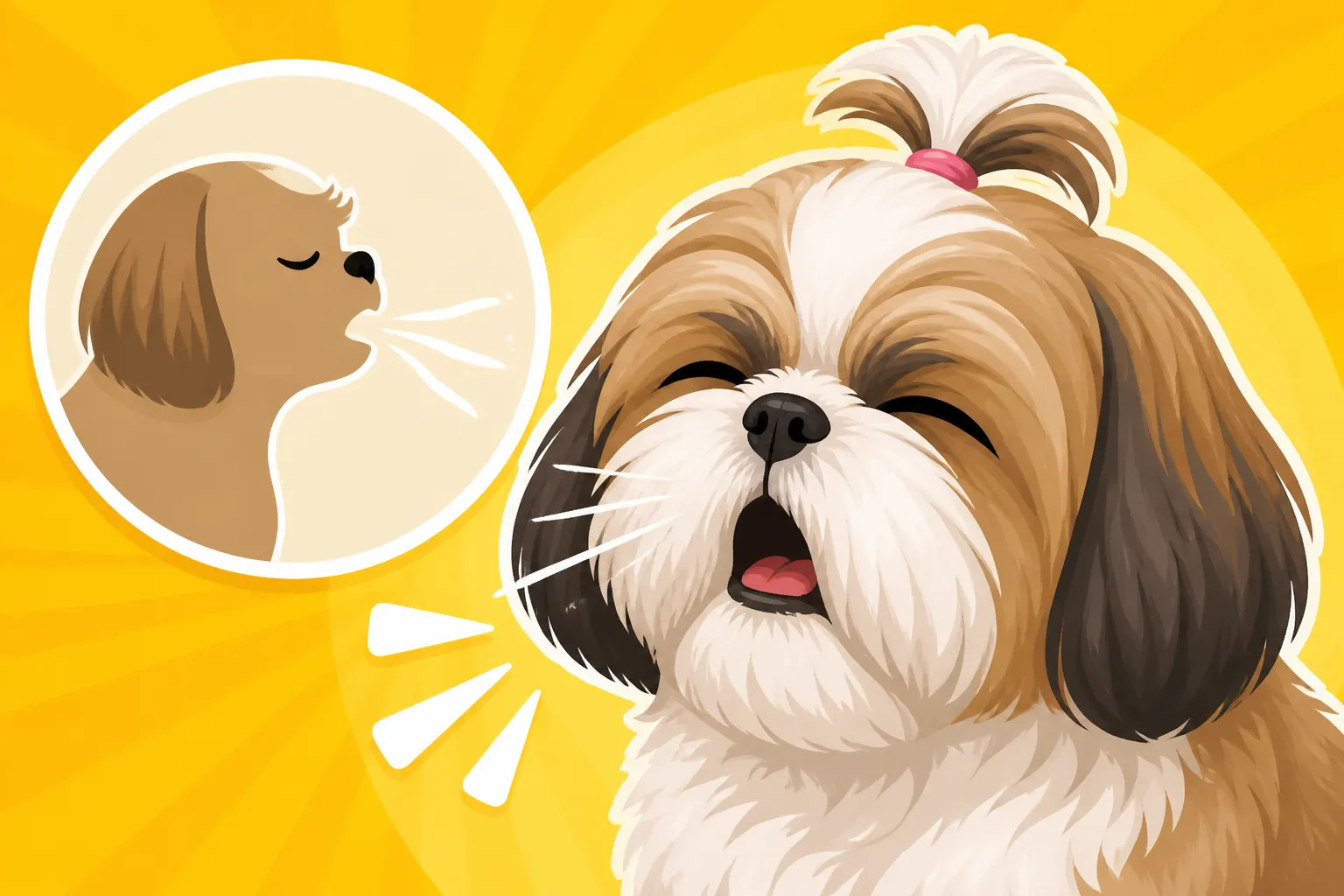
The Reverse Sneeze Every Shih Tzu Owner Hears
That sudden, alarming snorting sound, sometimes sounding like a goose honking or like your little one is struggling desperately to breathe, is a classic "reverse sneeze" that almost every Shih Tzu owner will encounter. It can be quite frightening the first time you hear it, leaving you wondering if your precious companion is choking or having a serious medical emergency. This comprehensive guide is here to demystify the reverse sneeze, explain why it happens so often in our flat-faced friends, and give you practical steps to manage it, ensuring you feel confident and prepared when it strikes.
Understanding the Reverse Sneeze Phenomenon
The first time you witness your Shih Tzu doing a reverse sneeze, it’s natural to feel a jolt of panic. It’s an abrupt, often loud, and quite dramatic event that can make you think the worst. But once you understand what's actually happening, it becomes much less alarming and more manageable. It’s essentially a protective reflex, similar to a regular sneeze, but instead of expelling air out, your dog is rapidly pulling air in.
What Does a Reverse Sneezing Episode Look and Sound Like?
Imagine your Shih Tzu suddenly freezing in place, head extended, neck stiff, and eyes wide with a look of concentration, or even a bit of distress. They might pull their lips back slightly, and their chest will expand as they forcefully inhale air through their nose in short, rapid bursts. This isn't a silent event; you'll hear distinct snorting, gagging, or honking sounds, often described as sounding like a goose honk, a pig snort, or even a severe asthma attack. The sounds are generated as air is pulled quickly over the soft palate and through the narrowed nasal passages.
The entire episode typically lasts anywhere from a few seconds to a minute or two. While it can feel like an eternity when you're watching your beloved dog struggling, it's usually over relatively quickly. During the episode, your Shih Tzu might stand perfectly still, or they might take a few steps as they try to clear whatever is irritating them. Their body language, despite the alarming sounds, usually doesn't indicate extreme pain, though they may seem momentarily disoriented or anxious, which is completely understandable given the intensity of the involuntary reflex.
It's important to differentiate this from a cough or choking. A cough is an expulsion of air, often from the lungs, while choking involves an obstruction in the airway, preventing air from moving in or out effectively. A reverse sneeze, on the other hand, is a series of rapid, involuntary inhalations that sound quite distinct once you've learned to recognize them. It’s almost as if they are trying to inhale a sneeze backward, hence the name.
The Anatomy Behind This Reflex
At its core, a reverse sneeze is a respiratory spasm involving the soft palate and pharynx – the area at the back of the throat. When an irritant or allergen enters the nasal passages or the back of the throat, the body’s natural response is to try and clear it. In a regular sneeze, the reflex is to forcefully push air out through the nose and mouth to expel the irritant. In a reverse sneeze, the soft palate (the fleshy, flexible part at the back of the roof of the mouth) spasms and drops, creating a sort of vacuum effect. This reflex causes the dog to quickly and repeatedly inhale, drawing air and the irritant further into the nasal passages in an attempt to dislodge it.
Think of it as the body’s attempt to suck the irritant back down and clear it. The rapid intake of air causes the characteristic snorting or gagging sounds as the air passes over the vibrating tissues of the soft palate and through the often-already-narrowed airways of a brachycephalic breed like the Shih Tzu. This involuntary contraction is usually harmless and resolves on its own once the irritant is cleared or the spasm passes. It’s simply an overzealous defensive maneuver by your dog’s respiratory system.
Why Shih Tzus Are Particularly Prone to Reverse Sneezing
If you own a Shih Tzu, you’re likely to encounter reverse sneezing more often than someone with, say, a Labrador Retriever. This isn't bad luck; it's directly related to the unique anatomical features of the Shih Tzu breed. Their charming flat faces, while undeniably adorable, come with a set of predispositions for certain respiratory quirks, including the reverse sneeze. Understanding these underlying factors can help you better manage and even prevent episodes.
Brachycephalic Features and Airway Challenges
Shih Tzus are a brachycephalic breed, which means they have a shortened skull and a 'flat' face. This distinctive appearance comes with a host of internal anatomical differences in their respiratory system. Unlike long-nosed breeds, a Shih Tzu's internal structures are essentially "compressed" into a smaller space. This can lead to a condition known as Brachycephalic Breathing in a Shih Tzu. Their airways are often narrowed, making them more susceptible to respiratory issues.
Specifically, many Shih Tzus have The Elongated Soft Palate in a Shih Tzu. This means the soft tissue at the back of their mouth extends too far into the throat, sometimes even obstructing the airway. When this elongated palate vibrates during breathing or spasms during irritation, it can trigger a reverse sneeze. Additionally, many Shih Tzus also have Shih Tzu Stenotic Nares and Noisy Breathing, which refers to nostrils that are too narrow, restricting airflow even further. These combined factors mean that even minor irritations can cause a significant reaction in their already compromised airways, making the reverse sneeze a much more common occurrence for them.
Common Triggers for a Shih Tzu
Beyond their inherent anatomy, several common environmental and situational factors can trigger a reverse sneeze in your Shih Tzu. Identifying these triggers can be a huge step in prevention. One of the most common culprits is sheer excitement. When your Shih Tzu gets overjoyed, perhaps when you come home from work, or during vigorous play, their rapid breathing can irritate the throat and soft palate, leading to a reverse sneeze. Similarly, eating or drinking too quickly can cause food particles or water to tickle the back of their throat, initiating the reflex. Something as simple as pulling on a collar during a walk, which puts pressure on their trachea, can also set it off. This is why a harness is always recommended for a Shih Tzu, which puts no pressure on the throat and neck. If you haven't already, check out our guide on Shih Tzu Leash Manners on a Harness for more details on proper walking equipment.
Environmental irritants are another major factor. Dust, pollen, mold, and even strong household odors from cleaning products, air fresheners, or perfumes can easily irritate a Shih Tzu's sensitive nasal passages and throat. Pay attention to what's in the air around your dog, especially indoors. Even changes in temperature, such as going from a warm house to cold outdoor air, can cause the delicate tissues in their nose and throat to react, initiating a spasm. These triggers are often unavoidable, but being aware of them allows you to minimize exposure and be prepared when an episode occurs.
What to Do When Your Shih Tzu Reverse Sneezes
When your Shih Tzu starts a reverse sneeze episode, it can feel like time slows down. Your instinct might be to panic, but the most important thing you can do is remain calm. Your dog will pick up on your stress, which can prolong the episode. Taking quick, calm action can help them recover faster and reassure both of you that everything is under control.
Immediate Calming Techniques
The first step is always to stay calm. Your dog senses your emotions, and if you become anxious, they might become more agitated, which can worsen or extend the reverse sneeze. Speak to them in a soothing, gentle voice, reassuring them that they're okay. Often, simply knowing you're there and calm can help them relax.
Once you’re calm, you can try a few gentle interventions to help stop the spasm. One effective method is to gently massage your Shih Tzu's throat, specifically the area around their larynx. This action can encourage them to swallow, which helps to reset the soft palate and interrupt the spasm. Another technique is to briefly and gently cover their nostrils for just a second or two. This forces them to swallow and breathe through their mouth, which can also break the cycle of the reverse sneeze. Just be sure to do this very lightly and only for a fleeting moment, as you don't want to restrict their breathing. Offering a small sip of water can also sometimes help, as the act of swallowing can calm the irritated tissues.
Prevention and Management Strategies
While you can't always prevent reverse sneezing, there are several steps you can take to manage and minimize its frequency. Given that pressure on the throat can be a trigger, switching from a collar to a harness for walks is highly recommended. A harness distributes pressure across their chest and shoulders, completely alleviating any strain on their delicate trachea.
Reducing exposure to environmental irritants can also make a big difference. Use a HEPA air purifier in your home, especially in rooms where your Shih Tzu spends a lot of time. Opt for fragrance-free cleaning products and avoid using strong perfumes, air fresheners, or diffusers around your dog. If seasonal allergies seem to be a trigger, consult your vet about appropriate antihistamines or other allergy management strategies. Managing excitement levels during greetings or playtime can also help; try to keep interactions calmer and more controlled to avoid sudden, gasping breaths. If you're concerned about potential vet visits for these issues, remember that pet insurance can be a lifesaver. Providers like Healthy Paws offer coverage that could assist with diagnostic tests or ongoing allergy treatments, giving you peace of mind.
When to Seek Veterinary Advice
While the vast majority of reverse sneeze episodes are harmless and resolve on their own, it's crucial for Shih Tzu owners to know when a respiratory event might be something more serious. Distinguishing a benign reverse sneeze from other, more concerning health issues can literally be life-saving.
Distinguishing Reverse Sneezing from Other Concerns
One of the biggest anxieties for new Shih Tzu owners is the fear of mistaking a reverse sneeze for choking or another serious respiratory problem. A reverse sneeze, as we've discussed, is characterized by rapid, forceful inhalations, often accompanied by snorting or honking. The dog usually remains conscious, alert, and can typically move around, albeit sometimes appearing a bit confused. Their gums should remain a healthy pink color.
In contrast, actual choking involves a foreign object obstructing the airway, leading to true difficulty breathing (unable to inhale or exhale effectively), frantic pawing at the mouth, distressed coughing, and potentially blue or grayish gums due to lack of oxygen. This is an emergency. Similarly, a regular cough is an outward expulsion of air, and if persistent or accompanied by other symptoms like lethargy, loss of appetite, or wheezing, it could indicate bronchitis, pneumonia, kennel cough, or even heart issues. Our guide on The Snoring That Means a Shih Tzu Airway Problem can help you differentiate between various noisy breathing concerns. If you see signs like blue gums, collapse, continuous coughing, or extreme lethargy following a respiratory event, it's time for an immediate vet visit.
Here's a quick comparison:
| Symptom / Condition | Reverse Sneeze | Cough | Choking |
|---|---|---|---|
| Sound | Snorting, honking, gagging, rapid inhalations | Hacking, wheezing, deep "Ahem" | Silent, struggling to breathe, gasping, sometimes a high-pitched squeak |
| Air Movement | Rapid, forceful inhalation | Forceful exhalation | No effective air movement (in or out) |
| Body Language | Head extended, neck stiff, body still; often wide-eyed but conscious | Usually head down, sometimes crouching, may gag at end of cough | Frantic pawing at mouth, extreme distress, panic, may collapse |
| Gum Color | Pink and healthy | Pink and healthy | Blue/gray, purple (cyanosis) |
| Duration | Few seconds to 1-2 minutes | Intermittent, can be persistent | Immediate, life-threatening until obstruction is cleared |
| Urgency | Usually none, unless very frequent/severe | Vet visit if persistent or worsening | Emergency! Immediate action needed. |
Diagnosing and Treating Underlying Issues
If reverse sneezing becomes chronic, more frequent, lasts longer than a couple of minutes, or starts to be accompanied by other worrisome symptoms, it’s definitely time to schedule a consultation with your veterinarian. They can perform a thorough physical examination to rule out other medical conditions and evaluate your Shih Tzu’s overall respiratory health. They'll look for signs of allergies, nasal mites, foreign bodies lodged in the throat or nasal passages, or more severe forms of brachycephalic airway syndrome.
In some cases, diagnostic tests like X-rays, rhinoscopy (looking into the nasal passages with a tiny camera), or blood work might be recommended to get a clearer picture of what’s going on. If a foreign body is suspected, or if an elongated soft palate is causing significant issues, medical intervention might be necessary. This could range from anti-inflammatory medications to address irritation, to more involved surgical procedures such as What Soft Palate Surgery Does for a Shih Tzu or Nostril Surgery on a Shih Tzu Puppy to improve airflow. These surgeries, while effective, do come with considerations, including Shih Tzu Anesthesia Risk From a Flat Face.
Dealing with unexpected vet bills for diagnostics or potential surgery can be a financial strain, which is where having good pet insurance can make a world of difference. Companies like Healthy Paws can provide reimbursement for eligible vet bills, easing the financial burden and allowing you to focus on your Shih Tzu’s recovery. Being prepared for these possibilities, both financially and emotionally, is a crucial part of responsible Shih Tzu ownership.
Disclaimer
The information provided in this article is for general informational purposes only and is not a substitute for professional veterinary advice. Always consult with a qualified veterinarian for any health concerns or before making any decisions related to your Shih Tzu's care.