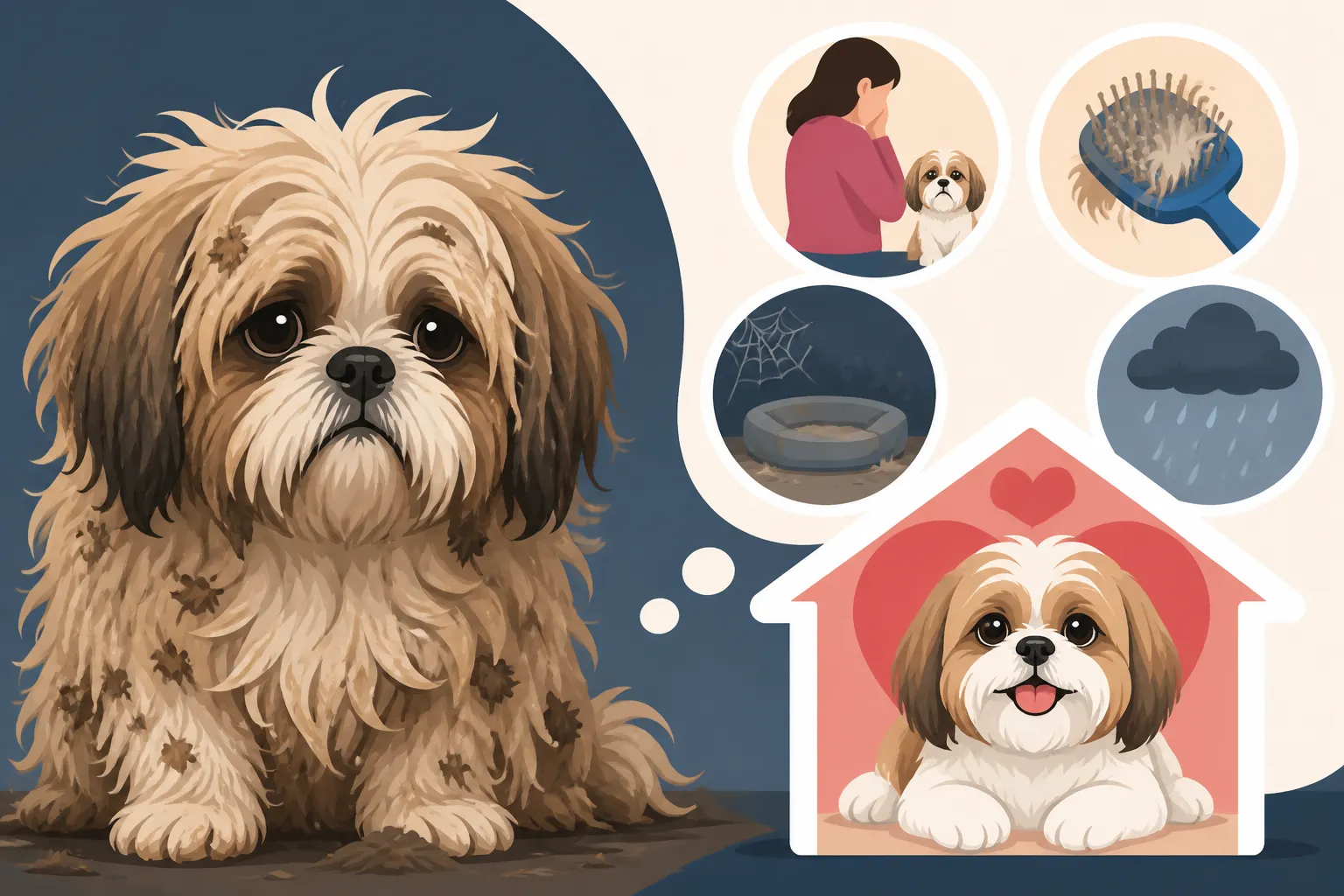
Why Shih Tzus Reach Rescue With Matted Coats
It's a heartbreaking reality that many Shih Tzus find their way into rescue organizations with coats so severely matted they can barely move, see, or even eat comfortably. This isn't just about looking disheveled; severe matting causes immense pain and hides serious health issues. This guide will delve into the complex reasons why these sweet, fluffy companions often arrive in such a state, exploring the challenges of their unique coat and the circumstances that lead to such neglect, and what happens next.
The Unique Challenges of the Shih Tzu Coat
Anyone who's ever shared their home with a Shih Tzu knows their coat is undeniably beautiful – a flowing cascade of luxurious hair that commands attention. But what many new or prospective owners might not fully grasp is just how demanding that beautiful coat truly is. It's not a wash-and-wear situation; it requires dedication, the right tools, and a consistent routine to keep it healthy and free from painful mats.
The Double Coat Dilemma
The Shih Tzu possesses what's known as a double coat. This means they have two distinct layers of hair: a soft, woolly undercoat that provides insulation, and a longer, silkier outer coat of guard hairs that protect against the elements. While this combination looks magnificent, it's also a recipe for matting, especially when shedding occurs. The finer undercoat often sheds but gets tangled within the longer outer coat, forming dense knots that quickly become impossible to brush out. Think of it like trying to untangle fine thread from thicker yarn – it's a monumental task, and if left unchecked, those small tangles become huge, painful mats in no time.
These mats start small, often in high-friction areas like behind the ears, under the legs, or where a harness rubs. But once they begin, they tighten with every movement, every scratch, every bit of moisture. What might seem like a minor tangle after a day of play can, within a week, become a solid, impenetrable felted mass that pulls on the skin, restricts movement, and traps dirt and moisture. It’s a vicious cycle that can quickly get out of control, even for well-meaning owners who simply don't understand the speed and severity with which these mats form.
High-Maintenance Grooming Needs
Because of their unique double coat, Shih Tzus require a grooming regimen that far exceeds many other breeds. Daily brushing isn't just a suggestion; it's a necessity, especially if you want to maintain a longer coat. This isn't a quick once-over with a brush; it involves working through the entire coat in sections, using a pin brush and a metal comb to ensure you're reaching down to the skin and removing any budding tangles. Many owners are genuinely shocked to discover the commitment involved.
Beyond daily brushing, Shih Tzus also need regular baths and thorough drying. Improper drying can actually worsen matting, as damp undercoat is prone to knotting. Professional grooming every four to six weeks is often recommended to maintain the coat, and this isn't a cheap endeavor. The time, effort, and expense can be significant, and for some, it becomes an overwhelming burden. Understanding these needs upfront is crucial, because failing to meet them isn't just about aesthetics; it has serious implications for the dog's comfort and health. For more on this, you might find our guide on Brushing a Shih Tzu Double Coat Every Day incredibly helpful.
Common Reasons for Matting in Rescue Shih Tzus
It’s easy to jump to conclusions when you see a matted dog, but the reasons behind a Shih Tzu arriving at a rescue in such a condition are often complex and heartbreaking, rarely stemming from outright malice. More often, it’s a confluence of factors that lead to the coat becoming severely neglected.
Owner Overwhelm or Lack of Knowledge
One of the most frequent scenarios is an owner who simply underestimated the massive commitment involved in grooming a Shih Tzu. They might have been drawn to the breed's adorable appearance as a puppy, without truly understanding the lifelong grooming needs. Perhaps they’d owned short-haired dogs before and assumed all dog grooming was similar. They might try to brush their dog, but without proper technique or the right tools, they're only skimming the surface, leaving the dense undercoat to mat against the skin.
It’s not uncommon for an owner to purchase a Shih Tzu and then, weeks or months later, find themselves completely overwhelmed by the daily demands of coat care. They might feel guilty but simply don't know how to tackle the growing mats, or they fear hurting their dog, leading to avoidance. This lack of education isn't an excuse, but it's a reality that contributes significantly to dogs ending up at rescues in poor condition. Without understanding how to properly care for the double coat, a well-intentioned owner can quickly find themselves in over their head. When grooming becomes a battle, many owners give up, and the mats take over.
Financial Constraints and Cost of Professional Grooming
Let’s be honest, life can throw unexpected curveballs. The cost of owning a pet, especially a breed like the Shih Tzu with its specific grooming needs, can be substantial. Professional grooming for a Shih Tzu often falls within a certain price range per session, and for many families, that can add up quickly over a year. Our article, Shih Tzu Grooming at $50 to $90 a Session, explores these costs in more detail. When faced with job loss, unexpected medical bills, or other financial hardships, regular grooming appointments might be the first thing to be cut from the budget.
Imagine a situation where an owner is struggling to put food on the table, let alone afford regular visits to a professional groomer. They might try to groom at home, but without the right equipment or experience, they struggle. Then, the mats become so severe that the groomer charges extra, sometimes significantly more, for the dematting process, as discussed in What a Groomer Adds for a Matted Shih Tzu. This can create an impossible situation, where the cost of fixing the problem becomes a barrier to getting the help needed, leading to further neglect and ultimately, surrender to a rescue. Pet insurance, like that offered by Healthy Paws, can sometimes help cover the costs of veterinary care for skin infections resulting from severe matting, but it typically doesn't cover routine grooming.
Health and Mobility Issues of the Owner
Sometimes, the issue isn't a lack of willingness or knowledge, but a change in the owner's circumstances. An elderly owner might develop arthritis, making it physically impossible to hold a brush for the time needed or to manage a squirming dog. A sudden illness, injury, or disability can render someone incapable of providing the intensive daily care a Shih Tzu's coat demands. In these cases, the owner often loves their dog deeply but is simply unable to meet its physical needs.
For instance, an owner who suffers a stroke might lose the dexterity required for fine grooming, or one confined to bed might be unable to get up and bathe their dog regularly. When family support isn't available or sufficient, the dog's grooming falls by the wayside, and mats form. These are truly heartbreaking situations where the owner's own suffering inadvertently leads to the dog's suffering, and surrendering the dog to a rescue becomes the most loving, albeit painful, option to ensure it receives the care it needs.
Behavioral Challenges and Resistance to Grooming
Another significant factor can be the dog's own temperament or lack of early grooming socialization. If a Shih Tzu puppy isn't introduced to brushing, bathing, and handling from a very young age, they can develop an intense aversion to it. A dog that fights every brush stroke can make grooming a terrifying ordeal for both pet and owner. For a detailed look at this, our article on Why Grooming Training Starts the First Week offers valuable insights. Without proper positive reinforcement and patience, a dog can learn to associate grooming with fear or discomfort.
Imagine trying to brush a fully grown Shih Tzu who screams, bites, or thrashes at the sight of a comb. Many owners, especially those without experience, might struggle with this and eventually give up. The mats grow, making subsequent attempts even more painful for the dog and stressful for the owner, creating a cycle of avoidance. Sometimes, a Shih Tzu might even have an underlying painful condition, such as a back problem, that makes being handled or standing for grooming excruciating, leading to aggression or fear, as explored in A Shih Tzu Snapping Because Its Back Hurts. These behavioral barriers, often inadvertently created or exacerbated, can be just as formidable as financial ones when it comes to maintaining a Shih Tzu's coat.
The Harmful Impact of Matted Coats on Shih Tzus
When we talk about matted coats, it's crucial to understand that this isn't merely an aesthetic problem. A severely matted coat can lead to a cascade of painful health issues, significantly diminishing a Shih Tzu's quality of life. It’s a form of neglect that causes both physical and emotional suffering, turning a once-comfortable fur coat into a rigid, torturous shell.
Skin Problems and Infections
The most immediate and obvious harm from severe matting is to the skin underneath. Mats pull constantly on the skin, creating tension that is incredibly uncomfortable and often painful. This constant pulling can cause bruising, swelling, and restrict blood flow. Furthermore, matted fur traps dirt, debris, moisture, and parasites right against the skin. This creates a dark, warm, and moist environment – the perfect breeding ground for bacteria and yeast.
Many Shih Tzus arrive at rescues with severe skin infections, hot spots, and widespread dermatitis hidden beneath the matted fur. These infections can be intensely itchy, causing the dog to scratch, which only further exacerbates the matting and irritation, sometimes leading to open wounds. It's a vicious cycle of pain and infection that can make life miserable. Our article on Shih Tzu Skin Allergies and Hot Spots details how these conditions manifest and how crucial a healthy coat is in preventing them.
Pain, Discomfort, and Mobility Issues
Beyond skin problems, severe mats can physically impede a Shih Tzu's ability to move, eat, and even perform basic bodily functions. Mats around the joints, armpits, or groin can restrict a dog's natural gait, making walking painful and difficult. Imagine trying to bend your arm or leg when your skin is tightly held by a stiff, felted blanket – that's what a matted Shih Tzu experiences with every step. They may become reluctant to move, jump, or play, leading to muscle atrophy and further discomfort.
Mats can also form tightly around the ears, causing painful ear infections or pulling the ear leather away from the head. Similarly, mats around the eyes can obstruct vision, cause irritation to the cornea, or even pull the eyelids into an unnatural position, leading to conditions like entropion or corneal ulcers. Mats around the mouth and anus can make eating and defecating incredibly difficult and unsanitary. These are not minor inconveniences; they are sources of constant, agonizing pain that severely impact a Shih Tzu's daily existence, often addressed in our discussions about Shih Tzu Ear and Skin Infections Under the Coat.
Hidden Dangers and Veterinary Concerns
Perhaps one of the most insidious dangers of a severely matted coat is its ability to hide other serious issues. Underneath those dense layers, a rescue might discover injuries, severe infestations of fleas or ticks, or even tumors that have gone unnoticed by the previous owner. The sheer volume and density of the mats can make a thorough physical examination nearly impossible without first shaving the dog down.
When a severely matted Shih Tzu arrives at the vet, the priority is often gentle and careful shaving under sedation or even anesthesia. This is because the process of removing deep, tight mats can be incredibly painful and stressful for the dog, risking nicks and cuts to already inflamed skin. Anesthesia always carries a risk, especially for brachycephalic (flat-faced) breeds like the Shih Tzu, as we discuss in Shih Tzu Anesthesia Risk From a Flat Face. The veterinary care required to address these issues – from sedated grooming to treating infections and injuries – can result in significant and often unexpected bills. Without pet insurance, the costs can be overwhelming, as explored in The After-Hours Bill for a Shih Tzu Eye.
What Rescues Do for Matted Shih Tzus
When a Shih Tzu with a matted coat arrives at a rescue, it marks the beginning of a long but incredibly rewarding journey back to health and happiness. Rescues are equipped to handle these extreme cases, understanding that beneath the tangled fur is a loving dog desperate for comfort and care. Their work is a testament to dedication and compassion.
Initial Assessment and Veterinary Care
The first step for any severely matted Shih Tzu entering a rescue is an immediate and thorough veterinary assessment. This isn't just a quick check-up; it's a comprehensive evaluation to identify all the hidden problems the mats might be concealing. The vet will look for skin infections, parasites, open sores, injuries, and assess the dog's overall health and pain level. Often, pain medication is administered to make the dog more comfortable and reduce stress.
Once the initial assessment is complete, the delicate process of shaving begins. This is usually done by experienced groomers or veterinary staff, often under sedation or light anesthesia to minimize stress and pain, and to prevent accidental nicks to the compromised skin. The mats are removed slowly and carefully, revealing the true condition of the dog underneath. This can be a shocking process, often uncovering deep wounds, severe inflammation, or even a different body shape than anticipated due to the restrictive nature of the mats. The article What a Groomer Adds for a Matted Shih Tzu gives some insight into the complex nature of dealing with severe matting.
The Journey to Recovery and Rehoming
After the matted fur is removed, the real healing can begin. The Shih Tzu will receive ongoing veterinary care to treat any skin infections, address dental issues (often exacerbated by years of neglect), and resolve other health problems that were masked by the fur. This period is crucial for physical recovery, which can sometimes take weeks or even months depending on the severity of the matting and underlying health conditions.
Alongside physical recovery, behavioral rehabilitation often starts. Many dogs who have suffered severe matting are fearful of grooming tools and handling. Rescues will patiently introduce gentle brushing, positive reinforcement, and build trust to help the dog overcome its past trauma. This prepares them for a loving forever home where their new family can maintain their coat properly using tools like those found at Chewy. Eventually, once medically cleared and emotionally ready, these resilient Shih Tzus are carefully matched with adoptive families, as detailed in our guide Adopting a Shih Tzu Whose Past Nobody Knows, who understand their needs and are committed to providing the lifelong care they deserve. Fostering, often discussed in Fostering a Matted Shih Tzu Through a Rescue, plays a vital role in this transition.
Here's a quick look at the stark difference between a well-groomed and a matted Shih Tzu:
| Feature | Well-Groomed Shih Tzu | Severely Matted Shih Tzu |
|---|---|---|
| Coat Appearance | Soft, flowing, clean, free of tangles, shiny | Dense, stiff, felted, dirty, dull, often emits an odor |
| Skin Health | Clean, healthy, no irritation, good airflow | Inflamed, irritated, prone to infections, poor airflow |
| Comfort Level | Comfortable, mobile, can move freely and play | Painful, restricted movement, difficulty walking/lying |
| Visibility | Eyes clear, no hair pulling on face, good peripheral vision | Eyes often obscured, tear staining, hair pulling eyelids |
| Grooming Effort | Regular daily brushing, professional trims every 4-6 weeks | Often requires full body shave under sedation, veterinary care |
| Risk of Injury | Low, routine care is gentle | High risk of nicks during shaving, skin damage |
The sight of a severely matted Shih Tzu at a rescue is a powerful reminder of the profound commitment required to care for this beautiful breed. Their luxurious coats, while stunning, demand consistent, knowledgeable attention to prevent painful mats and ensure their well-being. By understanding these challenges, we can all contribute to preventing such suffering and ensuring that every Shih Tzu lives a life of comfort and joy, free from the agony of a neglected coat.
Disclaimer
This article is for general informational purposes only and does not constitute professional advice. Laws, prices and regulations vary by location and change over time. Consult a qualified professional for guidance on your specific situation.