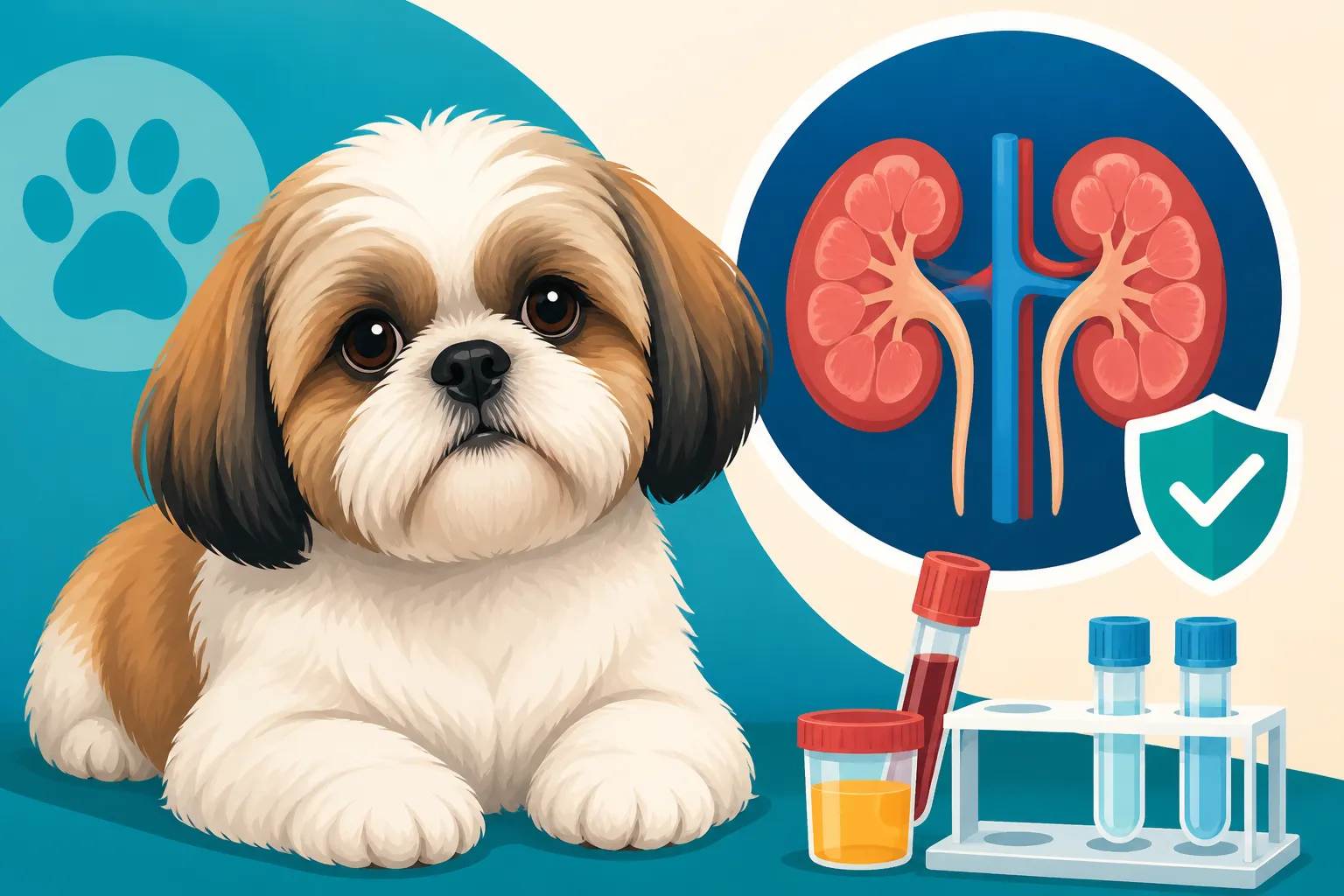
Testing a Shih Tzu for Kidney Disease
It’s a heart-wrenching reality for many Shih Tzu owners: the insidious way kidney disease can creep up, often showing no obvious symptoms until it’s alarmingly advanced. You might notice your beloved companion just seems a little "off," perhaps drinking a bit more, or having an accident in the house when they never used to. These subtle shifts can be incredibly frustrating to pinpoint, leaving you worried and wondering if something serious is happening beneath that fluffy exterior. This guide is here to demystify the process of identifying kidney disease in your Shih Tzu, walking you through the various tests available and what each one can tell you about your dog's kidney health.
Understanding Kidney Disease in Shih Tzus
When we talk about kidney disease in our furry friends, it's not a single, simple condition. It’s a broad term that encompasses a range of issues affecting these vital organs, which are responsible for filtering waste from the blood, regulating blood pressure, and producing hormones. For a breed like the Shih Tzu, with their unique genetic background, certain kidney problems can be a particular concern, making vigilance and early detection even more crucial.
Why Shih Tzus Are Prone to Kidney Issues
Shih Tzus, unfortunately, can be predisposed to certain kidney conditions. One of the most significant is a genetic disorder called Renal Dysplasia. This condition means the kidneys don't develop properly, leading to structural abnormalities that can impair function from a very young age. While not every Shih Tzu will have Renal Dysplasia, the breed as a whole does seem to have a higher incidence compared to many others. This predisposition is why proactive testing and understanding the signs are so incredibly important for Shih Tzu parents. It's not about being alarmist, but about being informed and prepared to give our little lions the best chance at a long, healthy life.
Beyond specific genetic conditions, all dogs can be susceptible to acquired kidney disease as they age, just like humans. Factors like diet, exposure to toxins, infections, or even other health conditions like high blood pressure or dental disease can all contribute to kidney damage over time. Because Shih Tzus often live long lives, reaching well into their teen years, the cumulative effect of these factors can become a real concern, especially as they enter their senior years. This is why vigilance throughout their life, not just in puppyhood, is key.
Recognizing Early, Subtle Signs
The biggest challenge with kidney disease is that by the time overt symptoms appear, a significant portion of kidney function—sometimes as much as 75%—may already be lost. This is why recognizing early, subtle changes is so vital. You might notice your Shih Tzu is drinking more water than usual, perhaps draining their bowl faster or asking to go outside more frequently. This increased thirst is often one of the first indicators, signaling that the kidneys are working harder to flush out toxins. If you ever notice your Shih Tzu exhibiting what seems like excessive thirst as the first kidney sign, it's definitely time for a vet visit.
Another common, yet easily overlooked, sign is changes in urination. More frequent urination, larger puddles, or even an increase in nighttime accidents can all point to kidney issues. Beyond these, subtle shifts in energy levels, a decreased appetite, or even a duller coat can sometimes be precursors. Your dog might just seem a little "off" – less playful, more lethargic, or simply not as vibrant as usual. It’s easy to dismiss these as just "getting older" or "a bad day," but for a Shih Tzu with a genetic predisposition, these nuances can be critical clues. Keeping an eye on their regular habits and noticing any deviation, no matter how small, can make a huge difference.
Routine Veterinary Check-ups and Screening
Regular veterinary care is the cornerstone of preventative health for any dog, and it's especially true for Shih Tzus when it comes to kidney health. Many owners understandably dread vet visits, especially if their dog gets stressed, but these appointments are absolutely non-negotiable for early detection of potential problems. Think of it as your annual maintenance check for a beloved car – you wouldn't skip that, would you?
The Importance of Annual Wellness Exams
Your Shih Tzu’s annual wellness exam is far more than just vaccinations. It's a comprehensive health assessment where your veterinarian can catch subtle changes you might miss at home. During these visits, your vet will perform a thorough physical examination, feeling their abdomen, listening to their heart and lungs, and checking their overall body condition. They’ll also ask you about any changes you’ve noticed in your dog’s behavior, appetite, or bathroom habits. These conversations are crucial, as your observations provide valuable context that standard tests alone can’t capture. Don't be shy about mentioning even the smallest concern, like if your Shih Tzu is leaving its food more often or just seems a little less enthusiastic on walks.
These routine visits also provide an opportunity for your vet to establish a baseline for your Shih Tzu's health. Over time, comparing current bloodwork and urinalysis results to previous ones can reveal trends, even if individual readings fall within the "normal" range. This historical data is incredibly valuable for detecting a gradual decline in kidney function that might not be obvious from a single test. This proactive approach helps ensure that potential issues are identified early, when intervention is most effective. Many pet insurance providers, like Healthy Paws, emphasize the importance of preventative care and routine check-ups in their plans, understanding that early detection can prevent more serious, costly conditions down the line.
Standard Bloodwork and Urinalysis
When it comes to screening for kidney disease, standard bloodwork and a urinalysis are your first line of defense. These are typically part of any comprehensive annual exam, especially for middle-aged and senior Shih Tzus.
Bloodwork
The key indicators on a routine blood chemistry panel for kidney function are:
- Blood Urea Nitrogen (BUN): Urea is a waste product of protein metabolism that is filtered by the kidneys. Elevated BUN can indicate reduced kidney function, but it can also be affected by hydration, diet, and gastrointestinal bleeding.
- Creatinine: A waste product from muscle metabolism, creatinine is also filtered by the kidneys. High creatinine levels are a strong indicator of kidney impairment. However, both BUN and creatinine usually don't show significant elevation until about 75% of kidney function is lost, which is why relying solely on these can mean missing early-stage disease.
- Phosphorus and Calcium: Kidneys play a crucial role in regulating these minerals. As kidney function declines, phosphorus levels often rise, and calcium levels can fluctuate, sometimes dropping or becoming elevated depending on the stage and progression of the disease.
- Symmetric Dimethylarginine (SDMA): This is a newer, more sensitive blood test that can detect kidney disease much earlier than BUN and creatinine, sometimes when as little as 25% of kidney function is lost. SDMA levels are directly correlated with kidney filtration rate. Many vets are now including SDMA as a standard part of senior panels and even routine wellness bloodwork for at-risk breeds like Shih Tzus, providing a crucial early warning system. If your vet doesn't routinely run an SDMA, it's worth asking for it.
Urinalysis
A urinalysis provides invaluable information about how well the kidneys are concentrating urine and filtering waste. It typically involves several key measurements:
- Urine Specific Gravity (USG): This measures the concentration of the urine. If the kidneys are not functioning properly, they may be unable to concentrate urine effectively, leading to a low specific gravity (dilute urine), even if the dog is dehydrated. This is often an earlier indicator than elevations in BUN or creatinine.
- Protein in Urine: The presence of excessive protein in the urine can indicate kidney damage, as healthy kidneys should retain most proteins in the blood. This is often evaluated further with a Urine Protein-Creatinine Ratio (UPC).
- Glucose, pH, Ketones: While not direct indicators of kidney disease, abnormal levels can point to other health issues that might impact kidney function or overall health, such as diabetes.
- Sediment Examination: The urine is spun down, and the sediment is examined under a microscope for red blood cells, white blood cells, crystals (which can lead to bladder stones and urinary problems in Shih Tzus), bacteria, or casts (cylindrical structures that can indicate kidney tubule damage).
Collecting a "clean catch" urine sample, often through cystocentesis (a sterile sample collected directly from the bladder with a needle), is ideal for accurate results, especially if bacterial infection is suspected. Your vet can advise on the best method for your Shih Tzu.
Advanced Diagnostic Tests for Kidney Function
While routine bloodwork and urinalysis are excellent screening tools, sometimes your veterinarian will need to delve deeper to get a full picture of your Shih Tzu's kidney health. This might happen if initial tests raise concerns, or if your dog is showing symptoms that suggest a more advanced or specific kidney issue.
Specific Gravity and Urine Protein-Creatinine Ratio
We touched on Urine Specific Gravity (USG) earlier, but it's worth emphasizing its importance. A persistently low USG, even when your Shih Tzu is drinking a normal amount, suggests that their kidneys are struggling to concentrate urine. This can be one of the earliest red flags. Your vet will look at this alongside other blood values to determine if it's indicative of kidney disease or other issues, like excessive water intake (psychogenic polydipsia) or other hormonal imbalances.
The Urine Protein-Creatinine Ratio (UPC) is a crucial test when protein is detected in a standard urinalysis. Proteinuria, or excessive protein in the urine, is a significant sign of kidney damage, particularly to the glomeruli—the tiny filters in the kidneys. The UPC ratio helps quantify the amount of protein being lost, and importantly, it helps differentiate between protein coming from the kidneys versus protein from an infection or inflammation in the lower urinary tract. A high UPC ratio consistently indicates kidney disease, even if BUN and creatinine levels are still within normal limits, especially early on when the damage might be mild. Monitoring this ratio over time is critical for tracking disease progression and the effectiveness of any prescribed treatments.
Imaging Techniques: Ultrasound and X-rays
Sometimes, your veterinarian needs to literally "look" inside your Shih Tzu to assess kidney structure. This is where imaging comes in.
- Abdominal X-rays: While X-rays don't show the internal texture of organs, they can reveal the size, shape, and position of the kidneys. More importantly, X-rays are excellent for detecting radio-opaque kidney stones or bladder stones in a Shih Tzu, which can cause significant damage and pain. They can also provide a general overview of the abdominal cavity, ruling out other conditions.
- Abdominal Ultrasound: This non-invasive procedure is invaluable for visualizing the internal architecture of the kidneys in detail. A veterinary radiologist or your regular vet can use ultrasound to look for changes in kidney size, shape, and texture; identify cysts, tumors, or abscesses; and assess the blood flow to the kidneys. Ultrasound can also detect blockages in the ureters (tubes connecting kidneys to the bladder) or changes consistent with conditions like Renal Dysplasia. This allows for a much more precise diagnosis than bloodwork alone can offer, helping to guide treatment plans. If a specific structural problem is suspected, an ultrasound is often the next step after initial blood and urine tests.
Kidney Biopsy and Genetic Testing
For some complex cases, a definitive diagnosis may require a kidney biopsy. This procedure involves taking a small tissue sample from the kidney, usually guided by ultrasound, and then examining it under a microscope by a veterinary pathologist. A biopsy can identify the specific type of kidney disease (e.g., glomerulonephritis, amyloidosis, or the characteristic structural abnormalities of Renal Dysplasia), determine the extent of damage, and help predict the progression of the disease. It's a more invasive procedure, typically performed under general anesthesia, and your vet will discuss the risks and benefits thoroughly. However, for certain conditions, it provides invaluable information that no other test can.
Regarding genetic testing, while there isn't a single universal genetic test for "kidney disease" in Shih Tzus, specific DNA panels might be available for conditions like Renal Dysplasia if a particular genetic marker has been identified in the breed. For example, some breed-specific registries or health programs might recommend DNA tests for breeding dogs to help reduce the incidence of inherited conditions. If you're considering breeding your Shih Tzu or if you've adopted a puppy from a breeder, inquire about whether any genetic testing for kidney conditions was performed on the parents, as this can give you an idea of your puppy's predisposition. For more information on inheritance, you might want to look into whether Renal Dysplasia is inherited in Shih Tzus.
| Test Category | Specific Test | What It Measures/Reveals | Typical Timing | Significance for Shih Tzus |
|---|---|---|---|---|
| Routine Screening | Blood Urea Nitrogen (BUN) | Waste product from protein metabolism. Elevated in later-stage kidney disease. | Annual wellness exams (all ages) | General indicator, but less sensitive for early detection. |
| Creatinine | Waste product from muscle metabolism. Elevated in later-stage kidney disease. | Annual wellness exams (all ages) | General indicator, less sensitive for early detection. | |
| Symmetric Dimethylarginine (SDMA) | Waste product from cell metabolism. Earlier indicator of kidney decline. | Annual wellness exams (especially senior) | Crucial for early detection, even before symptoms. | |
| Urinalysis (USG) | How well kidneys concentrate urine. Low USG indicates impaired concentrating ability. | Annual wellness exams (all ages) | Often one of the first signs of dysfunction. | |
| Urinalysis (Protein/Glucose/Cells) | Presence of protein, sugar, blood, or crystals. | Annual wellness exams (all ages) | Can indicate infection, inflammation, or kidney damage. | |
| Advanced Diagnostics | Urine Protein-Creatinine Ratio (UPC) | Quantifies protein loss in urine due to kidney damage. | If protein found in urinalysis. | Important for diagnosing and monitoring protein-losing nephropathy. |
| Abdominal X-rays | Kidney size, shape, position; presence of kidney/bladder stones. | If stones suspected or kidney structure needs assessment. | Can detect stone formation common in some Shih Tzus. | |
| Abdominal Ultrasound | Detailed view of kidney internal structure, cysts, tumors, blood flow. | If structural issues or specific disease suspected. | Essential for diagnosing Renal Dysplasia and other structural abnormalities. | |
| Kidney Biopsy | Definitive diagnosis of specific kidney disease type and extent of damage. | For complex cases, when other tests are inconclusive. | Provides precise diagnosis for targeted treatment. | |
| Genetic Testing (e.g., Renal Dysplasia) | Identifies specific genetic mutations predisposing to certain kidney conditions. | Pre-breeding, or if a specific genetic cause is suspected. | Helps breeders reduce incidence and can inform prognosis. |
Interpreting Test Results and Next Steps
Getting back your Shih Tzu's test results can be a nerve-wracking experience. You might be looking at a sheet full of numbers and acronyms, wondering what it all means for your furry family member. It’s a lot to take in, and it's completely normal to feel a bit overwhelmed. But remember, these results are tools, providing information to help your vet formulate the best plan moving forward.
When "Normal" Isn't Good Enough
One of the most frustrating aspects of kidney disease, particularly in its early stages, is that some values might still technically fall within the "normal" reference range, especially for older or predisposed Shih Tzus. This is where your veterinarian's expertise, and your insights as an owner, become absolutely invaluable. For example, if your Shih Tzu's creatinine level has been consistently at, say, 0.7 mg/dL for years, and now it's 1.2 mg/dL, even if 1.2 is still technically within the "normal" range for some labs, that upward trend is a significant red flag for your vet. This is often how Shih Tzu kidney values on routine bloodwork start to tell a story.
A slight elevation in SDMA, even with normal BUN and creatinine, can signal early kidney decline. Similarly, a consistently low urine specific gravity, indicating dilute urine, is a strong indicator of reduced kidney function, even if the other blood values haven't caught up yet. Your vet will look at the entire picture – all the blood and urine values, any imaging results, your dog's age, breed predisposition, and the clinical signs you've observed at home. It’s not just about hitting a "positive" or "negative" mark; it’s about understanding the nuances and trends that might indicate a subtle, ongoing process.
Working with Your Veterinarian for a Diagnosis
Once the tests are in, your veterinarian will carefully go over them with you. This is your chance to ask every question you have, no matter how small it seems. Don't hesitate to ask for clarification on any terms or numbers you don't understand. Your vet will piece together all the information from the physical exam, your observations, and the test results to form a diagnosis. They'll explain what the findings mean for your Shih Tzu, whether it’s early-stage kidney disease, an acute kidney injury, or a chronic condition like the aforementioned Renal Dysplasia.
If kidney disease is diagnosed, even in its earliest stages, the next steps will involve discussing a management plan. This might include further diagnostic tests, dietary changes, or the introduction of medications. Remember, early detection, especially with sensitive tests like SDMA, gives you and your vet the best opportunity to intervene and slow the progression of the disease, significantly improving your Shih Tzu's quality of life and potentially extending their lifespan. Your vet is your partner in this journey, and open communication is key to navigating the complexities of your Shih Tzu's health.
Managing Kidney Disease Once Diagnosed
Receiving a kidney disease diagnosis for your beloved Shih Tzu can feel devastating, and it's completely normal to feel a flood of emotions – fear, sadness, and even guilt. But please know, this isn't a death sentence. While kidney disease is often progressive, there are many effective strategies to manage the condition, slow its progression, and ensure your Shih Tzu maintains a good quality of life for as long as possible. The key is proactive management and a strong partnership with your veterinary team.
Dietary Changes and Nutritional Support
Perhaps the single most impactful intervention for managing kidney disease is a specialized renal diet. These prescription diets are specifically formulated to reduce the workload on the kidneys and minimize the accumulation of waste products in the blood. They typically feature:
- Controlled Protein Levels: Not necessarily "low" protein, but high-quality protein in controlled amounts. This reduces the production of nitrogenous waste products (like BUN) that damaged kidneys struggle to filter, while still providing essential amino acids to maintain muscle mass.
- Reduced Phosphorus: Elevated phosphorus levels are a common and damaging consequence of kidney disease. Renal diets significantly restrict phosphorus to prevent hyperphosphatemia, which can worsen kidney damage and contribute to other health issues. For more specific information, you can research kidney diets for a Shih Tzu.
- Controlled Sodium: Lower sodium levels help manage blood pressure, which is often elevated in dogs with kidney disease, and reduce fluid retention.
- Increased Omega-3 Fatty Acids: These beneficial fats, particularly EPA and DHA, have anti-inflammatory properties that can help protect kidney tissue and slow disease progression.
- Added B Vitamins: Water-soluble B vitamins are often lost in greater amounts through the urine when kidney function is impaired, so renal diets typically supplement these.
Transitioning your Shih Tzu to a new diet needs to be done gradually over several days to avoid digestive upset. It can sometimes be a challenge, as kidney diets aren't always the most palatable, and dogs with kidney disease often have a reduced appetite. Your vet can provide tips for encouraging your dog to eat, such as warming the food slightly or trying different brands of prescription renal diets, like those offered by Hills Prescription Diet or Purina Pro Plan Veterinary Diets. Remember, consistent adherence to the diet is crucial for its effectiveness.
Medications and Supportive Therapies
Beyond diet, several medications and supportive therapies can help manage the symptoms and slow the progression of kidney disease in Shih Tzus. Your vet will tailor a protocol based on your dog's specific condition and stage of disease.
- Phosphorus Binders: If dietary restriction alone isn't enough to control phosphorus levels, your vet might prescribe phosphorus binders, which are medications given with meals to bind excess phosphorus in the gut, preventing its absorption.
- Fluid Therapy: Dehydration is a major concern for dogs with kidney disease because their kidneys struggle to conserve water. Subcutaneous (under the skin) fluid administration at home can be a game-changer, helping to flush toxins and maintain hydration. Your vet will teach you how to administer fluids safely and effectively. This is particularly important for managing water intake for a Shih Tzu with kidney disease.
- Blood Pressure Medication: Hypertension (high blood pressure) is common in kidney disease and can further damage the kidneys, heart, and eyes. Medications like ACE inhibitors or calcium channel blockers are often prescribed to manage blood pressure.
- Anti-Nausea/Appetite Stimulants: Many dogs with kidney disease experience nausea and a poor appetite due to the buildup of toxins. Medications to control nausea (antiemetics) and stimulate appetite can help ensure your Shih Tzu gets the nutrition they need.
- Potassium Supplements: Some dogs with kidney disease may develop low potassium levels, which can lead to muscle weakness and further kidney damage. Potassium supplements might be prescribed if needed.
- Anemia Management: As kidney disease progresses, the kidneys produce less erythropoietin, a hormone vital for red blood cell production, which can lead to anemia. In some cases, specific medications can help stimulate red blood cell production.
Managing kidney disease is an ongoing process that requires regular monitoring through blood and urine tests. Your vet will schedule follow-up appointments to track your Shih Tzu's kidney values, adjust medications as needed, and assess their overall well-being. With careful management and a lot of love, many Shih Tzus can live comfortably for extended periods after a kidney disease diagnosis.
Disclaimer
This article is intended for informational purposes only and does not constitute veterinary advice. Always consult with a qualified veterinarian for any health concerns or before making any decisions about your Shih Tzu's care.