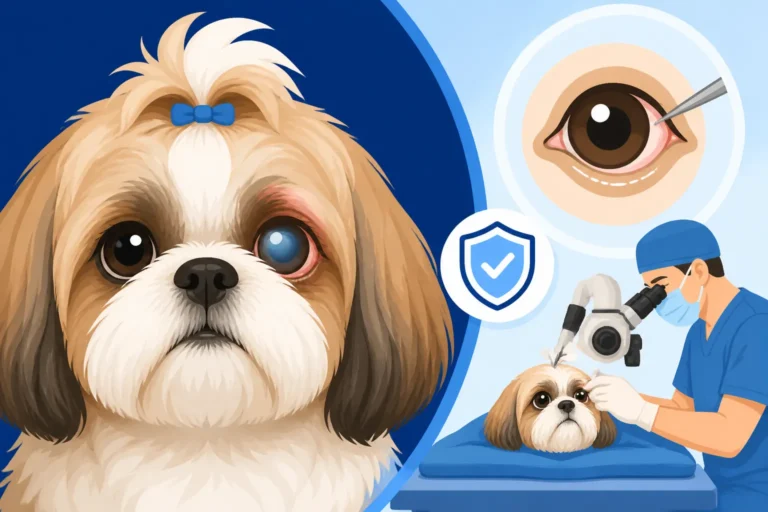
Setting a Shih Tzu Deductible Against Eye Bills
Bringing a Shih Tzu into your life is an absolute joy, but it also comes with a unique set of responsibilities, especially when it comes to their health. One of the most common and often expensive health concerns for our beloved flat-faced companions are eye problems. The fear of an unexpected, high-cost vet bill for an eye emergency or chronic condition can be incredibly stressful. This guide is here to walk you through how to strategically set your pet insurance deductible to best prepare for and manage those inevitable Shih Tzu eye bills.
The Unique Vulnerability of Shih Tzu Eyes
It's no secret that Shih Tzus have those beautiful, expressive, often bulging eyes that steal our hearts. But these very features, a hallmark of their brachycephalic (flat-faced) breed, also make them incredibly susceptible to a host of eye issues. Understanding these vulnerabilities is the first step in appreciating why thoughtful financial planning, including your pet insurance deductible, is so critical.
Common Eye Conditions in Shih Tzus
Our little lion dogs, while regal, often face a lifetime of potential eye challenges. One of the most alarming is Shih Tzu Eye Proptosis, the Emergency Owners Miss, where the eyeball actually pops out of its socket. It sounds terrifying because it is, and it's an immediate, costly emergency. But beyond such dramatic events, there are more insidious, chronic issues that can rack up bills over time. Many Shih Tzus suffer from conditions like Shih Tzu Corneal Ulcers and Dry Eye, which can require lifelong medication and frequent vet visits. Their prominent eyes are also prone to irritation and damage from eyelashes growing inward, known as entropion or distichiasis, which falls under the umbrella of Shih Tzu Eyelash and Eyelid Problems, often requiring surgical correction. Even something as common as Pigmentary Keratitis in a Shih Tzu, where dark pigment spreads across the cornea, can eventually impair vision and needs ongoing management. Then there are age-related issues like Cataracts Behind a Shih Tzu's Bulging Eye, which might require specialist surgery. These aren't just minor inconveniences; they are serious conditions that demand prompt and often specialized veterinary attention.
Why These Conditions Lead to High Bills
When your Shih Tzu develops an eye issue, it's rarely a simple, inexpensive fix. First, the delicate nature of the eye often means a general practitioner vet might refer you to a veterinary ophthalmologist, a specialist whose services naturally come at a higher price point. Imagine a scenario where your Shih Tzu suddenly starts squinting, and after an initial vet visit, you're told it's a deep corneal ulcer. The initial exam might be reasonable, but then come diagnostic tests, specialized medications, follow-up appointments, and potentially even surgery if the ulcer doesn't heal. For an emergency like a proptosis, you're looking at an immediate emergency room visit, surgical replacement of the eye, and extensive aftercare, easily running into thousands of dollars. Even chronic conditions like dry eye, while not as acutely expensive as surgery, can lead to substantial ongoing costs for prescription eye drops for a Shih Tzu Each Month, artificial tears, and regular check-ups to monitor progression and prevent complications. These ongoing expenses, combined with the potential for sudden, severe emergencies, highlight why the financial burden of Shih Tzu eye care can be so significant, often catching owners off guard.
Understanding Pet Insurance Deductibles for Eye Care
Navigating the world of pet insurance can feel like trying to untangle a particularly stubborn Shih Tzu mat – confusing and a little overwhelming. But when it comes to protecting your furry friend's precious peepers, understanding how deductibles work is absolutely essential. It directly impacts how much you pay out of pocket before your insurance coverage kicks in.
How Deductibles Work
At its core, a deductible is simply the amount of money you, the pet owner, are responsible for paying toward your pet's veterinary care before your insurance provider starts to reimburse you. Most pet insurance policies offer different deductible structures. The most common is an annual deductible, meaning you pay this amount once per policy year, regardless of how many different conditions or incidents your Shih Tzu experiences. Once you've met that annual deductible, your reimbursement kicks in for all eligible claims for the remainder of that policy year.
Another less common, but still available, structure is a per-condition deductible. With this model, you pay the deductible amount for each new condition your Shih Tzu is diagnosed with. So, if your dog gets dry eye, you pay the deductible. Later, if they develop a corneal ulcer (even if related to the dry eye, depending on policy terms), you pay another deductible for that new condition. For breeds like Shih Tzus, prone to multiple eye issues, a per-condition deductible can quickly become very expensive as you might be paying multiple deductibles for different eye-related problems throughout the year. For this reason, an annual deductible is generally preferred by most Shih Tzu owners, as it caps your out-of-pocket for the year before reimbursement begins.
The Impact of Your Deductible Choice on Reimbursement
Your choice of deductible directly impacts your monthly premium and, more importantly, how much you ultimately get back from your insurance company when you file a claim. Generally, a higher deductible means a lower monthly premium. This sounds attractive, right? You save money every month. However, it also means you'll have to pay more out of pocket each time your Shih Tzu needs significant veterinary care before your insurance starts contributing. Conversely, a lower deductible results in a higher monthly premium, but the insurance kicks in much sooner, meaning you pay less at the time of treatment.
Consider a situation where your Shih Tzu needs Shih Tzu Proptosis Emergency Surgery Cost, which can be upwards of $3,000-$5,000. If you have a $1,000 deductible, you'd pay the first $1,000, and then your insurance would cover a percentage (e.g., 80-90%) of the remaining $2,000-$4,000. But if you chose a $250 deductible, your out-of-pocket at the time of the incident would be significantly less, perhaps only $250, before the reimbursement percentage applied to the much larger remaining bill. The difference in immediate cash outlay can be substantial, especially for unforeseen emergencies. Understanding this balance is key to making an informed decision that suits your financial comfort and your Shih Tzu's potential health needs.
Pre-Existing Conditions and Eye Issues
This is perhaps one of the most crucial aspects to understand when insuring a Shih Tzu, especially concerning their eyes. Most pet insurance policies, including popular ones from providers like Healthy Paws, have strict rules about pre-existing conditions. A "pre-existing condition" is any illness or injury that your pet showed signs of, or was diagnosed with, before your insurance coverage began, or during the policy's waiting period.
For Shih Tzus, this is particularly relevant. If your Shih Tzu has already experienced a corneal ulcer, dry eye, or even significant tear staining that required vet attention before you enroll in a policy or before your waiting period is over, those specific conditions or directly related ones might be considered pre-existing. This means the insurance company would likely not cover any future treatments, medications, or surgeries related to those pre-existing eye issues. This makes it absolutely vital to enroll a Shih Tzu Before Its First Eye Problem, ideally as a puppy. The earlier you get coverage, the less likely common Shih Tzu eye issues will be flagged as pre-existing. Always review the policy details carefully, paying close attention to the definition of "pre-existing conditions" and any specific exclusions related to brachycephalic breeds or chronic eye conditions, as these can vary significantly between providers.
Strategies for Setting Your Shih Tzu's Eye Care Deductible
Choosing the right deductible isn't just about picking a number; it's about finding a balance that works for your budget while offering peace of mind for your Shih Tzu's distinct health profile. With their predisposition to eye issues, this decision takes on even greater importance.
Assessing Your Financial Comfort Level
Before you even look at specific plans, take an honest inventory of your financial situation. How much could you comfortably afford to pay out of pocket if your Shih Tzu suddenly needed urgent care for a Shih Tzu Eye Proptosis, the Emergency Owners Miss, or another serious eye condition tomorrow? Would a $1,000 bill put you in a bind? Or could you handle that without much stress?
- Consider your emergency fund: Do you have a dedicated savings account for pet emergencies? If so, how much is in it? This fund can act as your "self-funded deductible."
- Monthly budget: How much can you realistically allocate to your pet insurance premium each month without feeling a squeeze? Remember, a lower deductible means a higher monthly premium, and vice-versa.
- Tolerance for risk: Are you someone who prefers to pay more monthly for the security of a lower out-of-pocket expense during an emergency, or are you comfortable with a higher deductible to save on monthly premiums, gambling that you might not need to hit it often?
For many Shih Tzu owners, given the predictability of some eye issues (like chronic dry eye) but the unpredictability of others (like sudden injury or proptosis), a middle-ground deductible often strikes the best balance. It keeps monthly premiums manageable while still providing substantial relief for major, unexpected costs.
Balancing Premiums and Deductibles
It's a classic seesaw relationship: as one goes up, the other tends to go down.
- High Deductible, Low Premium: This option is appealing if you want to keep your monthly expenses low. It assumes you'll cover a larger portion of the initial vet bills yourself. This might work for someone with a robust emergency savings fund who views insurance as protection against catastrophic, multi-thousand-dollar events. For example, if your Shih Tzu requires Shih Tzu Eye Removal Cost due to irreparable damage, the bill could be substantial. A higher deductible might mean you pay the first $1,000 or $2,500, but the remaining 80-90% is still a huge relief.
- Low Deductible, High Premium: This option means you pay more each month but significantly less out-of-pocket when your Shih Tzu needs care. If a Shih Tzu develops chronic dry eye, requiring frequent vet visits and ongoing medication, a low deductible could mean the insurance starts contributing much faster to those recurring costs. This is often preferred by owners who want maximum coverage and minimal immediate financial strain during vet visits.
Let's look at a hypothetical scenario for a common Shih Tzu eye surgery, like for Shih Tzu Entropion Surgery Cost, which can range from $1,500 to $3,000 per eye.
| Deductible Chosen | Monthly Premium (Example) | Out-of-Pocket for a $2,000 Surgery (80% Reimbursement) | Total Annual Cost (Premium + Deductible + Co-pay) |
|---|---|---|---|
| $100 | $60 | $100 (deductible) + $380 (20% of remaining $1900) = $480 | $720 (premium) + $480 (out-of-pocket) = $1,200 |
| $250 | $50 | $250 (deductible) + $350 (20% of remaining $1750) = $600 | $600 (premium) + $600 (out-of-pocket) = $1,200 |
| $500 | $40 | $500 (deductible) + $300 (20% of remaining $1500) = $800 | $480 (premium) + $800 (out-of-pocket) = $1,280 |
| $1,000 | $30 | $1,000 (deductible) + $200 (20% of remaining $1000) = $1,200 | $360 (premium) + $1,200 (out-of-pocket) = $1,560 |
Note: Monthly premiums and vet costs are illustrative examples and will vary based on location, age, specific provider, and actual vet fees.
As you can see, the higher the deductible, the less you pay monthly, but the more you pay when an issue arises. For many, finding a sweet spot around the $250-$500 deductible range feels most comfortable, offering a good balance between manageable monthly costs and reasonable out-of-pocket expenses during a health event. It’s important to remember that these figures don’t account for potential multiple claims in a year, which is where an annual deductible really shines.
The "Sweet Spot" for Shih Tzu Eye Health Deductibles
For many Shih Tzu owners, a deductible in the $250 to $500 range often proves to be the "sweet spot." Here's why:
- Manageable Monthly Premiums: This range typically offers premiums that are affordable for most budgets, avoiding the sticker shock of very low deductible plans. For instance, you might see your Shih Tzu Insurance Premiums Month by Month be significantly higher with a $100 deductible versus a $250 one.
- Significant Relief for Major Bills: While you're still responsible for the initial $250-$500, this amount is generally much more manageable than the full cost of a $2,000+ eye surgery or emergency. What 70 Percent Leaves on Shih Tzu Eye Surgery can still be a large sum, so minimizing your initial payment helps.
- Covers Multiple Minor Incidents: With an annual deductible in this range, if your Shih Tzu has several smaller eye issues in a year – say, a couple of visits for corneal abrasions, then a bout of conjunctivitis – you're likely to meet your deductible relatively quickly. After that, your insurance starts reimbursing for all subsequent eligible claims, easing the burden of ongoing care.
- Avoids Underinsuring: Choosing an extremely high deductible might save you money on premiums, but it could mean that for anything less than a very major, multi-thousand-dollar event, you're effectively self-insuring because the deductible is so high that the policy's benefit doesn't kick in often enough to feel worthwhile.
Ultimately, the "sweet spot" is personal, but for a breed with such specific and potentially costly health vulnerabilities like the Shih Tzu's eyes, striking a balance that offers both financial predictability and robust coverage is paramount. Always read the policy details, especially regarding any specific breed exclusions or limitations related to brachycephalic conditions, before making your final decision.
Beyond the Deductible: Managing Ongoing Shih Tzu Eye Health Costs
While choosing the right deductible is a huge part of being prepared for Shih Tzu eye bills, it's not the only piece of the puzzle. A truly comprehensive approach involves proactive care, smart financial planning, and selecting the best overall policy for your beloved companion.
Wellness Plans and Routine Eye Care
Many pet insurance providers, or even some veterinary clinics, offer optional wellness plans. These plans are separate from accident and illness insurance and typically cover routine care like annual exams, vaccinations, and sometimes even a portion of dental cleanings. While they don't usually cover major eye surgeries or chronic disease management, they can be incredibly beneficial for proactive eye care.
Regular veterinary check-ups are crucial for catching potential Shih Tzu eye problems early, before they escalate into more severe or costly issues. For example, a vet might spot the beginnings of dry eye or detect abnormal eyelash growth during a routine visit, allowing for early intervention with prescription drops or a minor procedure. Some wellness plans might contribute to the cost of these routine visits, making it easier to keep up with preventative care. It's an investment in early detection, which can often save you significant money and your Shih Tzu discomfort in the long run.
Emergency Funds and Other Financial Safety Nets
Even with pet insurance, there will always be some out-of-pocket expenses due to deductibles, co-pays, and services not covered by your plan. This is where having an emergency fund specifically for your pet becomes invaluable. Think of it as your safety net for the unexpected, or to cover the portion that your insurance won't.
- Dedicated Savings Account: Set up a separate savings account and contribute a small amount to it regularly. This fund can cover your deductible, your co-payment (typically 10-30% of the bill after the deductible is met), or any costs for conditions deemed pre-existing.
- Veterinary Credit Lines: Companies like CareCredit offer special credit cards for veterinary expenses, often with promotional interest-free periods if the balance is paid within a certain timeframe. This can be a lifesaver for immediate, high-cost emergencies where you don't have enough cash on hand.
- Budgeting for a Shih Tzu With Chronic Eye Disease: If your Shih Tzu develops a chronic condition, like recurring corneal ulcers or lifelong dry eye, factor in the ongoing costs for prescription refills, special cleaning solutions, and regular follow-up appointments when planning your monthly budget. Organizations like Chewy and Ollie also offer convenient ways to manage recurring pet supply and food deliveries, potentially freeing up mental bandwidth and a little budget for those unexpected health costs.
Choosing the Right Policy and Provider
Selecting the best pet insurance policy for your Shih Tzu goes beyond just the deductible; it involves looking at the full picture of coverage, exclusions, and the provider's reputation.
- Read the Fine Print: Always, always read the entire policy document before signing up. Pay close attention to waiting periods, annual limits, per-incident limits, and any breed-specific exclusions. Some policies might have limitations on conditions common to brachycephalic breeds, so clarify these upfront.
- Compare Providers: Don't just pick the first policy you see. Research multiple providers. Companies like Healthy Paws are known for comprehensive accident and illness plans with a range of deductible and reimbursement options. Compare their offerings, customer reviews, and claims process efficiency. A good comparison will show you not only the price, but the actual value and peace of mind you're getting.
- Understand Reimbursement Percentages: Most policies offer reimbursement percentages ranging from 70% to 90%. While a 90% reimbursement costs more in monthly premiums, it significantly reduces your out-of-pocket expenses for large claims.
- Customer Service and Claims Process: A smooth claims process and responsive customer service can make a world of difference during a stressful veterinary emergency. Look for reviews on how quickly providers pay out claims and how easy it is to communicate with them.
- Enroll Early: As mentioned before, enrolling your Shih Tzu when they are young, ideally as a puppy, is the best way to avoid eye conditions being labeled as pre-existing, ensuring the broadest possible coverage for their entire life.
By combining a smart deductible choice with proactive care and a well-researched insurance policy, you can ensure that you're well-prepared for any eye-related health challenges your adorable Shih Tzu might face, giving them the best chance at a long, happy, and comfortable life.
Disclaimer
This article is for general informational purposes only and does not constitute professional advice. Laws, prices and regulations vary by location and change over time. Consult a qualified professional for guidance on your specific situation.