Getting a Shih Tzu to Enter Its Carrier
It’s a scenario many Shih Tzu owners know all too well: the carrier comes out, and your sweet, fluffy companion suddenly transforms into a furry, four-legged escape artist. They might dart under the sofa, plaster themselves against your legs, or simply become dead weight, making the seemingly simple act of getting them inside a genuine wrestling match. This isn’t just inconvenient; it can be distressing for both you and your little one. This guide is here to help you turn that stressful struggle into a calm, even willing, entry by understanding why your Shih Tzu resists and how to build positive associations.
Understanding Why Your Shih Tzu Resists the Carrier
For a creature as small and sensitive as a Shih Tzu, the carrier often represents more than just a box. It’s a symbol, a harbinger of things to come, and unfortunately, those things are often not their favorite activities. We, as owners, inadvertently teach them to fear it.
The Carrier as a Negative Experience
Think about it from your Shih Tzu's perspective. When does the carrier usually appear? More often than not, it's pulled out for trips to the veterinarian for shots, exams, or perhaps even an uncomfortable procedure. It's used for grooming appointments, which, while necessary, can involve strange noises, unfamiliar hands, and long periods away from you. For a dog that thrives on comfort and companionship, these experiences, even if ultimately for their good, can be quite stressful.
Each time the carrier signals an impending "unpleasant" event, your Shih Tzu learns to associate the carrier itself with fear, anxiety, or discomfort. It becomes a pre-trip indicator of stress, much like the sound of car keys can signal a ride, but in this case, a ride they'd rather skip. This negative conditioning is powerful, and it's why you see that immediate change in their demeanor.
It's not that your Shih Tzu is being "stubborn" or "difficult" intentionally. They are simply reacting to a learned association. Their tiny brains have made a connection: carrier = something I don't like. Over time, this can escalate from mild reluctance to full-blown panic, making those necessary trips even harder on everyone involved.
Lack of Positive Association
The flip side of negative experiences is a lack of positive ones. How often do you use the carrier for something fun? Probably not very often, right? Most of us only pull it out when absolutely necessary, pack the dog in, and head straight to the destination. There's no build-up of good feelings, no joyful anticipation linked to the carrier itself.
Imagine if every time you saw a certain type of bag, it meant you were going to the dentist, no matter what. You’d probably start avoiding that bag too! For your Shih Tzu, the carrier rarely signals a fun trip to the park, a visit with a favorite friend, or a tasty new treat. It just means the car ride, the vet, or the groomer. Because of this, the carrier is perceived as a trap rather than a cozy den.
This lack of positive association means there's nothing to counteract the bad feelings. The carrier just sits there, an inanimate object, until it suddenly becomes a symbol of stress. Building positive experiences is crucial to changing this perception and turning the carrier into something your Shih Tzu approaches with curiosity, or even eagerness.
The Shih Tzu's Sensitive Nature
Shih Tzus are a toy breed, and they are inherently sensitive. Their small stature means the world can often feel much larger and more intimidating to them. Being enclosed in a carrier, even a perfectly comfortable one, can feel restrictive or scary if they haven't been properly introduced to it. Their deep attachment to their owners also plays a role. Being separated, even temporarily within a carrier, can trigger separation anxiety if they aren't used to it. Building Alone Time for a Shih Tzu can offer some parallel insights into this.
Their history as companion dogs, bred specifically to sit on laps and be adored, means they are not typically independent or robust in the face of perceived threats. They look to you for reassurance and safety. If you're stressed about getting them into the carrier, they pick up on that energy, which only amplifies their own anxiety. It's a feedback loop that's tough to break without a deliberate change in approach.
Moreover, their brachycephalic (flat-faced) physiology can sometimes make them feel less comfortable in certain environments, especially if ventilation is poor or they feel overly confined. While a good carrier will always have ample ventilation, the sensation of being enclosed might still trigger an instinctual discomfort if they associate it with past breathlessness or heat.
Creating a Positive Carrier Experience at Home
The key to getting your Shih Tzu to willingly enter their carrier is to transform it from a scary transport box into a safe, comfortable, and even desirable "den." This takes patience and consistency, but the payoff in reduced stress for both of you is immense.
Making the Carrier a "Happy Place"
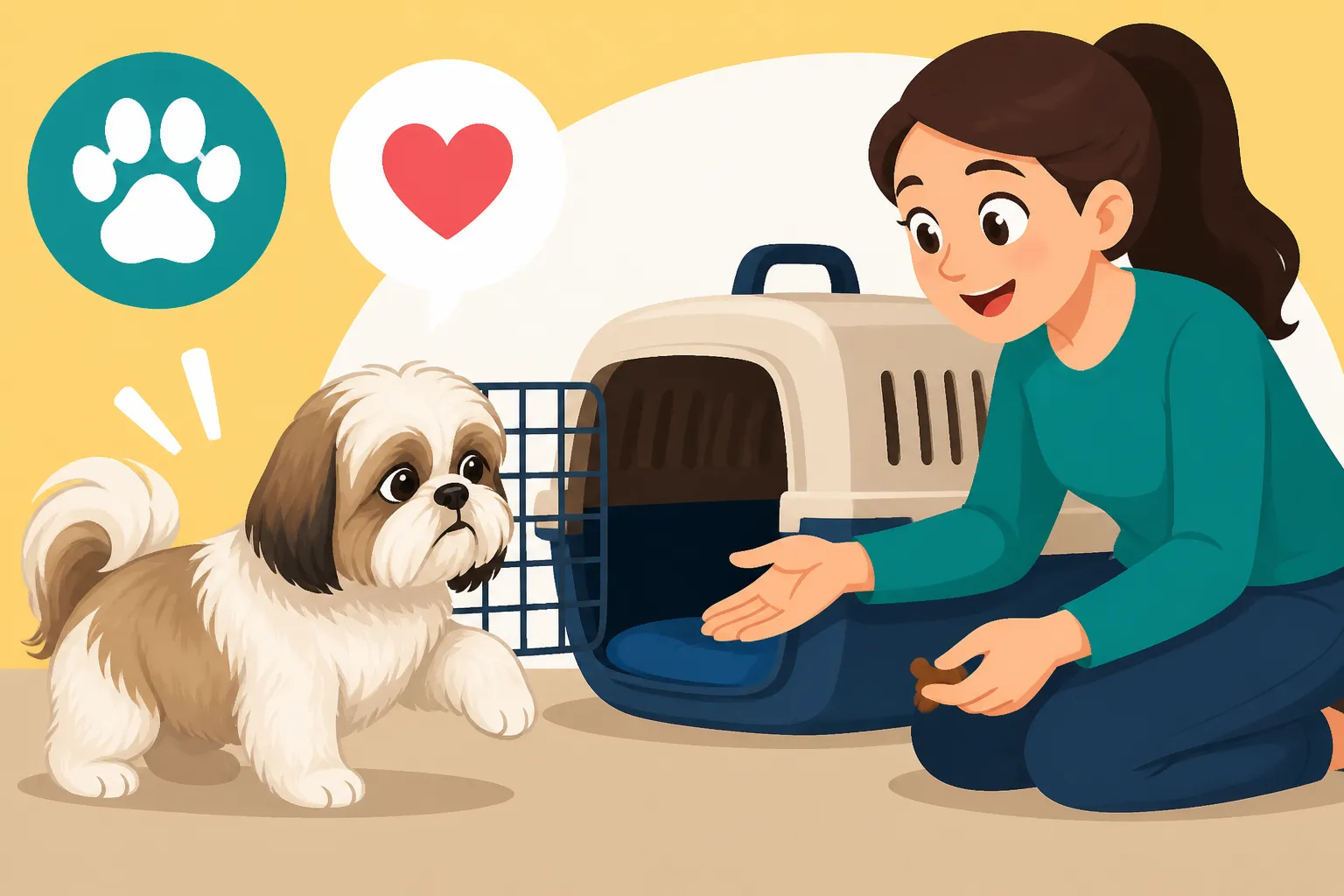
The first step is to demystify the carrier. Don't just pull it out when it's time to leave. Instead, make it a permanent, or at least frequent, fixture in your living space. Leave the carrier door open and place it in a high-traffic area, like your living room, where your Shih Tzu naturally spends time. The goal is for them to see it as just another piece of furniture, not a looming threat.
Now, let's make it inviting. Line the carrier with their favorite, softest blanket or a familiar bed that carries your scent. Toss in some beloved toys, especially those they only get for special occasions. Crucially, hide high-value treats inside. Think tiny pieces of cheese, cooked chicken, or their absolute favorite store-bought training treats. Let them discover these goodies on their own terms. You can even try feeding their regular meals near the carrier, gradually moving the bowl closer, and eventually, just inside the carrier door. This subtly links positive experiences (food!) with the carrier's presence.
By making the carrier a place where good things happen, you're slowly but surely rebuilding their association with it. It’s no longer the "scary box"; it's a cozy nook where delicious surprises appear and comfy naps are taken. This quiet, non-threatening presence is the foundation for all future training.
Gradual Introduction and Desensitization
Once the carrier is a comfy den with treats, the next step is to guide your Shih Tzu to interact with it more purposefully, but still on their terms. Start by simply tossing a treat just inside the open door. When they poke their head in to get it, offer calm praise. Don't close the door. Let them come and go freely. Over several sessions, toss the treat further inside, encouraging them to step in with all four paws.
Once they are comfortably entering to retrieve treats, begin to close the door for a fraction of a second while they are inside, then immediately open it and reward them. The duration of door closure should be incrementally increased: one second, then two, then five, always rewarding with high-value treats and calm praise. Never push it too fast. If your Shih Tzu shows any signs of anxiety – ears back, tail tucked, trying to get out – go back a step. The goal is to make each step feel safe and rewarding.
You can also incorporate classical conditioning. While your Shih Tzu is happily chewing a treat in the carrier, play some calming music or use a pleasant essential oil (ensure it's dog-safe and diluted!). This can further cement positive feelings. Think of it like Setting Up a Crate a Shih Tzu Will Enter; the principles of making it a comfortable, safe space are identical.
Incorporating Play and Praise
Beyond just treats, making the carrier part of fun and games can significantly improve your Shih Tzu's perception of it. During a play session, toss a favorite ball or soft toy into the carrier and encourage them to retrieve it. If they run in, get the toy, and come back out, celebrate! This turns the carrier into a temporary part of an exciting game rather than a place of confinement.
You can also play "find the treat" games. Hide a treat under a blanket inside the carrier, then encourage your Shih Tzu to go in and sniff it out. The act of problem-solving combined with the reward inside makes for a powerful positive experience. Every voluntary interaction with the carrier, no matter how small, should be met with lavish praise and a high-value reward. Your enthusiasm helps them understand they're doing something good.
Remember, consistent positive reinforcement is key. If you only reward when they go in for a trip, they'll still associate it with the trip. Incorporate these play-based interactions regularly, even when you have no plans to travel, to maintain that happy association.
Step-by-Step Training for Carrier Entry
Once your Shih Tzu is comfortable with the carrier being present and occasionally stepping inside, it's time to formalize the process a bit, always keeping it positive and stress-free.
Lure and Reward Techniques
This is where your high-value treats really shine. Hold a small, enticing treat just at the entrance of the carrier. As your Shih Tzu sniffs it, slowly move the treat further into the carrier, luring them to follow it inside. Once all four paws are in, give them the treat immediately and offer enthusiastic praise. Repeat this many times. The goal is for them to confidently walk in every time the treat appears.
Once they are reliably going in with the lure, you can introduce a verbal cue. As you lure them in, say a consistent word like "kennel," "crate," or "bed." Say it as they are entering, then reward. Over time, you’ll start to say the cue before you present the treat, and eventually, the cue itself will prompt them to enter. This is classic conditioning at its best. Keep training sessions short and fun, no more than five minutes at a time, so your Shih Tzu doesn't get bored or frustrated. For more on positive reinforcement, consider looking into Clicker Work With a Shih Tzu Puppy as the principles are similar for carrier training.
It's vital that you never force your Shih Tzu into the carrier. Pushing them in, even gently, will undo all your positive work and reinforce their fear. If they hesitate, go back a step, use a more enticing treat, or make the entry easier. Remember, Why Harsh Corrections Shut a Shih Tzu Down applies to all aspects of training, especially for sensitive breeds like Shih Tzus.
Practicing Short "Trips"
Once your Shih Tzu is entering the carrier willingly on cue, it's time to add movement. Start with very short, gentle "trips" around the house. Close the carrier door, pick it up, and carry your Shih Tzu a few feet, then immediately set it down, open the door, and reward them for being calm. Gradually increase the distance and duration of these household excursions.
Next, move to the car. Place the carrier in the car, either secured on a seat or in the footwell. Encourage your Shih Tzu to enter the carrier in the car, or carefully carry the closed carrier with them inside. Close the car door, start the engine (without moving), and then turn it off, open the car door, take the carrier out, open it, and reward. Gradually work up to short drives around the block, always ending the "trip" with immediate release and high-value rewards. The goal is for the act of being in the carrier and car to feel routine and safe, not just a precursor to a stressful event.
Think about making the destination of these practice trips a positive one, too. Maybe you drive to a local park for a sniff-walk, or to a friend's house where they get lots of fuss. This helps solidify the idea that carrier travel can lead to good things, not just the vet.
Dealing with Resistance and Fear
Despite your best efforts, there will be moments of resistance. This is normal, especially if your Shih Tzu has a strong negative history with the carrier. The absolute rule here is: never force, never scold. Forcing them in will set you back to square one, reinforcing their belief that the carrier is something to be feared. Scolding only teaches them to fear you when the carrier is present.
If your Shih Tzu is reluctant or shows signs of fear, stop. Revert to an earlier step where they were comfortable. Maybe that means just tossing treats near the carrier again, or only closing the door for a second. Patience is your most powerful tool. Some Shih Tzus might take days, others weeks or even months, to overcome their carrier aversion. Celebrate small victories: a nose poke, a paw step, a calm moment.
If you find yourself consistently struggling, and your Shih Tzu’s fear seems extreme, it might be beneficial to seek guidance from a professional positive reinforcement dog trainer. They can offer tailored strategies and help identify specific triggers you might be missing. Resources like BAXTER & Bella offer online training programs that can guide you through these challenges, and a dedicated trainer can provide hands-on help.
Choosing the Right Carrier for Your Shih Tzu
Having the correct carrier isn't just about compliance; it's about comfort, safety, and making the experience as pleasant as possible for your Shih Tzu. A well-chosen carrier can make all the difference.
Size and Comfort Considerations
For a Shih Tzu, the carrier should be large enough for them to stand up, turn around easily, and lie down comfortably in a natural position. It shouldn't be so big that they slide around excessively during travel, but definitely not cramped. A carrier that's too small can feel claustrophobic and cause unnecessary stress and discomfort, especially on longer trips.
When measuring, consider your Shih Tzu's full adult size, even if you're getting a puppy. Remember their long, flowing coat too – it takes up space! There are generally two types: hard-sided plastic carriers and soft-sided fabric carriers. Hard-sided carriers offer more protection and are easier to clean, while soft-sided carriers are often lighter, more collapsible, and can feel cozier. Many owners find both useful for different situations. You can find a wide range of options on sites like Amazon, often with detailed sizing charts and customer reviews to help you choose.
No matter the type, ensure it has ample ventilation on multiple sides. Your flat-faced Shih Tzu is more prone to overheating than many other breeds, so good airflow is critical for their safety and comfort during travel.
Safety Features and Ventilation
Safety is paramount. Ensure the carrier has secure latches and zippers that your clever Shih Tzu can't easily undo. For car travel, look for carriers that have seatbelt loops or can be securely fastened to prevent them from becoming a projectile in a sudden stop. Some carriers are specifically designed as car seats or booster seats, offering both safety and a view.
As mentioned, ventilation is non-negotiable for a Shih Tzu. Look for carriers with plenty of mesh windows or air vents on at least three sides. Before any trip, double-check that vents aren't blocked by blankets or other items. If traveling by air (and always research airline-specific requirements carefully for brachycephalic breeds!), choose an airline-approved carrier that meets strict ventilation and dimension standards.
Inside the carrier, place a comfortable, non-slip mat or blanket. This not only makes it cozy but also helps prevent slipping and sliding, which can be unsettling for your dog. For long trips, an absorbent pee pad underneath the bedding can be a lifesaver.
What to Put Inside
To truly make the carrier a den, fill it with inviting items. A soft, familiar blanket from their regular bed helps carry their scent and provides comfort. Consider adding a small, chew-safe toy to keep them occupied, especially if they’ll be in the carrier for a while. A Kong filled with a frozen treat or some peanut butter (if safe for your dog) can be a great distraction.
Don't forget to pack a small bowl if you’ll be offering water during stops. Some carriers come with attachable water bowls. For short trips, you might just offer water immediately upon arrival. For longer journeys, consider a no-spill water dispenser. Always ensure whatever you put inside is secure and won't become a choking hazard. Beds That Suit a Shih Tzu Back can give you ideas for comfortable padding, ensuring their spine is supported even in transit.
It's also a good idea to bring a shirt or an old towel that smells like you. Your scent can be incredibly reassuring to your Shih Tzu in an unfamiliar environment or during travel. This simple addition can significantly reduce their anxiety.
Maintaining Positive Carrier Associations
Training isn't a one-and-done deal. To ensure your Shih Tzu continues to willingly enter their carrier, you need to maintain those positive associations over time.
Regular Carrier Use, Not Just for Vet Trips
This is perhaps the most crucial long-term strategy. If the carrier only ever comes out for the vet or groomer, your Shih Tzu will inevitably revert to their original fears. Integrate the carrier into other, more positive aspects of your life.
Use it for short, fun outings. Maybe you take them in the carrier to visit a friend, just for a brief car ride to get a coffee, or even for a quick trip to the pet store where they get new toys and treats. The more often the carrier leads to something neutral or pleasant, the less it will be associated solely with stressful events. You can also simply leave the carrier out in the house with the door open, treating it as another bed or hiding spot, where treats occasionally appear. This keeps it from becoming an ominous object that suddenly appears.
Even if you don't have a specific destination, occasional short "dummy runs" in the car, ending with a cheerful return home and a reward, can reinforce the positive habit. This prevents the carrier from becoming a dreaded signal.
Continued Reinforcement
Never stop rewarding calm entry and travel. Even if your Shih Tzu is a pro at carrier entry, a small treat and a "Good dog!" upon settling inside or arriving at a destination helps solidify that behavior. Just like humans appreciate a pat on the back for a job well done, your Shih Tzu thrives on your positive feedback. Remember, Treats a Shih Tzu Can Eat Without Gaining can be small and healthy, so you don't have to worry about overfeeding.
Ensure that the destination itself is usually positive or at least neutral. If every trip is to a place that makes them uncomfortable, even the best carrier training will eventually break down. If a vet visit is unavoidable, try to make the return home extra special with a favorite meal or an extended cuddle session to balance out the stress.
Consistency from all family members is also important. Everyone who interacts with your Shih Tzu and the carrier should follow the same positive reinforcement techniques. This prevents mixed signals and reinforces the desired behavior.
Professional Guidance When Needed
If, despite all your efforts, your Shih Tzu's fear or anxiety around the carrier remains intense, or if it manifests as aggression or extreme panic, it's time to seek professional help. A Certified Professional Dog Trainer (CPDT-KA) or a Veterinary Behaviorist can assess your specific situation and provide tailored strategies. They can help identify underlying anxieties or phobias that might be contributing to the problem.
These professionals can guide you through more advanced desensitization and counter-conditioning protocols, and in some cases, a vet might even suggest temporary anti-anxiety medication to help your Shih Tzu cope during the re-training process. Never hesitate to reach out if you're feeling overwhelmed; their expertise can be invaluable in ensuring your Shih Tzu's well-being. Looking for a trainer who specializes in small or toy breeds, as they'll have a better understanding of their unique temperaments and potential sensitivities. Finding a Trainer Who Understands Toy Breeds is a great resource to help you locate one.
Disclaimer
This article is for general informational purposes only and does not constitute professional advice. Laws, prices and regulations vary by location and change over time. Consult a qualified professional for guidance on your specific situation.