A Shih Tzu Kneecap That Slips and Skips
Patellar luxation in Shih Tzus causes a slipping kneecap, leading to skipping steps, leg pain, and degenerative joint disease or arthritis.
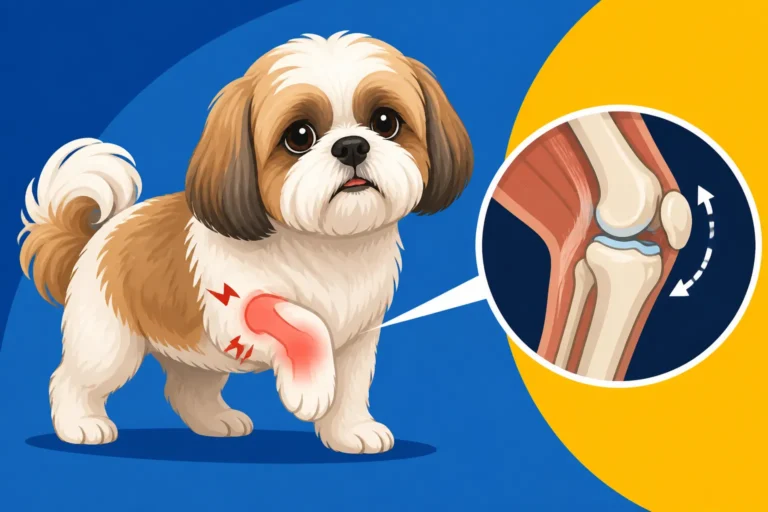
Patellar luxation in Shih Tzus causes a slipping kneecap, leading to skipping steps, leg pain, and degenerative joint disease or arthritis.
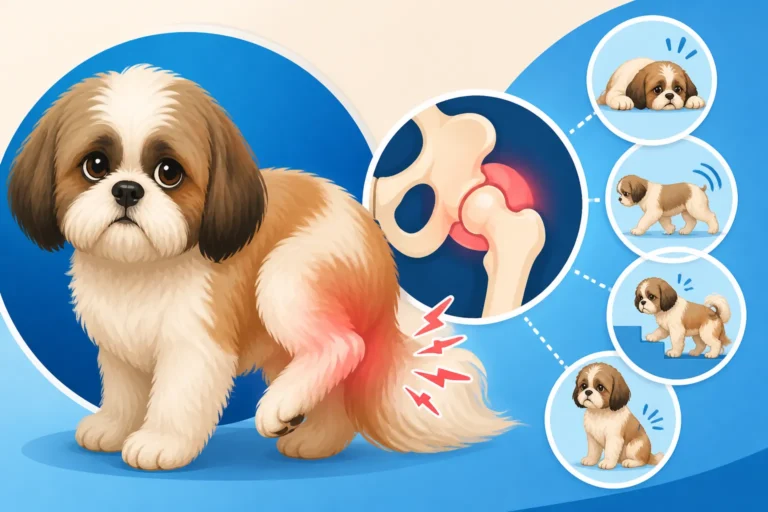
Shih Tzu hip dysplasia symptoms include limping, hesitation before jumping, and a bunny hop gait as cartilage and joints degrade.
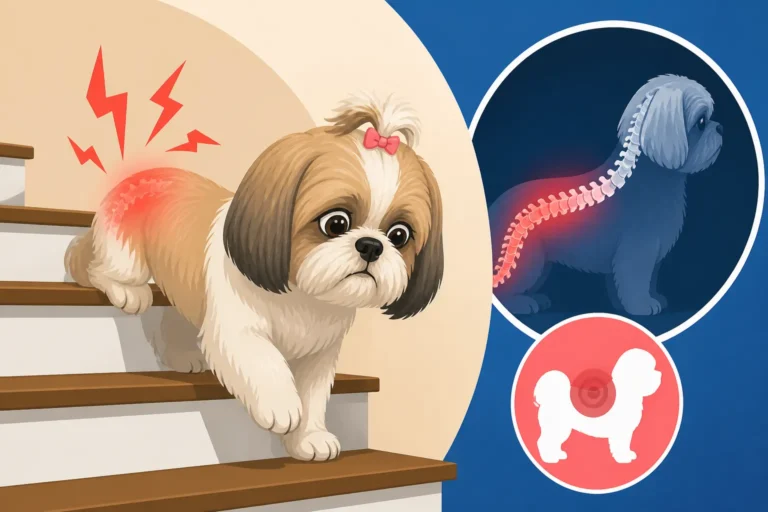
Shih Tzu anatomy features long bodies and short legs, creating high risks for intervertebral disc disease from climbing stairs.
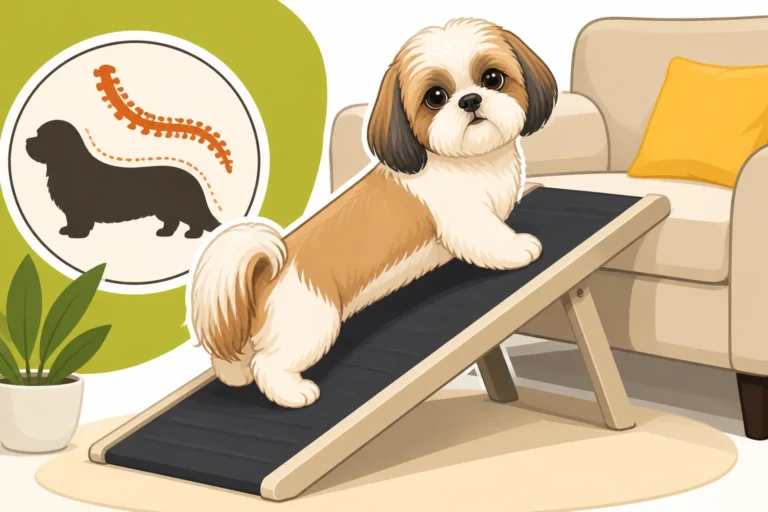
Ramps for a Shih Tzu protect delicate spines from intervertebral disc disease by safely eliminating the high impact of jumping off furniture.
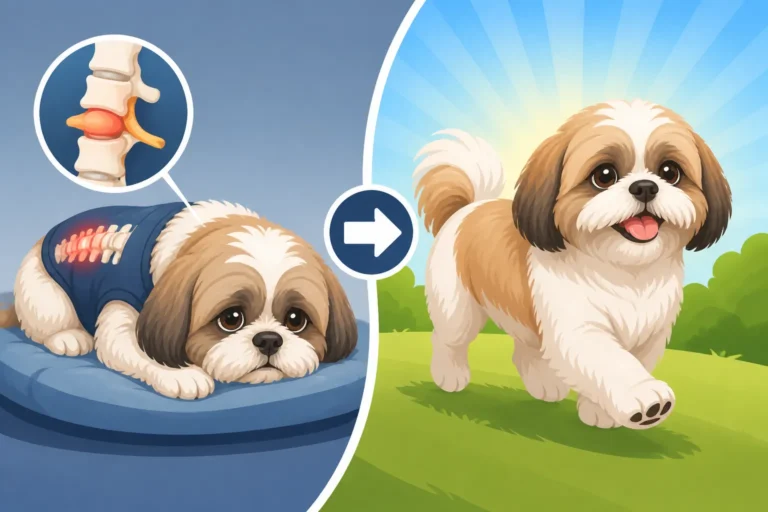
Shih Tzu recovery after disc surgery involves four to eight weeks of strict crate rest, pain medication, and regaining mobility.
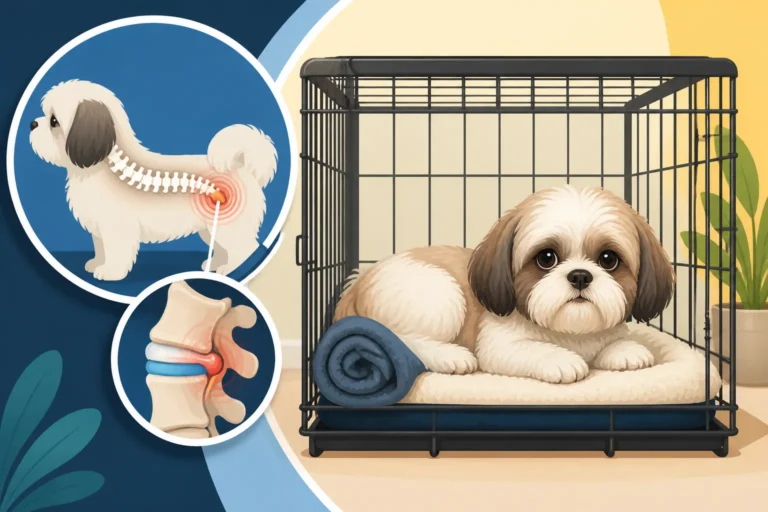
Strict crate rest for a Shih Tzu with a slipped disc provides spinal healing by reducing pressure on the damaged spinal cord.
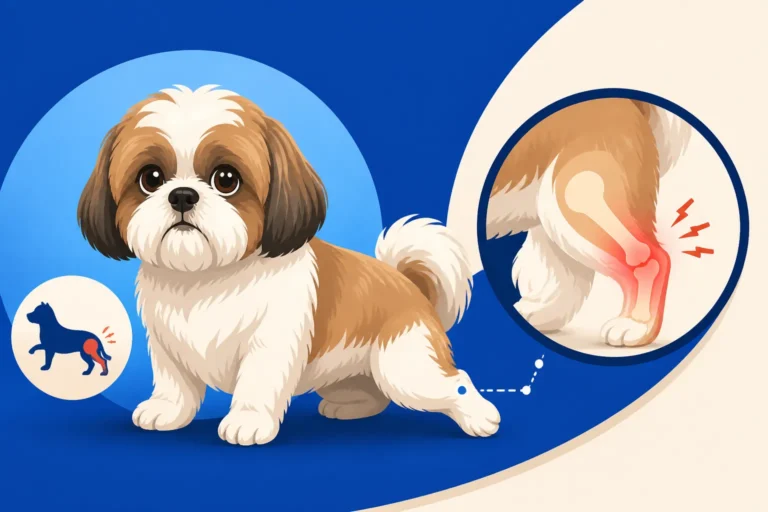
Shih Tzu hind leg weakness causes, including disc disease and patellar luxation, explained with diagnosis and treatment steps.

Shih Tzu reluctance to jump on the sofa can signal physical pain, past trauma, or age-related joint decline in senior dogs.
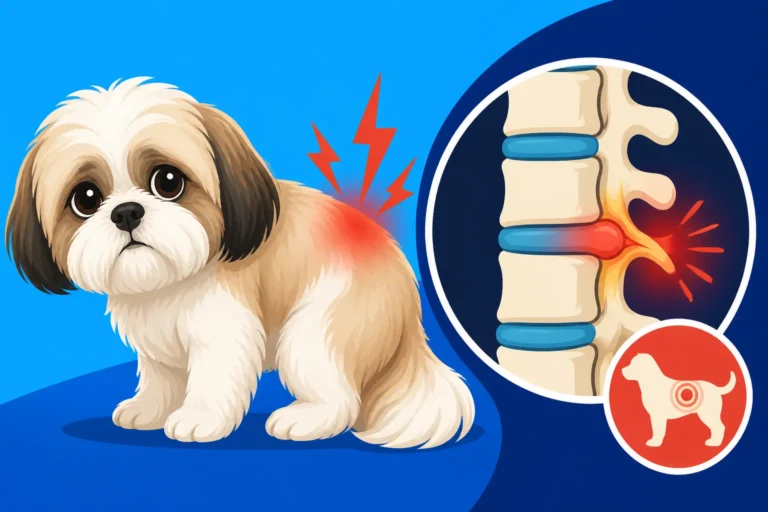
Shih Tzu disc disease causes sudden back pain and paralysis because genetic traits make their spinal discs harden prematurely.

Pre-anesthetic testing reveals hidden organ issues in Shih Tzus and helps veterinarians safely tailor dental anesthesia protocols.