Why a Shih Tzu Should Wear a Harness Not a Collar
It's a common sight, isn't it? A beautiful Shih Tzu trotting along, attached to a leash by a collar around their fluffy neck. Many new Shih Tzu parents don't realize the hidden dangers this simple choice can pose for their precious pup. This guide is here to shed light on why a harness is not just a preference, but a crucial safety measure for your Shih Tzu, ensuring their comfort, health, and well-being on every walk and adventure.
The Unique Vulnerabilities of a Shih Tzu's Anatomy
Our adorable Shih Tzus might look sturdy in their small packages, but their unique anatomy, particularly their flat faces and delicate structures, makes them especially vulnerable to injury when a traditional collar is used. It's not about being fragile, it's about being built differently, and understanding these differences is key to keeping them safe.
Brachycephalic Airway Syndrome and Neck Pressure
One of the most significant reasons a collar is problematic for a Shih Tzu is their brachycephalic (flat-faced) nature. This isn't just a cute facial feature; it comes with a set of anatomical challenges often referred to as Brachycephalic Breathing in a Shih Tzu. These include narrowed nostrils (stenotic nares), an elongated soft palate that can block the airway, and a smaller windpipe. Imagine trying to breathe through a straw, and then someone squeezing that straw even tighter. That's essentially what happens when a Shih Tzu, especially one prone to pulling, has pressure applied to their neck by a collar.
When a collar pulls, it compresses the already compromised airway. This can lead to increased respiratory distress, excessive panting, gagging, and even fainting in severe cases. It's not just uncomfortable; it can be incredibly dangerous, exacerbating their inherent breathing difficulties. During exercise or in warmer weather, when your Shih Tzu is already working harder to cool themselves down due to their limited ability to pant effectively, that added pressure can quickly become an emergency. Why a Shih Tzu Cannot Cool Itself Well is a related concern, and coupling heat stress with airway compression from a collar is a recipe for disaster.
Even a slight tug can have a disproportionate effect on a brachycephalic dog. Think about a brisk walk when your Shih Tzu spots a squirrel and lunges forward. That sudden jerk on the collar could cause them to choke, cough violently, or even temporarily lose consciousness. It's a risk that's simply not worth taking when there's a safer alternative available. We want our pups to enjoy their walks, not struggle for air.
Delicate Trachea and Potential for Collapse
Beyond the general brachycephalic airway concerns, Shih Tzus often have a very delicate trachea, or windpipe. This cartilage tube is surprisingly fragile, and repeated or sudden pressure from a collar can cause significant damage over time. This damage can manifest as irritation, inflammation, or, most alarmingly, tracheal collapse. This condition is exactly what it sounds like: the rings of cartilage that hold the trachea open weaken and flatten, making it extremely difficult for air to pass through.
The signs of tracheal collapse can range from a persistent, dry, harsh cough that sounds like a goose honking to severe respiratory distress. You might notice your Shih Tzu making that tell-tale "honking" sound, especially after excitement, drinking water, or when pressure is applied to their neck. Once the trachea is damaged, it's a condition that often requires ongoing management and can significantly impact your dog's quality of life. Prevention is truly the best medicine here, as treatment can be complex and sometimes involves surgery. Tracheal Collapse and the Shih Tzu Honk delves deeper into this concerning issue.
Even if your Shih Tzu isn't a strong puller, the mere act of attaching the leash to a collar and the occasional accidental tug can be enough to put stress on this delicate structure. Think about picking them up quickly, or if they suddenly jump off the sofa and the leash is briefly taught. These everyday occurrences, which seem innocuous for other breeds, can pose a risk to a Shih Tzu's trachea. Ensuring that no pressure is ever placed directly on their neck is a fundamental step in protecting this vital airway.
Risk to Their Protruding Eyes
This is perhaps one of the most terrifying, yet often overlooked, risks of using a collar on a Shih Tzu: the danger to their eyes. Shih Tzus are known for their beautiful, large, often prominent eyes. This isn't just an aesthetic feature; it means their eyes sit in relatively shallow sockets, making them more susceptible to injury. A sudden, strong pull on a collar can increase pressure in the dog's head and eyes. In extreme cases, this pressure can actually cause the eye to pop out of its socket – a horrific condition known as proptosis.
Imagine the absolute panic and trauma for both you and your dog if something like this were to happen. It's an emergency that requires immediate veterinary attention, and while sometimes the eye can be saved, it often leads to permanent vision damage or even loss of the eye. Shih Tzu Eye Proptosis, the Emergency Owners Miss details the seriousness of this condition, and it's a stark reminder of how vulnerable their eyes truly are. Even if proptosis doesn't occur, the increased pressure can contribute to other eye issues over time.
Beyond the direct trauma of proptosis, even rough play or incorrect handling can put a Shih Tzu's eyes at risk. If your dog gets tangled in a leash while wearing a collar, or another dog accidentally pulls on their collar, the impact on their delicate eye structure can be severe. It's a stark reminder that their charming, expressive eyes require extra protection, and removing direct neck pressure is a huge step in safeguarding them. Knowing What to Do in the First Minutes of a Proptosis is vital, but preventing it from happening in the first place is always the goal.
Why Harnesses Are the Safer, More Comfortable Choice
Given the unique anatomy of a Shih Tzu, it becomes clear that traditional collars present significant risks. This is where harnesses shine, offering a far superior and safer alternative for walking, training, and general handling of these beloved companion dogs.
Distributing Pressure Evenly Across the Chest
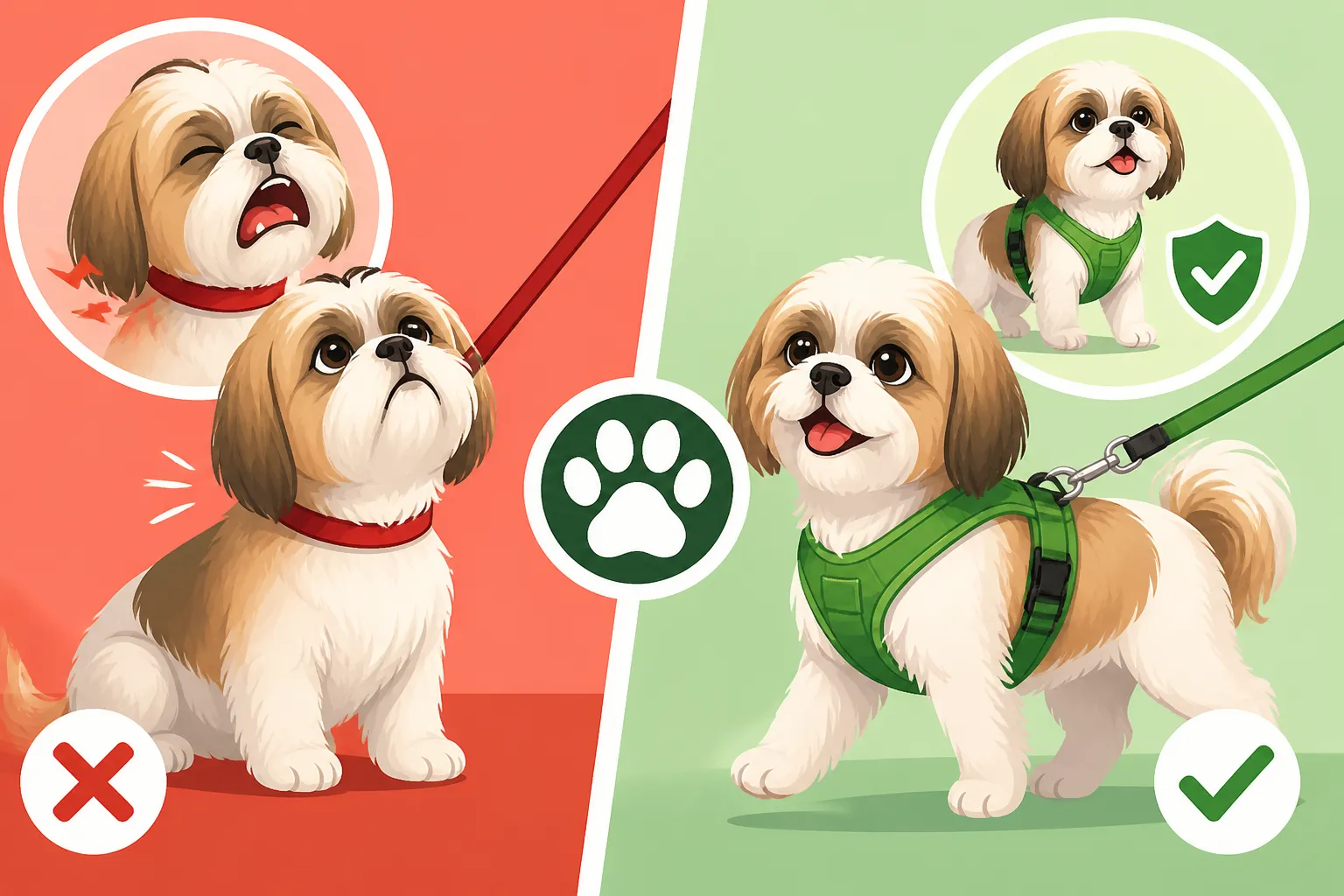
The fundamental advantage of a harness is its design: it completely bypasses the neck. Instead, a well-fitted harness distributes any pressure from the leash across your Shih Tzu's chest, shoulders, and back – areas that are much stronger and less vulnerable. When your Shih Tzu pulls, or you need to gently guide them, that force is spread out, preventing any dangerous compression on their delicate trachea, airway, or eyes.
Think of it like this: instead of a single point of pressure on a fragile neck, the harness wraps around their sturdier torso. This allows them to breathe freely, without any restriction, even if they get excited and pull momentarily. For a brachycephalic breed like the Shih Tzu, this unrestricted breathing is paramount, especially during physical activity. It makes walks a far more pleasant and safe experience for them, allowing them to truly enjoy exploring the world without discomfort or danger.
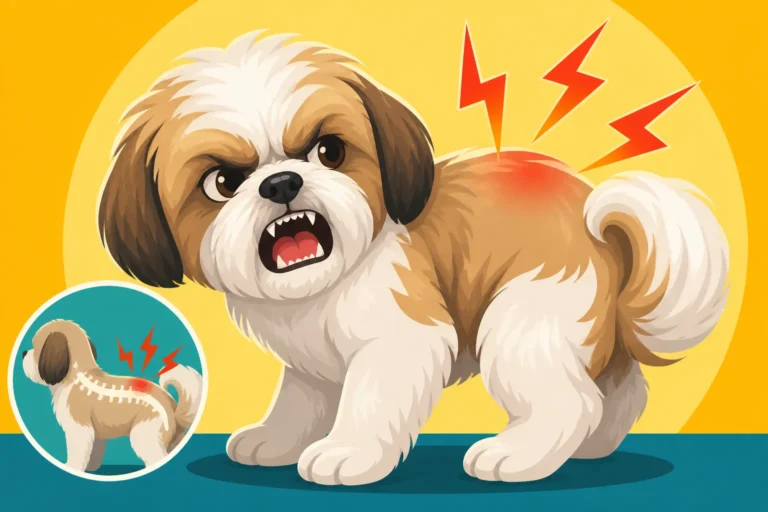
This even distribution of pressure also means less strain on their skeletal structure. While less common, continuous neck strain could indirectly affect their delicate spine, a concern for a breed known for Shih Tzu Back Problems and Disc Disease. By cradling them securely, a harness provides stability and comfort, making it a natural extension of their body rather than a potential point of injury.
Better Control and Training Opportunities
Beyond safety, harnesses offer superior control, which is incredibly beneficial for a small, sometimes strong-willed, Shih Tzu. With a collar, a dog can often slip out, or continue to pull, creating a difficult walking experience for both of you. A harness, particularly one with a front clip, can gently redirect your dog's momentum back towards you when they pull, teaching them to walk nicely on a leash without any harsh jerking or discomfort. This is a cornerstone of positive reinforcement training.
Many pet parents find that their Shih Tzu's pulling behavior significantly decreases once they switch to a harness. It removes the counter-pressure point on the neck that can sometimes encourage a dog to pull even harder. Brands like BAXTER & Bella, known for their comprehensive training programs, often advocate for harnesses precisely because they facilitate better leash manners without causing pain or fear. This makes training a more enjoyable and effective process. Teaching a Shih Tzu to Walk Without Pulling becomes much easier with the right gear.
This improved control is also vital for your Shih Tzu's safety in unpredictable environments. If you encounter an unexpected off-leash dog, a sudden loud noise, or need to quickly move your dog out of harm's way, a harness provides a secure way to guide them without risking injury. You can confidently keep them close and protected, knowing they can't easily slip away, which is a major concern when thinking about Why a Shih Tzu Is at Risk in a Dog Park.
Reduced Risk of Accidental Escapes
Shih Tzus are surprisingly agile and can be quite adept at wriggling out of traditional collars, especially if they get spooked or decide they don't want to go in a particular direction. A collar that's too loose can easily be slipped over their head, and even a well-fitted one can sometimes be manipulated by a determined pup. The thought of your beloved Shih Tzu darting into traffic or getting lost because their collar came off is every pet parent's nightmare.
Harnesses, when properly fitted, offer a much more secure enclosure. Their design, wrapping around the chest and often including straps behind the front legs, makes it incredibly difficult for a dog to back out or slip free. This added security provides immense peace of mind, allowing you to enjoy your walks without constantly worrying about an escape attempt. It means you can focus on the bonding and exercise, rather than constantly checking if their collar is secure.
Of course, even with a harness, proper fitting is essential. An ill-fitting harness can still be slipped out of, or worse, cause chafing and discomfort. However, the inherent design of a harness makes it far more difficult to escape from compared to a collar, especially when a small, spirited dog like a Shih Tzu is determined to get free. The feeling of security a harness provides for both you and your dog is invaluable.
Choosing and Fitting the Right Harness for Your Shih Tzu
Now that we understand why harnesses are the clear winner, the next step is finding the perfect one for your unique Shih Tzu. With so many options out there, it can feel a little overwhelming, but with a few key considerations, you'll be able to make an informed choice.
Understanding Different Harness Styles
Harnesses come in various styles, and each has its own benefits. Understanding these can help you narrow down the best fit for your Shih Tzu's body shape and walking habits.
-
Step-in Harnesses: These are usually very simple, requiring your dog to step their front paws through two loops before buckling over their back. They are often lightweight and easy to put on, making them a good choice for dogs who might be nervous about things going over their head. However, some can ride a bit low on the chest or rub in the armpits if not perfectly fitted, so checking for comfort is key.
-
H-Style Harnesses (or Back-Clip Harnesses): These harnesses have a strap that goes around the neck, another around the chest behind the front legs, and a vertical strap connecting the two over the back. The leash clips to a D-ring on the back. They are very common and distribute pressure well. The key is to ensure the neck strap sits comfortably, not too high, to avoid any slight pressure on the lower neck. They are generally secure and comfortable for most Shih Tzus.
-
Y-Front Harnesses: These are often considered superior for brachycephalic breeds. The straps form a 'Y' shape over the dog's chest, ensuring the pressure points are truly away from the throat and the front of the shoulders, allowing for full range of motion. The leash usually clips on the back. This style is excellent for preventing any restriction on the airway and is highly recommended for Shih Tzus and similar breeds.
-
Vest-Style Harnesses: These are essentially a wider piece of fabric that covers a larger area of the dog's chest and back, often with soft padding. They can be very comfortable, especially for dogs with sensitive skin or those who need extra support. They distribute pressure over a very broad area, making them ideal for Shih Tzus who might have a delicate constitution or just prefer the feel of more fabric. However, ensure the material is breathable, especially for a double-coated breed like a Shih Tzu, to prevent overheating.
When choosing, consider your Shih Tzu's individual needs. Do they pull a lot? Are they sensitive to fabrics? Do they have any known neck or back issues? Measuring your Shih Tzu correctly is paramount, and we'll cover that next.
What to Look for in a Quality Shih Tzu Harness
Once you've got a style in mind, it's time to consider the specifics of a quality harness that will stand up to daily use and keep your Shih Tzu safe and comfortable.
First, materials are key. Look for something durable but also soft and breathable. Nylon webbing is a common choice, but ensure it's smooth and has no rough edges that could chafe your Shih Tzu's delicate skin or snag their luxurious coat. Padded options, often with mesh or fleece lining, can add an extra layer of comfort, especially important for a dog with a full coat where rubbing can quickly lead to irritation or even hot spots. If you're looking for options, searching for "small dog harnesses" on Amazon will bring up a wealth of choices, allowing you to read reviews about material quality.
Next, hardware and adjustability matter. The buckles should be sturdy and secure, ideally with a quick-release mechanism for easy on/off. The D-rings where you attach the leash should be robust metal. Crucially, the harness needs to be highly adjustable. Your Shih Tzu's size might fluctuate slightly, or their coat length changes with grooming. Multiple adjustment points around the neck, chest, and girth allow for a custom, snug fit. Remember the "two-finger rule": you should be able to comfortably slip two fingers under any strap, but no more. This ensures it's tight enough not to slip but not so tight that it restricts movement or breathing. Fitting a Harness Around Shih Tzu Coat is a common challenge, so adjustability helps a lot.
Finally, consider safety features. Reflective stitching or strips are a huge plus, especially if you walk your Shih Tzu in the early morning or late evening. For a tiny dog, being visible to passing vehicles or cyclists is a non-negotiable safety measure. Think about the overall build quality – stitching should be reinforced, and all components should feel robust. Some harnesses also offer both front and back leash attachments, giving you more flexibility in managing a pulling dog. Training programs like those offered by BAXTER & Bella often recommend specific types of harnesses known for their durability and training effectiveness, so checking their recommendations can also be helpful.
Introducing the Harness and Making It a Positive Experience
For some Shih Tzus, especially puppies or those not used to wearing a harness, the initial introduction can be a bit of a hurdle. It's important to make this a positive and gradual experience to avoid creating negative associations.
Start slowly. Don't just clip it on and head out the door. Begin by letting your Shih Tzu sniff and investigate the harness. Place it on the floor, perhaps with a treat next to it, so they associate it with good things. For the first few times, simply drape the harness over their back for a few seconds, give a treat, and remove it. Gradually increase the duration. The goal is to make them feel comfortable with the harness touching their body. This approach is similar to how you might introduce other new experiences, like learning to accept regular grooming or Getting a Shih Tzu Used to Face Trims.
Once they tolerate it being draped, try fastening it, but only for a very short period (a minute or two) while offering high-value treats and praise. Distract them with a favorite toy or a quick game. Then, remove it. Repeat this process several times a day, slowly increasing the time they wear it. Never force the harness on them if they are showing signs of stress or fear, as this can lead to them becoming A Shih Tzu That Refuses the Harness altogether. Patience and positive reinforcement are your best friends here.
Finally, once they are comfortable wearing the harness inside the house for longer periods, attach the leash and practice walking around indoors. This allows them to get used to the feel of the leash before you introduce the distractions of the outside world. Always check for any signs of rubbing or discomfort, especially in the armpit area, which can be prone to irritation. The goal is for the harness to feel like a natural, comfortable part of their ensemble, a signal that it's time for a fun outing, rather than a source of anxiety or pain.
| Feature | Traditional Collar (Shih Tzu) | Harness (Shih Tzu) |
|---|---|---|
| Pressure Point | Concentrated on neck | Distributed across chest, shoulders, back |
| Airway Safety | High risk of tracheal damage, breathing restriction | Minimal to no risk of airway compression |
| Eye Safety | Risk of proptosis from sudden pressure | Significantly reduced risk to eyes |
| Control | Can encourage pulling, easier to slip | Better control, discourages pulling, more secure |
| Comfort | Can cause chafing, discomfort if pulling | Generally more comfortable, less rubbing (if fitted well) |
| Escape Risk | Moderate to high | Low (if properly fitted) |
| Training Aid | Less effective for leash manners | Excellent for positive leash training |
| Best Use Case | For ID tags only, or very calm, non-pulling dogs | Essential for all walks and leash activities |
Disclaimer
This article is for general informational purposes only and does not constitute professional advice. Laws, prices and regulations vary by location and change over time. Consult a qualified professional for guidance on your specific situation.