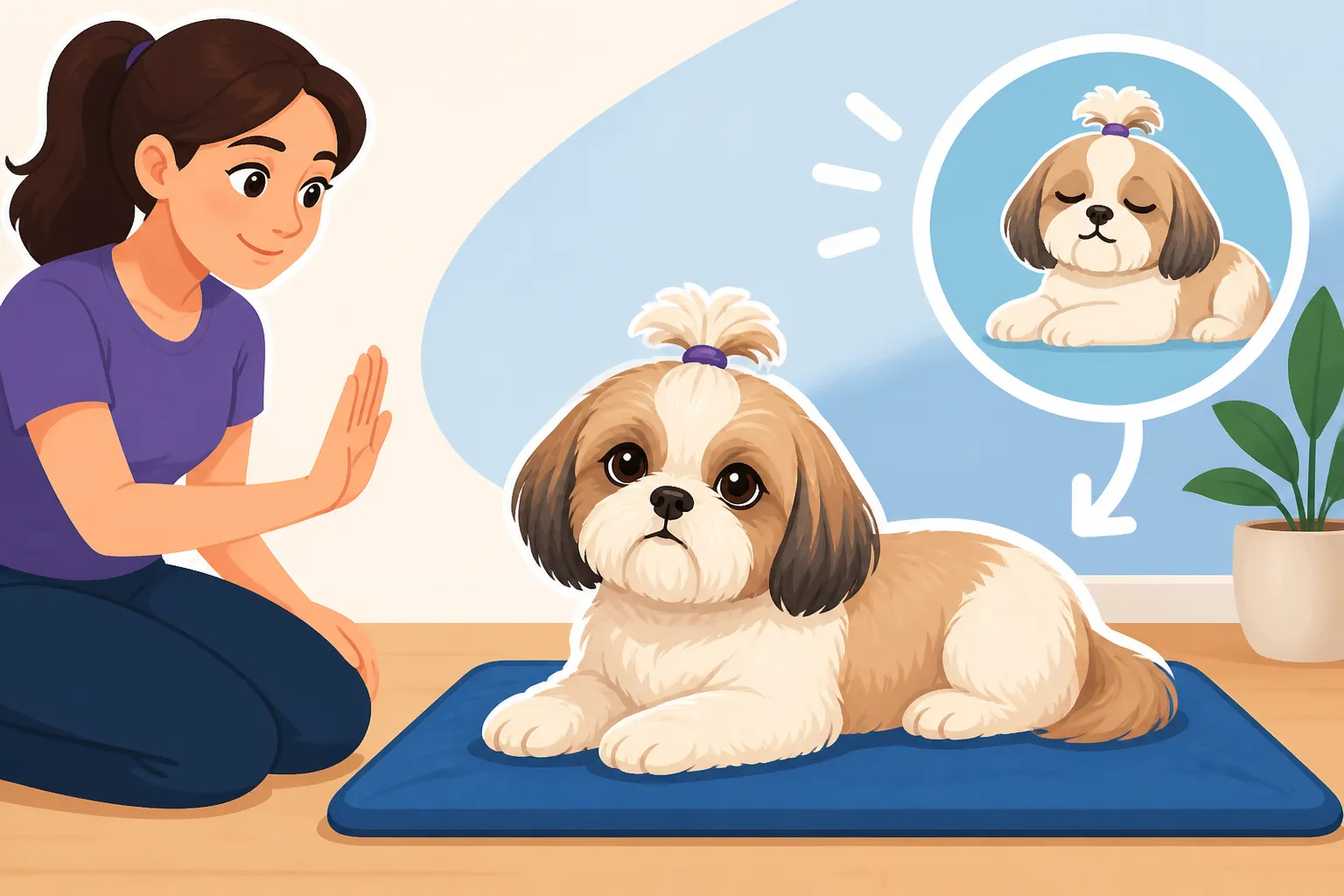
Teaching a Shih Tzu to Settle on a Mat
One of the most common frustrations I hear from Shih Tzu parents is how hard it can be to get their beloved little lion dog to just… chill out. They're constantly underfoot, demanding attention, or restless even when you're trying to relax. Teaching your Shih Tzu a solid "settle" cue on a designated mat isn't just a neat trick; it's a game-changer for calm in your home and peace of mind for both of you. This guide will walk you through how to teach your spirited companion to truly relax in their own space.
Understanding Why "Settle" is a Challenge for Shih Tzus
It might seem counterintuitive. Why would a dog bred to sit on laps and be a companion struggle with simply being? But understanding your Shih Tzu's inherent nature is the first step to successful "settle" training. It’s not about them being naughty; it’s about their history and how they perceive their role in your life.
The Shih Tzu's Natural Companion Instinct
Shih Tzus were literally bred over centuries to be lap warmers and companions to royalty. Their entire purpose was to be near their humans, offering comfort and receiving adoration. This deep-seated instinct means they are often highly attuned to your presence and desire constant interaction. It’s why they follow you from room to room, why they nose your hand for pets, and why they often lie right at your feet. This wonderful trait, however, can make independent settling a real challenge. They see themselves as an integral part of your personal space, so being asked to go to their own space can feel like a slight or a punishment if not approached correctly. They genuinely want to be where the action is, which, to them, is wherever you are. For more on this, check out Shih Tzu Temperament and the Companion It Was Bred to Be.
Over-Stimulation and Under-Stimulation Issues
Sometimes, a Shih Tzu struggles to settle because they are simply over-stimulated. Imagine a busy household: kids playing, the TV on, people moving in and out. For a small dog with keen senses, this can be a lot. They might be trying to keep track of everything, leading to a state of constant alertness rather than relaxation. Conversely, a Shih Tzu can also become restless from under-stimulation. If they aren't getting enough mental enrichment or appropriate exercise, that pent-up energy can manifest as an inability to settle. A bored Shih Tzu will often create their own "fun," which might involve barking at shadows or constantly seeking your attention, making calm downtime impossible. Finding the right balance of activity and quiet time is key to their overall well-being and ability to relax.
The Comfort vs. Training Dilemma
Many Shih Tzu owners, myself included, often fall into the trap of prioritizing our dog's immediate comfort over structured training, especially when it comes to independent settling. We love having them on our laps, snuggled in bed, or nestled beside us on the sofa. This is perfectly fine, of course! But without teaching them how to settle independently, they learn that the only truly comfortable or rewarding place is right next to a human. The dilemma comes when we need them to be in their own space – maybe guests are over, you're trying to work, or you simply want a moment to yourself. If "settle" hasn't been deliberately taught and reinforced as a positive experience, then asking them to go to their mat will feel like being exiled, rather than being given a comfy, safe place of their own. This isn't about pushing them away; it's about giving them the tools to be comfortable and confident even when they aren't glued to your side.
Laying the Foundation: What "Settle" Actually Means
Before you can teach your Shih Tzu to settle, you need to clearly define what "settle" means to you and, more importantly, to your dog. It's more than just lying down; it's about a state of calm.
Defining the Settle Cue
For your Shih Tzu, "settle" should mean: "Go to your designated spot, lie down calmly, and remain there until released." This isn't a temporary 'down-stay' where they're waiting for the next command. It’s an invitation to relax, chew a quiet toy, or even nap. The goal is for them to choose to be calm in that spot, rather than just mechanically staying because they have to. This involves a relaxed body posture, a quiet demeanor, and ideally, a lack of active attention-seeking. You'll want to use a consistent verbal cue, like "Settle," "Place," or "Mat," coupled with a hand signal, perhaps pointing to the mat. Consistency in your cues is paramount for your Shih Tzu to understand what's expected of them. Just as you teach other important commands, remember to keep training sessions short and positive, around Five Minute Sessions With a Shih Tzu.
Choosing the Right "Mat" or "Place"
The "mat" isn't just any old rug; it needs to be a special, clearly defined area. This could be a dog bed, a small rug, a bath mat, or even a travel mat that you can easily move from room to room. The key is that it's comfortable, portable, and distinct from other areas of the house.
- Comfort: Ensure it's soft and inviting. A plush dog bed is often ideal.
- Portability: Choose something you can easily pick up and move to different rooms, or even take with you to a friend's house. This helps generalize the "settle" cue, meaning your Shih Tzu learns to settle on their mat, regardless of where it is.
- Size: It should be large enough for your Shih Tzu to comfortably lie down and stretch out, but not so large that it feels like just another part of the floor.
Many owners find success with a dedicated, high-quality dog bed or a simple, washable mat found easily on platforms like Amazon. The important thing is that this item only comes out for "settle" training or when you want your dog to settle. This helps build a strong association: mat = calm time.
Essential Tools for Mat Training
Beyond the mat itself, you'll need a few other tools to make "settle" training successful and positive for your Shih Tzu.
- High-Value Treats: Shih Tzus are often very food-motivated, so delicious, tiny treats are your best friends here. Think small, soft, smelly treats that are easy for them to gobble down quickly without distraction. Consider Treat Sizes That Suit a Shih Tzu to ensure they're appropriate for your little companion.
- Clicker (Optional but Recommended): A clicker provides a precise marker for the exact moment your Shih Tzu does what you want. It helps them understand exactly what behavior earned them the treat.
- Long-Lasting Chews or Kongs: Once your Shih Tzu is on the mat, a safe, appealing chew or a Kong stuffed with a treat (like peanut butter or cream cheese) can help extend their settling time and make the mat a highly rewarding place to be. This keeps them engaged and reinforces the idea that good things happen on the mat.
- Positive Reinforcement: This isn't a tool you buy, but it's the most critical ingredient. Enthusiastic praise, gentle petting (if they enjoy it during quiet times), and a happy tone of voice are all vital for building a positive association with the mat. For a deeper dive into this training philosophy, look up Positive Reinforcement With a Shih Tzu.
Online training programs, such as those offered by BAXTER & Bella, can also provide structured guidance and support for owners looking to implement positive reinforcement techniques for mat training and other foundational behaviors.
Step-by-Step Guide to Teaching "Settle on a Mat"
Now that we understand the "why" and "what," let's get into the "how." Remember, patience and consistency are your two most important allies when teaching a Shih Tzu anything new.
Introducing the Mat Positively
The very first step is to make the mat the most wonderful place in the world. You want your Shih Tzu to want to go there.
- Place the Mat: Lay the mat down in a quiet area where you'll be working, but not necessarily in the middle of a high-traffic zone just yet.
- Scatter Treats: Without any commands, simply scatter a few high-value treats directly onto the mat. Let your Shih Tzu discover them and eat them off the mat. This immediately creates a positive association: "Oh, good things happen here!" Repeat this a few times, letting them walk away and then scattering more treats to entice them back.
- Treat for Proximity: As your Shih Tzu approaches the mat, even just stepping a paw on it, say "Yes!" (or click) and give a treat. The goal here is just to reward any interaction with the mat.
- Reward for Standing On It: Once your Shih Tzu is reliably stepping onto the mat, start rewarding only when all four paws are on the mat. "Yes!" and treat. Repeat several times. Keep it fun and low-pressure. Don't worry about them lying down yet; we're just building a positive connection to the mat itself.
Luring and Rewarding Initial Engagement
Once your Shih Tzu is happy to stand on the mat, we'll start encouraging them to lie down.
- Lure to a Down: With your Shih Tzu standing on the mat, hold a treat near their nose and slowly move it downwards towards the mat and then back towards their chest, forming a "C" shape. Most dogs will follow the treat into a 'down' position.
- Mark and Reward: The instant their elbows touch the mat and they lie down, say your verbal marker ("Yes!" or click) and give them the treat. Practice this several times. If they stand up, simply lure them back down without fuss.
- Add the Cue: Once they are consistently going into a down position with the lure, before you start to lure, say your cue: "Settle" (or "Place," or "Mat"). Then lure, mark, and reward. They'll start associating the word with the action.
- Gradually Fade the Lure: Over time, make your luring motion smaller and less obvious. Eventually, you want to be able to just say "Settle" and point to the mat, and they'll go and lie down.
Building Duration and Distance
This is where the real "settle" magic happens – teaching them to stay on the mat for longer periods and even when you move away.
- Duration (Staying Longer):
- Once your Shih Tzu is lying down on the mat after your cue, give them a treat.
- Instead of releasing them immediately, wait just one second, then mark and treat while they are still lying down.
- Gradually increase the time you wait: 2 seconds, 3 seconds, 5 seconds, and so on. Continue to mark and treat for remaining in the down position. The goal is to reinforce the act of staying.
- You can periodically drop treats onto the mat between their paws while they are lying there, gently reinforcing their choice to stay.
- If they get up, no fuss. Just reset, re-cue "Settle," and start again from a shorter duration.
- This is a perfect time to introduce a safe chew or a stuffed Kong. Once they're lying down on the mat, give them the long-lasting item. This teaches them to entertain themselves quietly on the mat, which is the ultimate goal of "settle."
- Distance (Moving Away):
- Once your Shih Tzu can comfortably stay on the mat for 10-15 seconds while you are standing right next to them, take one small step away.
- If they remain, mark, return to them, and treat.
- Gradually increase the distance: two steps, then turn your back, then walk to the other side of the room. Always return to the mat to mark and treat before they break position.
- If they get up and follow you, just calmly lead them back to the mat, re-cue "Settle," and shorten the distance or duration for the next attempt. Again, no scolding, just restart.
- Distractions: Once your Shih Tzu is solid with duration and distance in a quiet environment, start adding very mild distractions. A rustle of a bag, someone walking past, another person in the room. Always start small and build up slowly. The idea is to make the mat their go-to place for calm, even with a little bit of hustle and bustle. This is also where A Shih Tzu That Cannot Relax in the Evening might find true peace.
Troubleshooting Common "Settle" Struggles
Even with the best intentions, you might hit a few bumps in the road. It's completely normal, especially with a breed as charmingly opinionated as the Shih Tzu!
When Your Shih Tzu Just Won't Stay
This is probably the most common hurdle. You've lured them to the mat, they've laid down, but the moment you step away or stop feeding treats, they pop right back up and follow you.
- Are Your Treats High-Value Enough? Sometimes, our Shih Tzus need a serious incentive. If they're not staying, the reward might not be worth the effort in their eyes. Try something even more delicious! Think tiny pieces of cooked chicken, cheese, or hot dogs.
- Are You Releasing Too Soon? Make sure you're getting plenty of repetitions of marking and treating while they are still on the mat for staying. Don't just treat once and expect them to know to stay. Drop multiple treats, especially in the early stages, to really cement the idea.
- Is Your Duration/Distance Too Fast? You might be progressing too quickly. Go back a step. If they can't stay for 5 seconds, go back to 3. If they can't stay when you take one step, go back to standing right next to them. Success builds confidence!
- Are You Truly Reinforcing "Settle"? Remember, "settle" means relax. If they're just stiffly lying there, waiting for the next treat, they haven't truly settled. Giving them a long-lasting chew or a stuffed Puzzle Feeders a Shih Tzu Can Work on the mat is crucial for teaching them to self-entertain and relax.
- Is the Mat Comfortable? Double-check that the mat itself is genuinely comfortable and appealing. Noisy or uncomfortable materials won't invite relaxation.
Here's a quick troubleshooting table:
| Problem | Possible Cause | Solution |
|---|---|---|
| Won't get on mat at all | Mat not associated with good things | Scatter high-value treats directly on the mat, no cue. Build positive vibes. |
| Gets on mat, but won't lie down | Lure not clear or enticing enough | Use a stronger, more obvious lure with a highly desirable treat. |
| Lies down, but pops up immediately | Duration increased too fast / Rewards insufficient | Reduce duration, mark and treat more frequently for staying. Use higher-value treats. |
| Leaves mat when you move away | Distance increased too fast / No clear release cue | Go back to shorter distances, practice returning to reward on mat. Introduce a clear release cue ("Okay!"). |
| Whines or barks on mat | Frustration / Attention-seeking / Under-stimulated | Ignore mild whining (if safe), reward quiet. Ensure appropriate exercise before mat time. Provide chew. |
| Chews the mat | Boredom / Anxiety / Incorrect mat choice | Provide engaging, safe chew toys. Supervise closely. Choose a mat made of durable material. |
Dealing with Mat Guarding or Aversion
Sometimes, a Shih Tzu might start to guard their mat, growling if you approach, or conversely, develop an aversion and refuse to go near it.
- Mat Guarding: If your Shih Tzu is growling when you approach their mat or their chew, it's important to address this carefully. Never punish the growl, as it's a warning signal. Instead, work on building positive associations with you approaching their mat. Approach, drop an even higher-value treat near them (but not directly on them), and walk away. This teaches them that your approach means even better things are coming, rather than you taking something away. Avoid taking away their chews or treats directly from the mat without trading up for something better. If this behavior is significant, consider consulting a certified professional dog trainer.
- Mat Aversion: If your Shih Tzu suddenly avoids the mat, think about what might have happened. Did something scary happen near it? Was it associated with something unpleasant (like nail trims if not handled properly)? Go back to basics: scatter treats on it, make it the "fun zone" again. Try a different mat or location. Make sure no one is scolding them for getting off the mat; simply reset and restart the exercise positively. We want this to be a place of safety and comfort.
Integrating "Settle" into Daily Life
The true test of "settle" training is its practical application in your everyday routine. This is where it truly becomes beneficial.
- During Mealtimes: When you're eating, cue your Shih Tzu to "Settle" on their mat. Reward them for staying calm while you eat. This helps them understand that your mealtimes are not their begging opportunities.
- When Guests Arrive: This is a fantastic use of the "settle" cue. Before guests even come inside, have your Shih Tzu on their mat. This prevents frantic jumping or excessive barking at the door. Reward them for calm behavior.
- During Family Activities: If you're watching a movie, reading, or simply relaxing, cue your Shih Tzu to "Settle" on their mat nearby. This teaches them to enjoy quiet time alongside you, without demanding constant attention or exhibiting A Shih Tzu Whining at Your Feet All Evening.
- Taking it on the Go: Because the mat is portable, you can take it to friends' houses, outdoor cafes (if allowed), or even on car trips. This generalizes the behavior, teaching your Shih Tzu that their mat is their "home base" for calm no matter where they are.
- Morning and Evening Routine: Integrate "settle" into natural quiet times. Maybe when you're getting ready for work, your Shih Tzu goes to their mat. In the evening, when you're winding down, they go to their mat with a chew. Consistency is key here. Remember, even an Older Shih Tzu Can Still Learn new tricks and routines!
Teaching your Shih Tzu to settle on a mat is a profound gift you can give them. It provides them with a clear expectation for calm behavior, a safe and comfortable personal space, and the mental tools to relax independently. It truly strengthens the bond between you by fostering mutual understanding and peace in your home.
Disclaimer
This article is for general informational purposes only and does not constitute professional advice. Laws, prices and regulations vary by location and change over time. Consult a qualified professional for guidance on your specific situation.