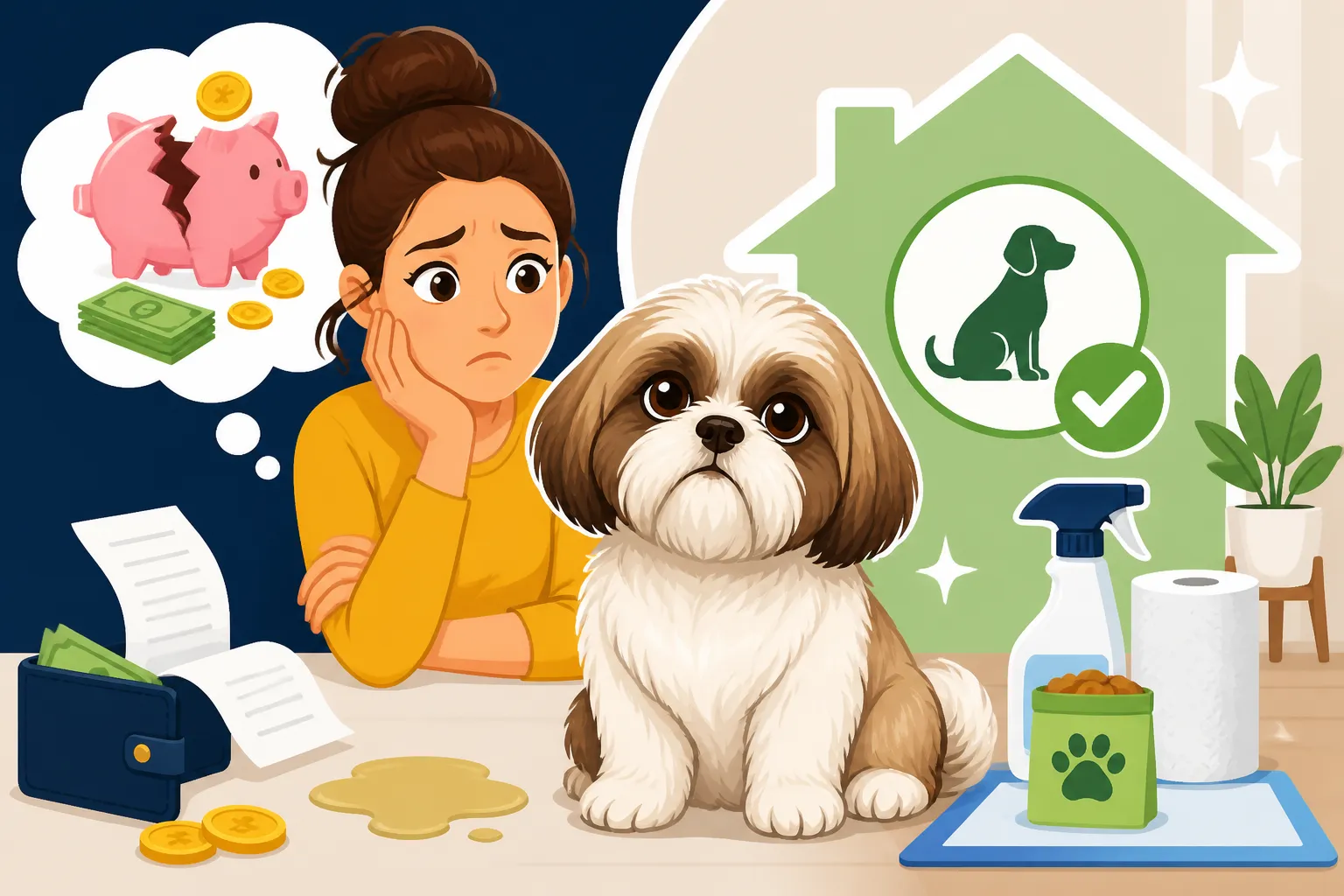
What It Costs to Fix Shih Tzu House Training
Oh, the sheer frustration of house training a Shih Tzu! It’s a journey many of us embark on, often with visions of a perfectly potty-trained pup, only to be met with countless accidents, endless clean-ups, and a growing sense of despair. If you're wondering what it truly costs, both in money and effort, to finally get your furry friend consistently going in the right spot, you're in the right place. This comprehensive guide will walk you through the various financial and emotional investments required to tackle Shih Tzu house training challenges head-on.
Understanding Why Shih Tzus Struggle with House Training
Before we dive into the costs, let's get real about why Shih Tzus, those adorable little fluff balls, can be such a challenge when it comes to potty training. It's not always about stubbornness; often, it's a combination of their unique breed characteristics and some common pitfalls owners unintentionally fall into. Understanding these root causes can actually save you money and heartache in the long run.
Breed-Specific Challenges
Shih Tzus are a toy breed, and while their small size makes them perfect lap warmers, it also means they come with some specific physiological traits that complicate house training. For starters, their bladders are tiny. This isn't just a cute fact; it means they physically cannot hold their urine for long periods, especially as puppies. Expecting a tiny Shih Tzu puppy to go eight hours without a potty break is setting them up for failure and you for frustration. They might need to go every couple of hours, sometimes even more frequently, depending on their age and activity level.
Beyond bladder size, their endearing flat faces (brachycephalic) mean they can sometimes have minor respiratory issues, which can affect their desire or ability to take long walks or stay outside comfortably in extreme weather. This can lead to a preference for indoor potty spots. And yes, while they are bred for companionship, they can indeed have a streak of independence, often mislabeled as stubbornness, when it comes to performing on command. They might decide that the comfy rug is just as good a spot as the grass outside, especially if the weather isn't to their liking. We've all been there, standing outside in the pouring rain, pleading with a tiny dog who glares back from under the porch cover!
Common Mistakes Owners Make
It's easy to make mistakes when house training, especially if you’re a first-time dog owner or accustomed to larger, more easily trained breeds. One of the most prevalent and costly errors is inconsistent scheduling. Your Shih Tzu thrives on routine, and if potty breaks are sporadic or at different times each day, they'll never learn to anticipate when and where they should relieve themselves. This inconsistency leads to more accidents, which then requires more cleaning products and more frustration.
Another major misstep is punishment. If you scold or punish your Shih Tzu for an accident, especially if it happens after the fact (like finding a puddle an hour later), they won't associate the punishment with the act of peeing indoors. Instead, they’ll learn to fear you or to hide their accidents, making it even harder to catch them in the act and redirect them. This can create a sneaky potty habit that's incredibly difficult and expensive to undo, often requiring professional intervention.
Lastly, some owners don't provide the right potty setup. Perhaps the crate is too large, allowing them to soil one end and sleep in the other, or the outdoor area isn't secure or appealing. For Shih Tzus, who often have a preference for softer surfaces, a patch of grass might not be as enticing as that plush bathmat. Many owners find themselves grappling with why Shih Tzu house training runs long, and these common errors are often at the heart of the issue.
Medical Reasons for Accidents
It's crucial to remember that not all accidents are behavioral. Sometimes, a sudden change in house training can signal an underlying medical issue. Urinary tract infections (UTIs) are incredibly common, especially in female dogs, and can cause increased frequency, urgency, and accidents. Your normally reliable Shih Tzu might suddenly start having accidents even shortly after going outside.
More serious conditions like kidney disease can also manifest as increased urination and accidents. If you notice your Shih Tzu suddenly drinking excessive amounts of water and having accidents, it’s imperative to rule out conditions like renal dysplasia and the associated Shih Tzu kidney problems. Even something as simple as bladder stones can cause discomfort and lead to inappropriate urination. In older Shih Tzus, cognitive decline, similar to dementia in humans, can lead to a breakdown in learned behaviors, including house training. They might simply forget where to go or even forget they need to go. If your otherwise well-trained Shih Tzu suddenly starts having frequent accidents, the very first step, before investing in expensive training solutions, should always be a trip to the vet. This initial vet visit itself is a cost, but it can save you from spending on ineffective training methods if the root cause is medical.
Initial Costs of Setting Up for Success
When you first bring home a Shih Tzu puppy, or even an adult dog, there’s an immediate financial outlay to prepare your home for successful house training. These aren’t optional expenses; they’re foundational investments that can prevent more costly problems down the line. Think of it as building a strong framework before you start decorating.
Crate and Indoor Potty Solutions
A proper crate is arguably the most valuable tool for house training a Shih Tzu, leveraging their natural instinct not to soil their sleeping area. But it's not a "set it and forget it" item. The cost for a suitable crate, typically a wire or plastic airline-style crate, can range from $40 to $150, depending on size and features. For a Shih Tzu, you'll want one that's just big enough for them to stand up, turn around, and lie down comfortably. If it's too large, they might use one end as a bathroom and the other as a bedroom, defeating the purpose. Many crates come with dividers, which are excellent for adjusting the size as your puppy grows. Proper setup is key; learning how to navigate Crate Training a Shih Tzu Properly is vital.
Beyond a crate, many Shih Tzu owners opt for indoor potty solutions. These can be particularly helpful for puppies, older dogs, or those living in apartments without easy outdoor access. Potty pads are the most common, costing anywhere from $15 to $50 for a large pack, and you'll go through them quickly in the early days. Reusable, washable pads are a more environmentally friendly and often more cost-effective long-term option, typically costing $10 to $30 per pad. Indoor grass trays for a Shih Tzu, designed to mimic natural grass, can range from $50 to $150 upfront, with ongoing costs for replacement grass patches or cleaning supplies. Sites like Chewy offer a wide variety of indoor solutions and can be a good starting point for pricing comparisons.
Essential Cleaning Supplies
Let's face it: accidents will happen. And when they do, you need the right tools to clean them up thoroughly. This isn't just for aesthetics; dog urine contains enzymes that, if not completely neutralized, will continue to attract your Shih Tzu back to the same spot. Skipping proper cleaning is a surefire way to prolong house training and increase the frequency of accidents.
A good enzymatic cleaner is non-negotiable and typically costs $10 to $30 per bottle. Brands like Nature's Miracle or Rocco & Roxie are popular and effective. You'll likely need several bottles over the course of house training. Paper towels or microfiber cloths will be consumed in large quantities, adding to your regular household expenses. For persistent odors or older stains, you might even consider renting a carpet cleaner (around $30-$50 per day) or hiring a professional carpet cleaning service (which can easily run $100-$300). The cost of cleaning Shih Tzu Accidents Properly is more than just soap and water; it's about eliminating the attractant for future mishaps. Don't underestimate this line item in your budget; it's a critical component of successful house training.
High-Value Training Treats
When it comes to positive reinforcement, especially for a breed like the Shih Tzu that thrives on praise and reward, high-value treats are your secret weapon. These aren't just any old kibble; they're small, soft, incredibly delicious morsels that your dog will do almost anything for. Think tiny pieces of cooked chicken, cheese, or specialized training treats.
The cost of these treats can vary widely. A small bag of premium training treats might be $5 to $15, but you'll be going through them quickly during intensive training periods. Buying in bulk from places like Chewy can sometimes offer savings. Some owners opt for fresh, human-grade options like those from Ollie, cutting them into tiny, pea-sized pieces to keep calories down and maximize the number of rewards per session. While these might seem like an extra expense, they are an investment in your training success. A motivated Shih Tzu learns faster, which means fewer accidents and ultimately, less money spent on cleaning and re-training. These treats are invaluable for positive associations with going potty outside, helping your dog understand that good things happen when they do their business in the right place.
The Investment in Professional Training
Sometimes, despite your best efforts, house training a Shih Tzu can feel like an uphill battle. This is where professional help can become an invaluable, albeit sometimes significant, investment. A good trainer can identify the specific issues, provide tailored strategies, and give you the tools and confidence to succeed.
Puppy Classes and Group Sessions
For young Shih Tzu puppies, puppy kindergarten or group obedience classes can be an excellent starting point. These classes typically focus on basic obedience, socialization, and often include foundational house training advice. The cost for a multi-week puppy class (usually 4-8 weeks) ranges from $120 to $250.
While not solely dedicated to house training, these classes teach you essential communication skills with your dog, timing of rewards, and how to create a consistent routine – all crucial components of potty success. The group setting also offers valuable socialization for your puppy, exposing them to new sights, sounds, and other dogs in a controlled environment. However, for deep-seated house training issues, a general puppy class might only offer broad advice, meaning you might need to supplement with more focused strategies. Still, for a solid foundation and general behavior, they’re a worthwhile investment that can prevent other behavioral issues from compounding house training challenges.
Private In-Home Trainers
When group classes aren't cutting it, or if your Shih Tzu has specific house training challenges (like marking behavior, or a strong preference for indoor surfaces), a private in-home trainer can be a game-changer. This personalized approach allows a professional to observe your dog in their own environment, identify triggers, and develop a customized plan.
The cost for a private trainer varies significantly based on their experience, location, and the number of sessions. A single in-home session can range from $75 to $200 per hour, with packages of multiple sessions often offered at a slight discount. For persistent house training problems, you might need 3-5 sessions, easily pushing the total cost to $225 to $1,000. A trainer can assess your specific situation, teach you how to read your dog’s cues, refine your potty schedule, and address any anxiety or fear that might be contributing to accidents. If you're struggling with a Shih Tzu that is lifting a leg on the sofa, a private trainer can provide targeted strategies and tools. This focused attention can accelerate progress and ultimately save you money on cleaning supplies and prevent further damage to your home.
Specialized "Board and Train" Programs
For the most challenging house training cases, or for owners who feel completely overwhelmed, a "board and train" program is an intensive, immersive option. During these programs, your Shih Tzu lives with a professional trainer for several weeks (typically 2-4 weeks), undergoing daily, consistent training.
This is often the most expensive option, with costs ranging from $1,500 to $4,000 or more for a comprehensive program. While your dog gets professional, around-the-clock training, it's crucial to find a reputable facility that uses positive reinforcement methods. After the program, there's usually a "transfer session" where the trainer teaches you how to maintain the learned behaviors at home. The drawback is that if the owner isn't diligent in continuing the training, the progress can regress. However, for a Shih Tzu backsliding on house training, or for owners who truly need a fresh start and a solid foundation laid by an expert, it can be a worthwhile investment to establish consistent habits. Always check references, visit the facility, and ensure you're comfortable with their methods before committing to such a significant expense. The potential cost savings in avoided home damage and peace of mind can make this a valuable option for some.
Addressing Medical and Behavioral Causes
As mentioned earlier, not all house training woes are purely behavioral. Sometimes, underlying medical conditions or deep-seated anxiety can be the culprits. Addressing these issues often requires a multidisciplinary approach involving veterinary care and potentially specialized behavioral consultations.
Veterinary Consultations and Diagnostics
When your Shih Tzu starts having accidents, especially if it's a sudden change or if they seem uncomfortable, the first stop should always be the veterinarian. A basic vet visit typically costs $50 to $150. During this visit, your vet will perform a physical exam and discuss your dog's symptoms.
However, to truly diagnose the cause of accidents, further diagnostics might be needed. A urinalysis to check for UTIs or crystals can cost $30 to $80. Blood work, especially a senior panel for an older Shih Tzu, might be $100 to $300 to check kidney function or other systemic issues. For more complex cases, such as suspected bladder stones or anatomical abnormalities, X-rays or an ultrasound could be recommended, costing $150 to $500. If your vet suspects a neurological issue or cognitive decline, a referral to a specialist might be necessary, adding to the costs. While these expenses can add up quickly, identifying and treating a medical problem is far more effective and humane than repeatedly trying to train a sick dog. Ignoring medical causes will lead to continued accidents and wasted training efforts.
Medication and Prescription Diets
Once a medical diagnosis is made, there will be costs associated with treatment. For a urinary tract infection, a course of antibiotics might cost $20 to $70. If your Shih Tzu is diagnosed with bladder stones, the treatment could involve a prescription diet specifically formulated to dissolve certain types of stones. These specialized diets are often more expensive than regular dog food, costing $40 to $80 per bag, and your dog might need to stay on it long-term. In some severe cases, surgery to remove bladder stones could be necessary, which can range from $1,000 to $3,000 or more.
For older Shih Tzus experiencing cognitive decline, your vet might prescribe medications designed to improve brain function, such as selegiline, which could cost $30 to $100 per month. While these medications don't cure the condition, they can help manage symptoms, including house training lapses, improving their quality of life and yours. Remember, these are ongoing costs that need to be factored into your budget if your Shih Tzu develops such conditions.
Behavioral Consultations
If all medical causes have been ruled out and your Shih Tzu continues to struggle with house training, a certified veterinary behaviorist or a professional dog behavior consultant might be the next step. These professionals specialize in identifying and modifying complex behavioral issues, including anxiety, fear, or learned habits contributing to accidents.
A behavioral consultation is typically more in-depth than a general training session. Initial consultations can range from $200 to $500 for a thorough assessment, often lasting several hours. Follow-up sessions might be $100 to $250 each. They might explore issues like separation anxiety (which can lead to stress-induced urination), territorial marking, or fear of going outside. They can create a detailed behavior modification plan, which might include specific training protocols, environmental management changes, and sometimes, even recommend anti-anxiety medication if the problem is severe. This is an investment in understanding the why behind the behavior, which is essential for effective, lasting change.
Ongoing Costs and Long-Term Strategies
House training isn't a one-and-done event; it's an ongoing commitment, especially with a Shih Tzu. Even after initial success, there are continuous efforts and minor expenses to maintain good habits and prevent relapses. This long-term view is critical for lasting success.
Continued Supplies and Maintenance
Even after your Shih Tzu is reliably potty trained, you'll still need some essential supplies. Cleaning products should always be on hand for the occasional accident, perhaps due to an upset stomach or a momentary lapse. Keep that enzymatic cleaner in the cupboard, ready to go. You might find you use fewer potty pads, but for an older Shih Tzu or one prone to accidents, keeping a few on hand, or a washable pad, is always a good idea.
For Shih Tzus, maintaining their grooming, especially around the sanitary areas, is also crucial for hygiene and preventing accidents from becoming messy. Regular professional grooming, or consistent at-home grooming, will ensure their long coat doesn't interfere with their ability to go potty cleanly. Learning about Shih Tzu sanitary trims and why they matter is a small but important part of the overall cost and effort.
Your Shih Tzu will continue to need appropriate food and treats. High-quality food contributes to overall health, which in turn supports a healthy digestive and urinary system. Treats remain a positive reinforcement tool, not just for potty training, but for general good behavior throughout their lives. Consider purchasing items like treats and cleaning supplies in bulk from online retailers like Chewy to save money over time.
Preventing Relapses and Future Issues
Relapses in house training can be incredibly disheartening, especially after you've put in so much effort. The key to preventing them is consistency and vigilance. This means sticking to a regular potty schedule, even for adult dogs, and taking them out frequently enough. A good rule of thumb for a Shih Tzu is to take them out first thing in the morning, last thing at night, after every meal, and after waking up from naps or periods of play. For adults, usually every 4-6 hours during the day is sufficient, but every dog is an individual.
Any changes in routine, environment (like moving to a new home), or family dynamics can trigger a relapse. During these times, it's wise to temporarily revert to a more intensive potty schedule, similar to when they were puppies. This proactive approach can save you the cost and frustration of having to re-train from scratch. If you notice your Shih Tzu backsliding on house training, it's a sign to revisit your routine and consider whether an underlying issue (medical or behavioral) is at play. Keeping up with routine vet check-ups can also catch potential medical issues before they impact house training.
The Emotional Toll and Time Investment
While this article focuses on financial costs, it's impossible to discuss house training without acknowledging the significant emotional and time investment. The frustration, the despair, the feeling that you're just not getting through to your dog – these are very real, unquantifiable costs. Lack of sleep from midnight potty breaks, the constant vigilance, the hours spent cleaning up messes… these are contributions of your personal time and energy.
This emotional and time investment can be the most draining aspect of house training a Shih Tzu. It requires patience, consistency, and a deep well of empathy. If you find yourself consistently overwhelmed, it might be time to invest in professional help, not just for your dog, but for your own well-being. A less stressed owner is a more effective trainer. Remember, every success, no matter how small, is a step forward, and celebrating those moments can help alleviate the emotional burden. This is part of the bonding process with your Shih Tzu, a journey that builds trust and understanding, even through the puddles.
Budgeting for House Training Costs
Understanding the potential costs is one thing, but actually managing them requires a proactive approach to budgeting. Unexpected expenses can derail even the most dedicated owner, so planning ahead is crucial.
Creating a Realistic Financial Plan
When you bring a Shih Tzu home, whether a puppy or an adult, you should factor house training expenses into your overall pet budget. This isn't just about the upfront cost of the dog; it's the ongoing reality. Consider creating a spreadsheet or using a budgeting app to track your expenses.
Here's a breakdown of what to include in your house training budget:
| Category | Estimated Low Cost (Initial/Monthly) | Estimated High Cost (Initial/Monthly) | Notes |
|---|---|---|---|
| Crate/Indoor Potty Setup | $40 | $150 | One-time purchase, consider adjustable crates |
| Potty Pads/Reusable Pads | $15/month | $50/month | Higher initial usage, consider reusable for long-term savings |
| Enzymatic Cleaners | $10/bottle (as needed) | $30/bottle (as needed) | Essential for odor elimination, buy in advance |
| High-Value Training Treats | $5/month | $30/month | Varies based on type & quantity, critical for positive reinforcement |
| Puppy Classes | $120 (one-time) | $250 (one-time) | Good foundation, not strictly house training focused |
| Private Trainer Sessions | $75/session | $200/session | Highly recommended for specific issues, packages often available |
| Board & Train Program | $1,500 (one-time) | $4,000 (one-time) | Intensive, for severe cases or overwhelmed owners |
| Vet Visit (Diagnostic) | $50 | $150 | First step for accidents, rule out medical issues |
| Urinalysis/Blood Work | $30 | $300 | If diagnostics are needed |
| Medication/Special Diet | $20/month | $100/month | For medical conditions, potentially ongoing |
| Behavioral Consultant | $200 (initial) | $500 (initial) | For complex behavioral issues, often requires follow-ups |
| Carpet Cleaning/Repair | $0 | $500+ | Variable, depending on severity of accidents and damage to flooring |
This table gives you a rough idea, but remember, every situation is unique. The key is to anticipate these expenses rather than being blindsided by them.
Pet Insurance Considerations
Pet insurance can be a lifesaver when unexpected medical issues arise, and house training problems often lead to vet visits. While pet insurance typically doesn't cover routine training fees or supplies, it can cover the diagnostic tests, medications, or even surgeries needed if a medical condition is causing the accidents. For example, if your Shih Tzu develops bladder stones or a chronic kidney condition that leads to house soiling, a good pet insurance policy could significantly offset the costs of diagnosis and treatment.
When researching pet insurance, pay close attention to what's covered for urinary and digestive issues. Some policies might have exclusions for certain breed-specific conditions, or for pre-existing conditions if your dog already has a history of urinary problems before you enroll. Look into providers like Healthy Paws, and carefully read the terms and conditions. The cost of Shih Tzu pet insurance for a flat-faced toy might be slightly higher due to their breed predispositions, but the peace of mind can be invaluable. Enrolling your Shih Tzu before its first eye problem or kidney issue is always a good strategy to ensure coverage.
Savings and Emergency Funds
Even with a budget and pet insurance, having a dedicated emergency fund for your Shih Tzu is a smart move. Not all medical conditions or behavioral interventions will be fully covered by insurance, and you'll always have deductibles and co-pays. Accidents, by their very nature, are unpredictable, and sometimes you need to act quickly, whether it’s an after-hours vet visit for a sudden bladder infection or a last-minute appointment with a behavioral specialist.
Aim to save at least $500 to $1,000 specifically for pet emergencies. This fund can cover things like a Shih Tzu bladder stone removal that goes beyond your insurance coverage, or a rush order of specialized cleaning products for a major accident. It’s also there for those times when you feel utterly defeated and decide that a private trainer, while expensive, is the only way forward for your sanity and your dog’s success. The ability to access funds quickly removes a significant barrier to getting your Shih Tzu the help they need, ultimately making the house training journey less stressful for everyone involved.
When to Seek Specialized Help (and What It Costs)
It's one thing to struggle with house training, and another entirely when the problem becomes deeply ingrained, dangerous, or indicative of a serious underlying issue. Knowing when to escalate from general training advice to specialized professional help can prevent further damage to your home, your relationship with your dog, and your peace of mind.
Persistent Accidents Despite Efforts
If you've been consistent with your schedule, diligently used positive reinforcement, ruled out medical issues with your vet, and still your Shih Tzu is having frequent accidents, it's a strong indicator that you need specialized help. This isn't a sign of failure on your part, but rather a sign that the problem is more complex than standard training can address.
This is when a private trainer or a veterinary behaviorist truly shines. They can observe subtleties in your dog's behavior, identify environmental triggers you might be missing, or uncover behavioral patterns that are deeply ingrained. Perhaps your Shih Tzu has developed a substrate preference for carpets, or they are struggling with confidence outside. The cost, as discussed earlier, ranges from $75 to $200 per session for a private trainer, or $200 to $500 for an initial behavioral consultation. While it feels like a big step, continued frustration without progress is often more costly in the long run, both financially (due to cleaning and potential damage) and emotionally. It's about finding the missing piece of the puzzle.
Aggression or Fear-Based Potty Problems
Sometimes, house training issues can be intertwined with more serious behavioral problems like aggression or extreme fear. A Shih Tzu might exhibit aggression when approached while going potty, perhaps due to resource guarding or past negative associations. Conversely, a fearful Shih Tzu might refuse to go outside, holding it until they can no longer, leading to accidents indoors, often out of sight. They might be afraid of loud noises, strange people, or other dogs, leading to a refusal to potty in perceived dangerous areas.
These complex behavioral issues require the expertise of a certified veterinary behaviorist. Their deep understanding of animal psychology and access to potential pharmaceutical interventions can be crucial. As mentioned, initial consultations are typically $200-$500, with follow-up sessions adding to the total. Attempting to address these issues yourself without professional guidance can be risky, potentially exacerbating the problem or even leading to bites if aggression is involved. A behaviorist can help create a safe environment for your Shih Tzu to learn, using counter-conditioning and desensitization techniques, and if necessary, prescribe medication to manage anxiety or fear, making training possible.
Geriatric Incontinence and Management
As Shih Tzus age, they can face a new set of challenges, including geriatric incontinence. This is often not a behavioral issue but a natural decline in muscle control, cognitive function, or the onset of age-related diseases. An older Shih Tzu might simply not have the same bladder control they once did, or they may forget their training due to cognitive decline in a Shih Tzu past twelve.
Management for geriatric incontinence focuses on comfort and hygiene rather than re-training. Your vet will first rule out treatable medical conditions. If it's age-related incontinence, options include prescription medications that strengthen bladder muscles (costing $20 to $60 per month), senior-specific diets, increased potty breaks, and using doggy diapers or wraps (which cost $10 to $30 for a pack). For an older Shih Tzu with vision loss in a senior Shih Tzu, an indoor potty setup might be easier for them to navigate. While these are ongoing costs, they're part of providing compassionate senior care. A senior panel a Shih Tzu needs at ten can help identify these issues early, allowing you to plan ahead and minimize stress for both you and your beloved companion.
Disclaimer
The information provided in this article is for general informational purposes only and does not constitute professional veterinary or behavioral advice. Always consult with a qualified veterinarian or certified dog trainer/behaviorist for any health or behavioral concerns your Shih Tzu may have. Costs mentioned are estimates and can vary significantly based on location, practitioner experience, and individual circumstances.