Shih Tzu Obesity and the Load on Its Back
It’s a struggle many Shih Tzu parents face: how do you tell if your little fluffball is carrying a few too many pounds when their beautiful, flowing coat hides so much? The truth is, that gorgeous double coat can be a deceptive blanket, masking weight gain that can silently put an immense strain on your beloved companion's delicate body, especially their unique spine. This guide is here to walk you through the subtle signs of obesity in Shih Tzus, uncover the specific risks it poses, and equip you with practical, compassionate strategies to help your furry friend achieve and maintain a healthy weight.
Understanding the Unique Risks of Weight Gain for a Shih Tzu
When we talk about Shih Tzus, we're not just discussing a cute, cuddly companion; we're talking about a breed with a very specific anatomical blueprint. This includes their adorable flat face (brachycephalic) and their characteristically long back with short legs (chondrodystrophic). While these features are part of what makes them so endearing, they also predispose them to certain health vulnerabilities, which excess weight can dramatically worsen.
The Delicate Shih Tzu Spine and Disc Disease
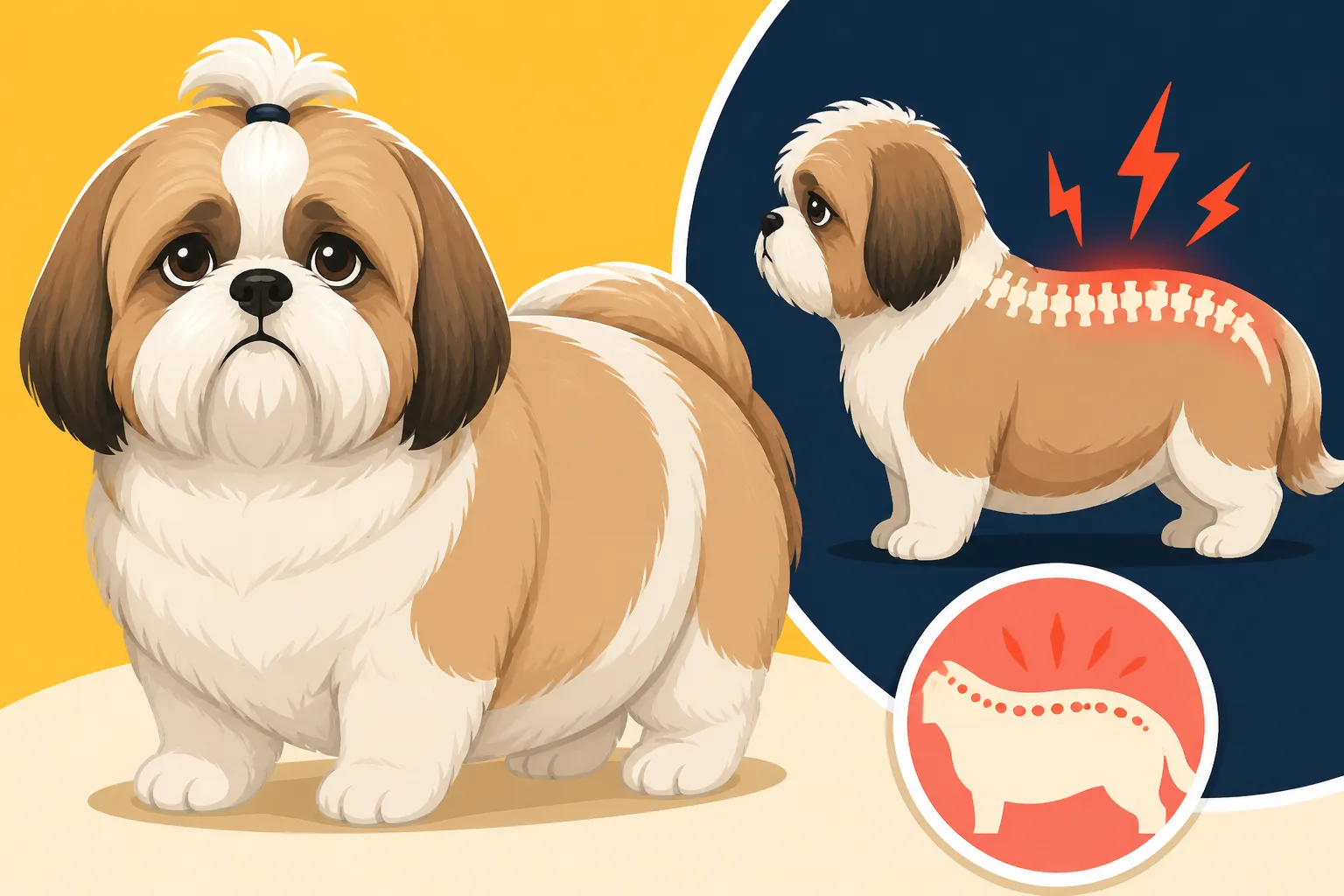
The most critical concern with an overweight Shih Tzu often revolves around their spine. These little dogs are predisposed to conditions like intervertebral disc disease (IVDD), a nasty ailment where the shock-absorbing discs between the vertebrae bulge or rupture. Think of their spine like a miniature suspension bridge. It's designed to carry a certain amount of weight, and it's quite flexible, which unfortunately also makes it vulnerable. Now, imagine adding an extra 20% or even 30% more weight onto that bridge. The strain on those delicate discs becomes immense.
Even just one or two extra pounds on a Shih Tzu, who might ideally weigh anywhere from 9 to 16 pounds, is a huge percentage of their body weight. For us, that might be like gaining 20 or 30 pounds; for them, it's far more impactful proportionally. This added pressure accelerates the wear and tear on their discs, making them more prone to slipping, herniating, or rupturing. When a disc goes, the consequences can range from severe pain and lameness to complete paralysis. It's truly heartbreaking to see a dog in agony from a slipped disc, and unfortunately, it's a very real danger. To learn more about how their unique anatomy plays a role, check out our article on Why a Shih Tzu Spine Is Built to Slip. For a deeper dive into the condition itself, you might find our guide on Shih Tzu Back Problems and Disc Disease insightful.
Beyond the Back: Other Health Complications
While the back is a primary concern, obesity in Shih Tzus doesn't stop there. It's a systemic issue that impacts nearly every part of their body.
Firstly, their joints take a beating. Shih Tzus are already prone to Patellar Luxation in a Shih Tzu, where the kneecap slips out of place. Extra weight makes this condition much worse, increasing the frequency and severity of luxation, and accelerating the onset of arthritis in those tiny, already stressed joints. This can lead to chronic pain and significantly reduce their mobility as they age. If you're seeing signs of this, our article on Shih Tzu Joint Problems in a Toy Frame might offer some helpful context.
Then there are their breathing issues. As a brachycephalic breed, Shih Tzus already struggle with breathing due to their compressed airways, including stenotic nares (narrow nostrils) and an elongated soft palate. Carrying extra weight adds fat deposits around their throat and chest, further constricting their already compromised airways. This makes them pant more, struggle during exercise, and increases their risk of heatstroke, especially in warm weather. You can explore this further in Brachycephalic Breathing in a Shih Tzu.
Beyond these specific breed concerns, an overweight Shih Tzu is also at a higher risk for:
- Diabetes: Just like in humans, obesity can lead to insulin resistance and diabetes, requiring lifelong management.
- Heart Disease: The heart has to work harder to pump blood through an enlarged body, leading to strain and increased risk of heart conditions.
- Reduced Lifespan: Plain and simple, an overweight dog generally lives a shorter life. Their quality of life is also diminished, as they're less able to enjoy walks, play, and interact comfortably.
It’s clear that even a small amount of extra weight can have cascading negative effects on your Shih Tzu’s health and happiness.
Identifying if Your Shih Tzu is Overweight
So, you’re convinced that weight is an issue, but how do you actually tell if your Shih Tzu is carrying too much? This is where the fluffy coat becomes both a blessing and a curse.
The Challenge of the Double Coat
You might look at your Shih Tzu and think they look perfectly healthy, maybe even a little slender, but their luxurious double coat can be incredibly deceptive. It's designed to give them that characteristic "chrysanthemum" look, and it effectively camouflages any extra padding underneath. What appears as a robust, solid dog might actually be a dog with a significant layer of fat hidden beneath all that hair.
This means that visual inspection alone isn't enough. Relying solely on your eyes can lead to missing crucial signs of weight gain until it becomes a severe problem. Instead, you need to get hands-on and feel what's truly underneath. Regular physical examination, paired with careful observation of their behavior, is your best tool.
The Rib and Waistline Test
The most reliable way to assess your Shih Tzu's body condition is through touch, often referred to as a "body condition score" assessment. Here's how to do it:
- The Rib Check: Gently run your flat palms along your Shih Tzu's sides, just behind their front legs. You should be able to easily feel their ribs, almost like feeling the knuckles on the back of your hand when your hand is open flat. If you have to press firmly to feel them, or if you feel a thick layer of padding over them (like feeling your palm), your dog is likely overweight. You shouldn't be able to see the ribs, but feeling them easily is key.
- The Waistline Test:
- From Above: Stand over your Shih Tzu (or have them stand on a grooming table or counter at your eye level, if they are comfortable). Look down at their back. You should see a slight indentation, or a "waist," just behind their rib cage, before their hips. An overweight Shih Tzu will have little to no waist, looking more like a straight line or even bulging outwards.
- From the Side: Look at your Shih Tzu from the side. Their abdomen should tuck up slightly behind their rib cage, not sag down or look distended. An overweight dog will often have a straight line from their chest to their hindquarters, or even a visibly sagging belly.
Remember, the ideal weight for a Shih Tzu typically ranges from 9 to 16 pounds, but this can vary depending on their bone structure and individual build. Your veterinarian can help you determine the specific ideal weight for your individual dog.
Here's a simplified table to help you understand the different body conditions:
| Body Condition Score | Description | Ribs | Waistline/Tuck Up |
|---|---|---|---|
| Too Thin (1-2) | Ribs, spine, and pelvic bones very easily visible/felt. | Clearly visible and easily felt with no fat cover. | Very pronounced hourglass shape and severe abdominal tuck. |
| Ideal (3) | Ribs easily felt with minimal fat cover. | Easily felt without pressing. | Clearly visible waist and abdominal tuck. |
| Overweight (4) | Ribs difficult to feel under a moderate fat cover. | Requires slight pressure to feel. | Little to no waist, abdomen mostly straight or slightly sagging. |
| Obese (5) | Ribs very difficult to feel under a thick fat cover. | Cannot feel ribs or requires significant pressure. | No waist, abdominal area distended and hanging. |
Behavioral Clues to Watch For
Sometimes, your Shih Tzu's behavior will give you the first hint that they're carrying too much weight, even before you do a proper body condition check.
Keep an eye out for:
- Decreased Activity: Is your Shih Tzu usually zippy but now seems reluctant to play or go for walks? Do they tire quickly? This is often one of the first signs. They might hesitate to jump on the sofa or bed, not just because of potential back pain, but because the extra effort is too much. You can read more about how even a few extra pounds impacts them in What Two Extra Pounds Do to a Shih Tzu.
- Difficulty Grooming: Overweight dogs often struggle to reach certain parts of their body, especially their hindquarters, to groom themselves. You might notice mats forming in areas they can no longer reach, or that their coat generally looks less well-maintained.
- Excessive Panting or Lethargy: Even with minimal exertion, an overweight Shih Tzu might pant heavily, seem overly tired, or display general lethargy. This is a red flag, especially for brachycephalic breeds, indicating their body is working harder than it should.
- Reluctance to Climb Stairs or Jump: If your Shih Tzu normally hops onto your lap or the furniture with ease but is now hesitating, struggling, or whining, it could be a sign that their joints or back are under strain from the extra weight. This often ties into potential disc issues.
Paying attention to these subtle changes in your Shih Tzu's daily routine and comfort levels can help you intervene before weight gain escalates into more serious health problems.
Crafting a Safe and Effective Weight Loss Plan
Once you've determined your Shih Tzu is overweight, the next step is to formulate a plan. This isn't just about cutting calories; it's about a holistic approach to their health, always with safety as the paramount concern.
Consulting Your Veterinarian First
Before you make any drastic changes to your Shih Tzu's diet or exercise routine, the absolute first step is to consult your veterinarian. This cannot be stressed enough. Here's why:
- Rule Out Medical Conditions: What looks like simple weight gain could sometimes be a symptom of an underlying medical issue, such as hypothyroidism. A vet can perform diagnostic tests to rule out conditions that could be contributing to weight gain or making weight loss difficult. For example, understanding Thyroid Disease Thinning a Shih Tzu Coat and impacting their metabolism is crucial.
- Determine Target Weight: Your vet will help you establish a realistic and healthy target weight for your specific Shih Tzu, taking into account their age, build, and overall health.
- Tailored Caloric Intake: They can calculate the precise daily caloric intake needed for safe and effective weight loss. Guessing can lead to insufficient nutrition or too rapid weight loss, which can be detrimental. They might recommend specific prescription weight loss diets that are formulated to be lower in calories but still provide essential nutrients, and often contain higher fiber to help your dog feel full.
- Discuss Food Options: Whether it's a specific kibble, a wet food, or even a fresh food diet, your vet can advise on the best type of food to support your Shih Tzu's weight loss journey, considering any other health conditions they might have.
- Develop a Safe Exercise Plan: They can help you create an exercise regimen that is appropriate for your dog's current fitness level, age, and any existing joint or back issues, ensuring you don't overdo it and cause injury.
Having a professional guide you through this process is invaluable. It ensures that your Shih Tzu loses weight in a healthy, controlled manner, and that any potential health issues are addressed promptly. It's also reassuring to know that if unexpected health issues arise during this journey, having pet insurance like Healthy Paws can provide a financial safety net for diagnostic tests, prescription foods, or any necessary treatments.
Dietary Adjustments and Smart Feeding
Diet is the cornerstone of any weight loss plan. It’s often said that weight loss is 80% diet and 20% exercise, and that holds true for our furry friends too.
- Accurate Portion Control: This is non-negotiable. Stop eyeballing portions. Invest in a digital kitchen scale to accurately weigh your Shih Tzu's daily food ration. Even a small difference in kibble volume can add up to significant extra calories for a small dog. Divide their daily allowance into two meals to help manage hunger. Our guide on Daily Calories for a Shih Tzu can offer a starting point, but always defer to your vet's specific recommendations.
- Choose Appropriate Food: Your vet might recommend a specific weight-management dog food. These diets are typically lower in fat and calories, higher in fiber to promote satiety, and enriched with essential nutrients so your dog doesn’t miss out while dieting.
- Reduce and Re-evaluate Treats: Treats are often the silent calorie culprits. Many commercial treats are surprisingly high in calories.
- Substitute with Low-Calorie Options: Instead of traditional treats, offer small pieces of plain cooked chicken breast (skinless, boneless), green beans, carrots, or apple slices (without seeds). Always check with your vet about safe human foods.
- Use Kibble as Treats: Take a portion of their daily kibble allowance and use that for training rewards or occasional treats. This way, you're not adding extra calories.
- Avoid Table Scraps: This is critical. Table scraps, no matter how small, contribute extra calories and often unhealthy fats and ingredients that can upset your Shih Tzu’s delicate digestive system or even be toxic.
- Engage with Puzzle Feeders and Slow Feeders: These tools can make mealtime an activity, slowing down eating and making your dog work a little for their food. This not only burns a few extra calories but also prevents them from wolfing down their meal too quickly, which can aid digestion and increase feelings of fullness.
Consistency is key here. Every family member needs to be on board with the new feeding plan to avoid accidental overfeeding.
Safe Exercise Strategies for an Overweight Shih Tzu
Exercise is vital, but for an overweight Shih Tzu, it needs to be introduced carefully and mindfully to avoid injury, especially to their vulnerable back and joints.
- Start Slow and Steady: Don't go from zero to a marathon. Begin with short, frequent walks—perhaps 5-10 minutes, two to three times a day. Gradually increase the duration and distance as your Shih Tzu's stamina improves. The key is consistency, not intensity.
- Low-Impact Activities: Avoid high-impact activities like jumping (especially off furniture!) or running on hard surfaces. These can put immense stress on their joints and increase the risk of disc injury. Instead, focus on controlled walks on softer surfaces like grass or carpet.
- Indoor Play: If outdoor conditions aren't ideal (too hot, too cold, or wet), engage your Shih Tzu in gentle indoor play. Short games of fetch in a hallway, hide-and-seek with treats, or simply walking around the house can add up. Our article on Shih Tzu Exercise for a Low-Energy Toy provides more ideas for appropriate activity levels.
- Monitor for Overheating: Shih Tzus, with their brachycephalic syndrome, are highly susceptible to overheating. Always walk them during cooler parts of the day, carry water, and watch for excessive panting, lethargy, or stumbling. If you notice any signs of heat stress, stop immediately and cool them down.
- Consider Ramps: To further protect their back, consider using ramps or pet stairs for accessing furniture or beds. This prevents them from jumping up and down, which can put sudden, traumatic strain on their spine. Our article, Ramps for a Shih Tzu With a Long Spine, gives some excellent options and guidance.
Remember, the goal is gradual, sustainable progress. Celebrate small victories, like increased stamina or a slightly more pronounced waistline. This journey takes patience and dedication, but the reward is a healthier, happier Shih Tzu.
Preventing Future Weight Gain and Maintaining a Healthy Lifestyle
Once your Shih Tzu reaches their ideal weight, the hard work isn't over. Maintaining that healthy weight is an ongoing commitment that requires vigilance and proactive adjustments.
Ongoing Monitoring and Adjustments
Weight management is a lifelong process, not a one-time fix. Just like in humans, a dog's metabolic needs can change with age, activity level, and overall health.
- Regular Weigh-Ins: Make it a habit to weigh your Shih Tzu regularly, perhaps once a month, at home if you have a reliable scale or during routine vet visits. This allows you to catch any upward trends early before they become a significant problem.
- Revisit the Body Condition Score: Continue to perform the rib and waistline test regularly. Over time, you'll become much better at discerning what a healthy body condition feels like under all that fur.
- Adjust Food Intake as Needed: Your Shih Tzu's caloric needs might decrease as they get older and their activity naturally slows down. As they transition into their senior years, their metabolism can also shift. Be prepared to slightly reduce their food portions to prevent creeping weight gain. Our article on Senior Shih Tzu Care Past the Age of Ten can offer guidance on caring for an aging Shih Tzu, including dietary adjustments. Similarly, if they become less mobile due to age or conditions like arthritis (see Shih Tzu Mobility Decline in Old Age), their caloric intake will need to be adjusted downwards.
- Maintain Treat Discipline: Continue to be mindful of treats and calories. It's easy to slip back into old habits, especially when your dog gives you those irresistible puppy-dog eyes!
Environmental Management for Spinal Health
Beyond diet and exercise, creating a back-friendly environment for your Shih Tzu is crucial, especially if they’ve been prone to back issues or are genetically predisposed.
- Ramps and Pet Stairs are Your Friends: Seriously, these are game-changers. Jumping on and off furniture or beds creates impact that jars the spine and can lead to acute disc injuries. By providing ramps or steps, you eliminate this risk. This is particularly important for preventing injuries that could lead to extensive recovery, such as Crate Rest for a Shih Tzu With a Slipped Disc.
- Non-Slip Surfaces: Slippery floors (hardwood, tile) can be treacherous for a Shih Tzu, causing them to splay out and strain their back and hips. Use rugs, carpet runners, or paw grippers to provide traction in high-traffic areas.
- Supportive Bedding: Ensure your Shih Tzu has comfortable, supportive bedding that helps alleviate pressure points on their joints and spine. Orthopedic beds can be a great investment, especially as they get older.
A healthy weight is a significant part of a comprehensive strategy to protect your Shih Tzu's spinal health and overall well-being. By making these changes, you're not just helping them live longer; you're ensuring they live a more comfortable, active, and joyful life. And while we hope for the best, having a reliable pet insurance plan like Healthy Paws can offer peace of mind, knowing that if a back injury or other serious health concern does arise, you're better prepared to provide the best possible care without undue financial stress.
Disclaimer
This article is intended for informational purposes only and is not a substitute for professional veterinary advice. Always consult with your veterinarian regarding your Shih Tzu's specific health concerns, diet, and treatment options.