Pigmentary Keratitis in a Shih Tzu
One of the most heart-wrenching things to notice as a Shih Tzu parent is when those big, beautiful eyes, so full of expression, start to look a little… off. Many owners eventually spot dark, shadowy spots creeping across their beloved dog's cornea, and it’s natural to feel a pang of worry, wondering what these mysterious marks are and if they signal something serious. This guide is here to walk you through exactly what pigmentary keratitis is, why it's so common in our flat-faced friends, and what you can do to manage and treat this often frustrating condition.
Understanding Pigmentary Keratitis in Shih Tzus
It’s no secret that Shih Tzus have those adorable, prominent eyes that just melt your heart. But these very features, unfortunately, also make them prone to a whole host of eye issues. Pigmentary keratitis is one of those conditions that seems to crop up far too often in our breed, and it’s something every Shih Tzu owner should be aware of.
What Pigmentary Keratitis Actually Is
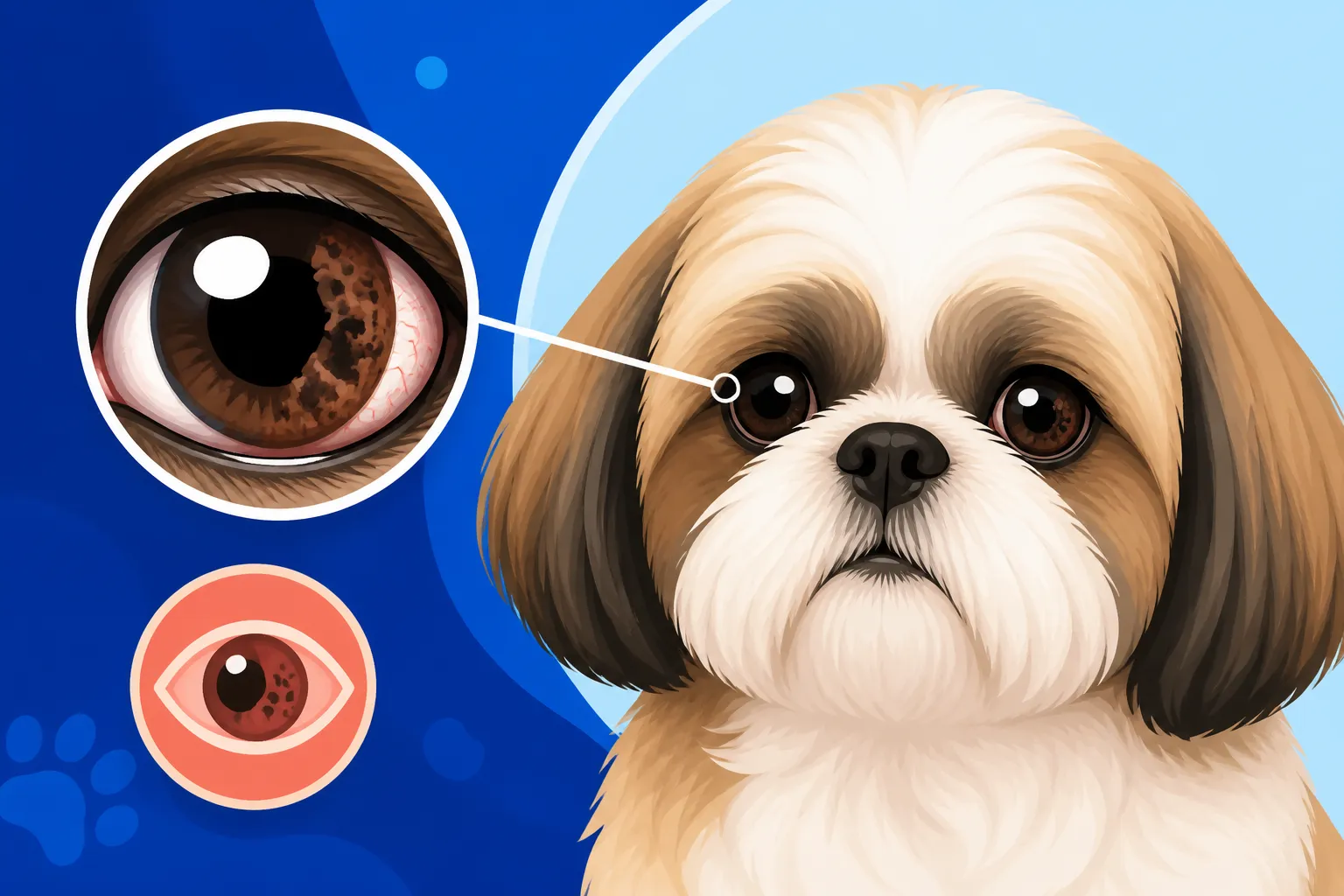
At its core, pigmentary keratitis is a condition characterized by the deposition of dark brown or black pigment on the surface of your Shih Tzu's cornea. Think of the cornea as the clear, protective outer layer of the eye, like a window. When this "window" becomes irritated or inflamed over time, the body responds by sending pigment-producing cells to the area. This pigment acts like a natural shield, trying to protect the delicate corneal tissue from further damage. Initially, you might notice just a tiny speck, almost like a smudge, often starting from the inner corner of the eye near the nose. But if the irritation continues unchecked, that speck can gradually spread, potentially covering a significant portion of the cornea.
The problem, of course, is that this protective pigmentation, while well-intentioned by the body, can eventually impair vision. Imagine trying to look through a window that has increasingly dark smudges or stains on it; the view becomes obstructed. For our Shih Tzus, this can mean anything from mild blurriness to severe vision loss if left untreated. It's a cruel irony that their unique facial structure, with those shallow eye sockets and bulging eyes, makes them especially vulnerable. Their eyes are often exposed more to environmental irritants and are less protected by their eyelids, leading to chronic irritation. This inherent vulnerability is part of what makes conditions like Brachycephalic Ocular Syndrome in a Shih Tzu so prevalent in the breed.
The Root Causes Behind the Pigmentation
So, what’s causing this chronic irritation that triggers the pigment to form? For Shih Tzus, it’s rarely one single thing, but often a combination of factors related to their brachycephalic (flat-faced) anatomy.
One of the most common culprits is chronic physical irritation. This can come from eyelashes growing in abnormal directions, like distichiasis (extra eyelashes growing from the eyelid margin) or ectopic cilia (eyelashes growing inward from the inside of the eyelid). These rogue hairs constantly rub against the sensitive corneal surface, like a tiny brush scrubbing the eye. Similarly, entropion, a condition where the eyelid itself rolls inward, can cause the eyelid hair to chafe the cornea, leading to endless irritation. These issues are why discussions around Shih Tzu Eyelashes Growing Into the Eye are so important for owners.
Another major contributor is dry eye, medically known as keratoconjunctivitis sicca (KCS). Shih Tzus are notoriously prone to dry eye because their prominent eyes and often compromised tear film mean their eyes don't produce enough tears, or the tears they do produce evaporate too quickly. Without a proper tear film to lubricate and protect the eye, the cornea becomes dry, inflamed, and highly susceptible to damage. This dryness is a constant source of irritation that can trigger pigment deposition. It's a condition that often requires Dry Eye in a Shih Tzu and Lifelong Drops to manage effectively. Environmental factors play a role too; dust, pollen, smoke, or even the chemical fumes from household cleaners can irritate the eyes. And let's not forget the sheer amount of hair around a Shih Tzu's face. If not meticulously trimmed and tied back, those long strands can constantly brush against the eyes, acting as a persistent irritant. It highlights why understanding Trimming Face Hair Away From Shih Tzu Eyes is more than just cosmetic. All of these factors, individually or in combination, create an environment where the cornea is under constant assault, leading it to defend itself with pigment.
Recognizing the Signs and Getting a Diagnosis
As a Shih Tzu owner, you become an expert in your dog's quirks and habits. Noticing subtle changes in their eyes is critical for early detection of pigmentary keratitis, which can make a huge difference in managing the condition.
What to Look For at Home
The most obvious sign of pigmentary keratitis is, of course, the appearance of dark spots on the eye. These aren't usually inside the eye itself, but rather on the clear, outer surface, the cornea. They can range from a faint brown haze to dense, black patches that look almost like ink stains. These usually start at the inner corner, closest to the nose, and spread outwards. Sometimes, owners describe it as looking like a "dirty eye" that just won't wipe clean.
Beyond the visible pigment, your Shih Tzu might show other signs of discomfort or irritation. You might notice them squinting, holding one eye partially closed, or rubbing their face with a paw. A Shih Tzu who is suddenly hesitant to jump or navigate familiar spaces, particularly in dimmer light, could be experiencing vision impairment from expanding pigment. This kind of behavior, often leading to A Shih Tzu Squinting With One Eye, should be a clear signal to contact your vet. There might also be increased tear production, leading to persistent wetness around the eyes, or a mucoid (thick, snot-like) discharge, especially if dry eye or an infection is also present. The white part of the eye (sclera) might appear red or bloodshot, indicating inflammation. Keeping a close watch on these subtle cues can help you catch pigmentary keratitis early, before it severely impacts your dog's vision and quality of life.
The Vet's Diagnostic Approach
When you bring your Shih Tzu to the vet with concerns about their eyes, a thorough ophthalmic examination will be performed. This isn't just a quick look; it's a detailed assessment designed to pinpoint the exact cause and extent of the problem.
One of the first tests will likely be a Schirmer Tear Test. This involves placing a small strip of specialized paper under the lower eyelid for a minute to measure tear production. Low tear production confirms dry eye (KCS), a common precursor to pigmentary keratitis. Next, the vet might use a fluorescein stain. This orange dye is dropped onto the eye; if there's any corneal ulceration or abrasion, the stain will adhere to the damaged area and glow bright green under a special blue light. While pigmentary keratitis itself isn't an ulcer, chronic irritation often leads to micro-abrasions or ulcers that contribute to pigmentation. The vet will also carefully examine the eyelids and eyelashes for abnormalities like distichiasis or entropion. They might use a magnification tool to get a really close look at those tiny hairs that could be causing trouble. In some cases, tonometry, which measures the pressure inside the eye, might be performed to rule out other conditions like glaucoma. Your vet might also take samples for cytology or culture if an infection is suspected. The goal of all these tests is to not only confirm pigmentary keratitis but, crucially, to identify and address the underlying cause of the irritation. Early and accurate diagnosis is key, as addressing the root problem is essential for effective management and preventing further vision loss.
Treatment Options to Manage Pigmentary Keratitis
Treating pigmentary keratitis is rarely a quick fix. It's often a multi-pronged approach that requires patience and consistency, focusing on both reducing the existing pigment and, most importantly, eliminating the underlying cause of the irritation.
Addressing the Underlying Irritation
The first and most critical step in treating pigmentary keratitis is to identify and resolve whatever is chronically irritating your Shih Tzu's cornea. If rogue eyelashes are rubbing the eye, your vet might recommend minor procedures like cryoepilation (freezing the hair follicles) or surgical removal to prevent them from growing back. For entropion, surgical correction to roll the eyelid back into its proper position is often necessary. These surgeries, while they sound daunting, can bring immense relief and prevent further pigment progression. This kind of intervention is often discussed in detail when dealing with Shih Tzu Entropion and Eyelid Surgery.
Once the physical irritants are handled, or if they aren't the primary cause, topical medications become paramount. Cyclosporine and tacrolimus eye drops are often prescribed. These medications work by suppressing the immune response in the eye, which reduces inflammation and helps to reverse, or at least halt, the pigment deposition. They also stimulate tear production, which is incredibly helpful if dry eye is a factor. These are often lifelong medications, much like the Prescription Eye Drops for a Shih Tzu Each Month needed for chronic dry eye. Steroid eye drops (corticosteroids) might be used judiciously to reduce inflammation, but they come with risks, especially if an undiagnosed corneal ulcer is present, so they are always prescribed with caution by your vet. Regular lubricating eye drops or artificial tears are also crucial, particularly for dogs with dry eye, to keep the cornea moist and comfortable. Consistency with these treatments is absolutely non-negotiable; skipping doses can quickly lead to a worsening of the condition.
Long-Term Management and Prevention
Successfully managing pigmentary keratitis is a marathon, not a sprint. It demands a lifelong commitment from owners, but the reward is a comfortable dog with preserved vision. The goal of long-term management is to keep the underlying irritation at bay and prevent new pigment from forming, or existing pigment from spreading. This means adhering strictly to your vet's prescribed medication schedule, whether it's daily drops, multiple times a day, or a combination. Regular follow-up appointments with your veterinarian, and possibly a veterinary ophthalmologist, are essential. These specialists can monitor the progression of the pigment, adjust medications as needed, and detect any new issues early.
At home, diligent eye care is your secret weapon. This includes gently wiping your Shih Tzu’s eyes daily to remove debris, mucus, and prevent tear staining. Keeping the hair around their eyes meticulously trimmed or tied back in a topknot is vital to prevent physical irritation from hair. Brands like Healthy Paws highlight the importance of proactive care in preventing more serious issues down the line. Some owners find that specially designed eye wipes or gentle cleansers can help keep the area around the eyes clean and free of irritants. For dogs prone to dry eye, environmental management, such as using humidifiers in dry climates or avoiding direct exposure to fans, can also make a difference. It's a continuous process, but with consistent care, many Shih Tzus with pigmentary keratitis live full, happy lives with good vision.
Here’s a quick overview of common treatment approaches for pigmentary keratitis:
| Treatment Type | Purpose | Application | Considerations |
|---|---|---|---|
| Topical Cyclosporine/Tacrolimus | Reduces inflammation, stimulates tear production, clears pigment | Drops/ointment 1-2 times daily, often lifelong | Mainstay treatment, may take weeks to see improvement, requires consistency. |
| Topical Steroids | Potent anti-inflammatory | Drops 1-3 times daily (short-term) | Use with extreme caution, contraindicated with corneal ulcers. |
| Artificial Tears/Lubricants | Keeps eye moist, provides comfort | Drops 2-6+ times daily | Supportive care, especially for dry eye, no side effects. |
| Eyelash/Eyelid Surgery | Corrects physical irritation (distichiasis, entropion) | One-time procedure with recovery | Addresses root cause, can prevent further pigment. |
| Hair Trimming/Topknot | Prevents physical irritation from facial hair | Regular grooming at home/groomer | Essential preventive measure, simple but critical. |
| Humidifiers | Adds moisture to ambient air | Environmental adjustment | Supportive for dry eye, especially in arid climates. |
Living with Pigmentary Keratitis: Owner's Role and Support
Discovering your Shih Tzu has a chronic eye condition like pigmentary keratitis can feel overwhelming. It's not just about the medical aspect; it's about integrating this care into your daily life and understanding the long-term implications.
Daily Care Routines and Challenges
The reality of managing pigmentary keratitis often means a commitment to daily eye drops, sometimes multiple times a day, for the rest of your dog's life. This can be challenging. Some Shih Tzus are quite cooperative, while others can be incredibly stubborn, making eye drop administration a wrestling match. Establishing a routine, using positive reinforcement (treats! praise!), and finding a comfortable position for both of you can make a huge difference. For instance, holding your Shih Tzu gently in your lap, facing away from you, can often be more effective than trying to administer drops face-to-face.
Beyond the drops, you'll need to be extra vigilant about keeping their face clean and dry. Those adorable long Shih Tzu whiskers and beard can easily trap moisture, food, and debris, which can then wick back into the eyes, causing more irritation. Regular gentle wiping of the tear stain areas and trimming the hair around the eyes is paramount. This can feel like a constant battle, especially if your dog loves to roll in the grass or splash in puddles. It's emotionally draining when you're doing everything right, and you still see that pigment expanding, or your dog is still uncomfortable. This is where patience and self-compassion, for both you and your furry friend, become incredibly important.
Financial Considerations and Support
Let's be realistic: managing a chronic condition like pigmentary keratitis can be expensive. The cost of prescription eye drops alone can add up quickly, especially if they are lifelong. Factor in regular veterinary check-ups, potential specialist visits to a veterinary ophthalmologist, and possible surgical interventions for issues like entropion or distichiasis, and the numbers can become quite substantial. When considering Budgeting for a Shih Tzu With Chronic Eye Disease, these ongoing costs are a major component.
This is where having a solid pet insurance plan can be a true game-changer. Many owners find peace of mind with providers like Healthy Paws because they can help offset a significant portion of these recurring medical expenses. Enrolling your Shih Tzu in a good pet insurance plan early, before any signs of pigmentary keratitis or other chronic eye issues appear, is crucial, as most policies consider pre-existing conditions. For example, a policy from Healthy Paws could cover 70-90% of your vet bills after your deductible, making those expensive medications and specialist visits much more manageable. Without insurance, you might find yourself weighing difficult financial decisions against your dog's quality of life. Thinking ahead about Shih Tzu Pet Insurance for a Flat-Faced Toy can truly save you stress and money in the long run. Having that financial safety net allows you to focus solely on providing the best possible care for your beloved companion, ensuring they receive the consistent attention and treatment needed to manage their pigmentary keratitis effectively.
Disclaimer
This article is intended for informational purposes only and is not a substitute for professional veterinary advice, diagnosis, or treatment. Always seek the advice of your veterinarian or other qualified health provider with any questions you may have regarding a medical condition. Never disregard professional veterinary advice or delay in seeking it because of something you have read in this article.