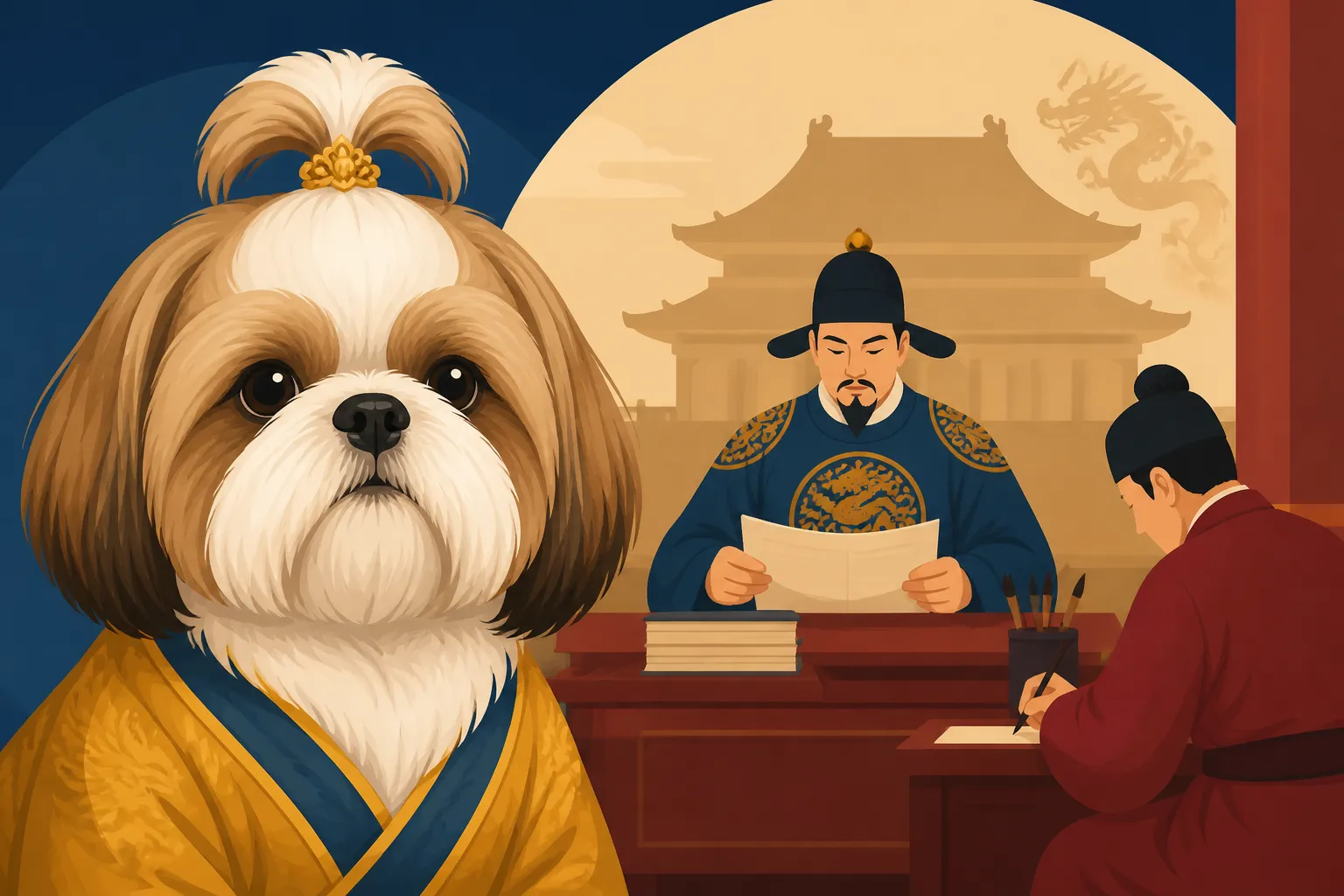
Court Records of Shih Tzus in the Yuan Dynasty
It's an absolutely thrilling thought, isn't it? Imagining our beloved little Shih Tzus, with their regal bearing and sweet faces, trotting through the ancient halls of imperial China, pampered by emperors and empresses. Many of us know the general narrative—that these delightful "lion dogs" have a history steeped in royalty, often associated with the Forbidden City. But when you start to dig into the specifics, like which dynasties specifically kept them and what the actual court records say, the details can get a bit fuzzy. This guide aims to clear up some of that historical fog, particularly focusing on the Yuan Dynasty, and explore what we actually know, and what remains tantalizingly unconfirmed, about the Shih Tzu's presence during that fascinating period.
Unraveling the Ancient History of the Shih Tzu in Imperial China
The history of the Shih Tzu, often romantically linked to ancient Chinese royalty, is a tapestry woven with threads of fact, legend, and sometimes, educated guesswork. When we talk about "court records," we're often hoping for explicit mentions of a dog breed by name, perhaps with descriptions that perfectly match our modern understanding of the Shih Tzu. The reality of ancient history, especially when dealing with specific dynasties, can be a bit more nuanced and challenging to piece together.
The Allure and Mystery of Imperial Court Dogs
For centuries, small, lion-like dogs were treasured companions in the courts of China. They weren't just pets; they were symbols of status, believed to ward off evil spirits, and even held spiritual significance, especially in their association with Buddhist traditions. The mystique around these dogs has always been immense, leading to tales of them being guarded fiercely and treated with the utmost reverence. This is why when we think of a Shih Tzu's history, our minds immediately go to opulent palaces and imperial decree. However, the precise lineage and naming conventions we use today for dog breeds weren't always in place. Ancient records might speak of "lion dogs," "sleeve dogs," or "under-the-table dogs," which could encompass a variety of small, long-haired breeds that are ancestral to not just the Shih Tzu, but also the Pekingese and Lhasa Apso. Discerning which specific "lion dog" might have been a proto-Shih Tzu requires careful examination of scarce historical accounts and artistic depictions. The Shih Tzu From Tibetan Temples to American Homes delves deeper into this broader historical journey.
The Yuan Dynasty: A Different Imperial Rule
To understand the likelihood of specific "Shih Tzu" records during the Yuan Dynasty, it’s crucial to understand the Yuan Dynasty itself. This period, from 1271 to 1368, was unique in Chinese history as it was established by Kublai Khan, the leader of the Mongol Borjigin clan, after he conquered the Southern Song dynasty. This meant that for nearly a century, China was ruled by a foreign power, distinct from the native Han Chinese dynasties that preceded and followed it. The Mongol rulers, while adopting many Chinese administrative practices and cultural elements, also brought their own traditions and priorities. Their court life, while grand, had different emphases compared to, say, the later Ming or Qing dynasties, which saw a resurgence of Han Chinese cultural norms. This cultural shift could influence what was deemed important enough to be recorded, and how such records were kept. The focus might have been on military achievements, administration, or specific Mongol traditions, rather than the detailed enumeration of companion animals in the way later dynasties might have recorded their imperial kennels.
The Elusive "Lion Dogs" of the Yuan Era
When we try to pinpoint the Shih Tzu specifically within the Yuan Dynasty's records, we face a considerable challenge. The breed as we recognize it today truly flourished and was meticulously documented much later, during the Ming and especially the Qing dynasties. So, what kind of "lion dogs" might have been present during the Yuan, and how would we know?
What Records Exist From the Yuan Dynasty?
Historical records from the Yuan Dynasty are extensive in certain areas, covering everything from military campaigns and political appointments to economic policies and philosophical debates. However, specific, detailed mentions of companion dog breeds are, unfortunately, not a primary focus of most surviving official documents. We might find general references to "dogs" or "hounds" used for hunting, or guards, but explicit descriptions of small, fluffy, companion dogs as a distinct breed are rare.
Instead, scholars often rely on indirect evidence such as:
- Court paintings and artwork: These can offer visual clues, showing what types of dogs were present in courtly settings. However, artistic stylization can make definitive breed identification difficult. A small, long-haired dog in a painting could be an ancestor of a Shih Tzu, a Lhasa Apso, or even a Pekingese.
- Writings by foreign travelers: Marco Polo, for instance, visited Kublai Khan's court during the Yuan Dynasty. His detailed accounts provide invaluable insights into court life. While he mentions horses, hunting dogs, and the vast imperial menageries, specific descriptions of small, ornamental companion dogs matching the Shih Tzu are not prominently featured in his widely known travelogue, The Travels of Marco Polo. This doesn't mean they weren't there, merely that they may not have caught his eye as much as the grander aspects of Mongol imperial power.
- Archaeological finds: While not specific to court records, the discovery of dog remains in historical sites can provide clues about the types of dogs present in different eras. However, differentiating between closely related ancient breeds based solely on skeletal remains is challenging without advanced genetic analysis, which is still a developing field for ancient canines.
Without clear written descriptions or highly detailed artistic representations, making a definitive claim about "Shih Tzus" in Yuan court records becomes an exercise in inference rather than direct historical citation.
Distinguishing Ancestors from Modern Shih Tzus
It’s important to draw a distinction between the "Shih Tzu" as a recognized modern breed and the ancestral "lion dogs" that populated various Chinese imperial courts. The Shih Tzu, as we know it, is widely believed to have developed from crossing the Pekingese with the Lhasa Apso, two distinct types of "lion dogs" that were kept in China and Tibet. Tibetan Lion Dogs and the Shih Tzu Line explores this connection. While small, long-haired dogs were certainly present in China for centuries, the specific characteristics that define a Shih Tzu (like its chrysanthemum face, underbite, and specific coat texture) likely solidified through selective breeding over time, most notably in the later Ming and Qing dynasties.
Consider the following table, which highlights the difficulty in precise identification:
| Characteristic | Ancient "Lion Dogs" (Yuan Era) | Modern Shih Tzu (Qing Era & Beyond) | Identification Challenge |
|---|---|---|---|
| Breed Name | Generic "lion dog," "sleeve dog" | "Shih Tzu" (later), specific descriptions | No specific breed name in early records |
| Physical Appearance | Small, long-haired, brachycephalic | Small, long-haired, brachycephalic, specific facial features, tail carriage | Artistic stylization, overlap with other ancient breeds |
| Role in Court | Companion, status symbol, spiritual | Companion, status symbol | General role similar, not unique to one breed |
| Documentation | Indirect (art, traveler accounts) | More direct (kennel records, detailed art, foreign accounts) | Lack of explicit textual evidence for Yuan Shih Tzus |
What this table illustrates is that while the concept of a small, esteemed companion dog was absolutely present during the Yuan Dynasty, directly identifying them as "Shih Tzus" in court records is not something reliable historical scholarship can do. The term "Shih Tzu" and the breed's distinct form emerged more clearly much later in history. Even though the modern Shih Tzu's ancestors surely roamed imperial grounds, it's difficult to say "this is the Shih Tzu" from Yuan documents.
Tracing the Lineage: From Yuan to Modern Shih Tzu
While direct evidence of the "Shih Tzu" breed by name in Yuan Dynasty court records may be scant, the Yuan period was still an important link in the long chain of imperial dog breeding that eventually led to the Shih Tzu we adore today. The traditions established in earlier dynasties, and continued during the Yuan, provided the foundation for the later development of distinct companion breeds.
The Enduring Tradition of Imperial Dog Breeding
The practice of keeping and breeding special companion dogs in the Chinese imperial court was a deeply ingrained tradition that predated the Yuan Dynasty and continued long after. Emperors and their families understood the value of these dogs not just as pets, but as symbols of wealth, power, and even good fortune. Shih Tzus Given as Tribute to Chinese Emperors highlights how these dogs were often exchanged as gifts between rulers. Even under Mongol rule, this tradition likely persisted, albeit perhaps with some shifts in emphasis or available breeds. The Mongols themselves appreciated fine animals, and it’s improbable that the practice of keeping cherished canine companions would have simply ceased. They likely inherited existing kennels and continued the practices, possibly even introducing new lines of dogs through their vast network of conquests and trade routes. This continuity of care for unique, revered dogs across dynasties is what paved the way for the eventual, clearer emergence of the Shih Tzu.
The Tibetan Connection and Its Lasting Impact
A critical factor in the Shih Tzu's lineage is its strong connection to Tibetan "lion dogs," which were highly regarded and often given as gifts to Chinese emperors. During the Yuan Dynasty, the Mongol rulers had a strong connection to Tibet, often sponsoring Tibetan Buddhism and establishing political ties. This meant there was likely a continued, if not intensified, exchange of goods, culture, and indeed, dogs, between Tibet and the Chinese imperial court. The Tibetan "lion dogs," ancestors to the Lhasa Apso, were known for their long coats and sturdy build, believed to be sacred animals. It's highly probable that these dogs, or dogs very similar to them, were present in the Yuan court due to these strong ties. These dogs would later play a pivotal role in the genetic make-up of the Shih Tzu. Why Tibetan Monasteries Kept Small Dogs elaborates on the spiritual significance of these canines. Even if they weren't called "Shih Tzus," the genetic pool and breeding practices that would eventually lead to the Shih Tzu were undoubtedly present and evolving during this time. Chewy, for modern pet owners looking to connect with this heritage, offers a variety of breed-specific books and historical accounts that delve into these rich origins, allowing us to appreciate the long journey our furry friends have taken.
The Art and Challenge of Historical Canine Research
Delving into the ancient history of dog breeds is a fascinating endeavor, but it’s fraught with challenges that modern historians and canine enthusiasts must navigate. The quest to find direct "court records of Shih Tzus in the Yuan Dynasty" truly exemplifies these difficulties, highlighting how much our understanding relies on interpretation and connecting disparate pieces of information.
Why Direct Records Are So Hard to Find
Several factors contribute to the scarcity of explicit Shih Tzu records during the Yuan Dynasty:
- Lack of standardized breed definitions: As mentioned, specific breed names and standards are a relatively modern invention. In ancient China, dogs were often categorized more broadly by their function (hunting dogs, guard dogs) or their general appearance (lion dogs). The nuances that distinguish a Shih Tzu from a Lhasa Apso or a Pekingese, which we now recognize, might not have been recorded with such precision.
- Focus of historical records: Official court records primarily concerned matters of state: decrees, military affairs, economics, and major political events. While animals of prestige might be mentioned, a detailed inventory or history of a specific companion dog breed was rarely the priority of imperial scribes.
- Survival of documents: Many ancient documents have simply been lost to time, war, or natural decay. Even if detailed records existed, there's no guarantee they would have survived centuries of upheaval, especially across dynasty changes where new rulers might discard or destroy records of their predecessors.
- Artistic interpretation: While artwork offers visual clues, it’s not always a scientific representation. Artists might have stylized dogs for aesthetic purposes, making it hard to discern exact breed features. Shih Tzus in Ming Dynasty Paintings shows how art became more specific later.
This means that instead of direct mentions, we often have to piece together a narrative from circumstantial evidence, inferring what might have been from broader trends and later developments.
The Broader Legacy for Today's Shih Tzus
While we may not find "Shih Tzu" explicitly named in Yuan Dynasty court records, the absence of direct proof doesn't diminish the breed's incredible lineage. Instead, it places the Yuan era as an important, albeit more obscure, chapter in the long story of imperial "lion dogs." The tradition of valuing these small, majestic dogs continued, ensuring that the genetic lines and breeding practices that would eventually refine into the modern Shih Tzu were preserved and evolved. The cultural exchange between Tibet and China during the Yuan period, for example, undoubtedly enriched the gene pool of these imperial companions.
Today, when we look at our Shih Tzus, whether they're curled up on a designer dog bed from Chewy or sporting a meticulously tied topknot, we're seeing the culmination of centuries of selective breeding and royal patronage. Their entire demeanor, from their confident strut to their loving gaze, speaks of a long history of being cherished. Understanding that the Yuan Dynasty was a bridge in this historical journey, continuing the tradition of imperial dog keeping even if the specific breed nomenclature was not yet solidified, helps us appreciate the depth and richness of their heritage even more. It’s a reminder that history is often less about explicit labels and more about continuous evolution and adaptation. The Shih Tzu From Tibetan Temples to American Homes and The Shih Tzu in the Qing Imperial Court offer deeper dives into the more well-documented periods of the breed's history, where their identity began to shine even brighter.
Disclaimer
This article is for general informational purposes only and does not constitute professional advice. Laws, prices and regulations vary by location and change over time. Consult a qualified professional for guidance on your specific situation.